Our quick picks
Urban Worm Bag Version 2
See the pick →Worm Factory 360 Worm Composter
See the pick →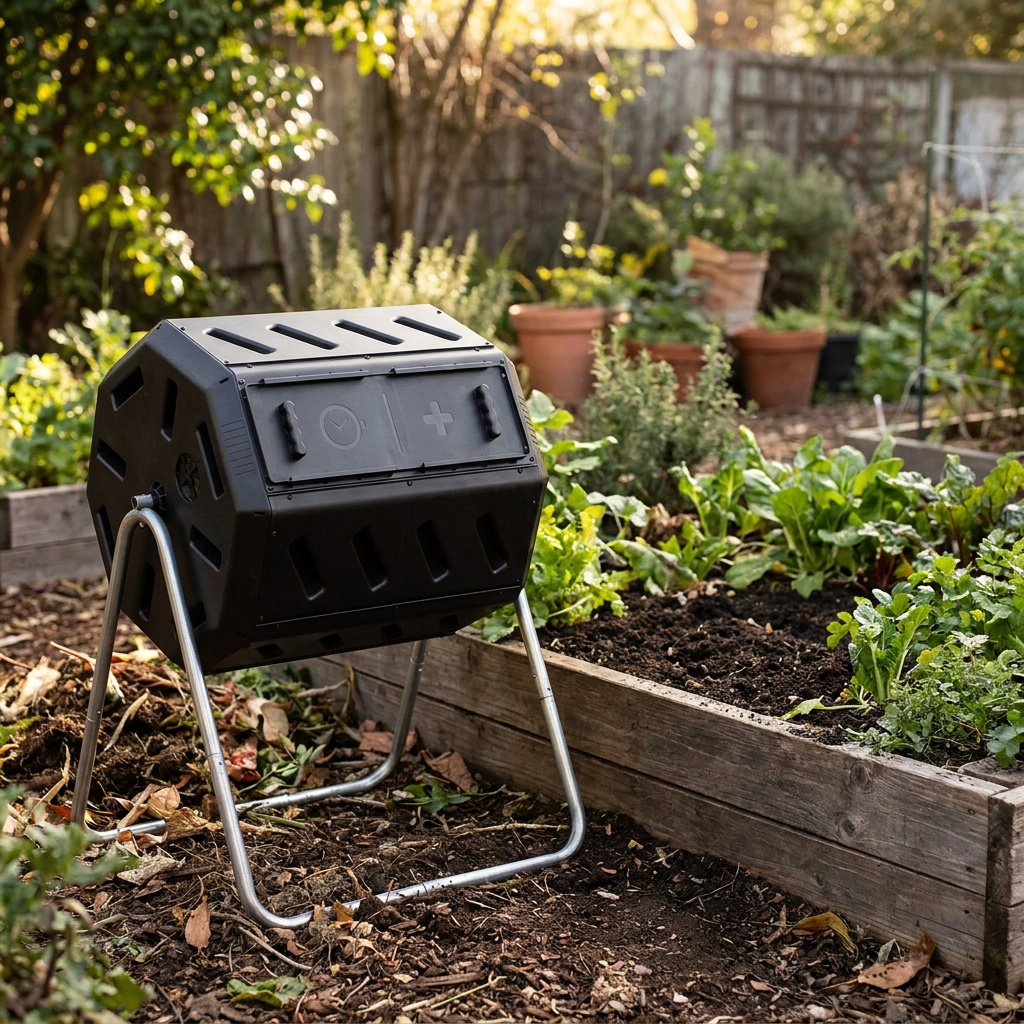
FCMP Outdoor IM4000 Tumbling Composter
See the pick →VIVOSUN Dual Chamber Tumbling Composter
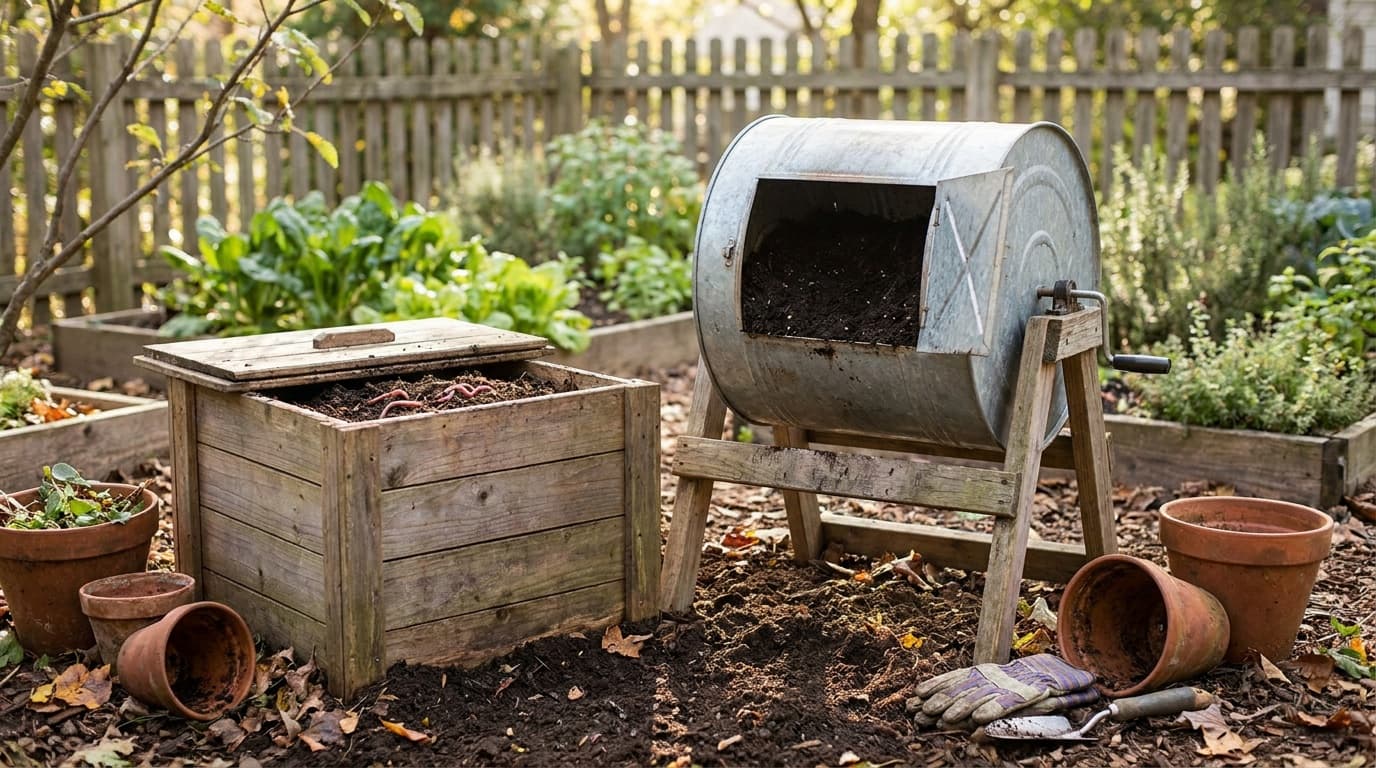
See the pick →These two composters solve the same problem in opposite ways. A worm bin (vermicomposting) relies on red wigglers to eat your kitchen scraps and excrete worm castings, one of the richest soil amendments you can make. A tumbler is a sealed drum you spin to aerate a hot compost pile, which decomposes a mix of greens and browns through microbial heat. The right choice depends on how much material you generate, how much space you have, whether you can compost indoors, and how much effort you want to put in.
Both produce a finished product that feeds the same plants, so the decision is about your inputs and your setup, not your garden. Either way, finished compost or castings worked into your beds before planting gives crops like tomatoes and lettuce a strong start. Time that bed prep against your season with the planting calendar.
Best worm bin: Urban Worm Bag Version 2
The Urban Worm Bag is a breathable fabric bin built specifically to solve vermicomposting's two recurring headaches: airflow and harvest. The fabric walls keep oxygen flowing so the bin stays aerobic (which means no sour smell), and a zippered bottom lets you harvest finished castings from below while the worms stay up top working fresh scraps. That continuous-flow design means you rarely have to dig through worms to get your castings.
It runs quietly and odor-free, which makes it viable indoors or in a garage, and the footprint is small. The trade-off is throughput: a worm bin processes scraps at the worms' pace, so it suits a kitchen's worth of food waste, not a yard's worth of leaves. You can check current pricing on the Urban Worm Bag to start a colony.
Best stacking worm system: Worm Factory 360
The Worm Factory 360 is the stacking-tray approach to vermicomposting and one of the longest-selling systems available. You add trays as the worms migrate upward toward fresh food, leaving finished castings in the lower trays for easy removal. It is a tidy, modular design with a spigot at the base to drain off "worm tea," the nutrient-rich liquid that collects.
The tray system makes harvesting clean and orderly, and the rigid plastic construction stands up well outdoors in mild climates. It does require a bit more management than a single-chamber bag (you stack and rotate trays), but many gardeners prefer the organized, expandable structure. It is the pick if you like a system you can grow tray by tray.
Best value tumbler: FCMP Outdoor IM4000
When you generate yard waste as well as kitchen scraps, a tumbler handles the volume a worm bin cannot. The FCMP Outdoor IM4000 is the value benchmark in this category: a roughly 37-gallon dual-chamber drum on a sturdy frame that you spin every few days to aerate the pile. Aeration plus the sealed drum drives the heat that breaks material down in weeks rather than months, and the closed design keeps pests out.
Loading is through a sliding door, and the internal aeration bars break up clumps as you turn it. The honest caveat owners raise is assembly (the kit has a lot of small parts) and that a full drum gets heavy to spin, so do not overfill one chamber. You can compare the FCMP IM4000's current price before deciding.
Best dual-chamber tumbler: Vivosun dual-chamber tumbler
The Vivosun dual-chamber tumbler uses the same spin-to-aerate principle but emphasizes the two-bin workflow that makes tumblers practical. Fill one chamber while the other finishes curing, then harvest the cured side and start the cycle again. That rhythm gives you a steady supply of finished compost instead of one batch you have to wait on, which is the main advantage of a dual-chamber design.
It sits on a frame for easy turning and seals against pests like the FCMP. The choice between the two often comes down to current price and capacity, since both follow the proven dual-chamber tumbler pattern. This is the pick if a continuous compost cycle matters more to you than anything else.
How to choose between a worm bin and a tumbler
The decision usually comes down to four factors.
Speed. A hot tumbler, spun regularly and balanced between greens and browns, can finish compost in a few weeks. A worm bin is slower and steadier, producing castings continuously over months. Tumblers win on raw speed.
Effort and inputs. Worm bins need gentle, ongoing attention to moisture and feeding but no heavy lifting. Tumblers need you to balance the green-to-brown ratio and physically spin a drum that gets heavy. Neither is hard, but they ask for different kinds of work.
Output. Worm castings are a premium, concentrated amendment, prized for seedlings and topdressing. Tumbler compost is excellent general-purpose organic matter in larger volume. If you want a little of the best, go worms; if you want a lot of very good, go tumbler.
Space and location. A worm bin is compact and odor-free enough for a kitchen, garage, or balcony, and it tolerates indoor temperatures. A tumbler needs outdoor space and does its best work in warm weather, since heat drives decomposition.
| Product | Sprout Score | Price | Best for |
|---|---|---|---|
| Urban Worm Bag Version 2 | 7.8 | $100-$150 | Vermicomposters who want a single large, well-aerated continuous-flow bin. |
| Worm Factory 360 Worm Composter | 8.3 | $100-$150 | Gardeners who want continuous worm castings without a backyard pile. |
| FCMP Outdoor IM4000 Tumbling Composter | 8.8 | $100-$150 | Home gardeners who want pest-proof, low-effort batch composting in a small yard. |
| VIVOSUN Dual Chamber Tumbling Composter | 7.7 | $50-$100 | Value-focused gardeners who want maximum capacity per dollar. |
Frequently asked questions
Is a worm bin or a compost tumbler faster?
A compost tumbler is faster for raw speed. Spun regularly with a good balance of greens and browns, a hot tumbler can finish compost in a few weeks. A worm bin works steadily over months, producing castings continuously rather than in fast batches. If turnaround time is your priority, choose a tumbler.
Can I keep a worm bin indoors?
Yes. A well-managed worm bin is odor-free and compact, which makes it suitable for a kitchen, garage, or apartment. Keep the bedding moist like a wrung-out sponge, bury food scraps, and avoid overfeeding, and there is no smell or pest problem. Worms also prefer stable indoor temperatures, so indoors often works better than a freezing or baking outdoor spot.
Which makes better compost, worms or a tumbler?
Worm castings are a more concentrated, premium amendment, excellent for seed starting and topdressing. Tumbler compost is a great general-purpose source of organic matter in larger volume. Castings are the richer product per cup; tumbler compost gives you more total material. Both improve soil structure and feed plants.
Do compost tumblers really work better than a pile?
A tumbler speeds up composting by making aeration easy and keeping the material contained and warm, which encourages the hot, fast microbial activity that an unturned pile lacks. The sealed drum also keeps out rodents. A tumbler is not magic, you still need a balanced mix and to spin it, but it does compost faster and cleaner than a neglected open pile.
The bottom line
Choose the Urban Worm Bag if you want odor-free castings from kitchen scraps in a small space, or the Worm Factory 360 if you prefer a stacking-tray system. Step up to a tumbler when you have yard waste and want speed: the FCMP IM4000 is the value pick, and the Vivosun dual-chamber model keeps a continuous compost cycle going. Whichever you choose, work the finished product into your beds before planting and time that prep with the planting calendar.