Our recommendations
A stationary bin usually holds more material and costs less than a compost tumbler, with only occasional turning. Choose a bin by capacity, pest resistance, and how you want to remove finished compost. These three picks range from a basic high-capacity bin to a heavier model built for long service. If you are still deciding on the method itself, the tumbler vs bin vs worm bin comparison settles that first.
Finished compost is the single best thing you can add to a raised bed or in-ground row, so the bin you choose shapes every harvest that follows. Below we sort the field by the specs that actually decide outcomes: capacity, pest resistance, heat retention, and access.
Hot vs cold composting (and why the bin matters)
The bin you pick nudges you toward one of two methods, so it helps to know the difference.
Hot composting needs a large, balanced, moist pile that can retain heat. A large or insulated bin and regular turning help the pile break down quickly and kill weed seeds and pathogens.
Cold composting is the slower, lower-effort path: pile material as it comes, turn rarely, and wait many months. It tolerates smaller and more open bins because it is not chasing internal heat.
An open ring excels at the volume hot composting wants but needs help holding heat and moisture. An enclosed bin retains heat and keeps pests out but caps your capacity. Match the bin to the method you will realistically follow.
Best value: Geobin
Best value
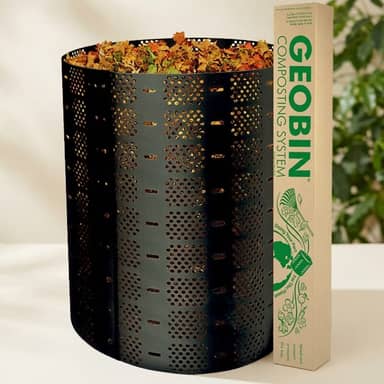
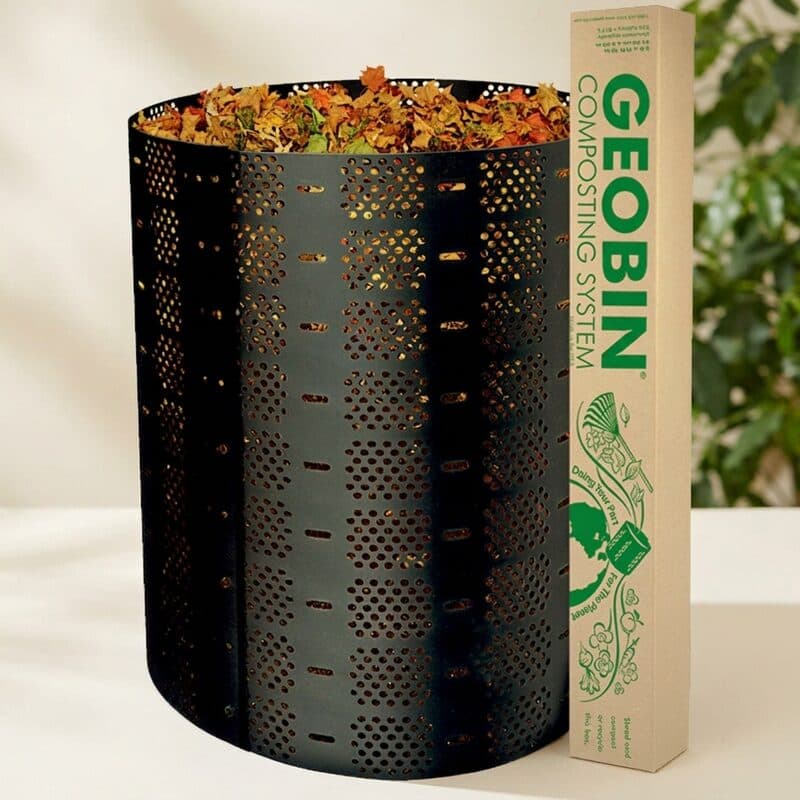
Geobin Expandable Compost Bin (up to 246 gal)
Best for: Gardeners with lots of leaf and yard waste who want maximum cheap composting volume in an expandable footprint.
Keep in mind: Open, flexible ring needs a tarp or regular turning to hold heat and moisture
Amazon price as of the checked date, subject to change. The price on Amazon at checkout applies.
Full research
- Capacity
- Up to 246 gal
- Max diameter
- Expandable to ~3.75 ft
- Type
- Open-bottom stationary ring
- Material
- Perforated recycled plastic
The Geobin is an expandable open-bottom composting ring of perforated recycled plastic that holds up to 246 gallons, offering the cheapest way to compost large volumes of leaf and yard waste in an adjustable footprint.
This catalog-wide research score is separate from this guide's use-case ranking. How we research
Strengths
- Massive 246-gallon capacity handles whole-yard leaf and garden waste
- Adjustable diameter lets you size the bin to your pile and expand later
- Lowest cost per gallon of any backyard composting option
Weaknesses
- Open, flexible ring needs a tarp or regular turning to hold heat and moisture
- Not rigid or animal-proof; relies on the pile to keep its shape
Sprout Score breakdown
Best for
Gardeners with lots of leaf and yard waste who want maximum cheap composting volume in an expandable footprint.
Owner rating snapshot
Amazon · 55 reviews · 4.4 stars
The Geobin is the cheapest way by far to compost large volumes, which is exactly why it is so widely recommended. It is an expandable open-bottom ring of perforated recycled plastic that you roll out to the diameter you want and lock with closure keys, holding up to 246 gallons. That capacity swallows whole-yard leaf and garden waste that a tumbler would choke on, and you can size it to your pile and expand it later.
An open, flexible ring relies on the pile for its shape and does not hold heat or moisture on its own. Cover it with a tarp and turn it now and then, and it composts well. Leave it alone and decomposition slows. It is also not animal-proof. For low-cost capacity, nothing here competes. You can check current pricing on the Geobin before buying.
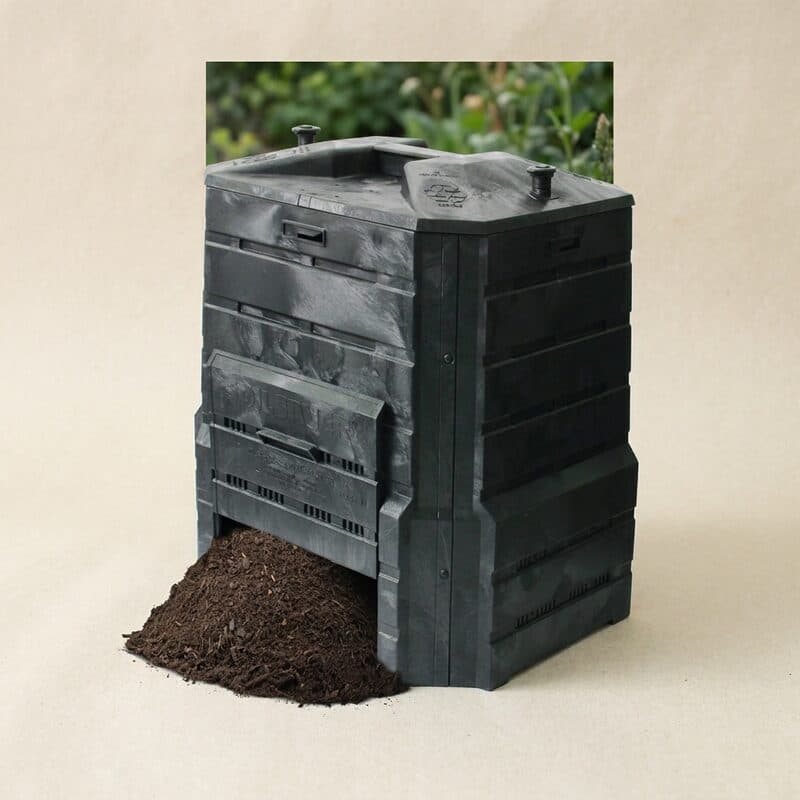
Best premium: Algreen Soil Saver
Best premium
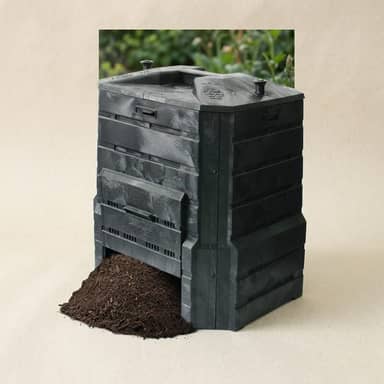
Algreen Soil Saver Classic Compost Bin (94 gal)
Best for: Gardeners who want a durable, tidy, animal-resistant stationary bin they can leave in one spot for years.
Keep in mind: Higher upfront price than an open ring or wire bin
Amazon price as of the checked date, subject to change. The price on Amazon at checkout applies.
Full research
- Capacity
- 94 gal (approx. 12.5 cu ft)
- Dimensions
- 25 x 30 x 25 in
- Type
- Enclosed stationary bin
- Material
- 100% recycled black plastic
Algreen's Soil Saver Classic is an enclosed stationary compost bin built from thick 100% recycled black plastic, with a locking animal-resistant lid and bottom harvest doors for tidy year-round composting in a fixed spot.
This catalog-wide research score is separate from this guide's use-case ranking. How we research
Strengths
- Thick recycled-plastic walls retain heat and speed decomposition
- Locking lid and enclosed body resist pests and keep the pile tidy
- Bottom doors let you pull finished compost without disturbing the top
Weaknesses
- Higher upfront price than an open ring or wire bin
- Fixed footprint and harvest doors that can stick when the pile is packed
Sprout Score breakdown
Best for
Gardeners who want a durable, tidy, animal-resistant stationary bin they can leave in one spot for years.
The Soil Saver is built for long-term use. Thick 100% recycled black plastic retains heat and resists weathering. A locking lid deters animals, and lower doors let you remove finished compost without disturbing fresh material above. Long-term owners report more than a decade of service.
Its 94-gallon enclosed capacity is smaller than the Geobin's open ring, and the bottom doors can stick when the pile is densely packed. But the heat retention and pest resistance are real, and for a tidy bin in a fixed spot near the house, this is the durable choice. You can compare current pricing on the Soil Saver against the others.
Most convenient access: Redmon Green Culture
Easy access
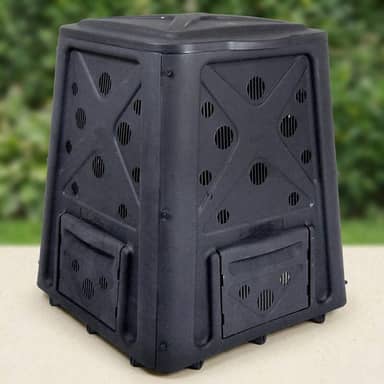
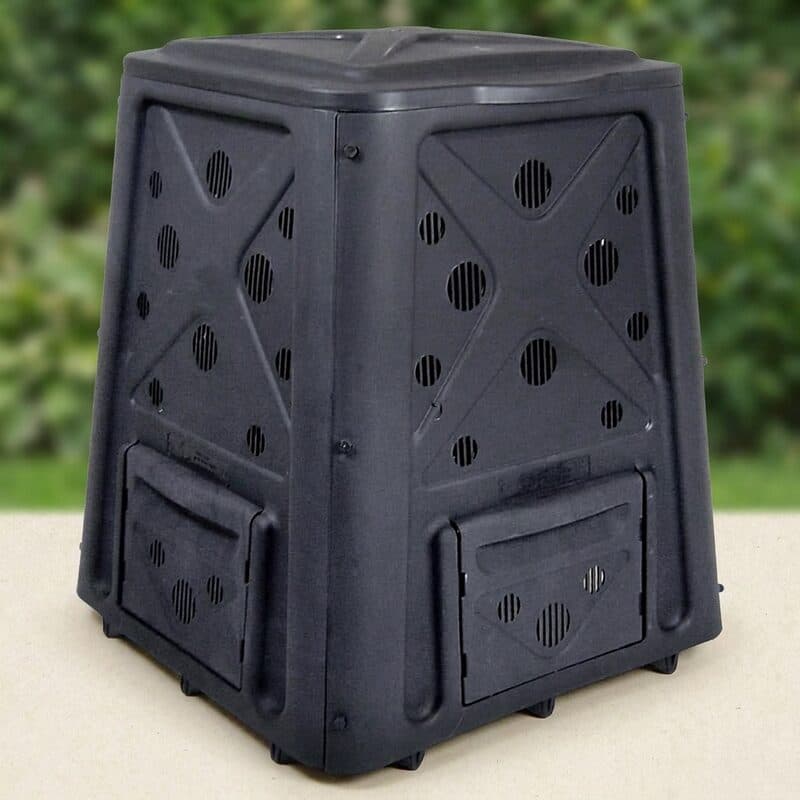
Redmon Green Culture Compost Bin (65 gal, 4-Door)
Best for: Households wanting an easy-to-assemble enclosed bin with convenient multi-door harvest access at a moderate price.
Keep in mind: Lighter-gauge panels are less rigid than thick-walled premium bins
Amazon price as of the checked date, subject to change. The price on Amazon at checkout applies.
Full research
- Capacity
- 65 gal
- Type
- Enclosed stationary bin
- Material
- Snapping plastic panels
- Lid
- Lift-off top
Redmon's Green Culture 65-gallon compost bin is an enclosed snap-together design with a lift-off lid and four lower access doors, offering convenient capacity for an average household at a moderate price.
This catalog-wide research score is separate from this guide's use-case ranking. How we research
Strengths
- Four lower doors make harvesting finished compost easy from any side
- Snap-together assembly goes up in minutes without tools
- Good capacity for the price for an average household
Weaknesses
- Lighter-gauge panels are less rigid than thick-walled premium bins
- Snap fittings can pop apart over time and the bin is not fully animal-proof
Sprout Score breakdown
Best for
Households wanting an easy-to-assemble enclosed bin with convenient multi-door harvest access at a moderate price.
Owner rating snapshot
Amazon · 3 reviews · 4.5 stars
The Redmon Green Culture bin is a 65-gallon enclosed design with a lift-off lid and four lower access doors. It snaps together without tools. The four doors let you remove finished compost from any side without dismantling the bin. Its capacity and price suit an average household's kitchen and garden scraps.
The trade-offs are in the build. The snapping plastic panels are lighter-gauge than the Soil Saver's thick walls, so the bin is less rigid and the fittings can pop apart over time, and it is not fully animal-proof. If easy assembly and convenient access matter more to you than maximum durability, it is a sensible pick. You can check the Redmon's current price here.
How to choose a compost bin
Four factors usually decide it.
Capacity. Match the bin to your waste stream. If you generate piles of leaves and garden trimmings, an expandable open ring gives the most volume per dollar. If you mostly compost kitchen scraps and modest garden waste, an enclosed 65-to-95-gallon bin is plenty and keeps things tidier. If even that footprint is too much, a compost tumbler or an indoor worm composter handles kitchen scraps in far less space.
Pest resistance. Open rings are not animal-proof. If raccoons, rodents, or dogs are a concern, choose an enclosed bin with a locking lid and avoid adding meat, dairy, or oily food to any bin.
Heat retention. Thick-walled enclosed bins hold heat and compost faster in cool weather. Open rings need a cover to do the same. If you want finished compost sooner, prioritize a bin that traps warmth.
Access. Decide how you will get compost out. Bottom or multi-door designs let you harvest the finished material from below while the top keeps working. Open rings require lifting the ring off or digging from the side.
| Product | Price | Best for | Buy |
|---|---|---|---|
| Geobin Expandable Compost Bin (up to 246 gal)#1 · BEST VALUE | Typical price range · $45–$60 | Gardeners with lots of leaf and yard waste who want maximum cheap composting volume in an expandable footprint. | Shop Amazon |
| Algreen Soil Saver Classic Compost Bin (94 gal)#2 · BEST PREMIUM | Typical price range · $90–$130 | Gardeners who want a durable, tidy, animal-resistant stationary bin they can leave in one spot for years. | Search Amazon |
| Redmon Green Culture Compost Bin (65 gal, 4-Door)#3 · EASY ACCESS | Typical price range · $50–$75 | Households wanting an easy-to-assemble enclosed bin with convenient multi-door harvest access at a moderate price. | Shop Amazon |
Frequently asked questions
Are stationary compost bins better than tumblers?
For most backyards, yes, on capacity and cost. Stationary bins hold far more material and cost less per gallon, which suits the leaf and garden volume most gardens produce. Tumblers are easier to turn and can be faster for small batches, but they cap your volume and cost more. If you compost a lot of yard waste, a stationary bin is the practical choice.
How do I keep animals out of my compost bin?
Choose an enclosed bin with a locking, animal-resistant lid rather than an open ring, and never add meat, fish, dairy, or oily food, which are the main attractants. Burying fresh kitchen scraps in the center of the pile rather than leaving them on top also helps. If pests are a serious problem in your area, an enclosed bin like the Algreen Soil Saver is the safer pick.
How long does compost take in a bin?
It depends on method. Hot composting in a large, well-turned, moisture-balanced pile can finish in a few months. Cold composting, where you pile material and rarely turn it, typically takes six months to a year. Heat-retaining enclosed bins and regular turning both shorten the timeline; an undisturbed open pile takes the longest.
Can you compost in winter?
Yes. Decomposition slows in cold weather but does not stop, and it resumes as the pile warms in spring. An enclosed, thick-walled bin retains heat better through winter and keeps working longer into the cold. Keep adding scraps through the season, balance them with browns, and the pile picks back up when temperatures rise.
What should you not put in a compost bin?
Skip meat, fish, dairy, and oily or greasy food, which attract pests and turn rancid. Avoid pet waste from cats and dogs, diseased plants, weeds gone to seed, and anything treated with herbicide. Stick to fruit and vegetable scraps, coffee grounds, eggshells, and yard waste, balanced with dry browns, and the pile stays healthy.
Our recommendation
Buy the Geobin for the most cheap composting volume, step up to the Algreen Soil Saver for a durable enclosed bin you can leave in place for years, and choose the Redmon Green Culture if easy assembly and four-door access matter most. Whichever you pick, balance your greens and browns, keep the pile damp, and turn it now and then. The finished compost is the best amendment you can add before your next planting calendar window opens.