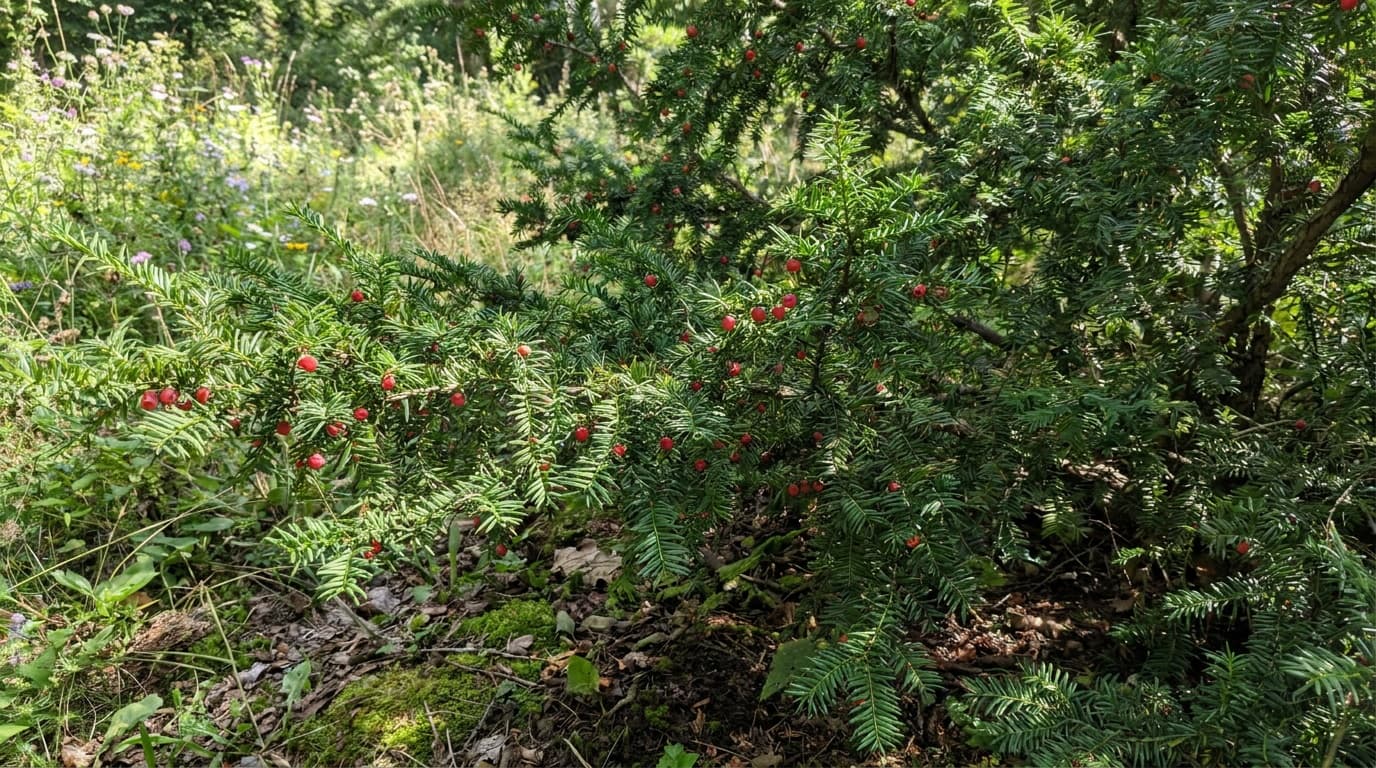
Japanese Yew plant profile
Taxus cuspidata
A perennial shrub for full sun.
Last updated .
When to plant
When to plant Japanese Yew
Plant this conifer in early spring, before new growth begins, or in early fall. Extension guidance rates those two windows as best because roots can establish before summer heat or a hard freeze; container or balled-and-burlapped stock goes in during these cooler, low-stress periods.
The calendar shows this cited seasonal window as an approximate band. It does not convert the season into frost-adjusted dates.
Open Japanese Yew in my garden calendarShows the source-backed planting season, not frost-adjusted dates.
Growing conditions
- Sun
- Full sun
- Soil pH
- 5 to 8
- Lifecycle
- Perennial
- Spacing
- 60 to 120 in apart
- Hardiness
- Zones 4a to 7bFind my hardiness zone
Common problems
Watch for these
Also watch for: root rot in wet soil, winter burn, scale, all parts except aril poisonous.
Next steps
Continue with Japanese Yew
Evidence trail
Evidence behind this profile
Original extension and institutional publications behind the planting, care, and safety facts on this page.
- Taxus cuspidata (Japanese Yew)
North Carolina Extension Gardener Plant Toolbox (NC State Extension). Supports general reference. Checked 2026-06-18.
- Is Fall for Planting?
Penn State Extension. Supports planting reference. Checked 2026-06-18.
- Toxic and Non-Toxic Plants: Yew (Taxus species) entry
ASPCA Animal Poison Control Center. Supports pet-safety verdicts for dogs and cats. Checked 2026-07-18.