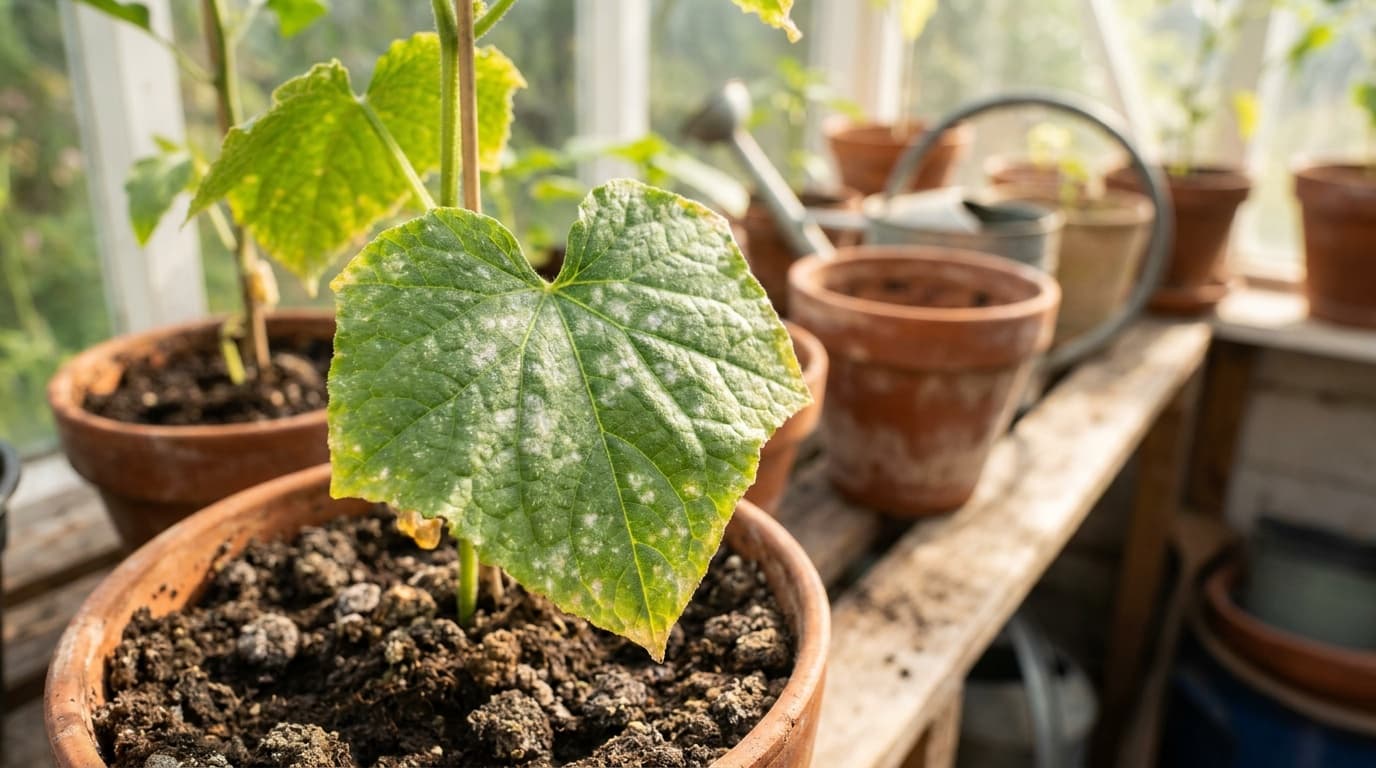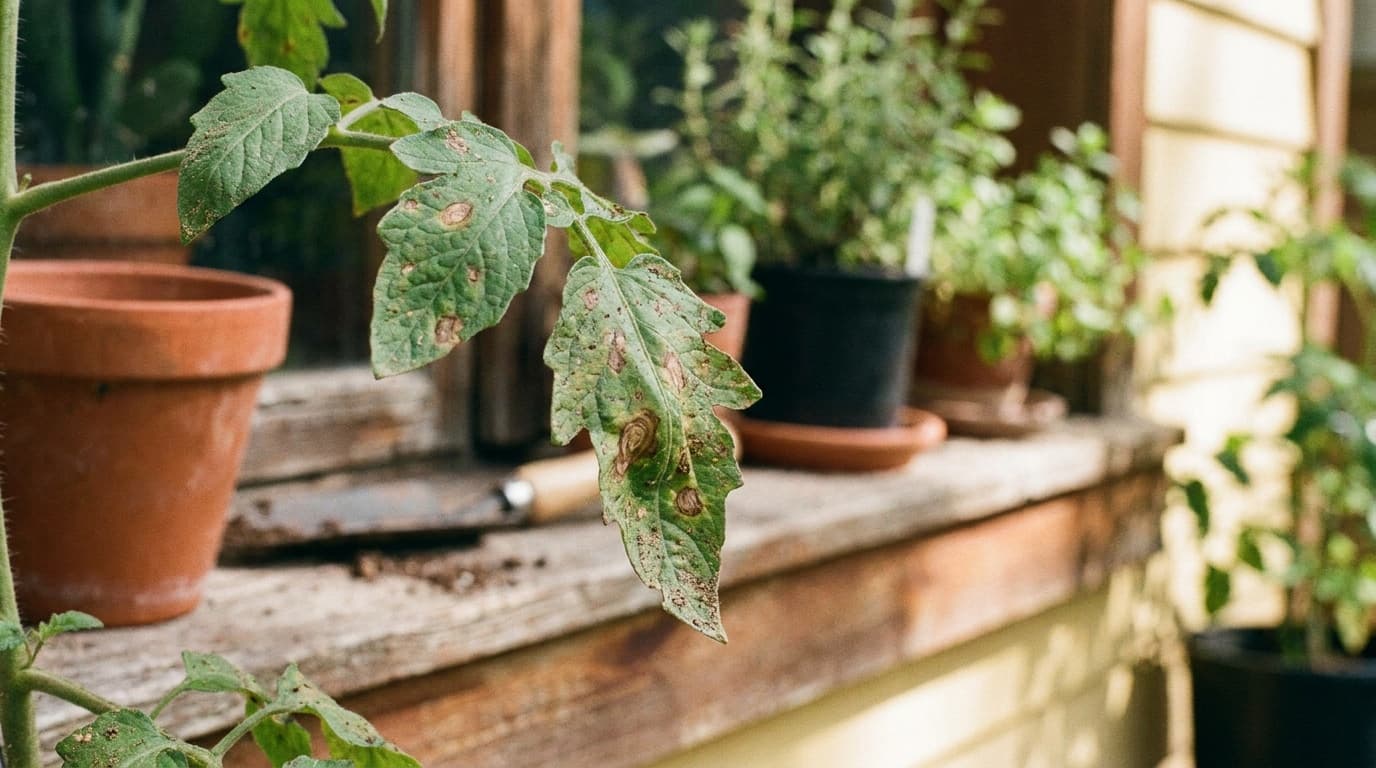
Fusarium wilt is one of two classic soilborne wilts gardeners run into, the other being verticillium wilt. Both plug the plant's plumbing and cause wilting that no amount of watering fixes. Fusarium is the warmer-weather wilt, often worst in the heat of midsummer, and many strains are specialized to particular crops. The hard truth up front: there is no spray and no rescue for an infected plant. Everything you can do is about the soil, the variety, and the rotation.
How to identify fusarium wilt
The pattern is gradual wilting and yellowing, frequently lopsided, with internal stem discoloration as the confirming clue.
The brown vascular streaking inside the stem is the most useful field clue and separates a true wilt disease from simple drought wilting, where the inside of the stem stays clean and the plant perks up after watering. Fusarium is hard to tell from verticillium wilt by eye; both need similar management, and lab testing is the only way to be certain which one you have. As a rough guide, fusarium tends to strike in hotter weather and verticillium in cooler weather.
What causes fusarium wilt
Fusarium wilt is caused by Fusarium oxysporum fungi that persist in the soil for many years as tough resting spores, even without a host. They infect through the roots, grow up into the water-conducting vessels, and clog them, which is why the plant wilts despite moist soil. Many strains are host-specific, so the strain that wilts tomatoes differs from the one that wilts melons.
The conditions and factors that favor it:
- Infested soil. The fungus survives for years, so once a bed is contaminated it stays a risk for a long time.
- Warm temperatures. Fusarium is favored by warm soil and air (roughly 80 F and up), which is why it often shows in the heat of midsummer.
- Susceptible varieties. Non-resistant tomato and other varieties have no defense.
- Plant stress. Drought, poor nutrition, root damage, and acidic soil worsen symptoms.
- Moving contaminated soil. Soil on tools, boots, and transplants spreads the fungus to clean beds.
How to manage fusarium wilt
There is no cure, so management is about resistant varieties, breaking the cycle, and not making the contamination worse.
Managing fusarium wilt
Plant resistant varieties
For tomatoes, choose varieties with an F in the disease code (the F in VFN means fusarium tolerance, and F1, F2, F3 indicate resistance to different races). Resistant varieties are the single most effective tool.
Rotate to non-hosts
Move susceptible crops out of an affected bed and plant non-host crops for several years to lower the fungus in that soil. Because many strains are crop-specific, rotating away from the affected crop family helps.
Remove and discard infected plants
Pull infected plants and put them in the trash, not the compost. Do not let the disease cycle through your compost back into the garden.
Keep plants unstressed
Steady water and balanced nutrition help plants tolerate low levels of the fungus. Stressed plants show symptoms sooner and worse.
Stop spreading the soil
Clean soil off tools and boots, and do not move soil or transplants from an infested bed to a clean one.
There is no product fix for fusarium wilt. This is a soil, variety, and rotation problem, so the most valuable thing you can buy is a packet of resistant seed, and the most valuable thing you can do is plan your rotation. Choosing a resistant variety from the start sidesteps most of the trouble.
How to prevent fusarium wilt
- Choose resistant varieties wherever they exist; for tomatoes, look for the F code.
- Rotate susceptible crops out of affected beds and grow non-hosts for several years.
- Keep plants healthy with steady water and balanced feeding to limit stress.
- Remove and trash infected plants promptly; never compost them.
- Avoid moving infested soil on tools, boots, and transplants.
- Grow in containers with fresh, clean potting mix where a bed is badly infested.
- Time plantings well. Use the planting calendar so plants establish before peak summer heat, when warm soil most favors the disease.
Which plants get fusarium wilt
Because many fusarium strains are host-specific, different crops have their own version of the disease. Common garden hosts include tomato, pepper, cucumber, watermelon, and cantaloupe, along with beans, peas, and others. The fungus is closely related to the one behind verticillium wilt, which causes nearly identical symptoms but in cooler weather, so when you cannot tell them apart, the management is the same: resistant varieties, rotation, and sanitation.
Can fusarium wilt be cured?
No. Once a plant is infected there is no cure, because the fungus is inside the plant's water-conducting tissue and no home fungicide reaches or kills it there. The plant will decline. Management is entirely preventive: resistant varieties, rotation to non-host crops, keeping plants unstressed, and removing infected plants so the fungus does not build up in the soil.
How do I tell fusarium wilt from drought stress?
A drought-stressed plant wilts but perks back up after watering, and the inside of the stem stays clean and green. With fusarium wilt the plant wilts despite moist soil, yellows from the bottom up, often on one side, and slicing a lower stem lengthwise reveals reddish-brown streaking in the vascular tissue. That internal streaking is the key difference.
What is the difference between fusarium and verticillium wilt?
Both are soilborne fungi that clog a plant's water-conducting tissue and cause bottom-up, often one-sided wilting with internal stem streaking, and neither can be cured. The main practical difference is temperature: fusarium is favored by warmer weather (around 80 F and up) and verticillium by cooler weather. They are hard to tell apart by eye, and a lab test is the only way to be sure. The good news is the management overlaps, and many tomato varieties (VF) resist both.
Can I replant in soil where fusarium wilt occurred?
You can, but choose carefully. The fungus survives in soil for years, so replant with resistant varieties or with non-host crops, and rotate susceptible crops out for several years. Because many fusarium strains are crop-specific, rotating away from the affected crop family is especially helpful. Container growing with fresh, clean potting mix is another way to grow susceptible crops in a garden with infested ground.
The bottom line
Fusarium wilt is a soil problem you prevent rather than a plant problem you cure. Lean on resistant varieties, rotate to non-hosts, keep plants unstressed, and remove infected plants to the trash, and you keep this long-lived fungus from taking over a bed. When you cannot tell it from verticillium wilt, treat them the same and reach for VF-coded varieties that resist both.