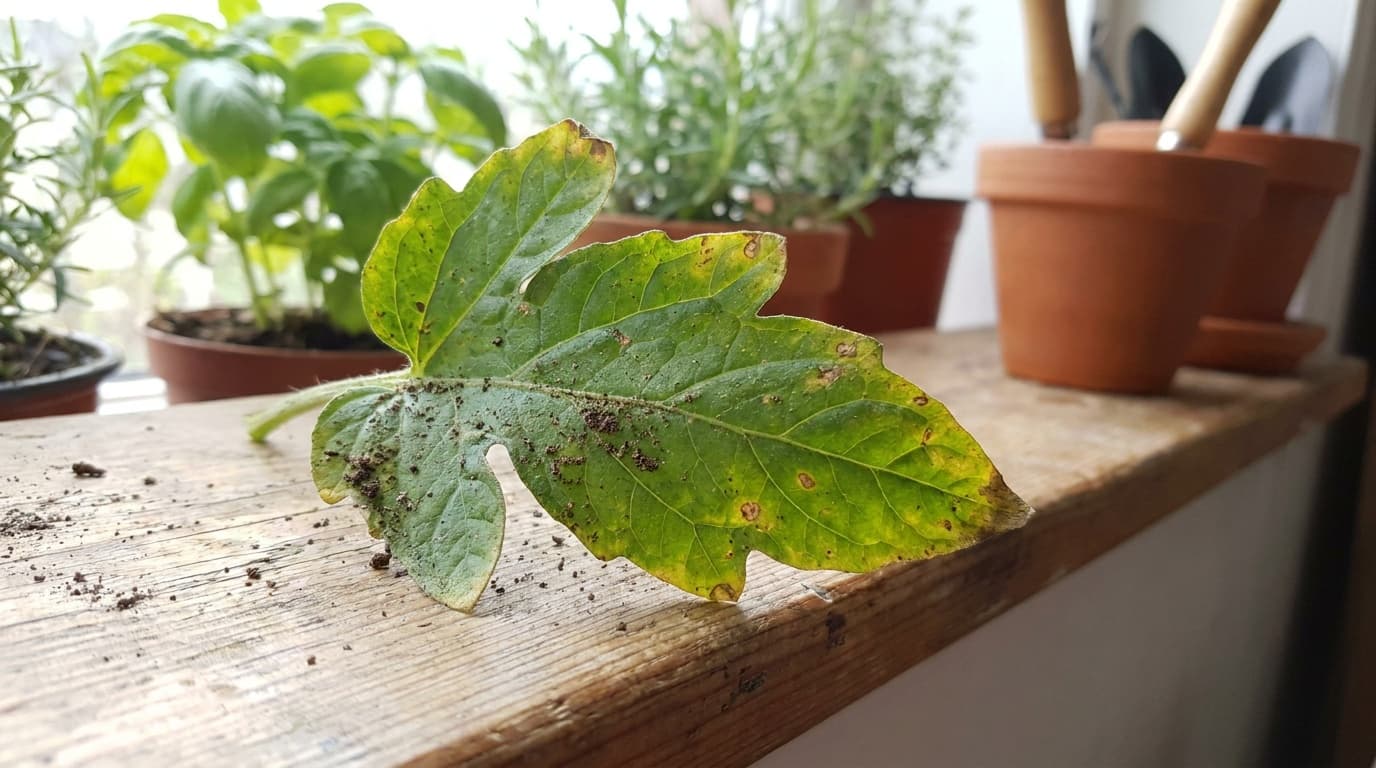
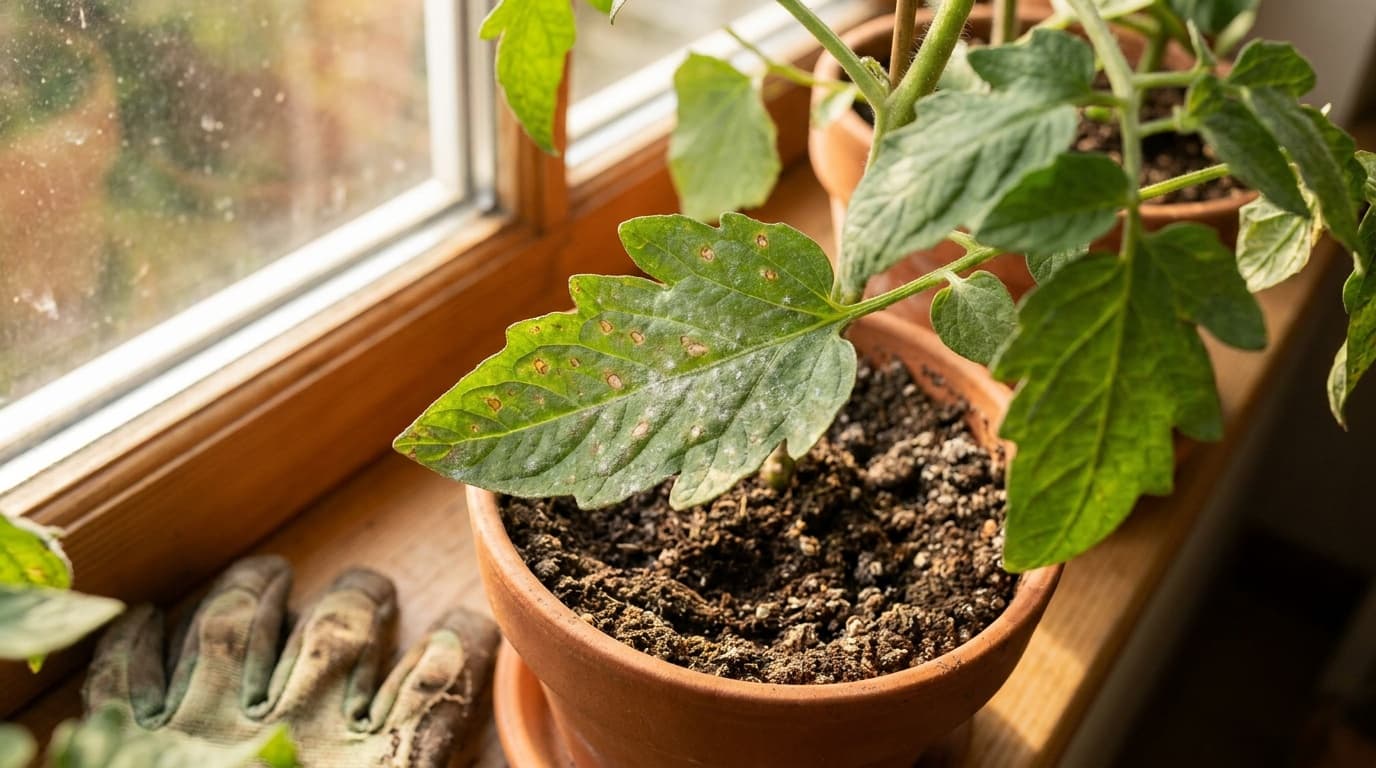
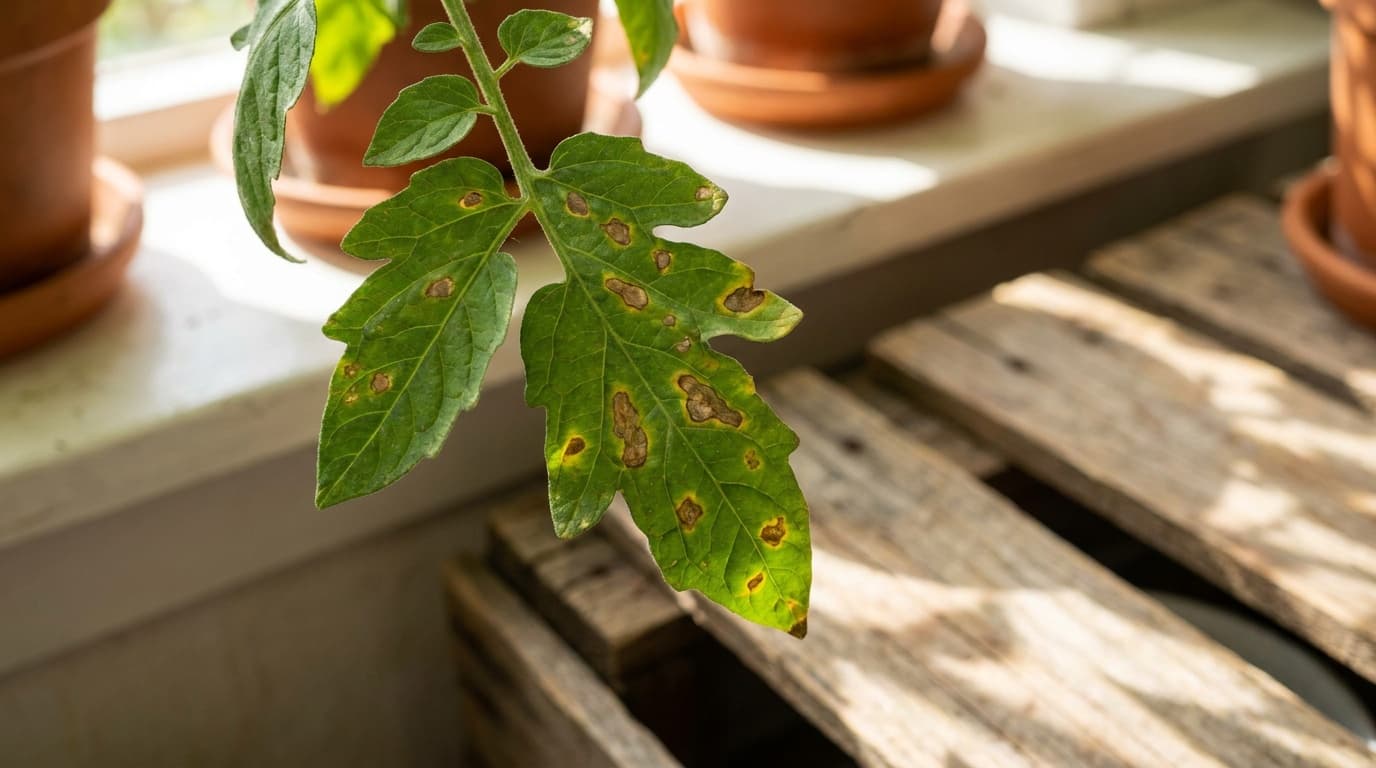
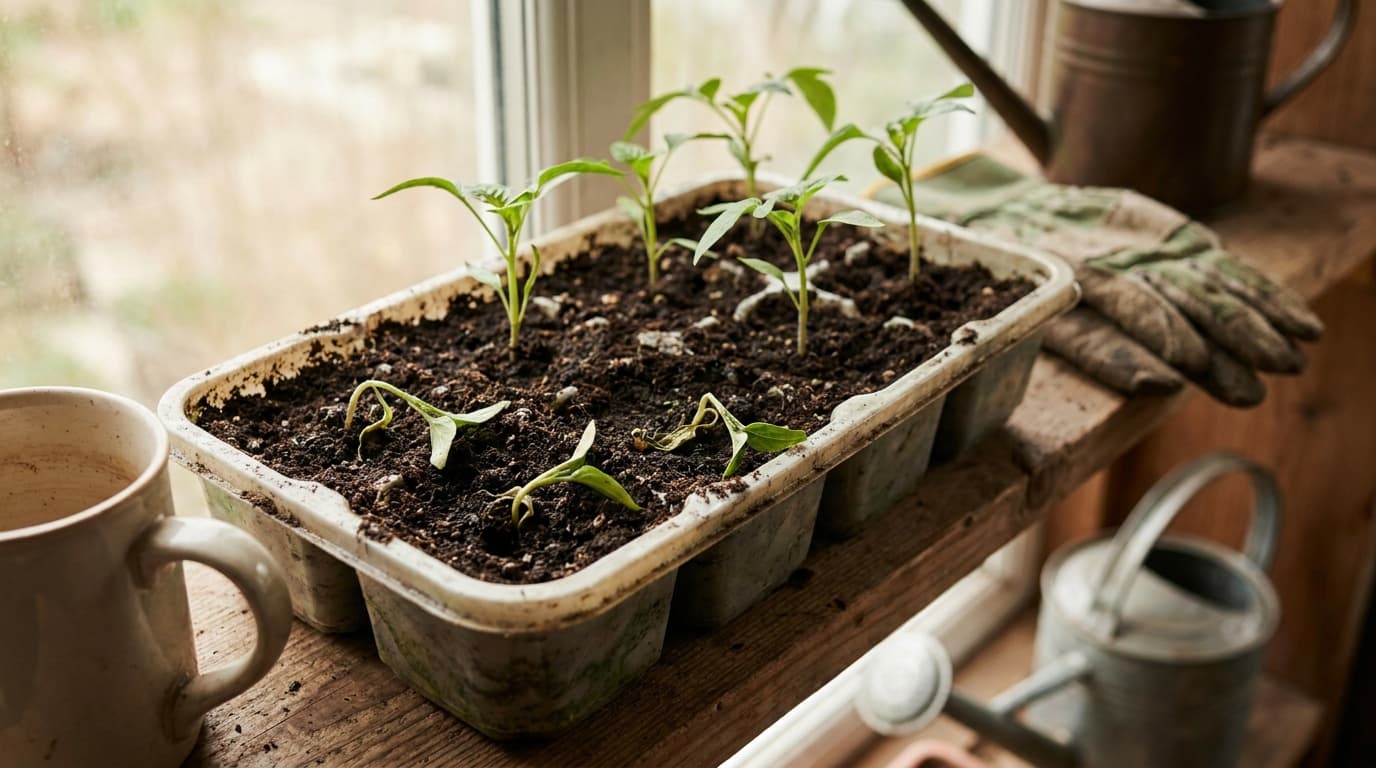
Anthracnose is not a single disease but a family of fungal infections that share a look: dark, sunken lesions with a slightly depressed center, often ringed or concentric, appearing on leaves, stems, and most damagingly on fruit as it ripens. On tomatoes you see soft, sunken circular spots on ripe fruit; on cucumbers and melons you see spots on leaves and fruit; on beans, dark streaks on pods and stems. The fungi thrive in warm temperatures with extended leaf wetness, so the disease tends to flare during humid spells and after periods of rain or overhead watering.
How to identify the problem
Look for sunken, darkened spots rather than the flat surface speckling of bacterial diseases. On fruit, anthracnose lesions are depressed and may develop concentric rings or pinkish spore masses in the center under humid conditions. On leaves it can resemble other leaf spots, so the fruit and stem symptoms, combined with warm wet weather, are your best confirmation. Spores spread in splashing water, which is why the disease often climbs up a plant from the soil line and spreads in wet conditions.
How to manage it, step by step
The plan
Water at the base
Improve airflow
Remove infected material
Rotate crops
Start with clean seed
Use preventive fungicide if needed
Base watering is the backbone of fungal control
Because anthracnose needs wet foliage to infect, the most powerful thing you can change is how water reaches the plant. Delivering water at the soil line, rather than over the leaves, keeps the canopy dry and breaks the wet-leaf conditions the fungus depends on. A soaker hose laid along the base of the row does this passively.
Some links on this page are affiliate links. As an Amazon Associate I earn from qualifying purchases.
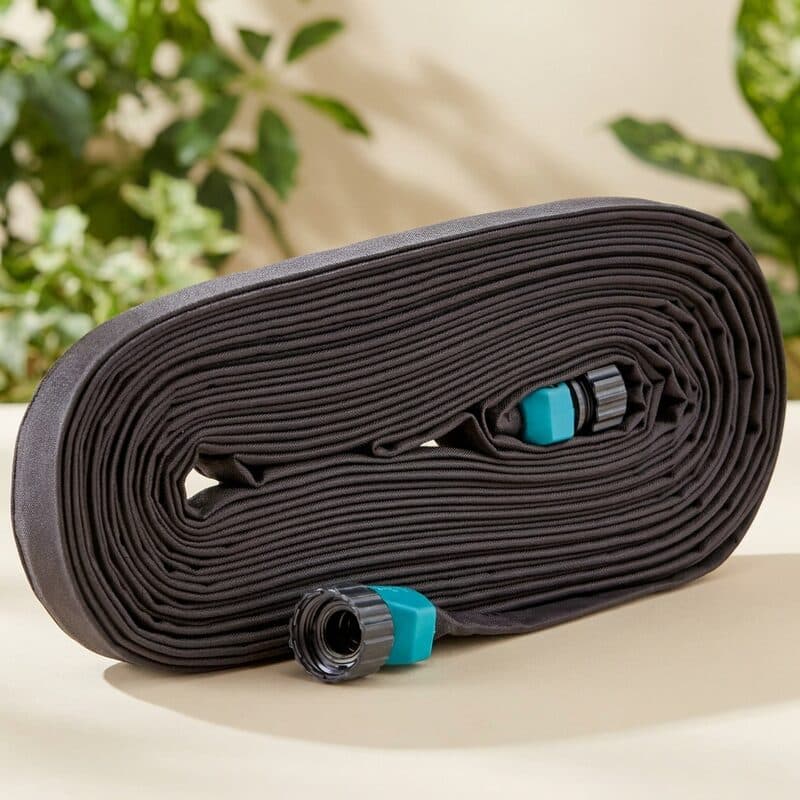
Keep foliage dry
Gilmour Flat Weeper Soaker Hose
Best for: Row and border gardeners who want low-waste, root-zone watering on a budget.
Keep in mind: Even output drops over very long runs and on slopes
Amazon price as of the checked date, subject to change. The price on Amazon at checkout applies.
Full research
- Type
- Flat weeper soaker hose
- Lengths
- Available in multiple lengths
- Delivery
- Seeps along the full length
- Connection
- Standard hose faucet
Gilmour's flat weeper soaker hose seeps water along its length to deliver moisture at the root zone, lying flat along rows and borders.
This catalog-wide research score is separate from this guide's use-case ranking. How we research
Strengths
- Delivers water directly to the root zone with little waste
- Flat profile lies neatly along rows and borders
- Inexpensive and easy to route through a bed
Weaknesses
- Even output drops over very long runs and on slopes
- Should be drained and stored to avoid winter damage
Sprout Score breakdown
Best for
Row and border gardeners who want low-waste, root-zone watering on a budget.
Owner rating snapshot
Amazon · 49 reviews · 4.2 stars
Pairing the soaker hose with a timer makes base watering consistent, so you water early in the day and the soil surface, not the leaves, gets the moisture. Watering in the morning also lets any incidental splash dry quickly.
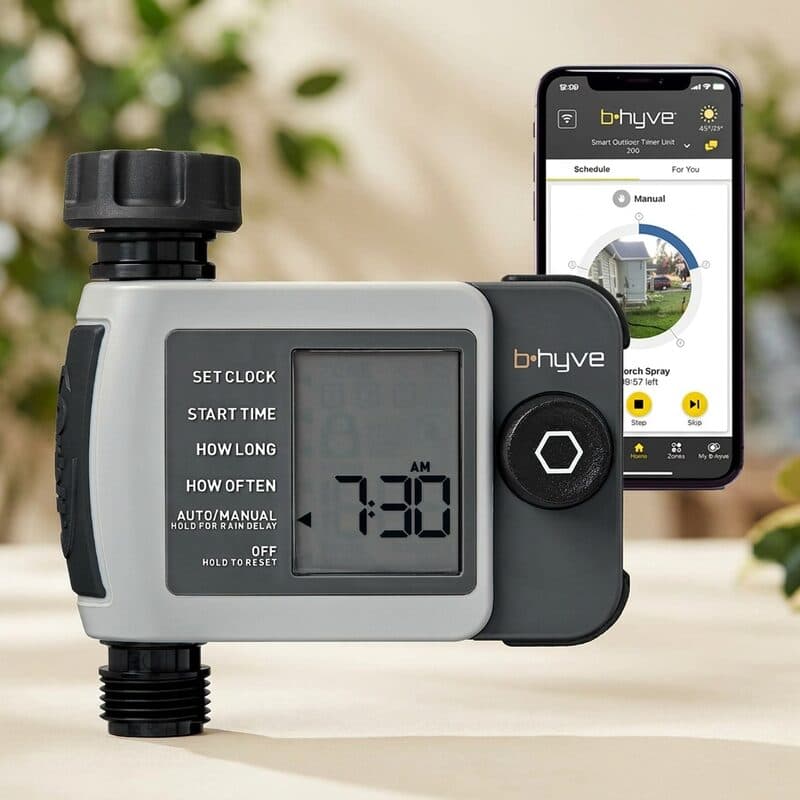
Water early, at the base
Orbit B-hyve Smart Hose Faucet Timer
Best for: Gardeners who want app control and weather-aware automatic watering.
Keep in mind: WiFi setup can be finicky at the faucet's signal range
Amazon price as of the checked date, subject to change. The price on Amazon at checkout applies.
Full research
- Connectivity
- WiFi and Bluetooth
- Scheduling
- App-based, weather-adjusting
- Zones
- Single outlet (multi-outlet models available)
- Power
- Battery powered
Orbit's B-hyve smart timer adds WiFi and Bluetooth control with weather-based scheduling, automating faucet watering from a phone app.
This catalog-wide research score is separate from this guide's use-case ranking. How we research
Strengths
- Weather-based scheduling skips watering after rain
- Controllable from a phone over WiFi or Bluetooth
- Flexible programs for multiple watering windows
Weaknesses
- WiFi setup can be finicky at the faucet's signal range
- Costs more than a basic mechanical dial timer
Sprout Score breakdown
Best for
Gardeners who want app control and weather-aware automatic watering.
Owner rating snapshot
Amazon · 17 reviews · 4.1 stars
Which plants are at risk, and how to plan
Anthracnose affects many crops, with the worst garden damage on tomatoes (sunken spots on ripe fruit), cucumbers, watermelon, and peppers, along with beans and other vegetables. Ripe and overripe fruit left on the plant is especially vulnerable, so harvest promptly during humid spells.
Use the planting calendar for your ZIP to time plantings so the most vulnerable fruiting stage avoids your wettest, most humid stretch where possible, and to plan a clean rotation away from last year's infected beds. Spacing and timing decisions made up front are far easier than fighting the disease mid-season.
What does anthracnose look like on tomatoes?
On tomatoes, anthracnose shows as soft, sunken, circular spots on ripe and ripening fruit, often with concentric rings and sometimes a darkened or pinkish center under humid conditions. The spots are depressed rather than flat. Overripe fruit left on the plant is especially susceptible, so prompt harvest during wet, humid weather helps limit losses.
Can I cure anthracnose once a plant has it?
No. Infected tissue does not recover, so there is no cure for the lesions already present. Management focuses on stopping new infections: water at the base to keep foliage dry, improve airflow, remove infected material, rotate crops, and use clean seed. Preventive fungicides protect healthy tissue but will not heal existing spots.
Does watering at the base help with anthracnose?
Yes, significantly. Anthracnose fungi need extended leaf wetness to infect, and spores spread in splashing water. Delivering water at the soil line with a soaker hose, ideally early in the day, keeps the canopy dry and removes the wet-leaf conditions the disease depends on. It is one of the most effective cultural controls you can apply.
Is anthracnose spread by seed?
Several anthracnose fungi are seed-borne, particularly on beans and cucurbits, so a contaminated seed lot can introduce the disease to a clean garden. Use certified disease-free seed, avoid saving seed from infected plants, and combine clean seed with rotation and sanitation to keep the fungus from establishing.
What to do now
Anthracnose is a wet-weather fungal disease you prevent rather than cure. Keep foliage dry by watering at the base, open up the canopy for airflow, remove infected leaves and fruit, rotate crops, and start with clean seed, reserving preventive fungicides for high-pressure conditions. Plan your spacing and rotation against the planting calendar, and you give the fungus far fewer chances to take hold.