Our recommendations
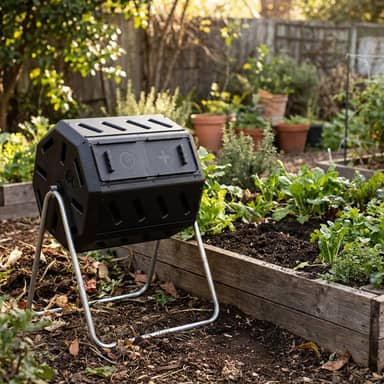
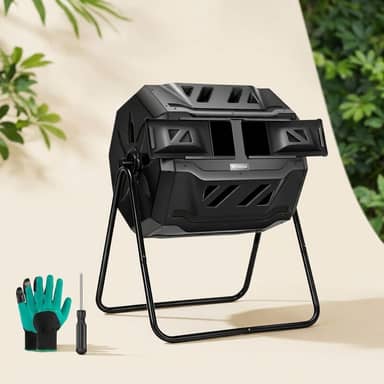
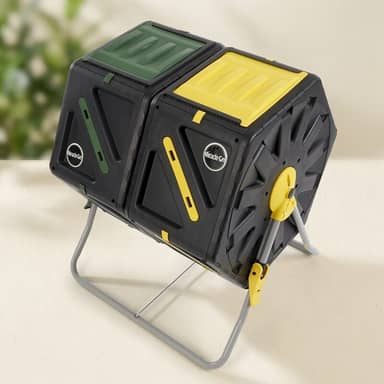
Compost tumblers make active backyard composting easier to contain, aerate, and turn. This guide compares enclosed rotating drums only, so capacity, chamber design, turning effort, and usable access stay directly comparable. Start with our composting-system comparison if you are still deciding between a tumbler, stationary bin, and worm bin. If you want the most volume for the least money and can live with occasional turning, our best compost bins guide covers the stationary picks.
Why a dual-chamber tumbler usually wins
A compost tumbler is a sealed drum on a frame. You add greens and browns, rotate the drum every few days to mix in oxygen, and let microbial heat break the material down. The enclosed body contains scraps and discourages rodents while the raised drum removes most of the heavy fork-turning required by an open pile.
A single chamber has one awkward limitation: new material resets the batch while finished material is still curing. Dual chambers solve that by letting one side finish while the other accepts fresh scraps. All three picks use that staggered workflow.
Best overall: FCMP Outdoor IM4000
Best overall
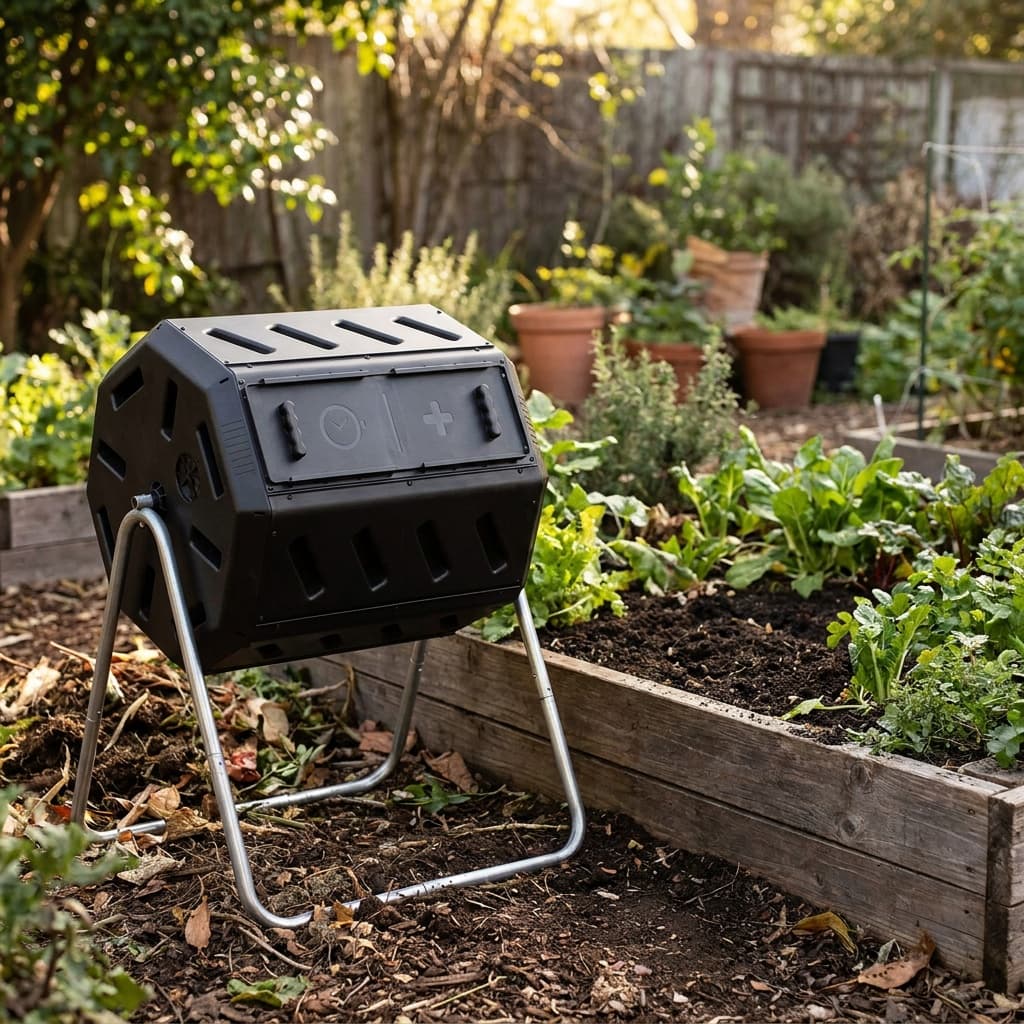
FCMP Outdoor IM4000 Tumbling Composter
Best for: Home gardeners who want pest-proof, low-effort batch composting in a small yard.
Keep in mind: Assembly is fiddly and time-consuming
Amazon price as of the checked date, subject to change. The price on Amazon at checkout applies.
Full research
- Total capacity
- 37 gallons (two 18.5-gal chambers)
- Design
- Dual rotating chamber
- Body material
- BPA-free recycled polypropylene
- Aeration
- Internal mixing bars + adjustable air vents
A dual-chamber tumbling composter that lets you cure one batch while loading the other. The off-ground drum keeps out pests and speeds up turning compared with an open pile.
This catalog-wide research score is separate from this guide's use-case ranking. How we research
Strengths
- Two chambers support a continuous batch cycle
- Tumbling design makes turning effortless versus a pile
- Sealed drum keeps rodents and pests out
Weaknesses
- Assembly is fiddly and time-consuming
- Full chambers get heavy and harder to rotate
Sprout Score breakdown
Best for
Home gardeners who want pest-proof, low-effort batch composting in a small yard.
Owner rating snapshot
Amazon · 187 reviews · 4.5 stars
The FCMP Outdoor IM4000 is the tumbler we point most people to because it gets the core workflow right. Two 18.5-gallon chambers (37 gallons total) let you cure one finished batch while you keep loading fresh scraps into the other, so you never have to stop composting to wait for a batch to mature. Internal mixing bars and adjustable air vents aerate the pile as you turn, and the BPA-free recycled polypropylene body resists rust.
The recurring owner complaint is assembly: the hardware is fiddly and the build takes a while. Once it is together, it holds up across seasons. Full chambers also get heavy, so site it where you can spin it comfortably.
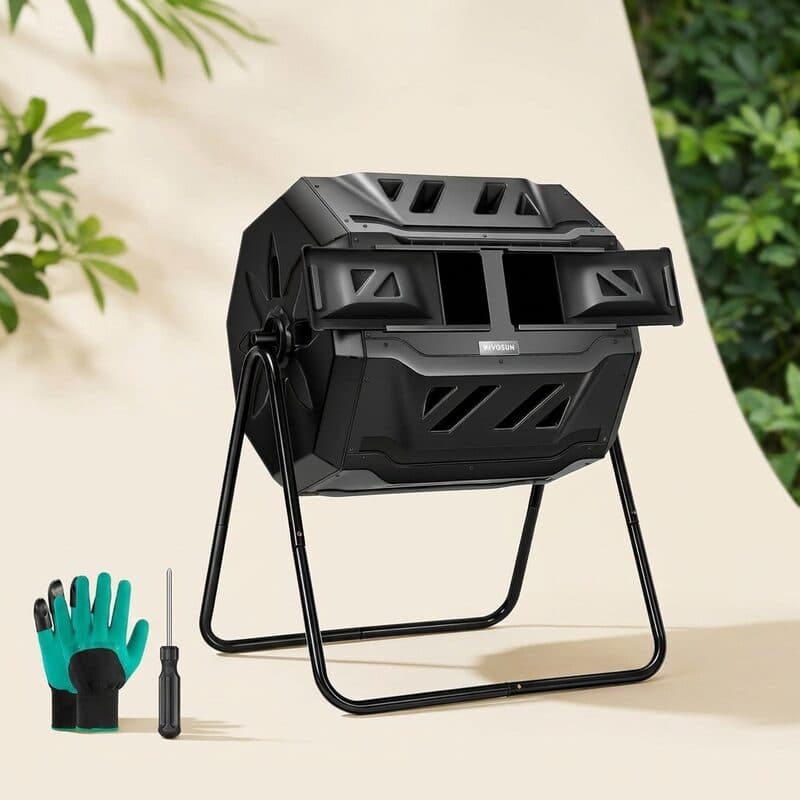
Best value: VIVOSUN Dual Chamber
Best value
VIVOSUN Dual Chamber Tumbling Composter
Best for: Value-focused gardeners who want maximum capacity per dollar.
Keep in mind: Lighter-duty plastic than premium tumblers
Amazon price as of the checked date, subject to change. The price on Amazon at checkout applies.
Full research
- Total capacity
- 43 gallons (two chambers)
- Design
- Dual rotating chamber
- Body material
- BPA-free PP with steel frame
- Aeration
- Internal bars + air vents
A budget-friendly dual-chamber tumbler with a steel frame and large stated capacity, aimed at gardeners who want batch composting without a premium price.
This catalog-wide research score is separate from this guide's use-case ranking. How we research
Strengths
- Large stated capacity for the price
- Steel frame adds stability
- Two chambers for continuous composting
Weaknesses
- Lighter-duty plastic than premium tumblers
- Full chambers are heavy to rotate
Sprout Score breakdown
Best for
Value-focused gardeners who want maximum capacity per dollar.
Owner rating snapshot
Amazon · 97 reviews · 4.3 stars
The VIVOSUN uses the same fill-one, cure-one batch workflow as the more expensive tumblers. Its steel frame adds stability, and its stated 43-gallon capacity is the largest in this lineup. The plastic is lighter-duty than premium models, and a full chamber is heavy to rotate. Choose it when capacity per dollar matters most.
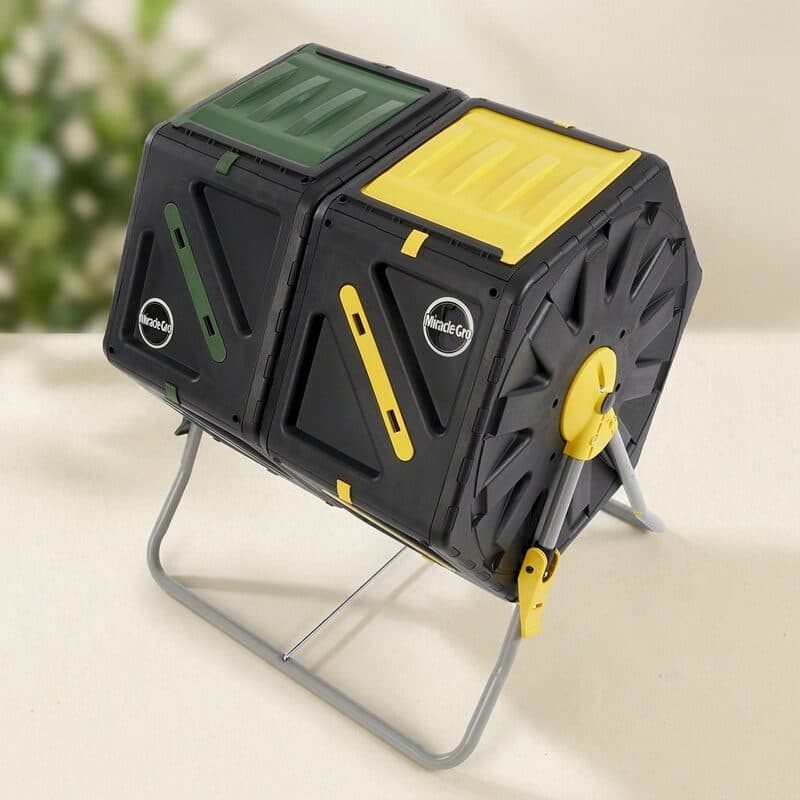
Best name-brand pick: Miracle-Gro Dual Chamber
Best dual chamber
Miracle-Gro Dual Chamber Tumbling Composter
Best for: Beginners who want a name-brand dual-chamber tumbler from a familiar retailer.
Keep in mind: Smaller usable volume than the spec suggests
Amazon price as of the checked date, subject to change. The price on Amazon at checkout applies.
Full research
- Total capacity
- 27.7 gallons (two chambers)
- Design
- Dual rotating chamber
- Aeration
- Internal mixing bars + aeration holes
- Assembly
- Owner-assembled
A two-chamber tumbling composter from a familiar garden brand, built around the same fill-one-cure-one workflow as pricier rivals.
This catalog-wide research score is separate from this guide's use-case ranking. How we research
Strengths
- Two chambers enable staggered batches
- Recognizable brand with wide retail availability
- Internal bars aerate as you turn
Weaknesses
- Smaller usable volume than the spec suggests
- Some owners report liquid leaking from the doors
Sprout Score breakdown
Best for
Beginners who want a name-brand dual-chamber tumbler from a familiar retailer.
Owner rating snapshot
Amazon · 145 reviews · 4.2 stars
If you would rather buy from a brand you recognize at a store you already shop, the Miracle-Gro dual-chamber tumbler runs the same staggered-batch approach with internal mixing bars. It is widely available and beginner-friendly. Owners note that the usable volume feels smaller than the 27.7-gallon spec suggests, and a few report liquid leaking from the doors, so it lands a step behind our top pick on build quality.
How to choose a compost tumbler
Capacity and yard size. A 30 to 45 gallon tumbler suits most small to mid-size yards. Bigger is not always better: a half-empty drum composts poorly, and full chambers get heavy. Match the size to how much material you actually generate.
Dual chamber vs single. A single drum forces you to stop adding scraps while a batch finishes. Dual chambers solve this and are worth the small premium for anyone composting year-round.
Cold-climate use. Microbial activity slows sharply in cold weather, so an outdoor tumbler may pause through a hard winter. Expect to bank material and let the batch regain speed when temperatures rise.
Pest resistance. A latching enclosed drum discourages rodents and keeps loose scraps contained. Check the door fit and avoid overfilling, since a packed opening is harder to close cleanly.
Effort. Every tumbler gets heavier as it fills. A comfortable handhold, stable frame, and realistic working volume matter more than a large advertised gallon count you cannot rotate.
| Product | Price | Best for | Buy |
|---|---|---|---|
| FCMP Outdoor IM4000 Tumbling Composter#1 · BEST OVERALL | Typical price range · $100-$150 | Home gardeners who want pest-proof, low-effort batch composting in a small yard. | Shop Amazon |
| VIVOSUN Dual Chamber Tumbling Composter#2 · BEST VALUE | Typical price range · $50-$100 | Value-focused gardeners who want maximum capacity per dollar. | Shop Amazon |
| Miracle-Gro Dual Chamber Tumbling Composter#3 · BEST DUAL CHAMBER | Typical price range · $100-$150 | Beginners who want a name-brand dual-chamber tumbler from a familiar retailer. | Shop Amazon |
How long does a compost tumbler take to make compost?
With a good greens-to-browns balance and regular turning, a tumbler batch typically finishes in about 4 to 8 weeks in warm weather, longer when temperatures drop. A dual-chamber design lets you keep one side curing on that timeline while you fill the other, so you always have a batch finishing.
Is a dual-chamber compost tumbler worth it?
For continuous backyard composting, yes. One chamber can cure while the other accepts fresh scraps, so adding material does not keep resetting the same batch. The split reduces the working capacity of each side, but the smoother batch rhythm is usually worth that trade-off.
Can you compost in a tumbler over winter?
Composting nearly stops once temperatures fall below about 40F, so an outdoor tumbler effectively pauses in winter. You can keep adding material and it will resume breaking down in spring. In cold zones, a worm bin kept indoors is the reliable way to keep composting through winter.
Do dual-chamber composters really work better?
For continuous composting, yes. A single drum has to stop accepting new scraps while a batch matures. Two chambers let you cure one finished batch while loading the other, so you are never forced to wait or start a second pile. It is the main reason we lead with dual-chamber tumblers.
How full should a compost tumbler be?
Leave enough open space for material to lift and fall as the drum rotates. A tightly packed chamber is harder to turn and mixes poorly. Follow the manufacturer's fill guidance and treat the advertised capacity as the outer limit rather than the ideal working load.
A good tumbler makes the batch rhythm easy enough to repeat: fill one chamber, rotate it regularly, let it cure, and keep feeding the other side. Match the drum to the amount of material you actually produce, then put the result to work with our healthy garden soil guide.