Our recommendations
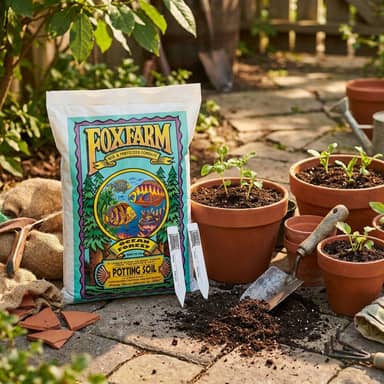
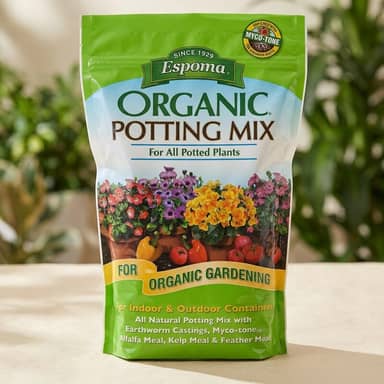
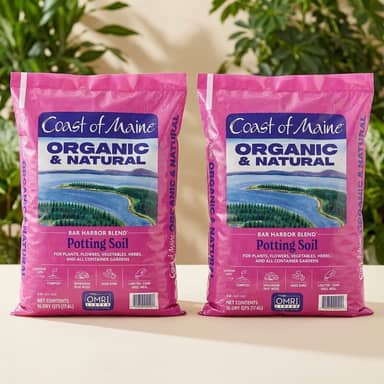
The bag of soil you choose matters more than almost any other container-gardening decision. Roots in a pot live entirely on what you give them, so the mix has to drain, hold moisture, and feed all at once. The most common and costly mistake is reaching for the wrong bag entirely: dense "garden soil" or "topsoil" in a container compacts, drowns roots, and stunts plants. This guide sorts out which mix to use where and names three organic options worth buying.
Potting mix vs garden soil vs raised-bed mix
These three are not interchangeable, and using the wrong one is the fastest way to disappoint yourself.
Potting mix (sometimes "potting soil") is a soilless blend, usually built on peat or coconut coir with perlite or bark for drainage. It is light, fluffy, and drains fast, which is exactly what roots in a pot need. Use it in any container, window box, or hanging basket.
Garden soil and topsoil are heavy, mineral-based products meant to be dug into the ground. In a container they compact into a dense, waterlogged brick. Never fill a pot with garden soil.
Raised-bed mix sits in between: a blend designed to fill the larger volume of a raised bed economically, often combining compost, topsoil-like material, and bark. It is too dense and cheap for small pots but right for filling beds. For a full bed you will often blend raised-bed mix with compost rather than buying bagged potting mix by the cubic foot.
What is the best organic potting soil?
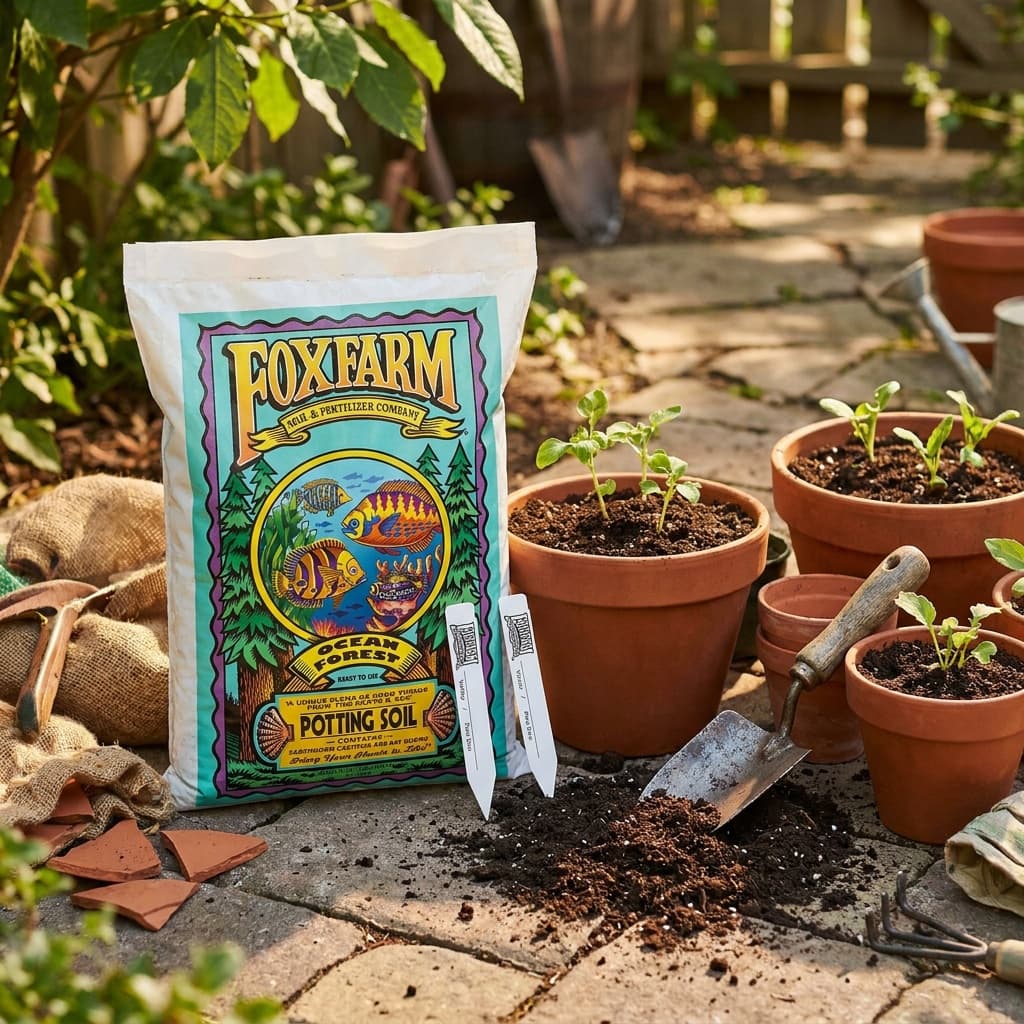
FoxFarm Ocean Forest is the best organic potting soil for most established container plants because it drains freely, holds moisture, and arrives with a rich nutrient blend.
Best overall
FoxFarm Ocean Forest Potting Soil
Best for: Container and raised-bed growers who want a rich, ready-to-plant mix.
Keep in mind: Can be too hot for tender seedlings without dilution
Amazon price as of the checked date, subject to change. The price on Amazon at checkout applies.
Full research
- Volume
- 1.5 cu ft
- Type
- Ready-to-use potting soil
- Key ingredients
- Aged forest products, sphagnum peat, earthworm castings, bat guano
- pH
- Adjusted to 6.3 to 6.8
A nutrient-dense, ready-to-use potting soil blended with earthworm castings, bat guano, and fish and crab meal. Its pH is pre-adjusted so nutrients stay available, making it a go-to for containers and transplants.
This catalog-wide research score is separate from this guide's use-case ranking. How we research
Strengths
- Rich, nutrient-dense blend that feeds early growth
- pH pre-adjusted to a plant-friendly range
- Drains well while holding moisture
Weaknesses
- Can be too hot for tender seedlings without dilution
- Premium price per bag
Sprout Score breakdown
Best for
Container and raised-bed growers who want a rich, ready-to-plant mix.
Owner rating snapshot
Amazon · 101 reviews · 4.7 stars
Ocean Forest is a ready-to-use blend of aged forest products, sphagnum peat, earthworm castings, bat guano, and fish and crab meal, with the pH pre-adjusted to roughly 6.3 to 6.8 so nutrients stay available to roots.
The one caution is that it is "hot," meaning rich enough that tender seedlings can be overwhelmed by the nutrient load. For mature transplants, vegetables, and flowers in containers and raised beds, it is excellent; for starting seeds, dilute it or use a gentler mix. It also carries a premium price per bag, which is the trade-off for the density.
Best value: Espoma Organic Potting Mix
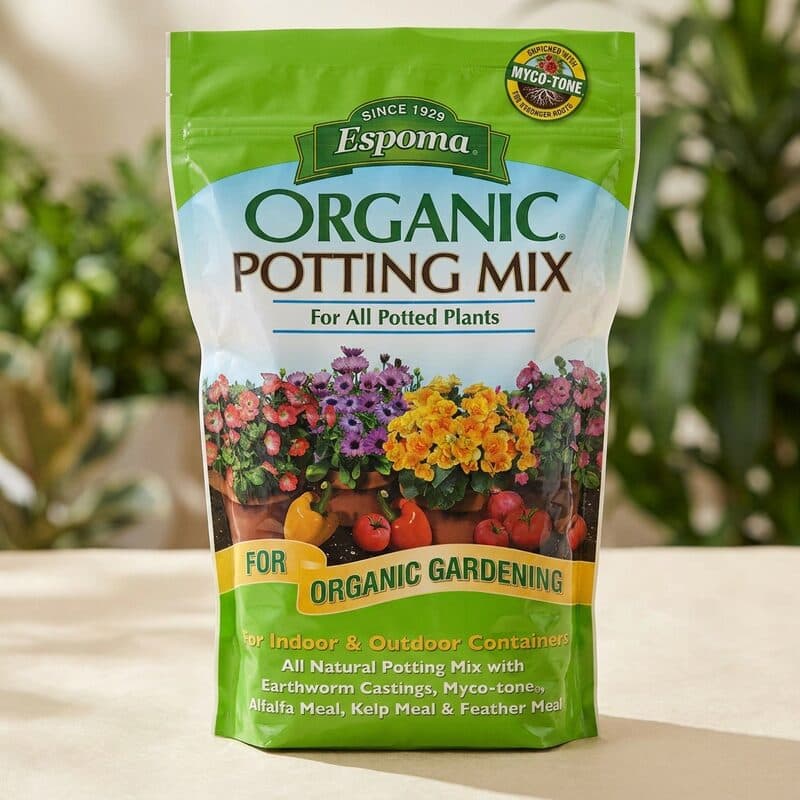
Best value
Espoma Organic Potting Mix
Best for: Gardeners who want an affordable, all-purpose certified-organic potting mix.
Keep in mind: Less nutrient-dense than premium blends
Amazon price as of the checked date, subject to change. The price on Amazon at checkout applies.
Full research
- Volume
- Available in 8 qt and 16 qt bags
- Type
- All-purpose organic potting mix
- Key ingredients
- Sphagnum peat moss, humus, perlite
- Additive
- Myco-tone mycorrhizae blend
An OMRI-listed organic potting mix enhanced with the brand's Myco-tone mycorrhizae blend to help roots take up water and nutrients. A solid all-purpose choice for indoor and container plants.
This catalog-wide research score is separate from this guide's use-case ranking. How we research
Strengths
- Certified organic and OMRI listed
- Myco-tone blend supports root establishment
- Affordable for a quality organic mix
Weaknesses
- Less nutrient-dense than premium blends
- Sold in smaller bag sizes
Sprout Score breakdown
Best for
Gardeners who want an affordable, all-purpose certified-organic potting mix.
Owner rating snapshot
Amazon · 438 reviews · 4.4 stars
If you want certified-organic quality without the premium price, the Espoma organic mix is the easy recommendation. It is OMRI listed, built on a sphagnum peat and humus base with perlite for drainage, and enhanced with the brand's Myco-tone mycorrhizae blend to help roots take up water and nutrients as they establish. It is a dependable all-purpose mix for indoor and outdoor containers.
It is less nutrient-dense than a premium blend like Ocean Forest, so you will likely supplement with fertilizer as the season goes on, and it tends to come in smaller bag sizes. For the price, it is a trustworthy, widely available organic choice.
Best for seedlings: Coast of Maine Bar Harbor
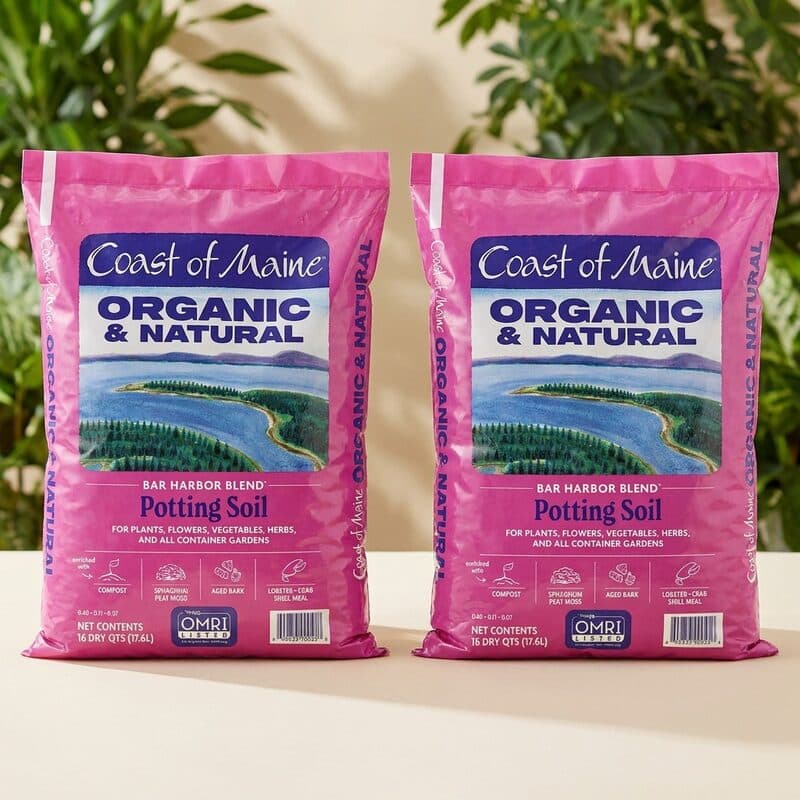
Best for seedlings
Coast of Maine Bar Harbor Blend Potting Soil
Best for: Organic gardeners who want a rich marine-compost-based mix for beds and pots.
Keep in mind: Premium price per bag
Amazon price as of the checked date, subject to change. The price on Amazon at checkout applies.
Full research
- Type
- All-purpose organic potting soil
- Key ingredients
- Sphagnum peat, aged bark, compost, worm castings
- Marine inputs
- Lobster and crab compost
- Certification
- OMRI listed for organic use
An OMRI-listed organic potting soil built on the brand's signature lobster and crab compost alongside peat, aged bark, and worm castings. A rich, well-structured mix for containers and beds.
This catalog-wide research score is separate from this guide's use-case ranking. How we research
Strengths
- Distinctive marine-compost inputs add nutrients
- Certified organic and well structured
- Versatile for containers and raised beds
Weaknesses
- Premium price per bag
- Regional availability can be limited
Sprout Score breakdown
Best for
Organic gardeners who want a rich marine-compost-based mix for beds and pots.
Owner rating snapshot
Amazon · 544 reviews · 4.8 stars
The Coast of Maine Bar Harbor Blend is our pick when you are starting seeds or growing tender transplants. It is an OMRI-listed organic mix built on the brand's signature lobster and crab compost alongside sphagnum peat, aged bark, compost, and worm castings, a rich but well-structured blend that holds moisture evenly for delicate young roots without the harsh nutrient load of a hotter mix. Northeast gardeners especially have a loyal following for it.
The trade-offs are a premium price and regional availability that can be spotty outside the Northeast. Where you can get it, it is a versatile mix that carries seedlings into containers and raised beds.
What makes a good organic potting mix
Drainage and structure. A good mix feels light and springy, not dense. Perlite, pumice, or bark create air pockets so roots breathe and excess water drains. If a mix packs into a heavy clod when wet, roots will suffocate.
Moisture retention. The flip side of drainage: the mix also has to hold enough water that you are not watering twice a day. Peat and coir do the holding; the art is in the balance, which the picks above get right.
Base ingredients. Most quality organic mixes start with sphagnum peat moss or coconut coir, plus aged bark or forest products and a drainage agent. From there, nutrient inputs (worm castings, composts, guano, fish and crab meal) and beneficial microbes or mycorrhizae set the premium mixes apart.
pH. Most vegetables and flowers want a slightly acidic to neutral pH around 6.0 to 6.8. A pre-adjusted mix (like Ocean Forest) saves you the guesswork.
Organic certification. OMRI listing means the inputs are approved for organic growing, which matters most for edibles. All three picks here are organic.
| Product | Price | Best for | Buy |
|---|---|---|---|
| FoxFarm Ocean Forest Potting Soil#1 · BEST OVERALL | Typical price range · Under $25 | Container and raised-bed growers who want a rich, ready-to-plant mix. | Shop Amazon |
| Espoma Organic Potting Mix#2 · BEST VALUE | Typical price range · Under $25 | Gardeners who want an affordable, all-purpose certified-organic potting mix. | Shop Amazon |
| Coast of Maine Bar Harbor Blend Potting Soil#3 · BEST FOR SEEDLINGS | Typical price range · Under $25 | Organic gardeners who want a rich marine-compost-based mix for beds and pots. | Shop Amazon |
Can I use garden soil in containers?
No. Garden soil and topsoil are heavy, mineral-based products that compact into a dense, waterlogged mass inside a pot, suffocating roots. Containers need a light, fast-draining potting mix built on peat or coir with perlite or bark. Save garden soil for amending in-ground beds.
What is the difference between potting soil and potting mix?
The terms are used almost interchangeably on bags today, and both refer to a light, soilless blend for containers. Historically "potting mix" implied a fully soilless peat-or-coir-based product, while "potting soil" sometimes contained field soil. Read the ingredients rather than the name: you want a peat or coir base with a drainage agent, not heavy topsoil.
Is FoxFarm Ocean Forest good for seedlings?
It is excellent for transplants and established plants, but it is nutrient-dense ("hot") enough that it can overwhelm tender seedlings. For starting seeds, use a gentler seed-starting or all-purpose mix, or dilute Ocean Forest, then move seedlings into it once they have a few true leaves.
How much potting soil do I need for a container?
Estimate by volume: a 1.5 cubic foot bag fills roughly a 20 to 25 gallon container, give or take. For a quick check, multiply the pot's volume and convert; most bags list their cubic-foot volume. It is better to slightly overbuy than to top off a pot with a different, denser product.
Does organic potting mix need fertilizer?
Most organic mixes include a starting nutrient charge that feeds plants for a few weeks to a couple of months. After that, especially in containers where nutrients leach away with watering, you will need to feed. A gentle organic fertilizer keeps container plants productive through the season.
Get the mix right and most of container gardening takes care of itself. Use a light, fast-draining organic potting mix in pots, save the heavy stuff for the ground, and step down to a gentler blend for seeds. When you are ready to expand beyond pots, our guide to containers and grow bags covers the vessels that hold all this good soil.