Our recommendations
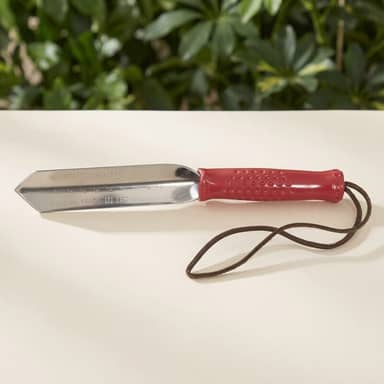


The garden trowel is the most-used tool in the shed, and also the one most people buy badly. The stamped-metal trowel with the riveted plastic handle from the big-box rack will bend at the neck the first time you hit a root, and the handle will work loose by midsummer. Spend a little more on the right design once and you will likely never buy another. This guide focuses on the two things that actually decide whether a trowel survives: how it is built where the blade meets the handle, and the steel it is made from.
Why most trowels fail at the neck
A trowel breaks in one of two places: the neck (where the blade narrows into the shaft) and the handle joint (where blade meets handle). Cheap trowels are stamped from thin sheet metal and bend at the neck under any real prying load, or they rivet a separate blade to a plastic handle that wiggles loose.
The designs that last solve this in one of two ways. A one-piece tool, forged or cast from a single billet of metal with no handle joint to fail, simply has nothing to come apart. Alternatively, a heavy-gauge blade with a thick, fully-seated tang running deep into the handle resists the bending and prying that destroys lighter tools. Both approaches show up in our picks. The material matters too: stainless steel resists rust and slides through soil with less drag, while powder-coated carbon steel is tough but needs drying to avoid rust.
Best overall: Wilcox All-Pro 10 in
Editor's choice
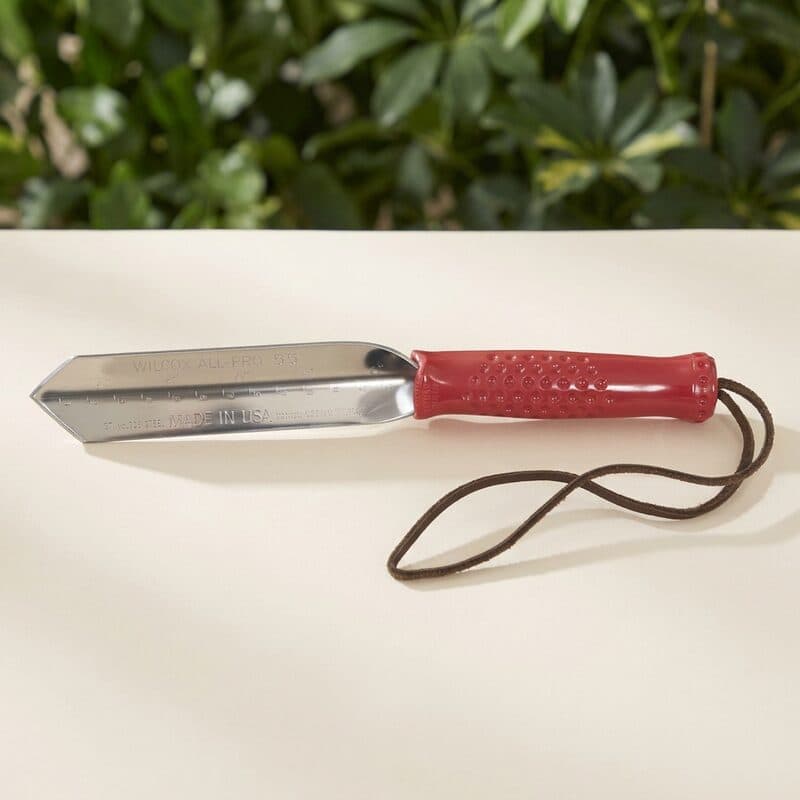
Wilcox All-Pro 10 in Stainless Steel Garden Trowel
Best for: Gardeners who want a trowel that survives heavy digging in tough soil for years.
Keep in mind: Bare metal handle is less cushioned than molded grips
Amazon price as of the checked date, subject to change. The price on Amazon at checkout applies.
Full research
- Length
- 10 in
- Material
- One-piece stainless steel
- Markings
- Etched depth measurements
- Construction
- Single piece, no welded joint
The Wilcox All-Pro is a single piece of stainless steel with depth markings, a trowel with a reputation for digging through tough soil without bending.
This catalog-wide research score is separate from this guide's use-case ranking. How we research
Strengths
- One-piece stainless build resists bending and rust
- Pointed tip cuts through compacted and rocky soil
- Etched depth markings help with consistent planting
Weaknesses
- Bare metal handle is less cushioned than molded grips
- Priced above stamped supermarket trowels
Sprout Score breakdown
Best for
Gardeners who want a trowel that survives heavy digging in tough soil for years.
Owner rating snapshot
Amazon · 18 reviews · 4.9 stars
The Wilcox All-Pro 10 in Stainless Steel Trowel is the trowel we point most gardeners to, because it removes the failure points entirely. It is a single piece of heavy 20-gauge stainless steel, blade and handle together, with nothing to bend at the neck or loosen at the joint. The sharp pointed tip cuts through compacted soil and slices roots, and the stamped depth markings let you use it as a measuring scoop when setting bulbs or seedlings.
The one-piece metal handle transmits more force to your hand than a cushioned grip, so some gardeners prefer padding for long digging sessions. Many owners report using the same Wilcox for years or even decades. For most gardeners, it should be the last trowel they need to buy.
Best value: Fiskars Ergo

Best value
Fiskars Ergo Trowel
Best for: Gardeners who prioritize hand comfort for routine planting in worked beds.
Keep in mind: Aluminum is softer than stainless when prying rocks
Amazon price as of the checked date, subject to change. The price on Amazon at checkout applies.
Full research
- Blade
- Cast aluminum
- Handle
- Ergonomic softgrip
- Use
- Digging and transplanting
- Finish
- Rust-resistant
Fiskars' Ergo trowel pairs a rust-proof cast-aluminum head with a cushioned grip, a comfortable everyday tool for planting and transplanting.
This catalog-wide research score is separate from this guide's use-case ranking. How we research
Strengths
- Softgrip handle is comfortable over long sessions
- Cast-aluminum head will not rust
- Inexpensive and widely available
Weaknesses
- Aluminum is softer than stainless when prying rocks
- Not a one-piece design, so the handle is a wear point
Sprout Score breakdown
Best for
Gardeners who prioritize hand comfort for routine planting in worked beds.
The Fiskars Ergo Trowel is the smart everyday pick when you want comfort and reliability without spending much. The cast-aluminum head resists rust and will not bend like stamped sheet metal, and the contoured, soft-grip handle is comfortable for extended planting. It is light, it is widely available, and it carries Fiskars's long warranty.
It is not the tool for prying boulders out of clay, and the aluminum head, while sturdy, is not the buy-it-for-life proposition the one-piece Wilcox is. But for the gardener who mostly plants annuals, sets out seedlings, and works reasonable soil, it is comfortable, affordable, and dependable.
Best traditional build: Red Pig Gardening Trowel

Best traditional build
Red Pig Gardening Trowel
Best for: Gardeners who want a traditional hardwood-handled trowel made for years of everyday planting.
Keep in mind: Costs considerably more than molded aluminum trowels
Amazon price as of the checked date, subject to change. The price on Amazon at checkout applies.
Full research
- Blade
- 6.5 x 2.75 in
- Overall length
- 14.5 in
- Handle
- Hardwood
- Build
- Steel blade with stainless bolsters
The Red Pig Gardening Trowel pairs a broad steel blade with stainless bolsters and a hardwood handle in a current, directly purchasable traditional garden tool.
This catalog-wide research score is separate from this guide's use-case ranking. How we research
Strengths
- Broad steel blade moves soil efficiently
- Hardwood handle and metal bolsters give it a traditional, substantial feel
- Direct manufacturer availability makes the exact model easy to identify
Weaknesses
- Costs considerably more than molded aluminum trowels
- Wood handles need drying and occasional care
Sprout Score breakdown
Best for
Gardeners who want a traditional hardwood-handled trowel made for years of everyday planting.
The Red Pig Gardening Trowel is the pick for gardeners who prefer traditional materials to a molded handle. Its broad 6.5-inch steel blade moves soil efficiently, while stainless bolsters and a hardwood handle give the tool a substantial, repairable construction. Garrett Wade sells the exact model directly, so there is no ambiguity about which version you are buying.
It costs considerably more than a basic cast-aluminum trowel, and the wood handle asks for drying and occasional care. The payoff is a well-proportioned everyday planting tool with a tactile, old-school build rather than another disposable plastic handle.
How to choose a garden trowel
Construction is everything. Look for one-piece tools or a heavy blade with a deep, fully-seated tang. Avoid thin stamped blades riveted to plastic handles, which is where cheap trowels fail.
Blade material. Stainless steel resists rust and glides through soil with the least drag, and it is the low-maintenance choice. Powder-coated carbon steel is tough but needs to be dried after use. Cast aluminum will not rust and stays light.
Handle comfort. A cushioned, contoured grip is easier on the hand over long sessions, while a bare metal handle is more durable but transmits more shock. Match this to how long your typical digging session runs.
Blade shape. A narrow, pointed blade excels at digging deep planting holes and slicing roots. A wider, more dished blade scoops and moves more soil. A pointed tip is the more versatile starting point.
Match it to your soil. Loamy beds forgive almost any decent trowel. Rocky or clay soil demands a thick blade you can pry with, so do not under-buy if your ground is hard.
| Product | Price | Best for | Buy |
|---|---|---|---|
| Wilcox All-Pro 10 in Stainless Steel Garden Trowel#1 · EDITOR'S CHOICE | Typical price range · Under $25 | Gardeners who want a trowel that survives heavy digging in tough soil for years. | Shop Amazon |
| Fiskars Ergo Trowel#2 · BEST VALUE | Typical price range · Under $25 | Gardeners who prioritize hand comfort for routine planting in worked beds. | Shop Amazon |
| Red Pig Gardening Trowel#3 · BEST TRADITIONAL BUILD | Typical price range · $50-$75 | Gardeners who want a traditional hardwood-handled trowel made for years of everyday planting. | Search Amazon |
What is the most durable garden trowel?
A one-piece trowel forged or stamped from a single piece of stainless steel is the most durable, because it has no blade-to-handle joint to loosen and no thin neck to bend. The Wilcox All-Pro is a good example. A traditionally built steel trowel with a well-seated hardwood handle, such as the Red Pig, trades that one-piece simplicity for a more comfortable, repairable handle.
Stainless steel or carbon steel trowel: which is better?
Stainless steel resists rust, needs no maintenance, and slides through soil with less drag, which makes it the easier choice for most gardeners. Carbon steel can be tougher and hold an edge well, but it will rust if not dried and oiled after use. If you do not want to think about maintenance, choose stainless.
What size trowel do I need?
A blade around 5 to 6 inches long handles most planting, with the overall tool around 10 to 12 inches. A narrow pointed blade is more versatile for digging holes and slicing roots, while a wider blade moves more soil. If you only buy one, a medium pointed stainless trowel covers the widest range of jobs.
How do I keep a garden trowel from rusting?
Choose stainless or cast aluminum to avoid rust entirely. For carbon steel, rinse off soil, dry the blade after each use, and wipe it with a light oil before storing. Storing any trowel dry rather than leaving it in a wet bucket or out in the weather is the single biggest factor in how long it lasts.
A good trowel is a tool you only have to buy once if you choose construction over price. Pick the build that matches your soil, mark the handle so you stop losing it, and it will be in your hand every season. For more on starting a productive bed, see our guide to raised bed gardening for beginners.