Our recommendations
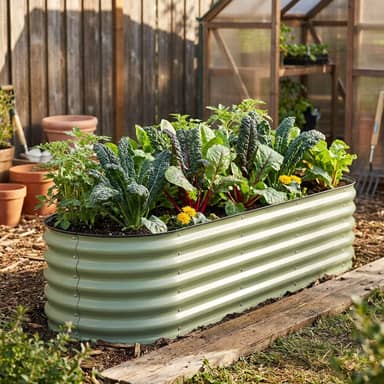
Vego Garden 17 in Tall (9-in-1) Modular Metal Raised Bed
Why this pick →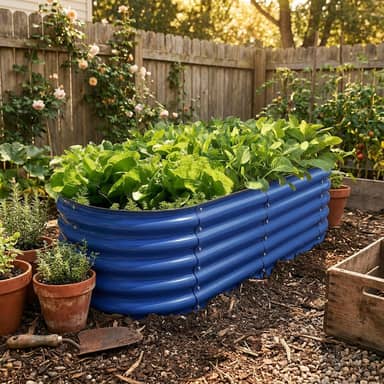
Olle Gardens 17 in Tall Galvanized Metal Raised Bed
Why this pick →
Birdies 8-in-1 Tall Metal Raised Garden Bed
Why this pick →
Greenes Fence Cedar Raised Garden Bed
Why this pick →The cedar-versus-metal question comes up the moment you start pricing raised beds, and the answer hinges on four things: how long the bed survives, how it treats the soil temperature, what it costs over its lifespan, and how it looks in your yard. Both materials grow vegetables perfectly well. The difference is in the years of service you get and the experience along the way.
Before you commit to a material, it helps to know what you plan to grow and when. A bed sized for shallow greens behaves differently from one built for tomatoes, and your fill-and-plant timing should line up with your local frost window. Run your ZIP through the planting calendar so the bed is full and warm by the time your crops want to go in.
The case for metal
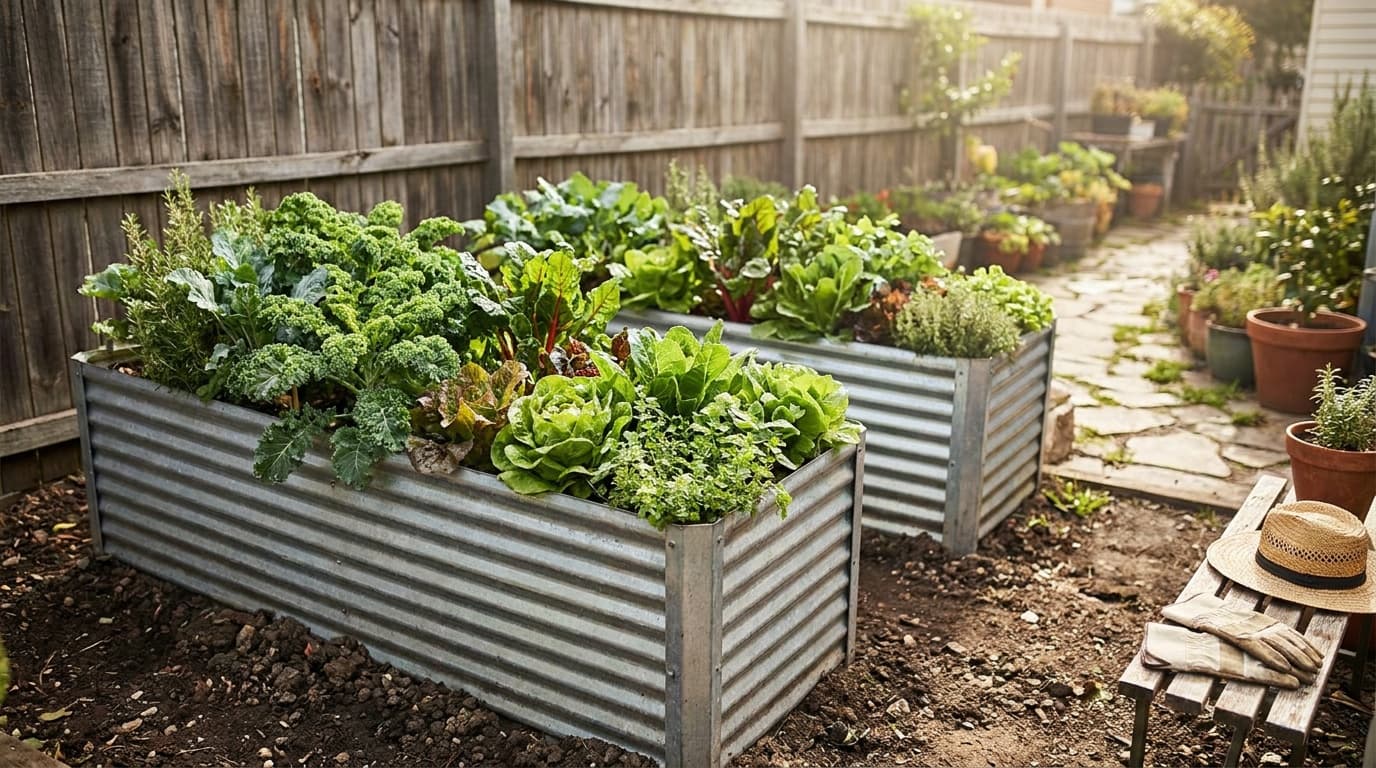
Modern metal beds are galvanized or Aluzinc-coated steel, and they dominate the category for good reasons: they assemble in under an hour, they come in modular panels that reconfigure into rectangles and U-shapes, and a quality bed holds its finish for many seasons.
Vego Garden 17in raised bed
Best metal overall
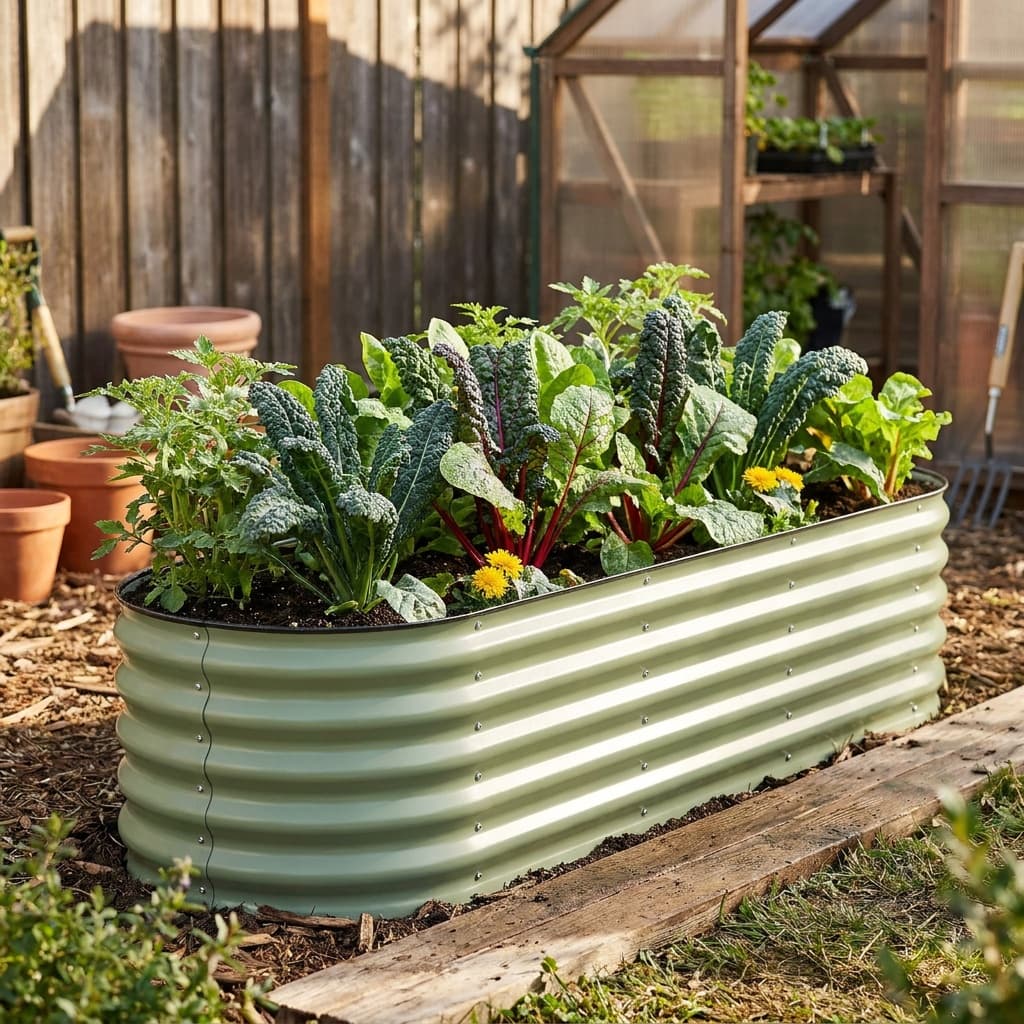
Vego Garden 17 in Tall (9-in-1) Modular Metal Raised Bed
Best for: Home gardeners who want a long-lasting, good-looking bed that can be reshaped to fit the yard.
Keep in mind: Costs more than basic galvanized or wood beds
Amazon price as of the checked date, subject to change. The price on Amazon at checkout applies.
Full research
- Material
- Aluzinc-coated steel
- Height
- 17 in
- Configuration
- 9-in-1 modular panels
- Gauge
- 0.8 mm Aluzinc steel
Vego's flagship modular metal bed is the category benchmark for home gardeners. The interlocking panels let one kit become several bed shapes, and the Aluzinc coating resists rust far longer than bare galvanized steel.
This catalog-wide research score is separate from this guide's use-case ranking. How we research
Strengths
- Reconfigurable into multiple shapes from one kit
- Aluzinc coating resists rust and corrosion
- Tool-light assembly with rounded safety edges
Weaknesses
- Costs more than basic galvanized or wood beds
- Metal heats up in full sun in hot climates
Sprout Score breakdown
Best for
Home gardeners who want a long-lasting, good-looking bed that can be reshaped to fit the yard.
Owner rating snapshot
Amazon · 16 reviews · 4.8 stars
The Vego uses Aluzinc-coated steel, a zinc-aluminum-magnesium alloy that resists rust better than plain galvanized, especially at the soil line where moisture sits. The 17-inch height is deep enough for carrots and tomato roots while staying affordable to fill, and the modular panels solve real layout problems. It is the best all-around metal bed for most gardeners. You can check current pricing on the Vego 17in bed before deciding.
Olle 17in galvanized raised bed
Best metal value
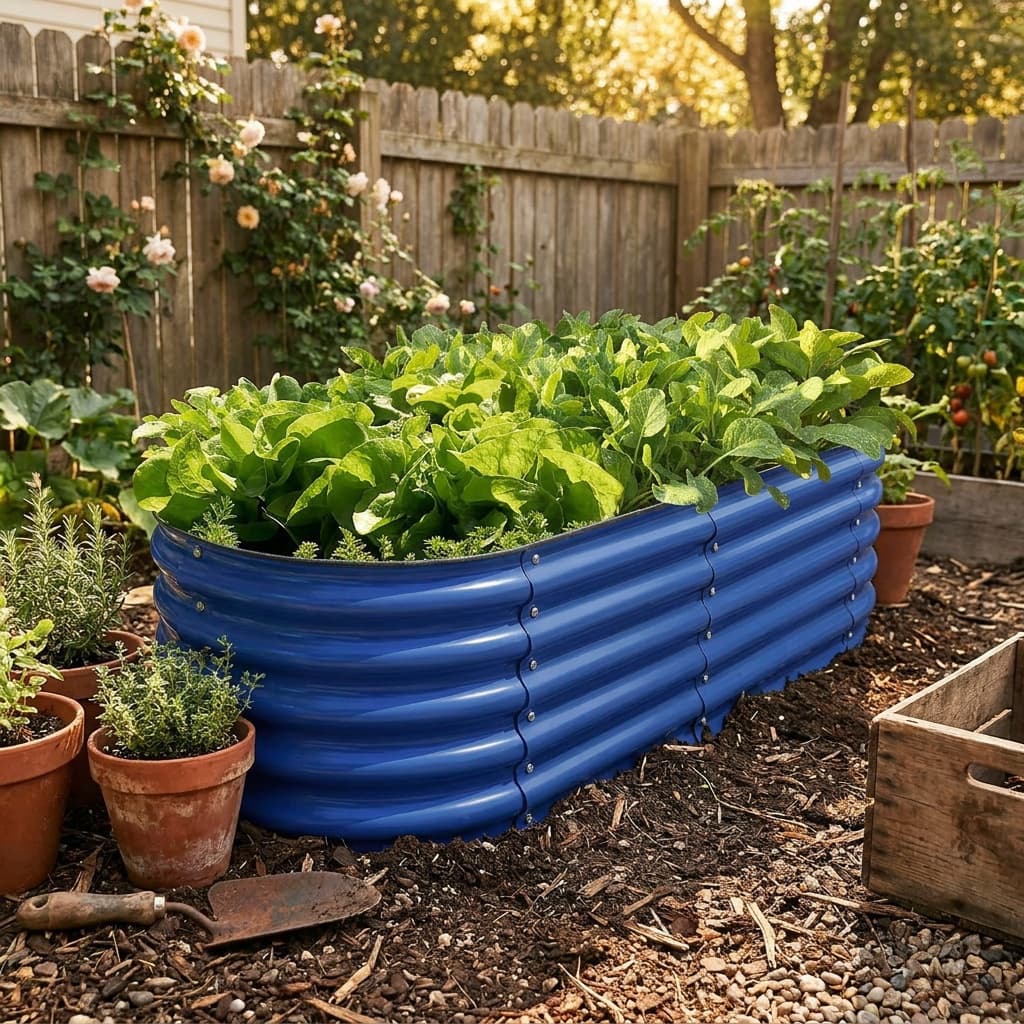
Olle Gardens 17 in Tall Galvanized Metal Raised Bed
Best for: Budget-minded gardeners who want tall metal beds without paying the premium-brand markup.
Keep in mind: Coating is thinner than Aluzinc-grade beds
Amazon price as of the checked date, subject to change. The price on Amazon at checkout applies.
Full research
- Material
- Galvanized steel
- Height
- 17 in
- Corners
- Reinforced bracket corners
- Coating
- Zinc-aluminum-magnesium
Olle Gardens positions itself as the value challenger to Vego and Birdies, offering similar tall galvanized beds at a lower price. Build quality is good, though the protective coating is generally thinner than the premium Aluzinc options.
This catalog-wide research score is separate from this guide's use-case ranking. How we research
Strengths
- Lower price than premium metal competitors
- Reinforced corners feel sturdy once assembled
- Available in tall and waist-high heights
Weaknesses
- Coating is thinner than Aluzinc-grade beds
- Color and size selection narrower than Vego
Sprout Score breakdown
Best for
Budget-minded gardeners who want tall metal beds without paying the premium-brand markup.
Owner rating snapshot
Amazon · 653 reviews · 4.6 stars
The Olle targets the same 17-inch height and modular footprint at a lower price. The coating is conventional galvanized rather than the higher-end Aluzinc alloy, so long-term corrosion resistance is a small step behind, but for most gardeners in temperate climates that gap matters less than the savings.
Birdies 8-in-1 metal raised bed

Longest-lasting
Birdies 8-in-1 Tall Metal Raised Garden Bed
Best for: Gardeners who want a buy-once metal bed with a long track record and will pay for it.
Keep in mind: One of the most expensive beds in the category
Amazon price as of the checked date, subject to change. The price on Amazon at checkout applies.
Full research
- Material
- Aluzinc steel
- Height
- Tall (around 30 in)
- Configuration
- 8-in-1 modular panels
- Origin
- Australian-designed
Birdies is the original modular Aluzinc raised bed that defined the category, with a reputation for lasting well over a decade. It commands a premium, but multi-season owners consistently report no rust-through.
This catalog-wide research score is separate from this guide's use-case ranking. How we research
Strengths
- Proven decade-plus longevity from long-term owners
- Thick Aluzinc steel resists corrosion
- Configurable into several footprint shapes
Weaknesses
- One of the most expensive beds in the category
- Taller height needs a lot of fill soil
Sprout Score breakdown
Best for
Gardeners who want a buy-once metal bed with a long track record and will pay for it.
Birdies is the Australian brand that arguably started the modern metal-bed trend, and owner reviews consistently mention beds holding their shape and finish after many seasons. The 8-in-1 panel system reconfigures into eight shapes. It costs more than the Vego or Olle, and that premium buys durability and configurability.
The case for cedar
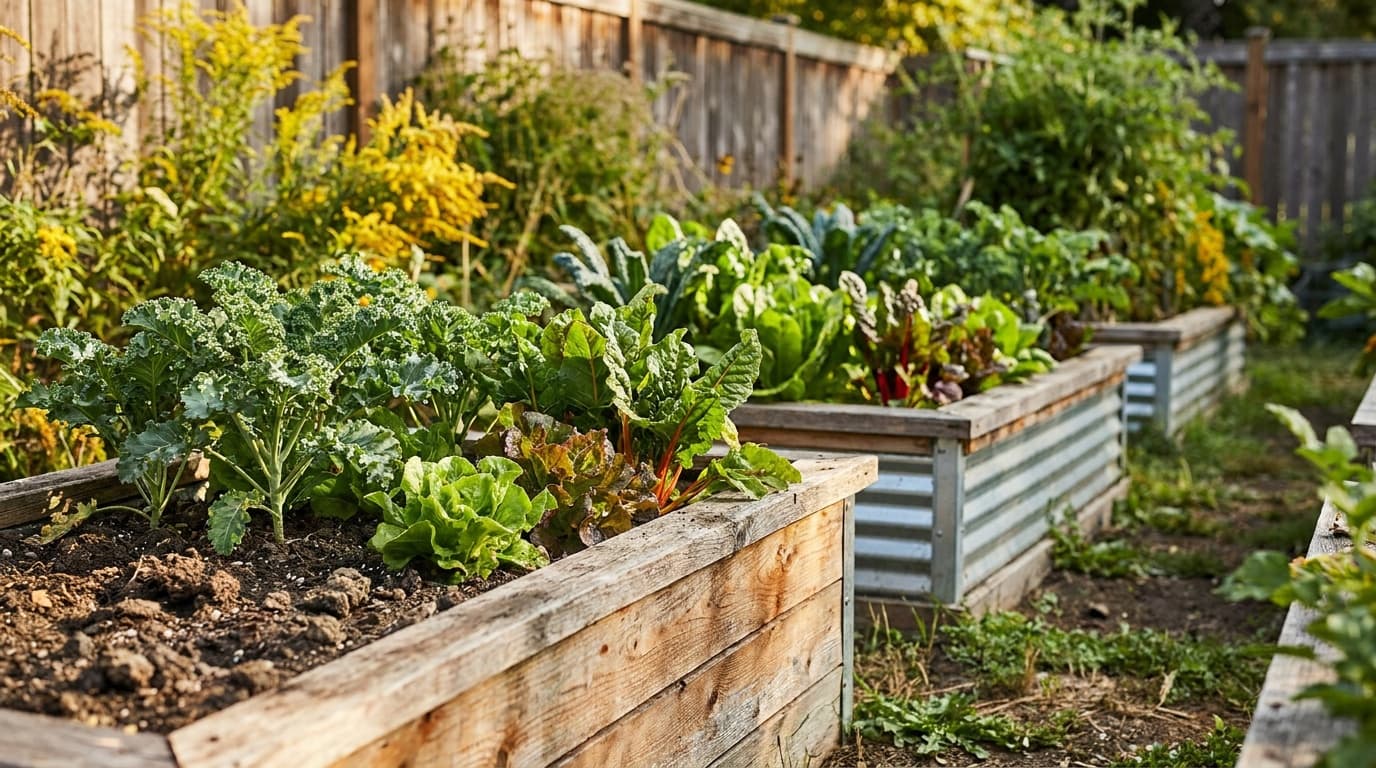
Cedar is the right wood for a raised bed because it contains natural oils that resist rot and insects, so it lasts far longer than pine or fir without chemical treatment. That matters when you are growing food, because pressure-treated lumber is not something you want against an edible root zone.
Greenes cedar raised bed

Best cedar
Greenes Fence Cedar Raised Garden Bed
Best for: Gardeners who want a natural, untreated wood bed and accept periodic replacement.
Keep in mind: Wood breaks down faster than metal over years
Amazon price as of the checked date, subject to change. The price on Amazon at checkout applies.
Full research
- Material
- Untreated cedar
- Assembly
- Dovetail interlocking boards
- Expandable
- Stackable and expandable
- Sourcing
- North American cedar
Greenes Fence makes the best-known cedar raised bed, using a no-hardware dovetail system that lets you stack tiers or expand the footprint. Untreated cedar is naturally rot-resistant but will gray and eventually break down outdoors.
This catalog-wide research score is separate from this guide's use-case ranking. How we research
Strengths
- Natural cedar look with no chemical treatment
- Dovetail boards assemble without tools
- Stackable and expandable design
Weaknesses
- Wood breaks down faster than metal over years
- Boards can warp or split in harsh climates
Sprout Score breakdown
Best for
Gardeners who want a natural, untreated wood bed and accept periodic replacement.
The Greenes kit uses a slot-together dovetail design that assembles without tools and can be stacked for extra height. Cedar will silver and weather over time, and it will not last as long as a quality metal bed, but it stays cooler in direct sun and many gardeners simply prefer the natural look. It is the value entry point into cedar.
Should you choose cedar or metal raised beds?
Choose metal for the longest service life and lowest upkeep. Choose cedar when a cooler bed edge and the look of natural wood matter more than maximum lifespan. Four factors settle the choice.
Longevity. Quality metal beds last the longest. Aluzinc steel is rated for a decade-plus, galvanized a bit less, and both outlast untreated cedar, which softens and breaks down over years. If buy-it-once durability is your priority, metal wins.
Soil heat. Cedar runs cooler than metal in direct sun. In temperate climates the difference is negligible because soil mass buffers temperature, but in very hot regions the edges of a metal bed can warm the root zone, so cedar (or heavy mulching on metal) has an edge.
Cost over time. Metal usually costs more upfront but less per year of service because it does not rot out. Cedar is reasonable for wood but pricier per year than a metal bed that lasts twice as long. Budget galvanized kits can undercut cedar on day one too.
Looks and feel. This is personal. Cedar reads warm and traditional and ages to a soft gray; metal reads clean and modern. Neither grows better vegetables, so trust your eye.
For depth, match the bed to your crops either way. Greens and herbs are happy in 8 to 11 inches, most vegetables including tomatoes and peppers want at least 12 inches, and root crops like carrots do best with 14 inches or more. A 17-inch bed covers nearly everything, which is why that height dominates the metal options here.
| Product | Price | Best for | Buy |
|---|---|---|---|
| Vego Garden 17 in Tall (9-in-1) Modular Metal Raised Bed#1 · BEST METAL OVERALL | Typical price range · $100-$150 | Home gardeners who want a long-lasting, good-looking bed that can be reshaped to fit the yard. | Shop Amazon |
| Olle Gardens 17 in Tall Galvanized Metal Raised Bed#2 · BEST METAL VALUE | Typical price range · $100-$150 | Budget-minded gardeners who want tall metal beds without paying the premium-brand markup. | Shop Amazon |
| Birdies 8-in-1 Tall Metal Raised Garden Bed#3 · LONGEST-LASTING | Typical price range · $150-$250 | Gardeners who want a buy-once metal bed with a long track record and will pay for it. | Search Amazon |
| Greenes Fence Cedar Raised Garden Bed#4 · BEST CEDAR | Typical price range · $50-$100 | Gardeners who want a natural, untreated wood bed and accept periodic replacement. | Shop Amazon |
Frequently asked questions
Do cedar or metal raised beds last longer?
Quality metal beds last longer. Aluzinc-coated steel is rated for a decade or more, and galvanized steel is close behind. Untreated cedar is naturally rot-resistant but still softens, grays, and breaks down over years, faster where it stays wet. For longevity per dollar, metal is the better value over time.
Do metal raised garden beds get too hot for plants?
In temperate climates, no. The large mass of soil inside the bed buffers temperature swings, so the root zone stays stable. In very hot, sunny regions the soil right at the metal edges can warm up, but plants a few inches in are unaffected. Mulch heavily and water consistently if you garden in extreme heat. Cedar runs slightly cooler if heat is a real concern.
Is cedar safe for growing vegetables?
Yes. Untreated cedar is one of the safest bed materials because it resists rot through natural oils rather than chemical treatment. Avoid pressure-treated lumber for food crops. Galvanized and Aluzinc steel are also safe; the zinc coating is stable in soil and zinc is a plant micronutrient.
Is metal or cedar cheaper for a raised bed?
Budget galvanized metal kits and cedar kits land in a similar price range upfront. Over time, metal is usually cheaper per year because it does not rot out, while cedar needs replacing sooner. Premium metal beds cost more at purchase but spread that cost over many more seasons.
Our recommendation
Choose metal if you want the longest service life, fast assembly, and modular shapes: the Vego is the best all-around pick, the Olle saves money, and the Birdies is the buy-it-once option. Choose cedar, like the Greenes kit, if you prefer a traditional look and a cooler root zone in a hot climate and you accept replacing it sooner. Whatever material you pick, get the depth right for your crops and time your fill so the bed is ready when your planting calendar says to plant.