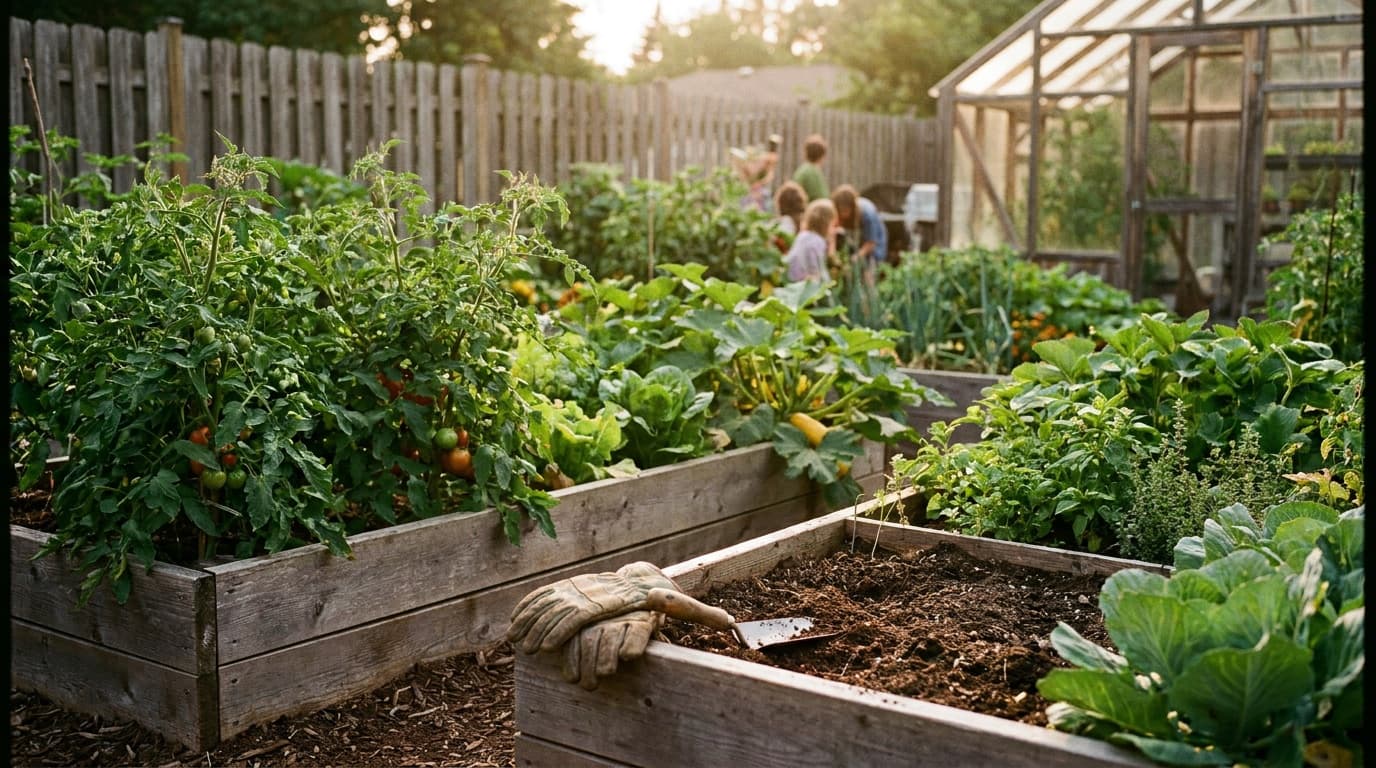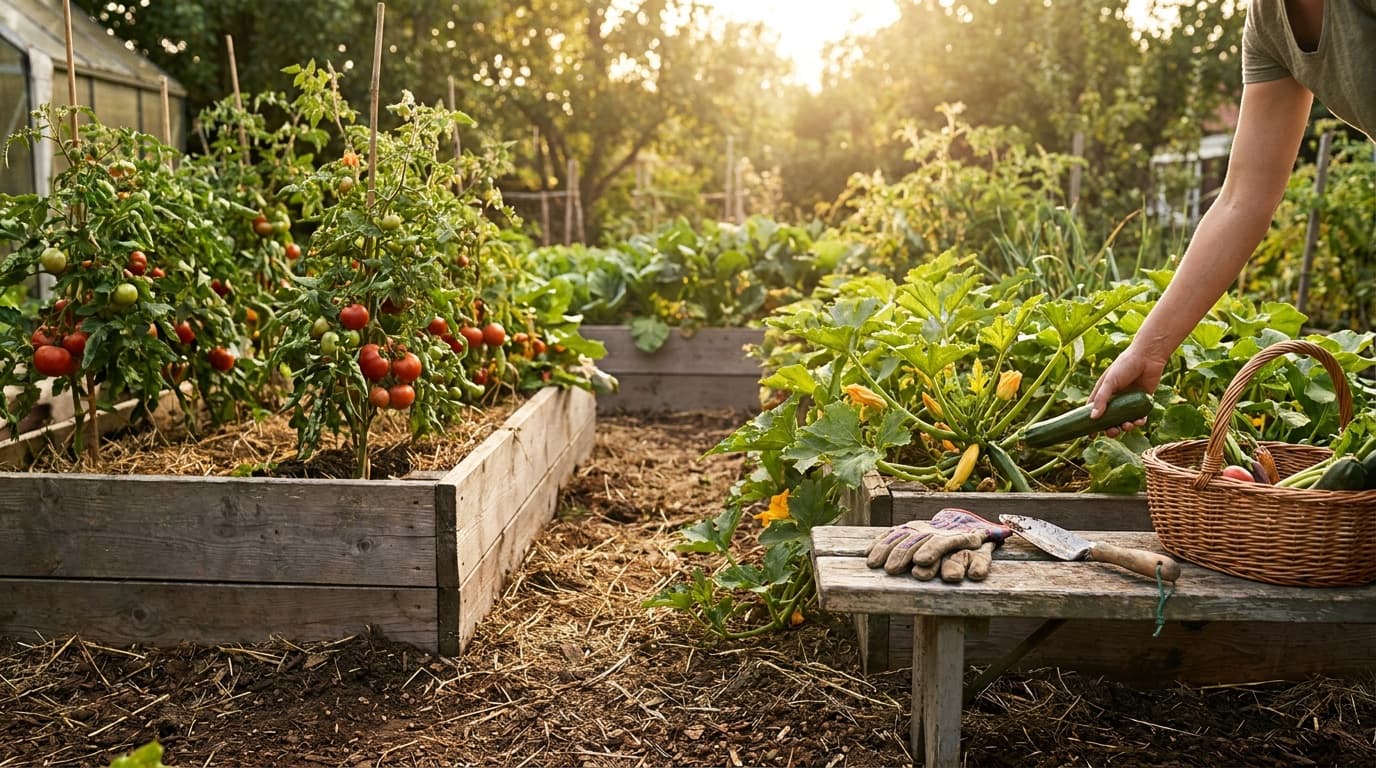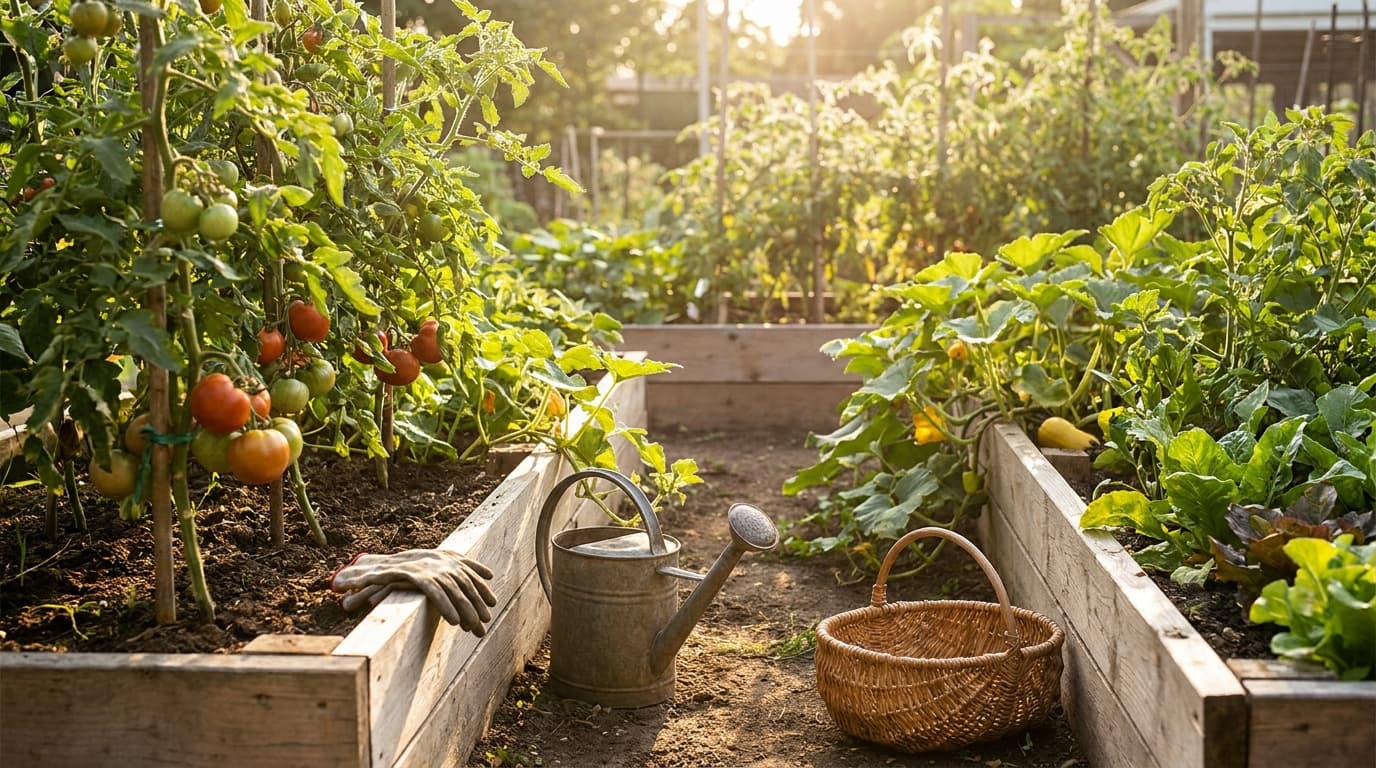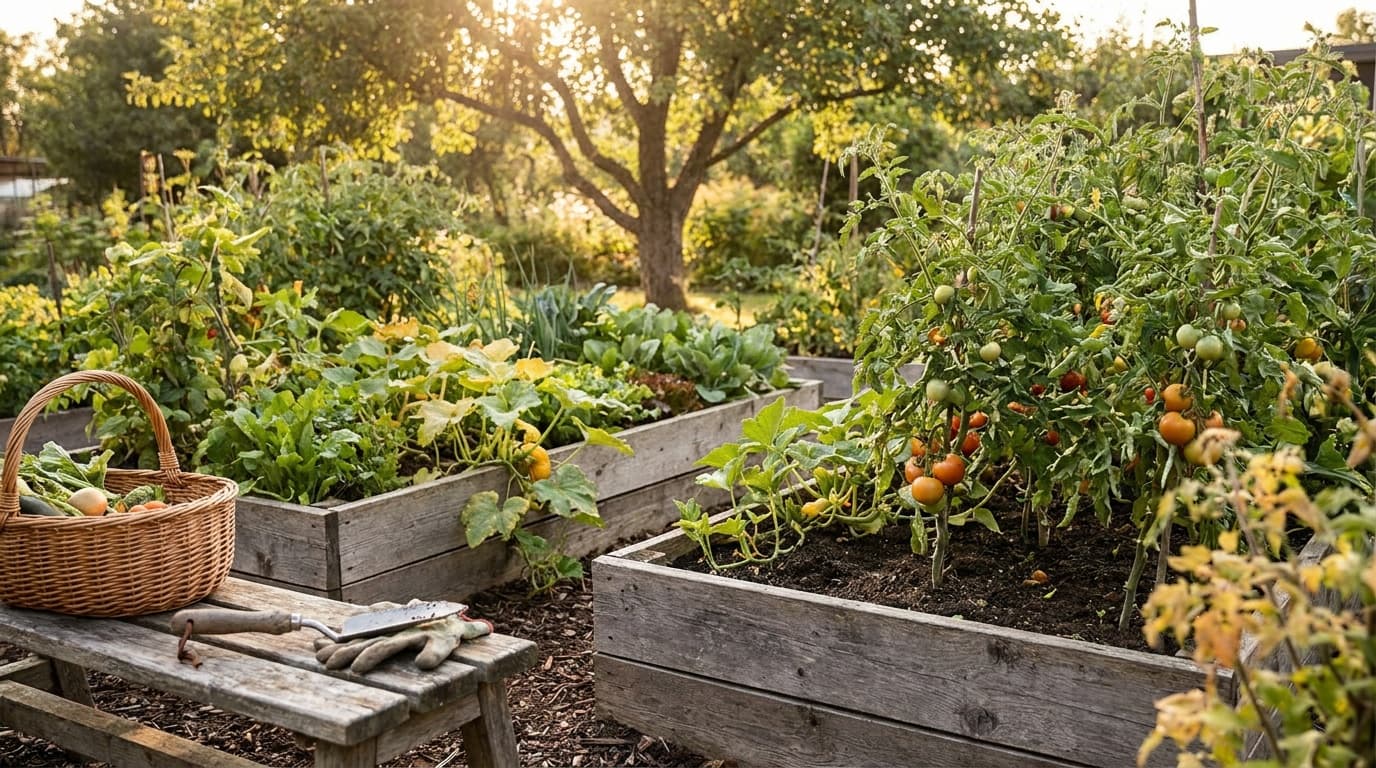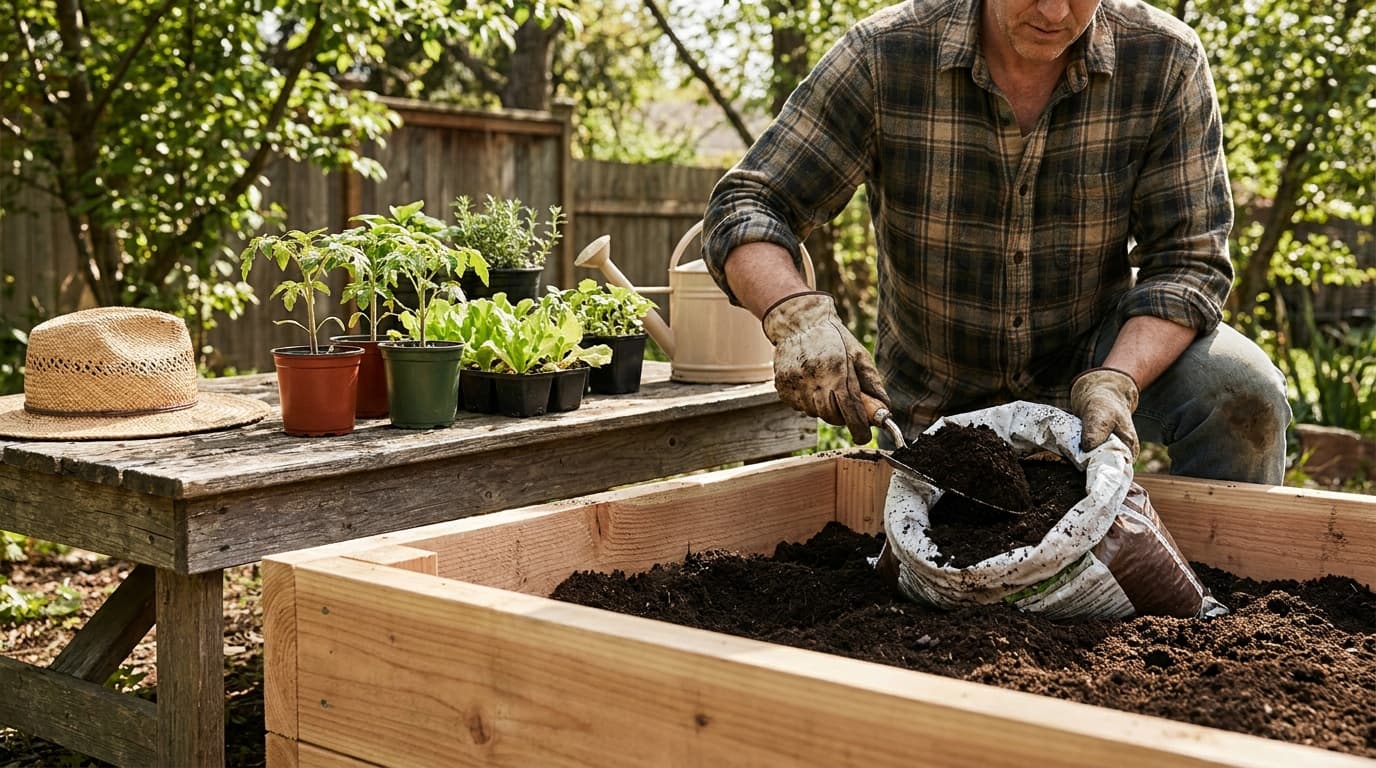
If you are new to growing food, a raised bed is the friendliest place to start. You skip the biggest source of beginner frustration, bad native soil, by filling the bed with exactly the loose, rich, well-draining mix vegetables want. Beds warm up earlier in spring, drain better, throw off fewer weeds, and save your back. They also draw a clear boundary, which makes planning and watering simpler than an open plot.
Why raised beds work
The core advantage is soil control. In the ground you inherit whatever you have, heavy clay, compacted fill, rocks, the wrong pH. In a raised bed you decide. A loose, organic-rich mix lets roots run, drains after rain so plants never sit waterlogged, and is easy to amend year to year. Because the soil is never walked on, it stays fluffy and uncompacted, which is exactly what roots and soil life want.
The practical wins stack up:
- Better drainage keeps roots from drowning in wet spells.
- Earlier warming in spring means you can plant sooner.
- Fewer weeds, because you start with clean mix and a defined edge.
- Less bending, especially with taller beds.
- Higher yields in less space, since rich soil supports closer planting.
Choosing and siting your bed
Two decisions shape everything: where the bed goes and what it is made of.
Set it up right
Pick full sun
Keep it reachable
Go deep enough
Choose a durable material
Level the ground
A solid first bed
For a first bed, the Vego Garden 17 inch provides enough depth for most crops, does not rot, and can be configured for different spaces. Its metal panels last longer than untreated wood.
Some links on this page are affiliate links. As an Amazon Associate I earn from qualifying purchases.
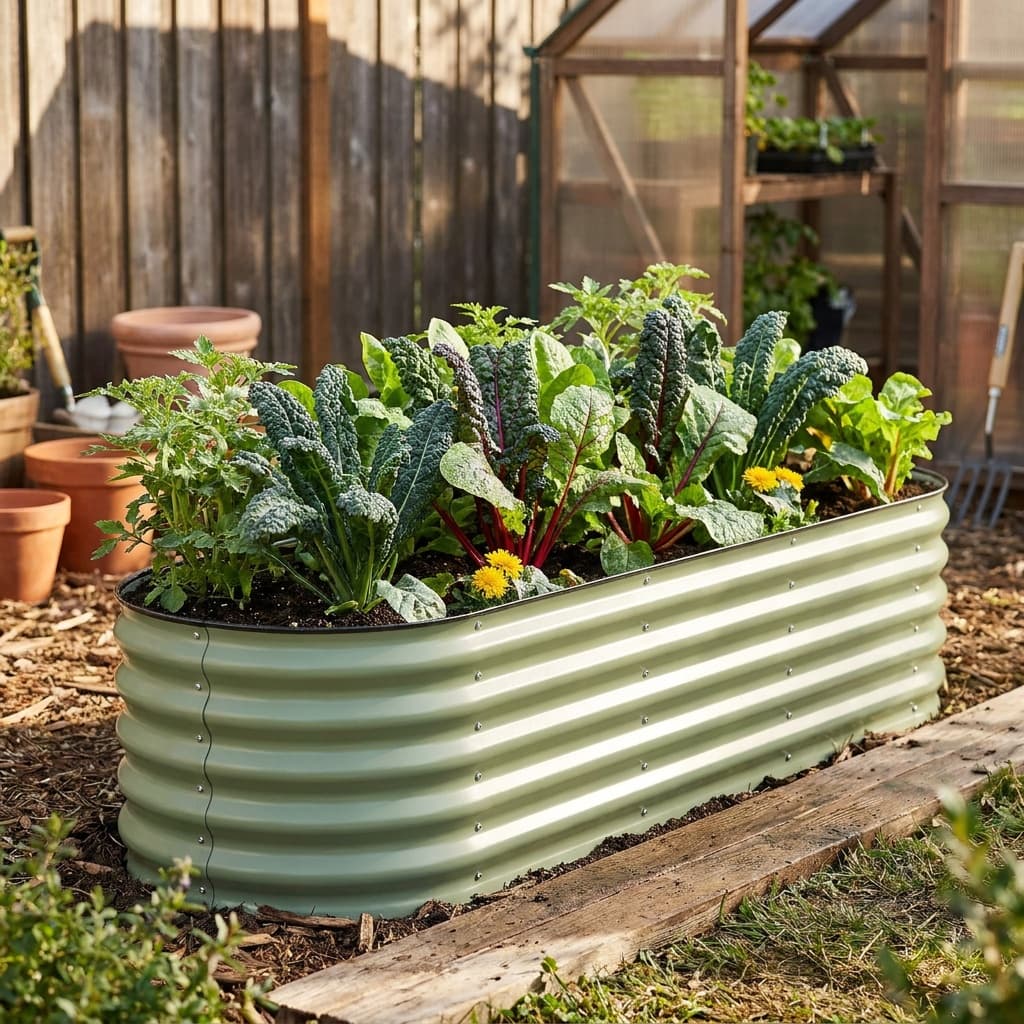
Durable starter bed
Vego Garden 17 in Tall (9-in-1) Modular Metal Raised Bed
Best for: Home gardeners who want a long-lasting, good-looking bed that can be reshaped to fit the yard.
Keep in mind: Costs more than basic galvanized or wood beds
Amazon price as of the checked date, subject to change. The price on Amazon at checkout applies.
Full research
- Material
- Aluzinc-coated steel
- Height
- 17 in
- Configuration
- 9-in-1 modular panels
- Gauge
- 0.8 mm Aluzinc steel
Vego's flagship modular metal bed is the category benchmark for home gardeners. The interlocking panels let one kit become several bed shapes, and the Aluzinc coating resists rust far longer than bare galvanized steel.
This catalog-wide research score is separate from this guide's use-case ranking. How we research
Strengths
- Reconfigurable into multiple shapes from one kit
- Aluzinc coating resists rust and corrosion
- Tool-light assembly with rounded safety edges
Weaknesses
- Costs more than basic galvanized or wood beds
- Metal heats up in full sun in hot climates
Sprout Score breakdown
Best for
Home gardeners who want a long-lasting, good-looking bed that can be reshaped to fit the yard.
Owner rating snapshot
Amazon · 16 reviews · 4.8 stars
If you want to compare metal, cedar, and budget options side by side before you commit, our guide to the best raised garden beds breaks down the trade-offs by material and size.
How to fill a raised bed
This is where beginners overspend or get it wrong. You do not need to buy bag after bag of pure potting soil to fill a deep bed, that gets expensive fast and is not even ideal. The goal is a blend that drains well, holds moisture, and is rich in organic matter.
A reliable mix for a vegetable bed is roughly:
- About half quality topsoil or a soil-based base for structure and mineral content.
- About a third compost for fertility, moisture retention, and soil life.
- The remainder a bagged growing or potting mix for lightness and drainage.
A quality bagged mix for the top layer
For the top growing layer, where seeds and transplants actually live, a rich bagged mix gives roots a strong start. A nutrient-dense potting soil like FoxFarm Ocean Forest, blended for containers and beds, is ideal for that critical top portion.
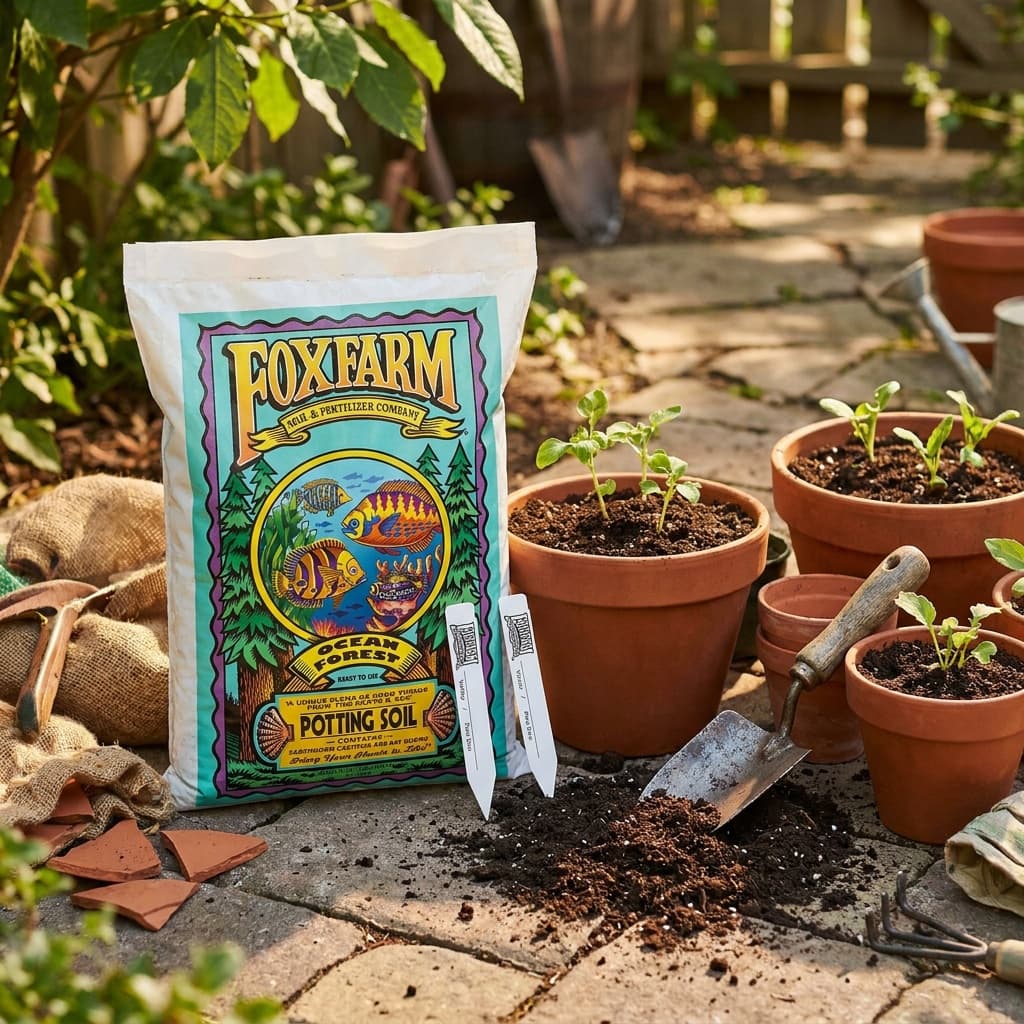
Rich top-layer mix
FoxFarm Ocean Forest Potting Soil
Best for: Container and raised-bed growers who want a rich, ready-to-plant mix.
Keep in mind: Can be too hot for tender seedlings without dilution
Amazon price as of the checked date, subject to change. The price on Amazon at checkout applies.
Full research
- Volume
- 1.5 cu ft
- Type
- Ready-to-use potting soil
- Key ingredients
- Aged forest products, sphagnum peat, earthworm castings, bat guano
- pH
- Adjusted to 6.3 to 6.8
A nutrient-dense, ready-to-use potting soil blended with earthworm castings, bat guano, and fish and crab meal. Its pH is pre-adjusted so nutrients stay available, making it a go-to for containers and transplants.
This catalog-wide research score is separate from this guide's use-case ranking. How we research
Strengths
- Rich, nutrient-dense blend that feeds early growth
- pH pre-adjusted to a plant-friendly range
- Drains well while holding moisture
Weaknesses
- Can be too hot for tender seedlings without dilution
- Premium price per bag
Sprout Score breakdown
Best for
Container and raised-bed growers who want a rich, ready-to-plant mix.
Owner rating snapshot
Amazon · 101 reviews · 4.7 stars
Feed it lightly
Even a great fill benefits from a gentle, slow-release feed, especially as the season goes on and the first burst of compost fertility fades. An all-purpose organic granular fertilizer works across everything you are likely to grow and releases slowly without burning tender roots.
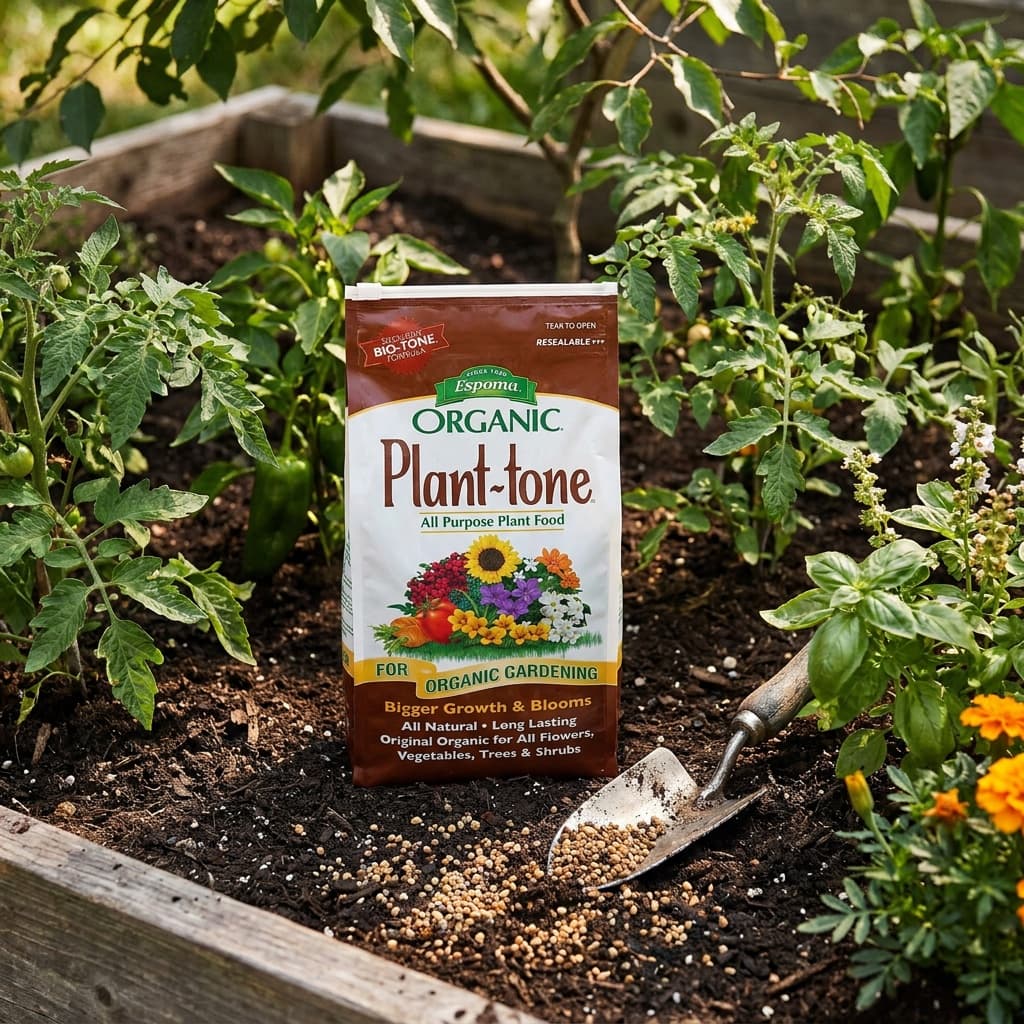
Gentle all-purpose feed
Espoma Plant-tone Organic All-Purpose Fertilizer
Best for: Gardeners who want one safe, all-purpose organic feed for the whole garden.
Keep in mind: Granular organics have a noticeable earthy smell
Amazon price as of the checked date, subject to change. The price on Amazon at checkout applies.
Full research
- NPK
- 5-3-3
- Type
- Granular slow-release organic
- Microbes
- Bio-tone beneficial microbe blend
- Use
- All-purpose: vegetables, flowers, trees, shrubs
A slow-release granular organic fertilizer with a 5-3-3 NPK and the brand's Bio-tone microbe blend. An all-purpose feed for vegetables, flowers, trees, and shrubs that releases gradually over the season.
This catalog-wide research score is separate from this guide's use-case ranking. How we research
Strengths
- Gentle slow-release feeding that resists burning
- Bio-tone microbes support soil biology
- Truly all-purpose across the garden
Weaknesses
- Granular organics have a noticeable earthy smell
- Slower visible response than synthetic feeds
Sprout Score breakdown
Best for
Gardeners who want one safe, all-purpose organic feed for the whole garden.
Owner rating snapshot
Amazon · 15 reviews · 4.7 stars
What to grow and how to plant it
Raised beds suit almost everything, but a few crops are especially rewarding for beginners: tomatoes, peppers, lettuce and salad greens, bush beans, radishes, and herbs. Because the soil is so rich and never compacted, you can plant a bit closer than traditional row spacing, which is the basis of intensive, square-foot-style planting and the reason beds out-yield their footprint.
Timing still matters as much as it does anywhere. Beds warm earlier, but tender crops still wait for your frost-free date. Use the planting calendar for your ZIP to know when each crop can safely go into the bed, since that depends on your location, not the calendar month alone.
How deep should a raised bed be for vegetables?
Aim for at least 10 to 12 inches of soil depth for most vegetables. That is enough for lettuce, beans, peppers, and similar crops. For deep-rooted plants like tomatoes, carrots, and other root crops, deeper is better, so taller beds of 16 inches or more give you the most flexibility.
What do I fill a raised bed with?
Use a blend rather than pure potting soil: roughly half quality topsoil for structure, about a third compost for fertility, and the rest a bagged growing or potting mix for lightness and drainage. For very deep beds you can fill the lower third with coarse organic matter, but keep the top 10 to 12 inches a proper growing mix.
Are metal raised beds safe and better than wood?
Modern galvanized and Aluzinc-coated metal beds are widely used for food gardening and last far longer than wood, which eventually rots. Metal can heat up in intense sun in hot climates, but for most gardeners the durability and low maintenance make it the better long-term choice. Cedar is a fine natural alternative if you prefer the look.
How wide should a raised bed be?
Keep it no wider than about 4 feet so you can reach the center from either side without stepping into the bed and compacting the soil. If the bed sits against a wall or fence where you can only reach from one side, limit the width to about 2 to 3 feet.
What to do next
Raised bed gardening succeeds because you control the one thing that matters most: the soil. Put a deep, reachable bed in full sun, fill it with a topsoil-compost-mix blend, feed it gently, and plant in efficient blocks timed to your frost dates. Do that and your first season will likely outperform years of fighting native dirt in the ground.