It is one of the most frustrating garden problems: healthy plants, loads of blossoms, and almost no fruit. The instinct is to fertilize, but more food rarely helps and can make it worse by pushing leaves over fruit. The real issue is that flowers are not getting pollinated. Here is how to figure out why and fix it.
How to tell it is a pollination problem
Pollination is the likely cause when:
- The plant flowers abundantly but few or no flowers turn into fruit.
- Flowers open, then dry up and drop without forming anything.
- You get tiny fruit that yellows and aborts shortly after the flower fades.
- It coincides with a heat wave, a cold snap, or a stretch with few bees around.
Different crops fail in different ways, which is a clue to the cause:
- Tomatoes and peppers are self-pollinating and rely on wind or vibration to shake pollen loose within each flower. They fail mostly to temperature extremes, when pollen becomes sterile or too sticky. See the tomato profile for variety and timing notes.
- Cucumbers, squash, and zucchini have separate male and female flowers and depend on insects to carry pollen between them. They fail mostly to a shortage of pollinators or to covers blocking access. See the cucumber and zucchini profiles.
The three causes and their fixes
Work out which one fits your situation, then apply the matching fix. Often it is more than one.
Cause 1: temperature is out of range
Pollen has a comfort zone. In sustained extreme heat (roughly above the low 90s Fahrenheit) tomato and pepper pollen can become unviable or too sticky to move, so flowers drop without setting. Cold below the mid-50s does the same at the other end.
The fix is patience and buffering. You cannot force a heat-stressed flower to set, but you can keep the plant healthy so it produces well once temperatures moderate. Provide afternoon shade during heat waves, water consistently to reduce stress, and use your planting calendar so the main fruit-set window lands in milder weather rather than the peak of summer.
Cause 2: not enough pollinators
Cucurbits (cucumber, squash, zucchini) need insects to ferry pollen from male to female flowers. Too few bees means too little fruit, and tiny fruit that yellows and rots at the tip is the classic sign of an unpollinated cucurbit.
Bring in pollinators
Plant flowers nearby
Stop spraying at bloom
Provide water
Plant in blocks
Cause 3: the cover is still on
This is the easy one to miss. Floating row cover and insect netting protect young plants from pests and cold, but if you leave them on once flowering starts, you have physically locked pollinators out. The plant blooms inside a sealed tent and nothing sets.
The fix is timing: remove row cover from insect-pollinated crops (cucumbers, squash, zucchini) as soon as flowers open, or at minimum open it during the day when pollinators are active. Self-pollinating crops like tomatoes are less affected, but cucurbits will simply fail under a cover.
Stop fertilizing your way deeper into the problem
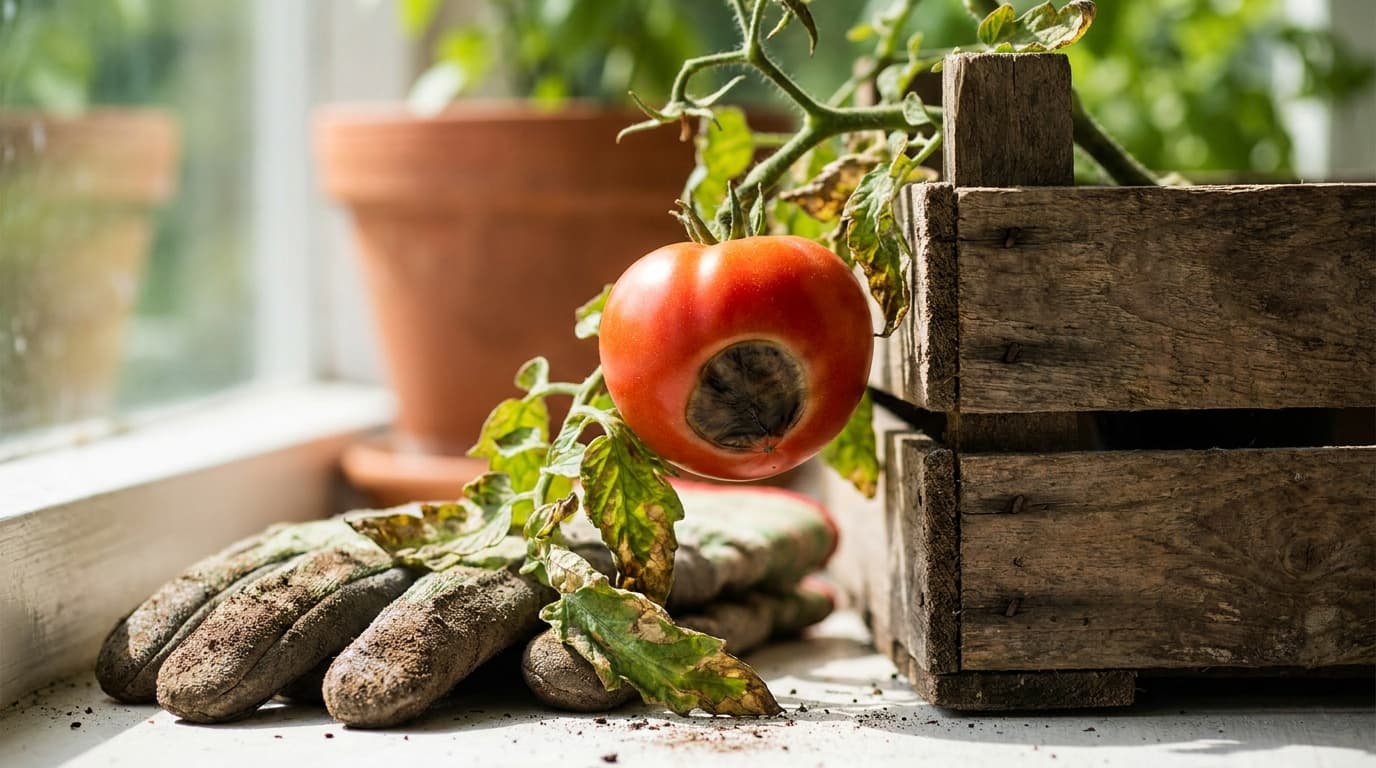
When fruit will not set, the wrong move is to pour on nitrogen. Excess nitrogen pushes leafy growth at the expense of flowers and fruit, so you end up with an even bushier plant and even less to harvest. If you suspect a nutrient issue, watch for true blossom end rot, which is a calcium-movement and watering problem, not a sign you need more fertilizer. For poor fruit set specifically, feeding is rarely the answer.
FAQ
Why does my plant have lots of flowers but no fruit?
Almost always a pollination problem. The flowers are opening but not getting pollinated, usually because temperatures are too hot or too cold for pollen to work, there are too few pollinators, or a row cover is blocking insect access. Fixing pollination, not adding fertilizer, is the answer.
How do I hand-pollinate squash or cucumbers?
On a dry morning, pick a freshly open male flower (plain stem, no baby fruit behind it), peel back the petals, and brush the pollen-laden center onto the center of a female flower, which has a tiny immature fruit at its base. Repeat with fresh flowers each day until natural pollinators return.
Does heat stop tomatoes from setting fruit?
Yes. Sustained heat above roughly the low 90s Fahrenheit can make tomato and pepper pollen unviable or too sticky to move, so flowers drop without setting fruit. Keep plants healthy and well watered through the heat, provide afternoon shade, and they typically resume setting once temperatures moderate.
Can leaving row cover on hurt fruit set?
Yes, for insect-pollinated crops like cucumbers, squash, and zucchini. If the cover stays on through bloom, pollinators cannot reach the flowers and the plant sets little or no fruit. Remove the cover, or open it during pollinator-active daytime hours, once flowering begins.
Diagnose before you treat: heat, missing pollinators, or a cover left on. Match the fix to the cause, hand-pollinate to bridge the gap, and time your planting with the planting calendar. For crop-specific notes, see the tomato, cucumber, and zucchini profiles.