Blossom end rot shows up first as a small water-soaked spot at the blossom end of the fruit (the bottom, opposite the stem). It darkens, sinks in, and turns into a tough brown or black leathery patch. It hits tomatoes most often, but you will also see it on peppers, squash, eggplant, and melons. The frustrating part is that it can appear on a plant that looks otherwise healthy, on the first flush of fruit, in soil that already has plenty of calcium.
What actually causes blossom end rot
The disorder is a calcium problem inside the fruit, but the soil is rarely the culprit. Calcium moves through a plant dissolved in water, pulled up by transpiration. The fast-growing tip of a fruit needs a steady supply, and it competes with leaves that transpire far more. When water delivery to the plant swings between soggy and bone-dry, the calcium stream stutters, and the fruit tip is the first tissue to starve. The cells there break down, and the rot forms.
This is why it is a watering story, not a fertilizer story. The most common triggers, drawing on guidance from university extension programs, are:
- Inconsistent watering. Wide swings between drought and flooding are the number one cause. Container plants and fast-draining sandy beds are especially prone.
- Damaged or shallow roots. Cultivating too close to the plant or transplanting into cold soil limits how much water and calcium the roots can take up.
- Too much nitrogen. High-nitrogen feeds push lush leafy growth that outcompetes the fruit for the calcium that is available.
- High salt or pH extremes. Excess fertilizer salts and very low or very high soil pH both reduce calcium uptake even when calcium is present.
How to fix it, step by step
The good news: blossom end rot is not contagious and not a disease. Affected fruit will not recover, so pick and discard the worst of it, but the next fruit can come in clean once moisture steadies.
The fix
Steady the water
Mulch to buffer moisture
Test the soil before adding calcium
Ease off the nitrogen
Protect the roots
Keep soil moisture steady
Everything above is really one lever: keep the root zone evenly moist. Hand watering works if you are disciplined, but the gardeners who beat blossom end rot for good usually automate it. A flat soaker hose like the Gilmour flat weeper laid along the base of the plants delivers slow, deep water right at the roots with little waste, which is exactly the steady supply calcium movement needs.
Some links on this page are affiliate links. As an Amazon Associate I earn from qualifying purchases.
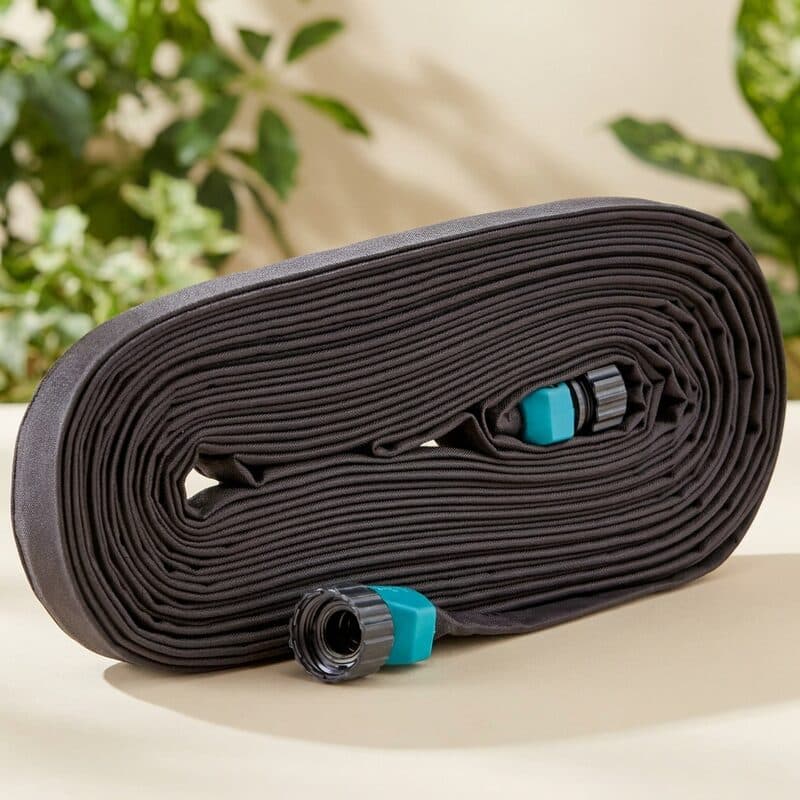
Steady root-zone watering
Gilmour Flat Weeper Soaker Hose
Best for: Row and border gardeners who want low-waste, root-zone watering on a budget.
Keep in mind: Even output drops over very long runs and on slopes
Amazon price as of the checked date, subject to change. The price on Amazon at checkout applies.
Full research
- Type
- Flat weeper soaker hose
- Lengths
- Available in multiple lengths
- Delivery
- Seeps along the full length
- Connection
- Standard hose faucet
Gilmour's flat weeper soaker hose seeps water along its length to deliver moisture at the root zone, lying flat along rows and borders.
This catalog-wide research score is separate from this guide's use-case ranking. How we research
Strengths
- Delivers water directly to the root zone with little waste
- Flat profile lies neatly along rows and borders
- Inexpensive and easy to route through a bed
Weaknesses
- Even output drops over very long runs and on slopes
- Should be drained and stored to avoid winter damage
Sprout Score breakdown
Best for
Row and border gardeners who want low-waste, root-zone watering on a budget.
Owner rating snapshot
Amazon · 49 reviews · 4.2 stars
To take the human memory out of it entirely, pair a hose or drip line with a timer so the bed gets the same drink at the same time every day. A weather-aware smart timer skips watering after rain, which keeps the soil from swinging the other way into soggy.
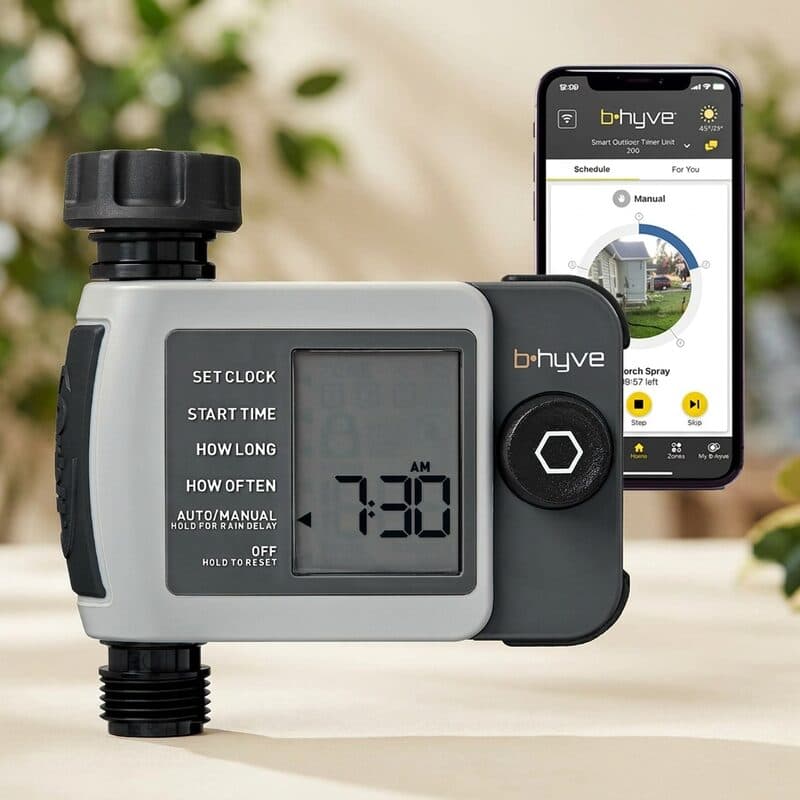
Set and forget
Orbit B-hyve Smart Hose Faucet Timer
Best for: Gardeners who want app control and weather-aware automatic watering.
Keep in mind: WiFi setup can be finicky at the faucet's signal range
Amazon price as of the checked date, subject to change. The price on Amazon at checkout applies.
Full research
- Connectivity
- WiFi and Bluetooth
- Scheduling
- App-based, weather-adjusting
- Zones
- Single outlet (multi-outlet models available)
- Power
- Battery powered
Orbit's B-hyve smart timer adds WiFi and Bluetooth control with weather-based scheduling, automating faucet watering from a phone app.
This catalog-wide research score is separate from this guide's use-case ranking. How we research
Strengths
- Weather-based scheduling skips watering after rain
- Controllable from a phone over WiFi or Bluetooth
- Flexible programs for multiple watering windows
Weaknesses
- WiFi setup can be finicky at the faucet's signal range
- Costs more than a basic mechanical dial timer
Sprout Score breakdown
Best for
Gardeners who want app control and weather-aware automatic watering.
Owner rating snapshot
Amazon · 17 reviews · 4.1 stars
Which plants get it, and what to plan
Blossom end rot is most associated with tomatoes, and it is common on peppers too, especially the first fruit of the season when roots are still establishing. Squash, eggplant, and melons can show it as well. Early-season fruit on young plants is the most vulnerable window, so steady watering matters most right after transplant.
Getting transplants into warm soil at the right time also helps, because cold, wet soil limits root function and calcium uptake. Use the planting calendar for your ZIP to time transplants for warm soil rather than rushing them out into a cold, damp bed.
Will blossom end rot spread to other tomatoes or plants?
No. Blossom end rot is a physiological disorder caused by calcium not reaching the fruit, not a fungus or bacteria, so it does not spread from fruit to fruit or plant to plant. If you fix the underlying watering issue, the next fruit can come in clean.
Should I add calcium or eggshells to fix blossom end rot?
Usually not. Most garden soil already has enough calcium, and the problem is delivery, not supply. Test your soil first. Eggshells break down too slowly to help in the same season, and foliar calcium sprays do little because calcium has to travel up through the roots in water. Consistent moisture is the real fix.
Can I eat tomatoes with blossom end rot?
Yes. If you cut away the rotted blossom end, the rest of the fruit is safe to eat. The affected portion will be tough and unappetizing, but the disorder is not toxic and does not make the rest of the tomato unsafe.
Why do my container tomatoes get blossom end rot worse than the ones in the ground?
Containers dry out far faster than garden beds, so the soil swings between wet and dry more often, which is exactly what triggers the disorder. Water containers more frequently, add mulch on top of the soil, and consider a self-watering setup or a timed drip line to keep moisture even.
What to do now
Blossom end rot looks alarming but it is one of the most fixable problems in the vegetable garden. Treat it as a watering problem first: water deeply and regularly, mulch to buffer the swings, and only add calcium if a soil test tells you to. Steady the moisture and the next fruit comes in clean.