Root rot is one of the great traps in gardening because its symptoms mimic the opposite problem. A plant with rotting roots cannot take up water, so it wilts, yellows, and droops exactly like a thirsty plant. The natural response is to water it, which drowns the roots further and accelerates the decline. Understanding that wilting can mean too much water, not too little, is the key insight that turns root rot around.
What causes root rot
Healthy roots need oxygen, which they get from air pockets in well-drained soil. When soil is saturated for too long, those air pockets fill with water and the roots suffocate. The dying roots then become easy targets for soil-borne fungi and water molds (commonly Pythium, Phytophthora, Fusarium, and Rhizoctonia), which finish the job and can spread to still-healthy roots.
So root rot is really two problems stacked: a physical one (no oxygen) that creates the opening, and a biological one (pathogens) that exploits it. Fix only the fungus and you have not addressed the waterlogging that caused it. The root causes:
- Overwatering. Watering on a fixed schedule regardless of soil moisture is the most common cause, especially in containers.
- Poor drainage. Heavy clay soil, pots without drainage holes, or beds in a low spot all hold water around the roots.
- Compacted or dense soil. Compaction removes the air pockets roots need even when total water is reasonable.
- Cold, wet soil. Roots take up far less water when cold, so early-season overwatering is easy and dangerous.
How to diagnose root rot
Because the top of the plant lies to you, check the roots and soil:
To check, gently lift a small plant or scrape down to the roots of a larger one. Firm, white or tan roots are healthy. Brown, slimy roots that pull away from their core when you tug are rotted.
How to rescue a plant with root rot
Caught early, many plants recover. The principle is to dry the soil, remove the dead tissue, and give the surviving roots air.
Rescuing a plant from root rot
Stop watering
Improve drainage immediately
Inspect and trim the roots
Repot into fresh, draining mix
Water sparingly going forward
How to prevent root rot
Prevention is entirely about water and drainage. The biggest habit shift is watering based on what the soil tells you, not a calendar, and watering at the base rather than soaking the whole bed shallowly and often.
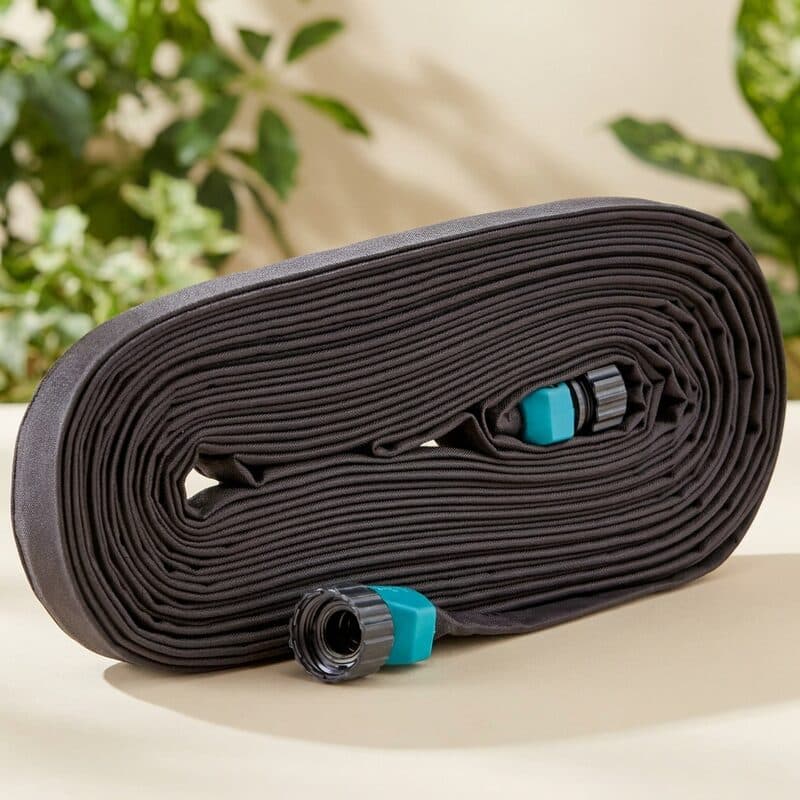
A flat soaker hose delivers slow, deep water right to the root zone, which encourages roots to grow down and lets you water less frequently but more thoroughly, the opposite of the shallow-and-constant pattern that keeps soil waterlogged.
Some links on this page are affiliate links. As an Amazon Associate I earn from qualifying purchases.
Deep, infrequent watering
Gilmour Flat Weeper Soaker Hose
Best for: Row and border gardeners who want low-waste, root-zone watering on a budget.
Keep in mind: Even output drops over very long runs and on slopes
Amazon price as of the checked date, subject to change. The price on Amazon at checkout applies.
Full research
- Type
- Flat weeper soaker hose
- Lengths
- Available in multiple lengths
- Delivery
- Seeps along the full length
- Connection
- Standard hose faucet
Gilmour's flat weeper soaker hose seeps water along its length to deliver moisture at the root zone, lying flat along rows and borders.
This catalog-wide research score is separate from this guide's use-case ranking. How we research
Strengths
- Delivers water directly to the root zone with little waste
- Flat profile lies neatly along rows and borders
- Inexpensive and easy to route through a bed
Weaknesses
- Even output drops over very long runs and on slopes
- Should be drained and stored to avoid winter damage
Sprout Score breakdown
Best for
Row and border gardeners who want low-waste, root-zone watering on a budget.
Owner rating snapshot
Amazon · 49 reviews · 4.2 stars
Pairing that with a weather-aware timer is the cleanest insurance against overwatering: it skips a cycle after rain so the bed is never topped up while it is already saturated, which is exactly the condition root rot needs.

Skips watering after rain
Orbit B-hyve Smart Hose Faucet Timer
Best for: Gardeners who want app control and weather-aware automatic watering.
Keep in mind: WiFi setup can be finicky at the faucet's signal range
Amazon price as of the checked date, subject to change. The price on Amazon at checkout applies.
Full research
- Connectivity
- WiFi and Bluetooth
- Scheduling
- App-based, weather-adjusting
- Zones
- Single outlet (multi-outlet models available)
- Power
- Battery powered
Orbit's B-hyve smart timer adds WiFi and Bluetooth control with weather-based scheduling, automating faucet watering from a phone app.
This catalog-wide research score is separate from this guide's use-case ranking. How we research
Strengths
- Weather-based scheduling skips watering after rain
- Controllable from a phone over WiFi or Bluetooth
- Flexible programs for multiple watering windows
Weaknesses
- WiFi setup can be finicky at the faucet's signal range
- Costs more than a basic mechanical dial timer
Sprout Score breakdown
Best for
Gardeners who want app control and weather-aware automatic watering.
Owner rating snapshot
Amazon · 17 reviews · 4.1 stars
Other prevention basics:
- Always use pots with drainage holes, and never let them stand in water.
- Improve heavy soil with compost and avoid planting in low, wet spots.
- Check before you water. Push a finger into the soil; if the top inch or two is still damp, wait.
- Do not overwater early-season transplants in cold soil, when roots take up little water.
- Time transplants for warm soil using the planting calendar and your local frost dates, so roots are active rather than sitting cold and wet.
Which plants are most prone
Root rot can hit nearly anything in waterlogged soil, but some crops are especially sensitive. Container tomato and pepper plants drown easily when overwatered or left in saucers. Cucumber and zucchini decline fast in soggy beds. Herbs like basil are quick to rot in cold, wet conditions. Anything in heavy clay or a low, poorly drained spot is at elevated risk.
What does root rot look like?
Below ground, rotted roots are brown or black, soft, and mushy, and they slip apart or pull away from their core when you tug them, unlike healthy roots which are firm and pale. Above ground it looks like drought stress in reverse: wilting, yellowing lower leaves, and stunting, but in soil that is still wet. A sour, rotten smell from the soil is another strong sign.
Can a plant recover from root rot?
Often yes, if you catch it before most of the roots are gone. Stop watering, improve drainage, trim away the mushy brown roots, repot into fresh draining soil, and water sparingly while the plant rebuilds its root system. If the majority of roots are already rotted and the plant is collapsing, recovery is unlikely and it is better to remove it.
Is root rot caused by overwatering or a fungus?
Both, but overwatering comes first. Waterlogged soil starves roots of oxygen and kills them, and then fungi and water molds colonize the dead tissue and spread. Because the waterlogging is the opening, fixing drainage and easing off water addresses the real cause. Fungicides are largely preventive and cannot revive roots that have already rotted.
How do I treat root rot in the garden bed?
Stop adding water and let the bed dry, divert any standing water, and ease soil compaction to restore air pockets. Remove badly affected plants entirely, roots and all, and do not compost them. Going forward, water deeply but only when the soil has begun to dry, water at the base rather than overhead, and improve heavy or low-lying soil with compost so it drains.
Root rot is a watering and drainage problem wearing a fungus costume. Read the soil before you read the leaves, water deeply but only when the soil dries, keep drainage flowing, and most plants will never get it.