If your peppers or tomatoes are wilting in soil that is clearly wet, dying back from the base, and not recovering, suspect Phytophthora root rot. It is a water mold (not a true fungus) that thrives in saturated soil, and it is one of the clearest cases where the disease is really a symptom of how the bed drains and how it is watered. Sprays are not the answer here. Water management is. Here is how to recognize it and fix the conditions that feed it.
How to identify Phytophthora root rot
The hallmark is a plant in trouble despite plenty of water in the soil:
- Wilting in wet soil. The plant looks droughty and wilts, but the ground is moist or soggy. Roots have rotted, so the plant cannot take up water even though it is there.
- Crown and stem-base decay. Dark, water-soaked, sometimes greasy-looking lesions at the soil line and lower stem. On peppers this often girdles the stem near the ground.
- Root rot. Pull a struggling plant and the roots are brown, mushy, and slough off instead of being firm and white.
- Rapid collapse and dieback, especially after heavy rain, overwatering, or in low spots where water pools. It often hits in patches that match the wettest parts of the bed.
It is most damaging to peppers and tomatoes among common garden crops. See the pepper and tomato profiles for those crops. It belongs to the broader family of root rots covered in our general root rot guide, with this version specifically tied to waterlogging.
Why it is really a drainage problem
Here is the key insight: Phytophthora cannot do much without standing water. Its spores actually swim through water films in saturated soil to reach roots. In well-drained soil that never stays soggy, the pathogen struggles to spread even when it is present. That is why this disease is, at root, a water-management problem. Fix the saturation and you remove the conditions it depends on. Chase it with products while the bed keeps flooding and you will lose.
The fix: manage the water
Stop Phytophthora root rot
Improve drainage first
Raise the beds
Water slowly at the soil line
Do not overwater
Rotate crops
Remove infected plants
Water slowly and at the roots
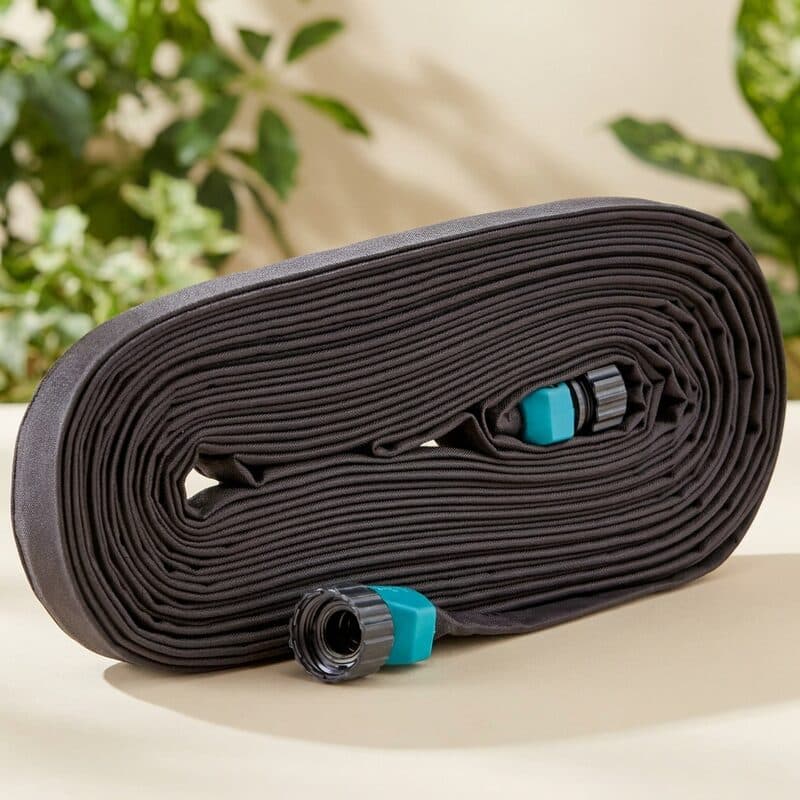
A big part of prevention is how you deliver water. Flooding a bed or running an overhead sprinkler creates exactly the brief saturation Phytophthora needs to spread. A flat soaker hose lays along the row and releases water slowly into the soil, so it soaks in and drains rather than pooling at the surface.
Some links on this page are affiliate links. As an Amazon Associate I earn from qualifying purchases.
Slow, targeted watering
Gilmour Flat Weeper Soaker Hose
Best for: Row and border gardeners who want low-waste, root-zone watering on a budget.
Keep in mind: Even output drops over very long runs and on slopes
Amazon price as of the checked date, subject to change. The price on Amazon at checkout applies.
Full research
- Type
- Flat weeper soaker hose
- Lengths
- Available in multiple lengths
- Delivery
- Seeps along the full length
- Connection
- Standard hose faucet
Gilmour's flat weeper soaker hose seeps water along its length to deliver moisture at the root zone, lying flat along rows and borders.
This catalog-wide research score is separate from this guide's use-case ranking. How we research
Strengths
- Delivers water directly to the root zone with little waste
- Flat profile lies neatly along rows and borders
- Inexpensive and easy to route through a bed
Weaknesses
- Even output drops over very long runs and on slopes
- Should be drained and stored to avoid winter damage
Sprout Score breakdown
Best for
Row and border gardeners who want low-waste, root-zone watering on a budget.
Owner rating snapshot
Amazon · 49 reviews · 4.2 stars
Pair slow delivery with good drainage and let the soil breathe between waterings. The goal is moist-but-draining, never standing-wet.
What not to do
Do not respond to a wilting plant in wet soil by adding more water. That is the most common and most damaging mistake, because the wilt looks like drought but the roots are already rotting and drowning. Confirm by checking the soil moisture and the roots before you reach for the hose. And do not expect a spray to bail out a chronically waterlogged bed: without fixing the drainage, the conditions that drive the disease are still there.
FAQ
Why is my pepper plant wilting even though the soil is wet?
That combination, wilting in moist or soggy soil, is a classic sign of Phytophthora root rot. The roots have rotted in saturated soil and can no longer take up water, so the plant wilts despite plenty of moisture. The fix is better drainage and less watering, not more water.
Can Phytophthora root rot be cured?
There is no reliable home cure once a plant is infected. Management is preventive and cultural: improve drainage, grow in raised beds, water slowly and sparingly, rotate crops, and remove infected plants. The pathogen needs saturated soil to spread, so keeping soil well drained is the real control.
How do I prevent Phytophthora in tomatoes and peppers?
Keep soil from staying saturated. Improve drainage with organic matter and good bed siting, grow in raised beds or mounds, water slowly at the soil line and let the surface dry between waterings, avoid low spots that pool water, and rotate susceptible crops away from affected beds.
Does overwatering cause root rot?
Yes. Overwatering and poor drainage create the saturated soil that water molds like Phytophthora need to produce and spread their spores. Letting the top inch or two of soil dry between waterings, and ensuring the bed drains well, is one of the most effective preventive measures.
Phytophthora root rot is a drainage problem wearing a disease costume. Fix the water (better drainage, raised beds, slow targeted watering, and no soggy soil) and you remove the conditions it depends on. For more on root rots generally, see the root rot guide, and check the pepper and tomato profiles for growing those susceptible crops.