Poor garden soil often lacks organic matter, stable structure, or the organisms that make nutrients available to plants. Improving those parts helps beds hold water, drain after storms, and supply nutrients more evenly. This guide explains what to change first and when an amendment can help.
What "healthy soil" actually means
Healthy garden soil has four things working together:
- Texture: the ratio of sand, silt, and clay. You cannot change texture much, but you can work with it.
- Structure: how those particles clump into crumbs with air gaps between them. Roots, water, and air all travel through that pore space.
- Organic matter: decomposed plant and animal material (humus) that holds water and nutrients and feeds the biology.
- Soil life: the bacteria, fungi, and larger organisms that release nutrients slowly and build structure for free.
Texture you inherit. The other three you build. Organic matter is the lever that moves all of them at once, which is why it is the center of everything below.
Step 1: test before you amend
Do not guess. A test tells you pH and nutrient levels so you stop wasting money on the wrong amendment, and stop overloading nutrients that are already high. A simple home jar test also reveals your sand/silt/clay split. We cover the full process in how to test your garden soil, and you should do that step first. The short version: a lab test once every two or three years, a quick pH check more often.
Step 2: feed the soil, in order
Once you know your starting point, build in this sequence. The first three steps matter more than any product.
The build order
Add organic matter
Stop tilling
Mulch the surface
Amend to the test
Plant a cover crop
Step 3: choose the right inputs
You do not need a shelf of products. You need a reliable source of organic matter, a balanced feed for the times a test says nutrients are low, and a good potting mix for containers.
A balanced organic feed for in-ground beds
For most vegetable and flower beds, a balanced slow-release organic fertilizer covers the gap between what compost provides and what hungry crops want, without the spike-and-crash of synthetic feeds. We cross-checked formulations and owner reviews across the category in our best organic fertilizers roundup. A widely used balanced option:
Some links on this page are affiliate links. As an Amazon Associate I earn from qualifying purchases.
Balanced organic feed
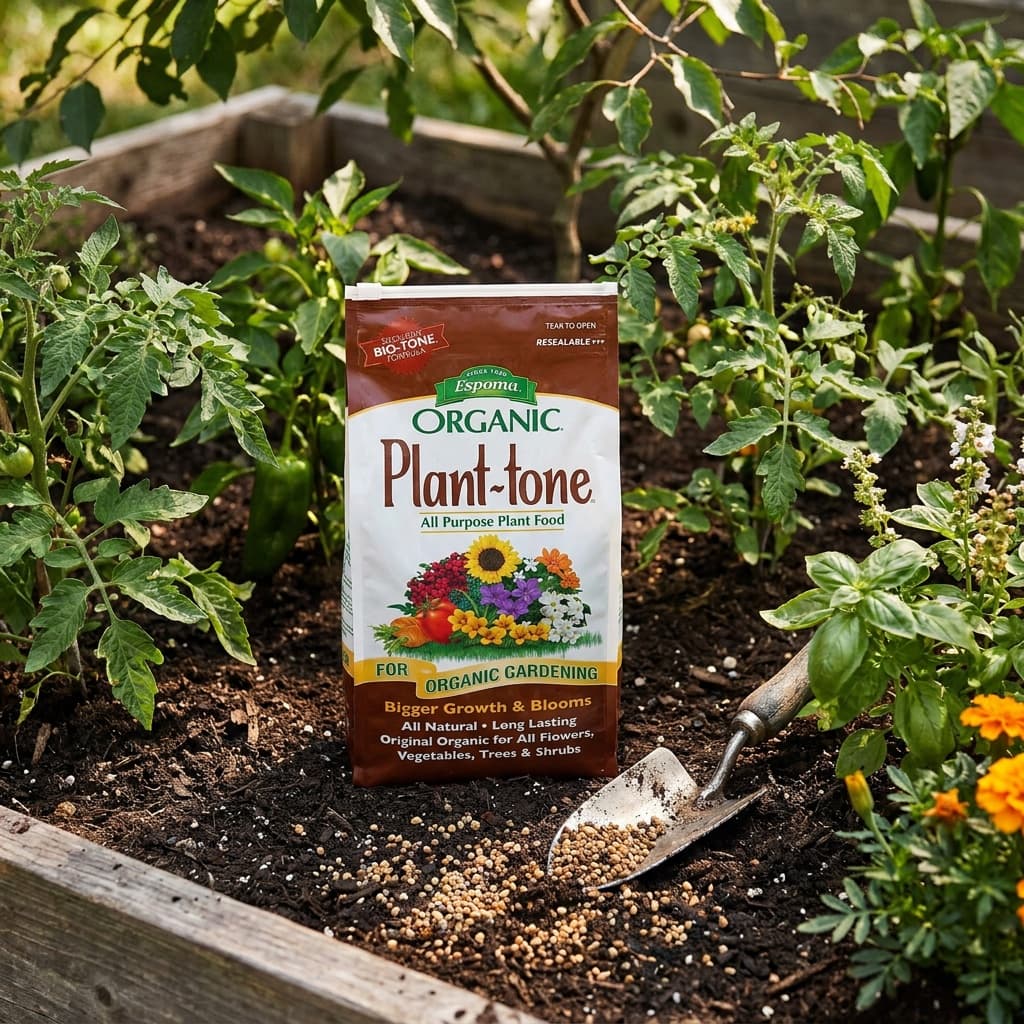
Espoma Plant-tone Organic All-Purpose Fertilizer
Best for: Gardeners who want one safe, all-purpose organic feed for the whole garden.
Keep in mind: Granular organics have a noticeable earthy smell
Amazon price as of the checked date, subject to change. The price on Amazon at checkout applies.
Full research
- NPK
- 5-3-3
- Type
- Granular slow-release organic
- Microbes
- Bio-tone beneficial microbe blend
- Use
- All-purpose: vegetables, flowers, trees, shrubs
A slow-release granular organic fertilizer with a 5-3-3 NPK and the brand's Bio-tone microbe blend. An all-purpose feed for vegetables, flowers, trees, and shrubs that releases gradually over the season.
This catalog-wide research score is separate from this guide's use-case ranking. How we research
Strengths
- Gentle slow-release feeding that resists burning
- Bio-tone microbes support soil biology
- Truly all-purpose across the garden
Weaknesses
- Granular organics have a noticeable earthy smell
- Slower visible response than synthetic feeds
Sprout Score breakdown
Best for
Gardeners who want one safe, all-purpose organic feed for the whole garden.
Owner rating snapshot
Amazon · 15 reviews · 4.7 stars
Work it in lightly at planting and side-dress heavy feeders mid-season. Because it is slow-release and microbe-fed, it is hard to burn plants with it, which makes it forgiving for newer growers. You can find a full retailer comparison via the organic fertilizer guide.
A proven mix for containers and new raised beds
Native garden soil does not belong in pots: it compacts, drains poorly, and can carry disease. For containers and to jump-start a brand-new raised bed while your real soil improves, start with a quality bagged mix. We compared mixes on drainage, organic content, and consistency in our best organic potting soil guide.
Container + raised bed starter
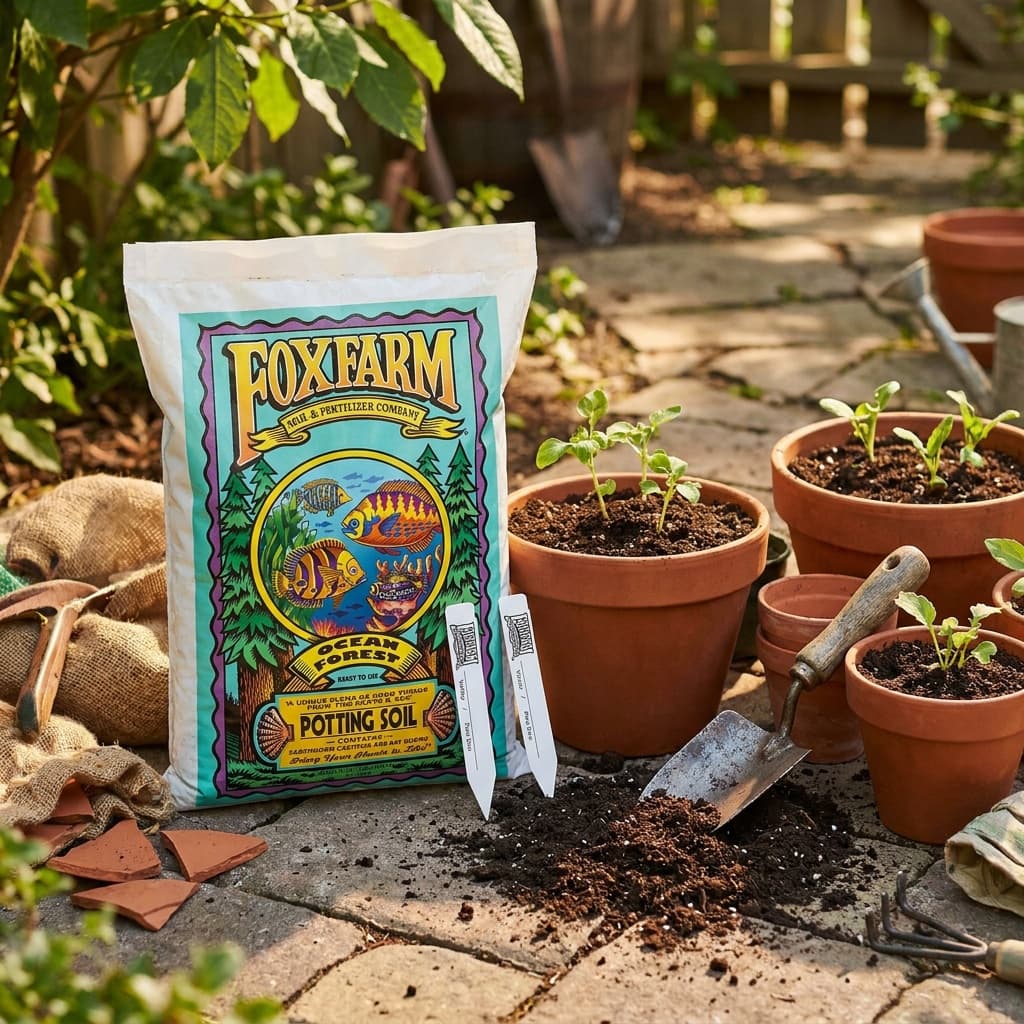
FoxFarm Ocean Forest Potting Soil
Best for: Container and raised-bed growers who want a rich, ready-to-plant mix.
Keep in mind: Can be too hot for tender seedlings without dilution
Amazon price as of the checked date, subject to change. The price on Amazon at checkout applies.
Full research
- Volume
- 1.5 cu ft
- Type
- Ready-to-use potting soil
- Key ingredients
- Aged forest products, sphagnum peat, earthworm castings, bat guano
- pH
- Adjusted to 6.3 to 6.8
A nutrient-dense, ready-to-use potting soil blended with earthworm castings, bat guano, and fish and crab meal. Its pH is pre-adjusted so nutrients stay available, making it a go-to for containers and transplants.
This catalog-wide research score is separate from this guide's use-case ranking. How we research
Strengths
- Rich, nutrient-dense blend that feeds early growth
- pH pre-adjusted to a plant-friendly range
- Drains well while holding moisture
Weaknesses
- Can be too hot for tender seedlings without dilution
- Premium price per bag
Sprout Score breakdown
Best for
Container and raised-bed growers who want a rich, ready-to-plant mix.
Owner rating snapshot
Amazon · 101 reviews · 4.7 stars
For raised beds, blend bagged mix with your own finished compost rather than filling with mix alone. It is cheaper and the compost brings the biology.
Make your own organic matter
The cheapest, best soil input is compost you make yourself from kitchen and yard waste. A tumbler keeps the pile aerated, warm, and rodent-resistant, which is why it finishes faster than an open heap. See our best compost tumblers comparison if you want to close the loop on your own scraps.
Watch the watering, not just the feeding
Soil biology needs air as much as water. Beds that sit waterlogged go anaerobic, the good aerobic microbes die back, and roots suffocate. That is the doorway to root rot. If your beds drain slowly, lead with organic matter and raised beds rather than amendments, and water deeply but less often. When you do plant, space crops so air moves between them; our spacing calculator gives spacing by crop so you are not crowding the bed.
FAQ
How long does it take to build healthy garden soil?
Expect meaningful improvement in one season and a different soil in two to three years of consistent compost and mulch. Organic matter builds slowly because it is being consumed by the biology even as you add it. The habit, not any single amendment, is what gets you there.
How much compost should I add to my garden each year?
A 1 to 2 inch layer spread across the bed surface each season is a solid general target. On a new or depleted bed you can go heavier the first year. You rarely need to dig it in: lay it on top and let worms and rain carry it down, which protects soil structure.
Do I need fertilizer if I add compost?
Often not much. Compost supplies a broad, slow trickle of nutrients. A soil test tells you whether a specific nutrient is low. If it is, a balanced organic feed like Espoma Plant-Tone tops up the gap for heavy feeders such as tomatoes and squash without overloading the bed.
Is tilling bad for soil?
Repeated tilling burns through organic matter and breaks up the fungal networks and worm channels that build structure, so over time it works against you. Occasional deep loosening to break a hard pan can help, but the steady-state approach for most home gardens is no-dig: amend from the top and let the biology do the mixing.
Can I use garden soil in containers?
No. Native garden soil compacts in pots, holds too much water, drains poorly, and can introduce disease. Use a quality potting mix for containers, and reserve your garden soil and homemade compost for in-ground and raised beds.
Build organic matter, protect the life in your soil, and test before you amend. Do that and most of the problems gardeners chase with products simply stop showing up. Start with a soil test, then come back and work the build order above.