Our recommendations

Smith Contractor 190216 2-Gallon Pump Sprayer
Why this pick →
Chapin 20000 1-Gallon Lawn and Garden Pump Sprayer
Why this pick →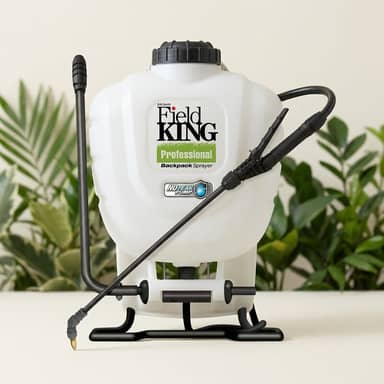
Field King Professional 190328 No-Leak Backpack Sprayer (4 Gallon)
Why this pick →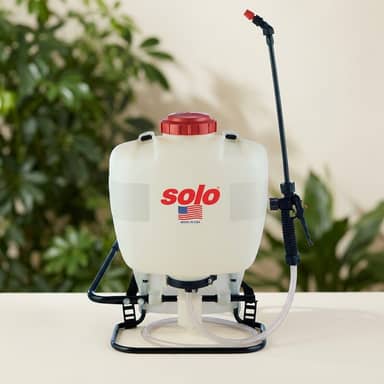
Solo 425 Professional Backpack Sprayer (4 Gallon, Piston Pump)
Why this pick →A garden sprayer is how you actually deliver the foliar treatments that keep a garden healthy: neem oil for pests, insecticidal soap for aphids and mites, copper or sulfur for fungal problems, and dilute liquid fertilizer for a fast feed. The right sprayer turns those jobs from a chore into a five-minute pass. The wrong one clogs, loses pressure halfway through, or leaks concentrate down your arm.
First choose the size and carry style: a handheld pump sprayer that sits on the ground, or a backpack you pump as you walk. Pump sprayers of 1 to 2 gallons suit small to medium beds and quick spot jobs. A backpack of about 4 gallons makes sense for larger areas because it cuts refill stops. The picks below focus on the parts that determine whether a sprayer lasts one season or many.
Best overall: Smith Contractor 190216 2-Gallon Pump Sprayer

Best overall
Smith Contractor 190216 2-Gallon Pump Sprayer
Best for: Gardeners and property owners who spray often and want one durable, serviceable sprayer with the right nozzle for any job.
Keep in mind: Costs more than a basic homeowner pump sprayer
Amazon price as of the checked date, subject to change. The price on Amazon at checkout applies.
Full research
- Tank capacity
- 2 gallons
- Hose
- 9/16 in x 50 in reinforced
- Wand
- 21 in poly
- Nozzles
- 7 included (brass, poly adjustable, 2 flat fans, foaming)
Smith's Contractor 190216 is a 2-gallon sprayer with a lockable shut-off, nickel-plated brass poppet, a 50-inch reinforced hose, and a seven-nozzle kit, built to handle frequent use and outlast budget units.
This catalog-wide research score is separate from this guide's use-case ranking. How we research
Strengths
- Seven-nozzle kit covers everything from fine misting to flat-fan coverage and foaming
- Lockable shut-off lets you spray continuously without squeezing, reducing hand fatigue
- Nickel-plated brass internals and Viton seals make it serviceable and built to last
Weaknesses
- Costs more than a basic homeowner pump sprayer
- At 2 gallons full it is heavier to carry by hand than a 1-gallon unit
Sprout Score breakdown
Best for
Gardeners and property owners who spray often and want one durable, serviceable sprayer with the right nozzle for any job.
The Smith Contractor earns the top slot because it does the broadest range of garden jobs well and is built to be serviced rather than thrown away. The 2-gallon tank is enough to treat a typical vegetable garden in one fill, and the seven-nozzle kit (brass, an adjustable poly tip, two flat fans, and a foaming nozzle) means you can dial in a fine mist for soft foliage, a flat fan for even coverage, or foam for clinging to weeds.
Two details matter most for the treatments gardeners actually spray. The lockable shut-off lets you hold a steady spray without squeezing the handle, which spares your hand on a long pass through the beds. And the nickel-plated brass poppet with Viton seals stands up to the oils and surfactants in neem and insecticidal soap, which slowly degrade cheaper rubber seals. You can check the current price on the Smith Contractor before deciding.
Best value: Chapin 20000 1-Gallon Sprayer

Best value
Chapin 20000 1-Gallon Lawn and Garden Pump Sprayer
Best for: Homeowners who need an affordable, easy-to-handle sprayer for spot weed control and light feeding around small beds and borders.
Keep in mind: Pump seal eventually needs an O-ring refresh after repeated seasons
Amazon price as of the checked date, subject to change. The price on Amazon at checkout applies.
Full research
- Tank capacity
- 1 gallon
- Tank material
- Translucent poly, funnel-top
- Hose
- 28 in nylon-reinforced
- Nozzle
- Adjustable poly cone (mist to stream)
Chapin's 20000 is a 1-gallon poly pump sprayer with a funnel-top tank, cleanable filter, and an adjustable cone nozzle on a 28-inch hose, sized for quick spot jobs around the yard.
This catalog-wide research score is separate from this guide's use-case ranking. How we research
Strengths
- Compact 1-gallon size is easy to carry and store for small spot-spraying jobs
- Adjustable cone nozzle dials from a fine mist to a directed stream
- Inexpensive from a brand with widely available replacement seals and parts
Weaknesses
- Pump seal eventually needs an O-ring refresh after repeated seasons
- Light-duty build is not meant for all-day or heavy contractor use
Sprout Score breakdown
Best for
Homeowners who need an affordable, easy-to-handle sprayer for spot weed control and light feeding around small beds and borders.
If your garden is a few raised beds or a small border, you do not need 2 gallons of capacity strapped to your hand. The Chapin 20000 is a 1-gallon poly sprayer with a funnel-top tank, a cleanable in-line filter, and an adjustable cone nozzle that goes from a fine mist to a directed stream. It is the easy grab-and-go choice for spot-treating an aphid outbreak or giving the tomatoes a quick foliar feed.
This is a light-duty sprayer, not a contractor tool, and the pump seal may need a cheap O-ring after several seasons. Chapin parts are widely available, so you can repair the sprayer instead of replacing it. For a small garden, it is the most practical entry point. You can compare the Chapin 20000's price against the others here.
If you find yourself refilling the 1-gallon tank constantly, the step up to a 2-gallon homeowner sprayer like the Chapin 20002 SureSpray adds capacity for only a little more money, without jumping all the way to a contractor build.
Best backpack: Field King 190328 Backpack Sprayer
Best backpack
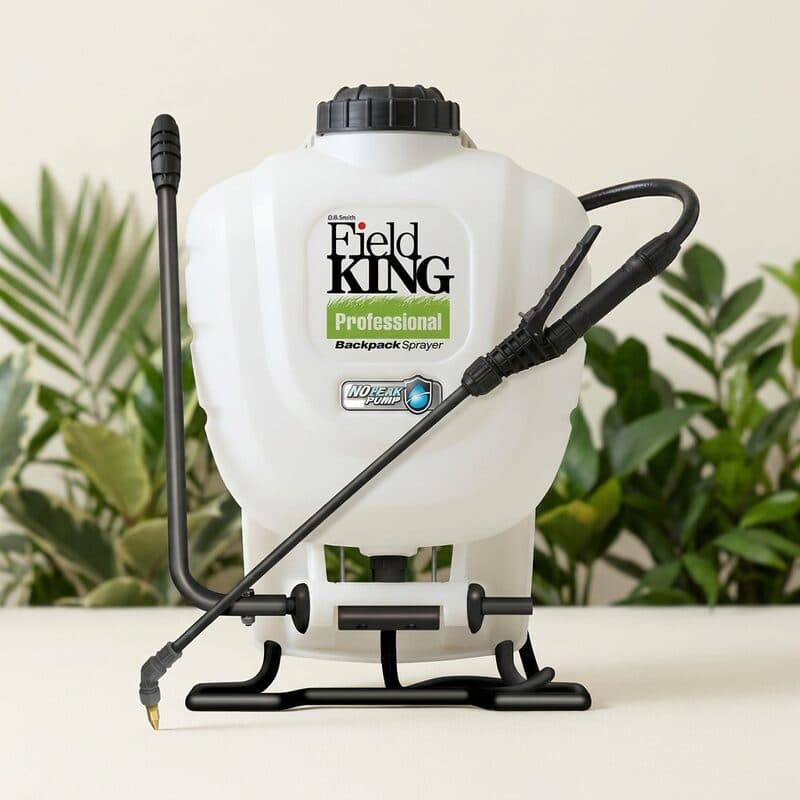
Field King Professional 190328 No-Leak Backpack Sprayer (4 Gallon)
Best for: Gardeners and property owners covering large beds, fence lines, or orchards who want a leak-free, high-pressure backpack they can rebuild instead of replace.
Keep in mind: A full 4-gallon load is heavy to carry over uneven terrain
Amazon price as of the checked date, subject to change. The price on Amazon at checkout applies.
Full research
- Tank capacity
- 4 gallons
- Pump
- Internal no-leak piston pump
- Max pressure
- Up to 150 psi
- Wand
- 21 in poly
Field King's Professional 190328 is a 4-gallon backpack with an internal no-leak piston pump that reaches up to 150 psi, a rebuildable Smith Pro II shut-off, and fully serviceable parts, widely cited as the best-value pro backpack.
This catalog-wide research score is separate from this guide's use-case ranking. How we research
Strengths
- Internal no-leak pump keeps chemicals off your back, unlike many external-pump backpacks
- Internal piston pump reaches up to 150 psi, higher than typical diaphragm backpacks
- Every wear part is user-serviceable, so a worn seal does not mean a new sprayer
Weaknesses
- A full 4-gallon load is heavy to carry over uneven terrain
- Costs several times more than a handheld pump sprayer
Sprout Score breakdown
Best for
Gardeners and property owners covering large beds, fence lines, or orchards who want a leak-free, high-pressure backpack they can rebuild instead of replace.
Owner rating snapshot
Amazon · 66 reviews · 4.6 stars
When you are covering a large garden, a long fence line, or an orchard, a backpack sprayer pays for itself in the trips you do not make back to the spigot. The Field King 190328 holds 4 gallons and is widely regarded as the best-value professional backpack for one specific reason: its internal no-leak piston pump. Many backpacks put the pump on the outside, where a worn seal weeps concentrate down your back. The Field King seals the pump inside the tank, so leaks land in the tank, not on you.
The internal piston also reaches up to 150 psi, higher than typical diaphragm backpacks, which gives you the pressure to push a fine, even mist through a flat-fan tip across a wide canopy. Every wear part is user-serviceable, so a tired seal means a rebuild, not a replacement. A full 4-gallon load is heavy over uneven ground, so fill it to match the job. You can see the current Field King price here.
Best premium: Solo 425 Backpack Sprayer
Best premium
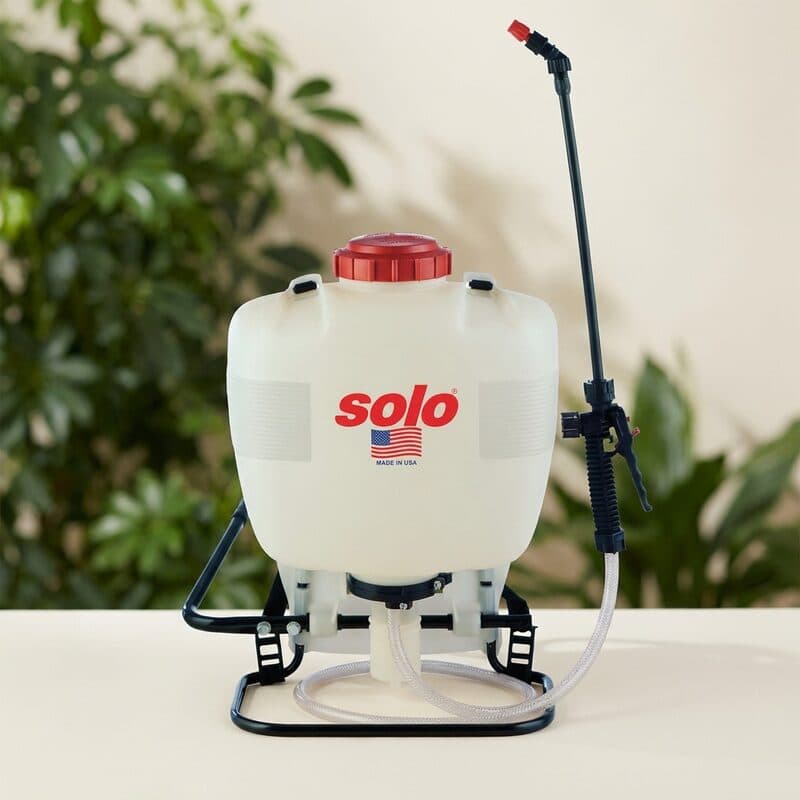
Solo 425 Professional Backpack Sprayer (4 Gallon, Piston Pump)
Best for: Serious gardeners and groundskeepers who want a rebuildable, long-lived backpack from a brand built around durability and field servicing.
Keep in mind: Priced at the top of the consumer backpack range
Amazon price as of the checked date, subject to change. The price on Amazon at checkout applies.
Full research
- Tank capacity
- 4 gallons
- Pump
- Connecting-rod piston pump
- Pump lever
- Mounts on left or right side
- Nozzles
- 4-nozzle assortment incl. brass adjustable
Solo's 425 is a 4-gallon backpack sprayer built around a German-engineered connecting-rod piston pump, with a switchable pump lever, a four-nozzle assortment, and a long reputation for being rebuilt rather than replaced.
This catalog-wide research score is separate from this guide's use-case ranking. How we research
Strengths
- German-engineered piston pump has a long-standing reputation for season-after-season durability
- Pump lever mounts on either side to suit left- or right-handed operators
- Designed to be rebuilt with replacement seals rather than thrown away
Weaknesses
- Priced at the top of the consumer backpack range
- External piston pump can weep at the seal if not maintained, unlike a sealed internal-pump design
Sprout Score breakdown
Best for
Serious gardeners and groundskeepers who want a rebuildable, long-lived backpack from a brand built around durability and field servicing.
Owner rating snapshot
Amazon · 17 reviews · 4.2 stars
The Solo 425 is the pick for a gardener who wants a backpack built around longevity above all. It is a 4-gallon unit with a German-engineered connecting-rod piston pump that has a long reputation for lasting many seasons, comfortable shoulder straps for long jobs, and a pump lever that mounts on either side for left- or right-handed operators. A four-nozzle assortment, including a brass adjustable tip, covers herbicide, soap, and liquid-feed duty.
It sits at the top of the consumer backpack price range, so the value case rests on durability rather than upfront cost. The pump is external, which means it can weep at the seal if you neglect maintenance, unlike the sealed internal design of the Field King. Buy the Solo if you spray often, want a sprayer you will rebuild for a decade, and do not mind paying for that.
How to choose a garden sprayer
The decision usually comes down to four things.
Pump vs backpack. A handheld pump sprayer (1 to 2 gallons) is lighter, cheaper, and ideal for small to medium beds and spot jobs. A backpack (around 4 gallons) frees both hands, distributes weight on your shoulders, and covers far more ground per fill, which matters once you are spraying a large garden, hedges, or trees. If you spend more time refilling than spraying, size up.
Pressure and nozzles. Neem, soap, and foliar feed need a fine, even mist. A higher-pressure piston pump and a useful nozzle set make that easier. A flat-fan tip covers foliage evenly, an adjustable cone changes from mist to stream, and a foaming tip helps treatments cling. More included nozzles give you more control.
Seal and pump materials. Oil-based sprays and surfactants slowly attack cheap rubber seals. Brass internals and Viton (or comparable chemical-resistant) seals last longer and survive the treatments gardeners actually use. A serviceable pump you can rebuild beats a sealed unit you must replace.
Serviceability. The sprayers worth owning are the ones where a worn O-ring or a tired pump seal is a few-dollar fix, not a reason to buy a new sprayer. Check that replacement parts are available before you commit.
| Product | Price | Best for | Buy |
|---|---|---|---|
| Smith Contractor 190216 2-Gallon Pump Sprayer#1 · BEST OVERALL | Typical price range · $30-$50 | Gardeners and property owners who spray often and want one durable, serviceable sprayer with the right nozzle for any job. | Shop Amazon |
| Chapin 20000 1-Gallon Lawn and Garden Pump Sprayer#2 · BEST VALUE | Typical price range · Under $20 | Homeowners who need an affordable, easy-to-handle sprayer for spot weed control and light feeding around small beds and borders. | Search Amazon |
| Field King Professional 190328 No-Leak Backpack Sprayer (4 Gallon)#3 · BEST BACKPACK | Typical price range · $90-$130 | Gardeners and property owners covering large beds, fence lines, or orchards who want a leak-free, high-pressure backpack they can rebuild instead of replace. | Shop Amazon |
| Solo 425 Professional Backpack Sprayer (4 Gallon, Piston Pump)#4 · BEST PREMIUM | Typical price range · $100-$140 | Serious gardeners and groundskeepers who want a rebuildable, long-lived backpack from a brand built around durability and field servicing. | Shop Amazon |
Frequently asked questions
What kind of sprayer is best for neem oil and insecticidal soap?
A pump or backpack sprayer with a fine, adjustable mist nozzle and chemical-resistant seals works best. Brass internals and Viton seals hold up to the oils and surfactants in neem and soap better than cheap rubber. Agitate the tank as you spray, since oil-based mixes separate, and rinse thoroughly with warm soapy water afterward so residue does not clog the nozzle or degrade the seals.
Do I need a backpack sprayer or is a pump sprayer enough?
For a few raised beds or a small garden, a 1 to 2 gallon handheld pump sprayer is plenty. A backpack (around 4 gallons) makes sense once you are covering a large garden, a fence line, or trees, where its larger capacity and hands-free carry save you repeated trips to refill. If you refill more than you spray, step up to a backpack.
Why does my garden sprayer lose pressure?
The most common cause is a worn or dried-out pump O-ring or seal. On most quality sprayers this is a cheap, replaceable part. A clogged in-line filter or nozzle can also reduce output. Clean the filter and nozzle, then lubricate or replace the pump seals. Rinsing the sprayer after every use, especially after oil-based sprays, prevents most pressure problems.
Can I use the same sprayer for weed killer and garden treatments?
It is safer not to. Herbicide residue is hard to fully rinse out, and even traces can damage the plants you later spray with neem, soap, or fertilizer. If you treat both, keep one sprayer dedicated to herbicides and a clearly labeled second sprayer for everything else.
How much area does a 2-gallon sprayer cover?
It depends on the application rate, but a 2-gallon tank typically treats a home vegetable garden or several raised beds in a single fill when applying a fine foliar mist. For full coverage of a large garden, orchard, or long fence line, a 4-gallon backpack covers more ground before you need to refill.
Our recommendation
Buy the Smith Contractor 190216 if you want one durable, serviceable sprayer that handles every garden job, step down to the Chapin 20000 for small-bed spot work on a budget, move to the Field King 190328 backpack when you are covering a lot of ground, and choose the Solo 425 if you want a premium backpack to rebuild for years. Match the size to your garden, keep the seals chemical-resistant, and rinse after every use so your sprayer is ready the next time the planting calendar has you out in the beds.