Our recommendations
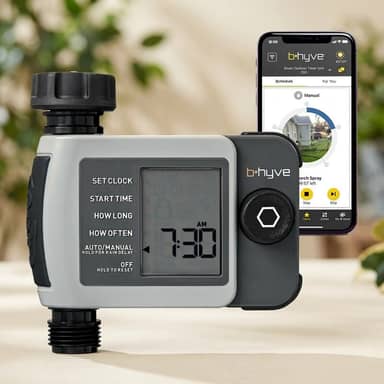
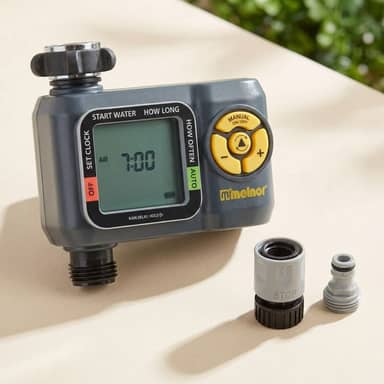
A hose timer opens and closes the water on a schedule you set. It attaches to the spigot between the faucet and a hose or drip line, so beds can be watered early in the morning while you are asleep, at work, or away. The choice is between a connected timer that can adjust its schedule and a self-contained digital timer that follows a fixed program. Both make consistent watering easier.
Smart timer vs simple timer
Choose between a fixed schedule and a timer that adjusts watering for the weather.
A smart (Wi-Fi) timer connects to your home network and an app on your phone. You can change schedules from anywhere, and the better ones pull local weather data to skip a cycle when rain is coming or add water during a heat wave. That intelligence is useful, especially for travelers and anyone tuning water use, but it depends on a reliable Wi-Fi signal reaching the spigot and on you being comfortable with an app.
A simple digital timer does one thing well: it runs the schedule you program on its own buttons, with no app, no hub, and no network to drop. It cannot react to weather, so you adjust it by hand as seasons change, but there is far less to go wrong and nothing to set up beyond the dial.
Best overall: Orbit B-hyve smart timer
Editor's choice
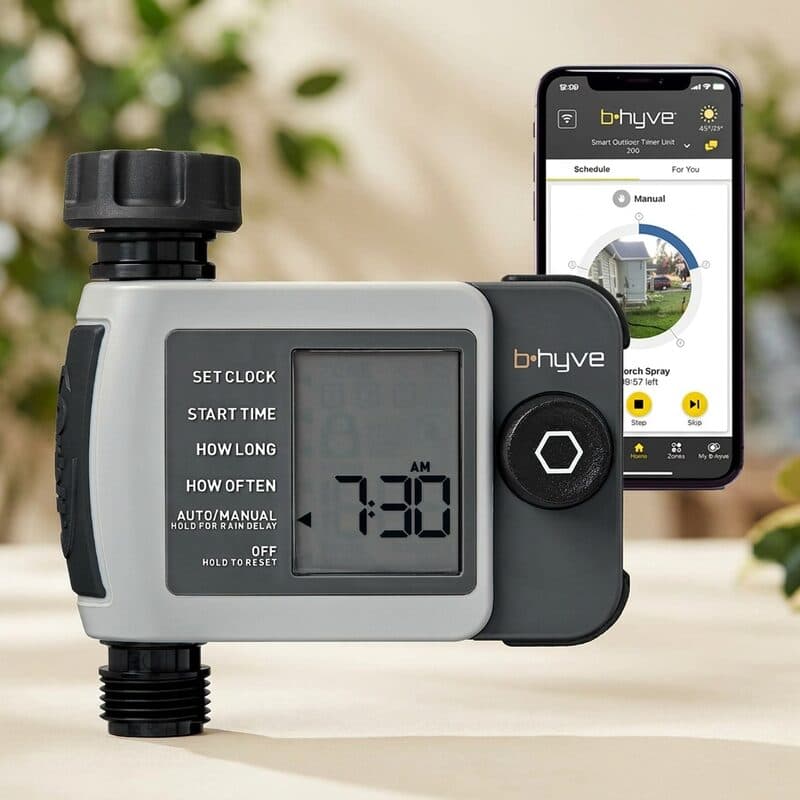
Orbit B-hyve Smart Hose Faucet Timer
Best for: Gardeners who want app control and weather-aware automatic watering.
Keep in mind: WiFi setup can be finicky at the faucet's signal range
Amazon price as of the checked date, subject to change. The price on Amazon at checkout applies.
Full research
- Connectivity
- WiFi and Bluetooth
- Scheduling
- App-based, weather-adjusting
- Zones
- Single outlet (multi-outlet models available)
- Power
- Battery powered
Orbit's B-hyve smart timer adds WiFi and Bluetooth control with weather-based scheduling, automating faucet watering from a phone app.
This catalog-wide research score is separate from this guide's use-case ranking. How we research
Strengths
- Weather-based scheduling skips watering after rain
- Controllable from a phone over WiFi or Bluetooth
- Flexible programs for multiple watering windows
Weaknesses
- WiFi setup can be finicky at the faucet's signal range
- Costs more than a basic mechanical dial timer
Sprout Score breakdown
Best for
Gardeners who want app control and weather-aware automatic watering.
Owner rating snapshot
Amazon · 17 reviews · 4.1 stars
The Orbit B-hyve Smart Hose Faucet Timer is the timer we recommend first because it removes the guesswork from watering. Connect it to Wi-Fi and the WeatherSense feature pulls your local forecast and historical weather to build and adjust a schedule, skipping cycles when rain is on the way so you are not watering in a downpour. You can also control it manually from the app or at the unit, and run multiple independent programs for different zones.
The timer needs a reliable Wi-Fi signal at the spigot, and the app takes some setup. A few owners report battery or connection problems at the edge of their network range. With a solid signal, it is the most capable timer here.
Best value: Melnor Digital Water Timer
Best value
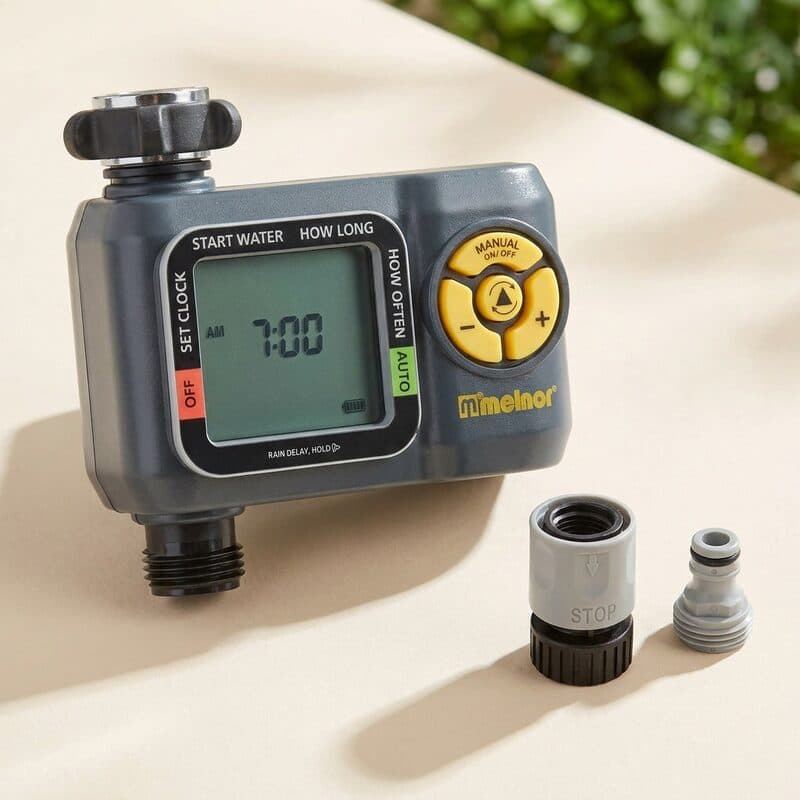
Melnor Digital Water Timer
Best for: Gardeners who want set-and-forget automatic watering without smart-app complexity.
Keep in mind: No smart or weather-based features
Amazon price as of the checked date, subject to change. The price on Amazon at checkout applies.
Full research
- Type
- Digital programmable timer
- Scheduling
- Set frequency and duration
- Override
- Manual on/off button
- Power
- Battery powered
Melnor's digital water timer offers straightforward programmable scheduling with a manual override, automating a single faucet without an app.
This catalog-wide research score is separate from this guide's use-case ranking. How we research
Strengths
- Straightforward digital programming without an app
- Manual override for off-schedule watering
- Affordable automation for a single faucet
Weaknesses
- No smart or weather-based features
- Small display can be hard to read in bright sun
Sprout Score breakdown
Best for
Gardeners who want set-and-forget automatic watering without smart-app complexity.
Owner rating snapshot
Amazon · 18 reviews · 4.1 stars
The Melnor Digital Water Timer is the pick for gardeners who want reliability without the app. Everything programs on the unit itself with clearly labeled buttons: set the start time, frequency, and run duration, and it runs that schedule day after day. There is no hub, no network, and nothing to troubleshoot from a phone, which is exactly the appeal. A manual override lets you water on demand without disturbing the program.
Because it is not connected, it cannot skip watering for rain, so you adjust it by hand as the season shifts from spring to peak summer. Owners occasionally mention the cover or seals as the weak point over time. As a no-fuss, dependable timer at a friendly price, it does its one job well.
How to choose a hose timer
Smart or simple. Check the Wi-Fi signal at the faucet and decide whether you want to manage watering through an app. Do not pay for connected features that will not work reliably at the spigot.
Number of outlets. Single-outlet timers water one hose or drip line. Dual-outlet models run two independent schedules from one faucet, which is handy if you want to water containers and beds on different cadences.
Programming flexibility. Look for the ability to set multiple start times and run durations per day. Seedlings and containers often want short, frequent watering, while established beds prefer long, infrequent soaks.
Battery type and life. Most timers run on AA or AAA batteries that drive the valve. A dead battery can leave the valve stuck open or closed, so note the battery type and change them at the start of each season.
Leak resistance and fittings. Hand-tighten to the spigot with the rubber washer seated, and check the threads match your faucet. The most common complaint across all hose timers is a slow drip at a poorly seated connection.
| Product | Price | Best for | Buy |
|---|---|---|---|
| Orbit B-hyve Smart Hose Faucet Timer#1 · EDITOR'S CHOICE | Typical price range · $50-$100 | Gardeners who want app control and weather-aware automatic watering. | Shop Amazon |
| Melnor Digital Water Timer#2 · BEST VALUE | Typical price range · $25-$50 | Gardeners who want set-and-forget automatic watering without smart-app complexity. | Shop Amazon |
Are smart hose timers worth it?
For most gardeners, yes, if your Wi-Fi reaches the faucet. A smart timer like the Orbit B-hyve skips watering when rain is forecast and lets you adjust the schedule from your phone while away, which saves water and protects plants from both drought and overwatering. If your signal is weak at the spigot, a simple digital timer is the more reliable choice.
Do hose timers work with drip irrigation?
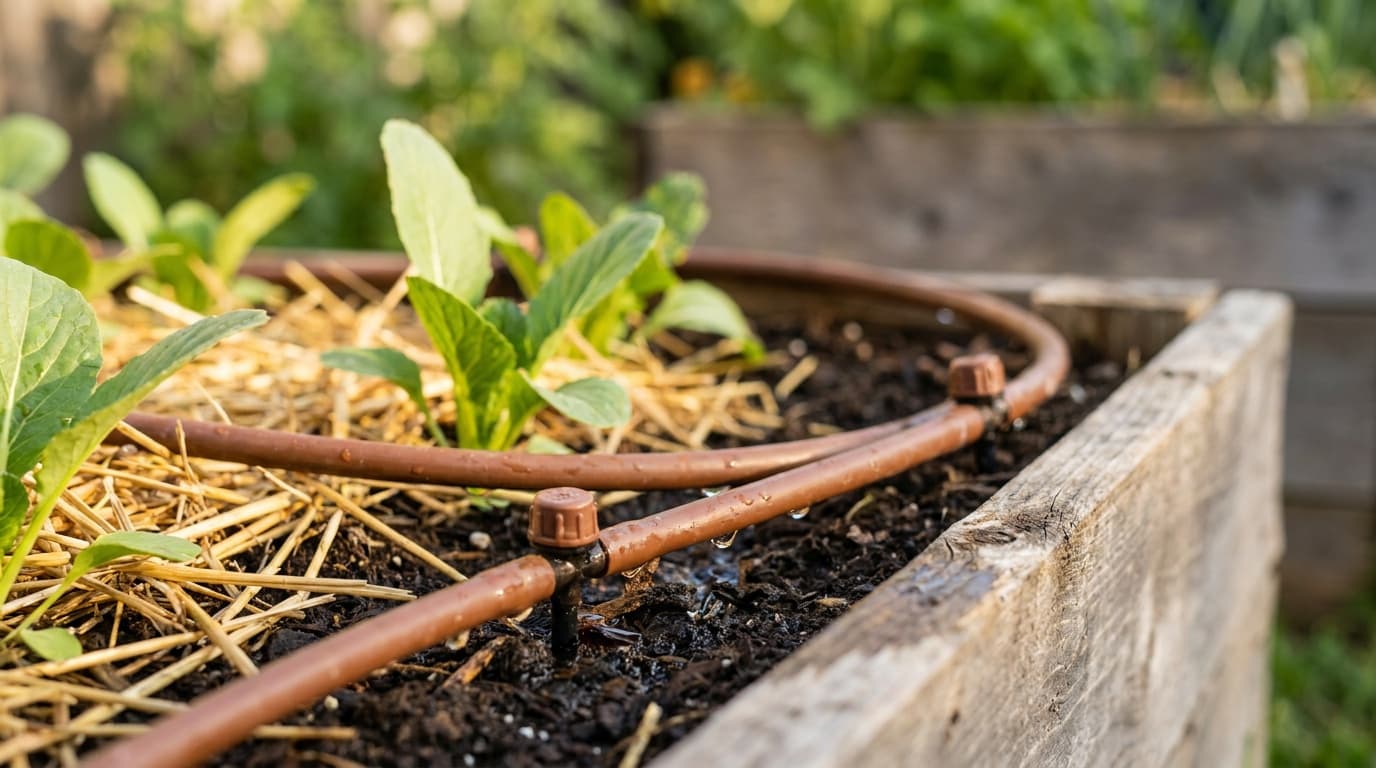
Yes. A hose timer screws onto the spigot and works with drip lines and soaker hoses just as it does with a regular hose, and pairing the two is one of the best watering setups for a garden. Drip delivers water to the roots with little waste, and the timer handles the schedule so beds get consistent moisture without you standing there with a hose.
How long should I run my hose timer for a garden?
It depends on your soil, weather, and what you are watering, but a common starting point for established beds is a long, deep soak two or three times a week rather than a light daily sprinkle, which encourages deep roots. Seedlings and containers dry out faster and may need shorter, more frequent cycles. Check the soil a few inches down and adjust from there.
Why does my hose timer leak?
The most common cause is a connection that is not seated properly. Make sure the rubber washer is in place and clean, hand-tighten the timer to the spigot, and confirm the threads match your faucet. If the valve itself drips when closed, a low battery or debris in the valve is often the culprit.
Will a hose timer water my garden while I am on vacation?
That is exactly what it is for. Set the schedule before you leave and the timer opens and closes the water on its own, so your garden keeps getting watered while you are away. A smart timer adds the ability to check and adjust from your phone and to skip cycles if it rains at home.
A hose timer is a small spend that pays for itself the first time it saves your garden during a hot week away. Decide whether you want smart weather-skipping or simple reliability, pair it with drip, and your beds will get the steady moisture they need. For more on building an efficient watering setup, browse our other gear guides.