Our recommendations
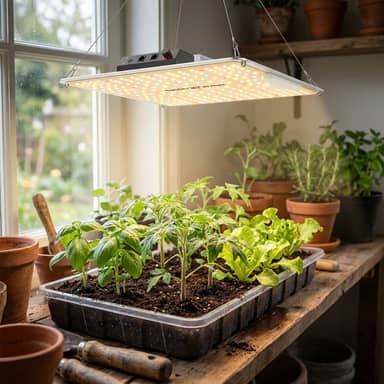
Spider Farmer SF-1000 LED Grow Light
Why this pick →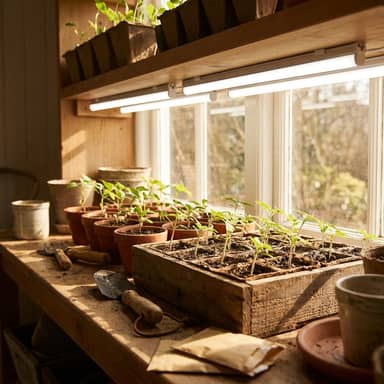
Barrina T5 LED Grow Light (4FT, 20W, 6-Pack)
Why this pick →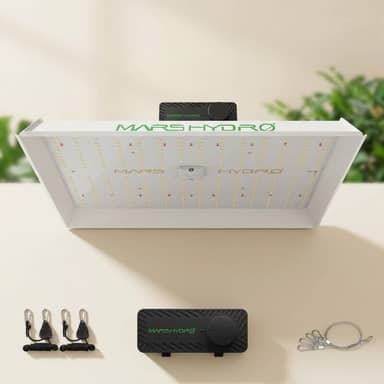
Mars Hydro TS 1000 LED Grow Light
Why this pick →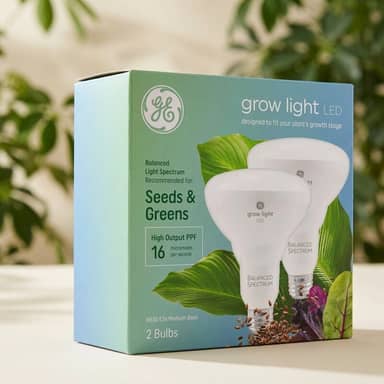
GE Grow LED Light Bulb (BR30, Balanced Spectrum)
Why this pick →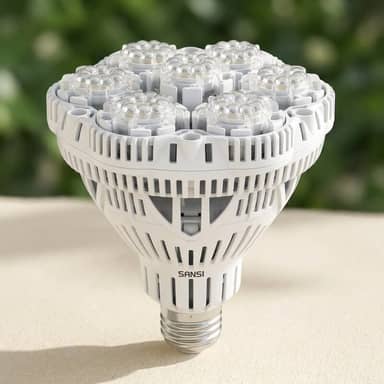
SANSI Grow Light Bulb (Full Spectrum LED)
Why this pick →Seedlings stretch, flop, and grow pale when they do not get enough light, and a sunny windowsill rarely delivers enough in late winter. A grow light fixes that, but the right one depends entirely on what you are lighting. A single tray on a counter is a different problem from four shelves of starts, and the cheapest screw-in bulb solves neither well. This guide sorts the picks by the job, so you can match the light to your space rather than overbuying or underlighting.
If you are still deciding when to start seeds, our planting calendar tells you the right indoor sowing window for your ZIP, and our guide to how to start seeds indoors walks through the full process.
Best overall: Spider Farmer SF-1000
Best overall
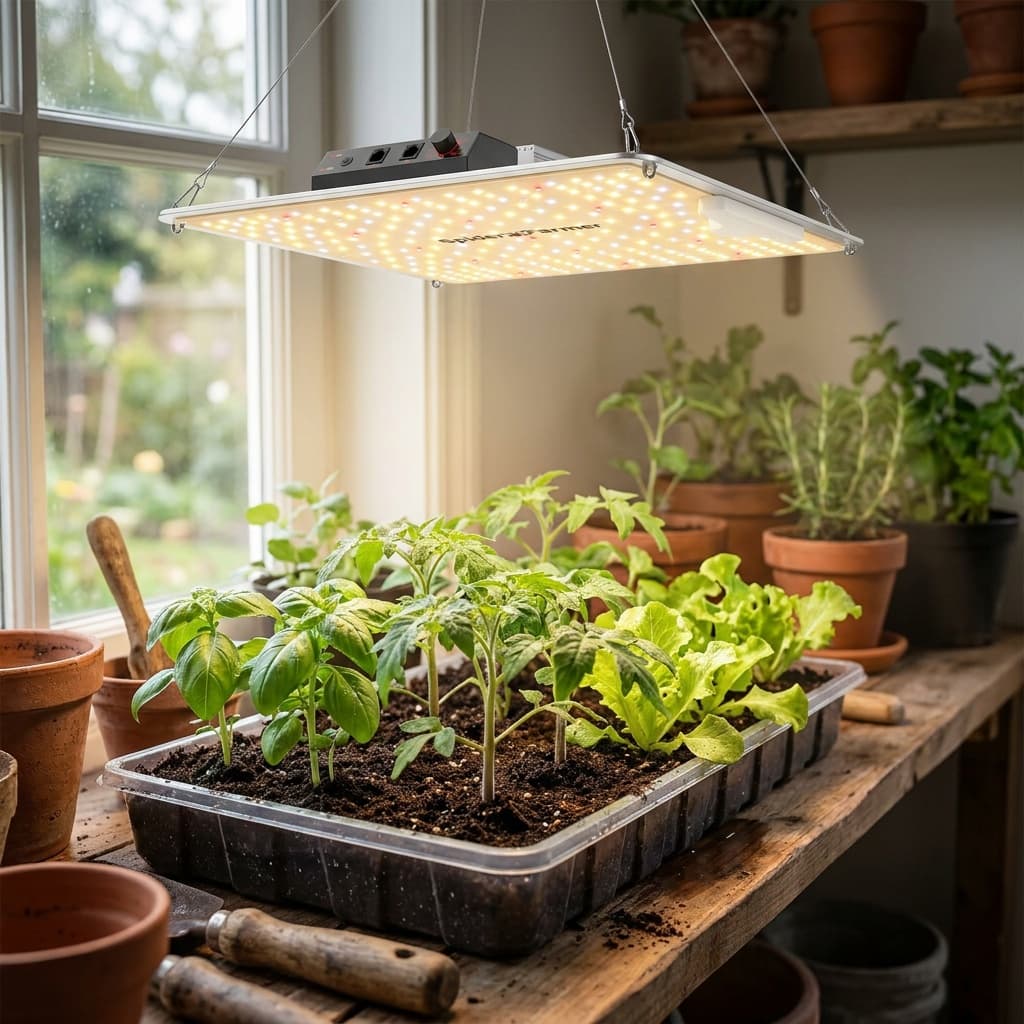
Spider Farmer SF-1000 LED Grow Light
Best for: Growers who want a quality dimmable panel for a 2x2 footprint.
Keep in mind: Covers a smaller footprint than its strip-light cost equivalent
Amazon price as of the checked date, subject to change. The price on Amazon at checkout applies.
Full research
- Type
- Quantum-board LED panel
- Diodes
- Samsung LM301B, full spectrum
- Power draw
- 100W
- Core coverage
- 2 x 2 ft
A dimmable full-spectrum quantum-board panel with Samsung diodes, fanless and quiet. A step up from strip lights for vigorous seedlings or a small grow.
This catalog-wide research score is separate from this guide's use-case ranking. How we research
Strengths
- High-quality Samsung LM301B diodes
- Dimmable for hardening off and stage control
- Silent, fanless operation
Weaknesses
- Covers a smaller footprint than its strip-light cost equivalent
- Overkill for a casual seed tray or two
Sprout Score breakdown
Best for
Growers who want a quality dimmable panel for a 2x2 footprint.
Owner rating snapshot
Amazon · 123 reviews · 4.6 stars
The Spider Farmer SF-1000 hits the balance most seed starters want. It is a quantum-board panel with Samsung LM301B diodes, a full spectrum that carries seedlings from germination through hardening off, and a dimmer so you can dial intensity down for fresh sprouts and up as they mature. It is fanless, so it runs silent on a kitchen shelf.
Its core coverage is about 2x2 ft, enough for one or two standard 1020 trays. Strip lights cover more shelf area for less money, but this panel provides stronger light over a compact household setup.
Best value: Barrina T5
Best value
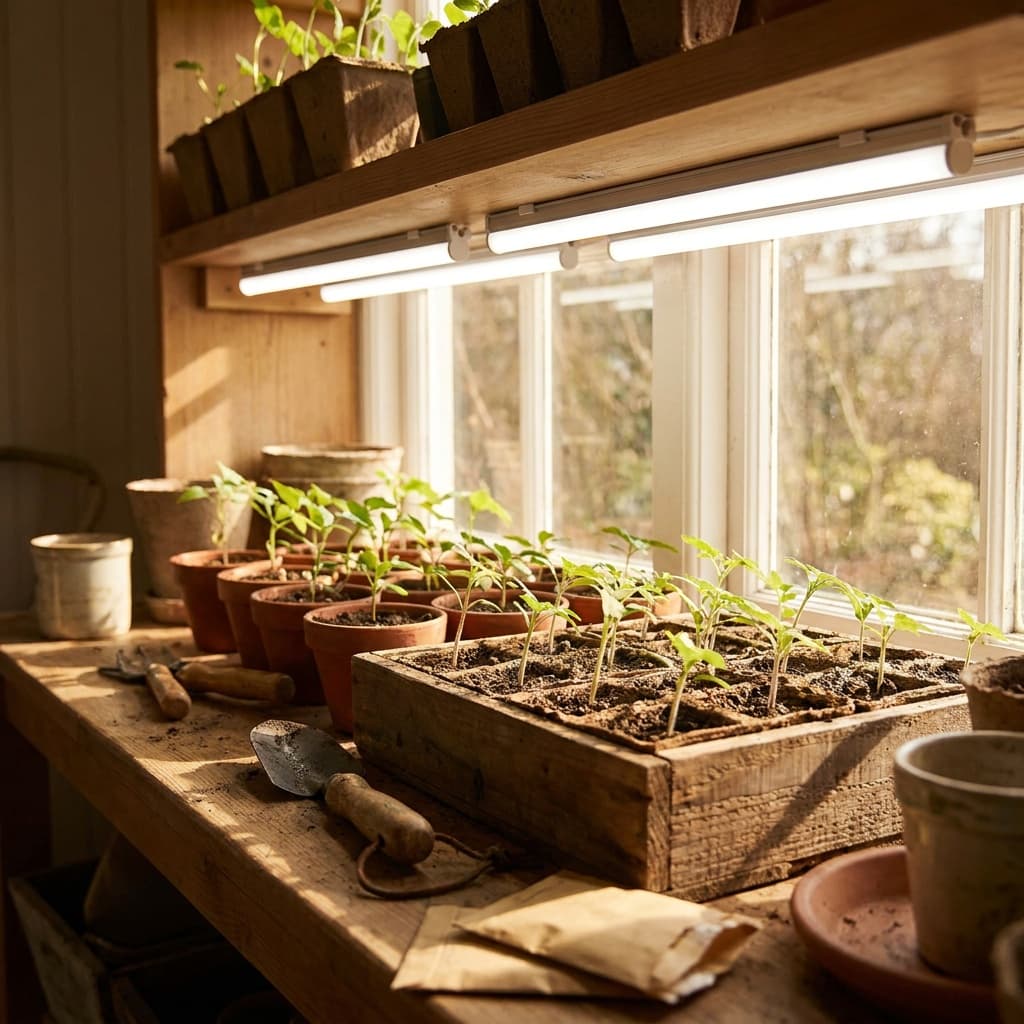
Barrina T5 LED Grow Light (4FT, 20W, 6-Pack)
Best for: Lighting a multi-shelf seed-starting rack on a tight budget.
Keep in mind: Lightweight mounting hardware and connectors
Amazon price as of the checked date, subject to change. The price on Amazon at checkout applies.
Full research
- Type
- T5 LED integrated bar (linkable)
- Length
- 4 ft per bar
- Spectrum
- Warm white (3000K)
- Power
- 20W per bar (2200 lm)
Linkable LED strip lights that bolt under a shelf to light a full tray of seedlings evenly. The default choice for budget seed-starting rigs.
This catalog-wide research score is separate from this guide's use-case ranking. How we research
Strengths
- Even coverage across long shelves
- Daisy-chain up to many bars from one outlet
- Very low cost per square foot of canopy
Weaknesses
- Lightweight mounting hardware and connectors
- No dimming or built-in timer
Sprout Score breakdown
Best for
Lighting a multi-shelf seed-starting rack on a tight budget.
Owner rating snapshot
Amazon · 269 reviews · 4.6 stars
When you are lighting a multi-shelf rack, the math favors linkable bars. The Barrina T5 ships as six 4 ft LED bars (20W, 2200 lumens each) that daisy-chain from a single outlet and bolt under wire shelving. Spread two or three bars across each shelf and you get even coverage along the whole length of a tray, which is exactly what a rack of seedlings needs.
The housing is solid aluminum, though the link cords and clips are lightweight, and there is no dimmer or built-in timer (pair it with a cheap outlet timer). For the cost per square foot of lit canopy, nothing here comes close.
Best for scaling: Mars Hydro TS 1000
Best for scaling
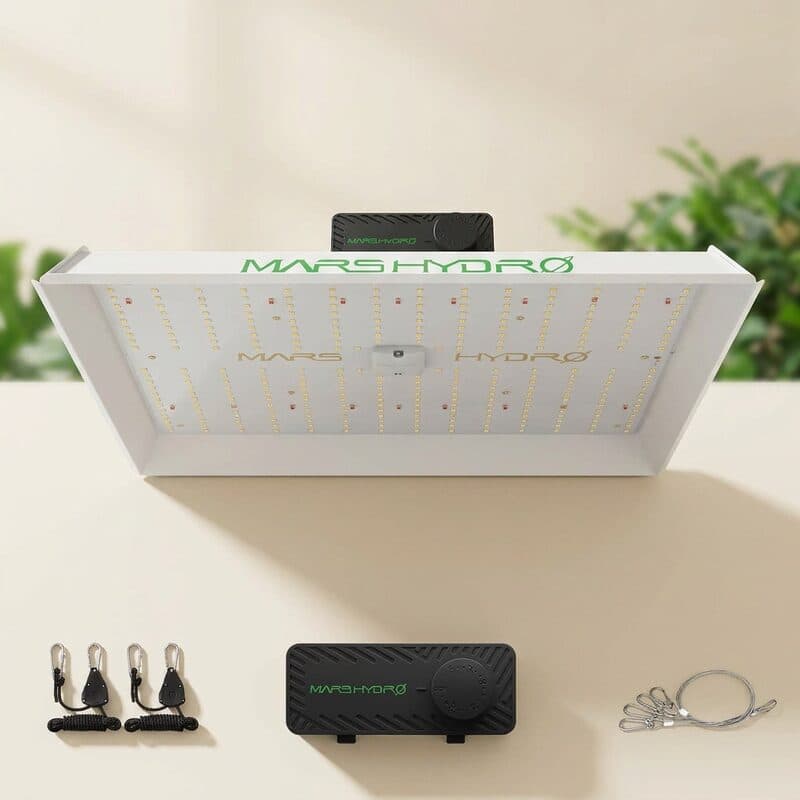
Mars Hydro TS 1000 LED Grow Light
Best for: Budget-minded growers wanting a dimmable panel alternative to the SF-1000.
Keep in mind: Generic (non-Samsung) diodes
Amazon price as of the checked date, subject to change. The price on Amazon at checkout applies.
Full research
- Type
- LED panel with reflective film
- Spectrum
- Full spectrum (3000K + 5000K + IR/red)
- Power draw
- 150W
- Core coverage
- 2 x 2 ft
A dimmable full-spectrum panel that competes directly with the SF-1000, usually at a slightly lower price. It covers a 2x2-foot growing area.
This catalog-wide research score is separate from this guide's use-case ranking. How we research
Strengths
- Dimmable full-spectrum output
- Reflective film boosts edge coverage
- Frequently the lower-cost panel option
Weaknesses
- Generic (non-Samsung) diodes
- Listed wattage is draw, not actual diode wattage
Sprout Score breakdown
Best for
Budget-minded growers wanting a dimmable panel alternative to the SF-1000.
Owner rating snapshot
Amazon · 203 reviews · 4.6 stars
The Mars Hydro TS 1000 is the natural alternative to the SF-1000 and usually costs a little less. It is a dimmable full-spectrum panel sized for the same 2x2 ft core area, with reflective film around the diodes to push light to the edges. The diodes are generic rather than name-brand Samsung, and the headline wattage is power draw rather than actual diode output, so read the specs carefully.
If you are starting seedlings now but plan to grow them on under lights, or expand into a small tent later, this panel scales into that role well.
Best bulb: GE Grow LED
Best bulb
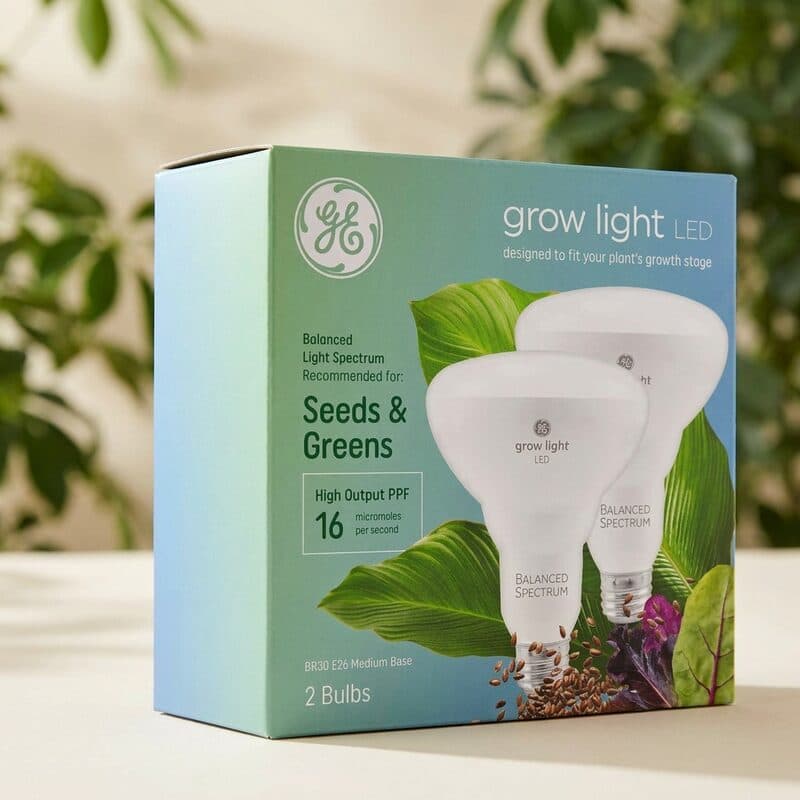
GE Grow LED Light Bulb (BR30, Balanced Spectrum)
Best for: Lighting a few houseplants or a small pot of seedlings in an existing lamp.
Keep in mind: Single bulb covers only a small area
Amazon price as of the checked date, subject to change. The price on Amazon at checkout applies.
Full research
- Type
- BR30 LED bulb (E26 base)
- Spectrum
- Balanced (seeding and greens)
- Power
- 9W
- Fit
- Standard household E26 socket
A screw-in BR30 grow bulb that drops into any standard lamp or fixture. Best for a few herb pots or a small seedling cluster, not a full rack.
This catalog-wide research score is separate from this guide's use-case ranking. How we research
Strengths
- Fits any standard E26 socket, no special fixture
- Inexpensive and widely stocked
- Low heat and low power draw
Weaknesses
- Single bulb covers only a small area
- Not practical for a full seed-starting shelf
Sprout Score breakdown
Best for
Lighting a few houseplants or a small pot of seedlings in an existing lamp.
Owner rating snapshot
Amazon · 193 reviews · 4.6 stars
Not everyone needs a panel or a rack. If you have a few herb pots or one small cluster of starts, the GE Grow LED is a BR30 bulb that screws into any standard E26 socket, including a desk lamp or a clip light. It runs cool, draws little power, and is widely stocked. One bulb only lights a small spot, so it is the wrong tool for a full tray, but it is the simplest way to add real grow light to an existing fixture.
Budget bulb: SANSI Grow Light Bulb
Budget bulb
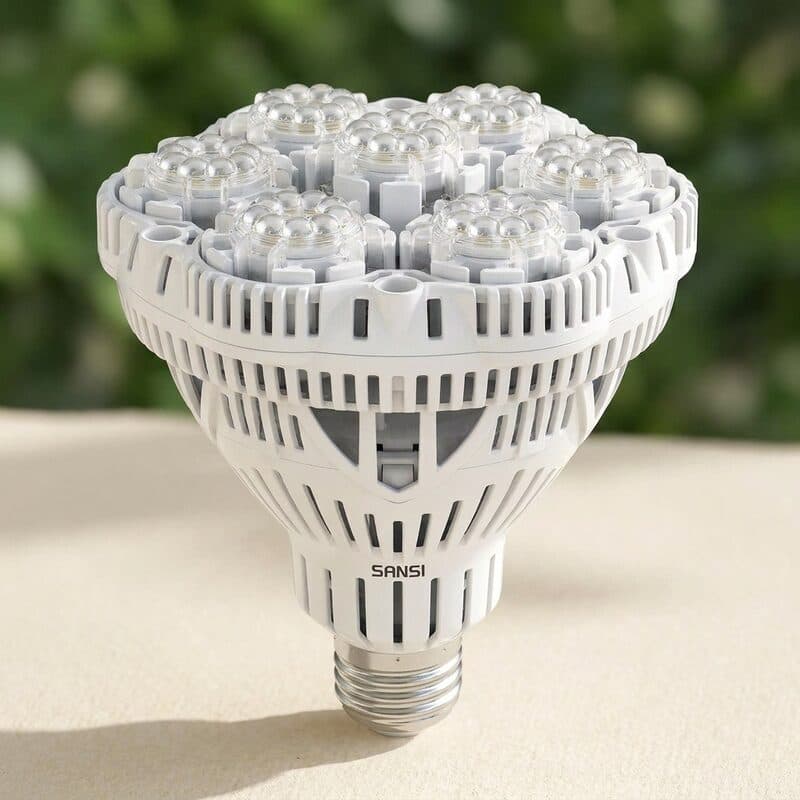
SANSI Grow Light Bulb (Full Spectrum LED)
Best for: Indoor growers wanting a brighter screw-in bulb for a small plant group.
Keep in mind: Still only covers a small footprint
Amazon price as of the checked date, subject to change. The price on Amazon at checkout applies.
Full research
- Type
- LED grow bulb (E26 base)
- Spectrum
- Full spectrum (sunlight-like white)
- Power
- 24W
- Heat dissipation
- Ceramic-based
A higher-output full-spectrum screw-in bulb with ceramic heat dissipation. A stronger single-bulb option than a basic grow bulb for small plant groups.
This catalog-wide research score is separate from this guide's use-case ranking. How we research
Strengths
- Stronger output than typical grow bulbs
- Fits any standard E26 socket
- Ceramic body runs cool
Weaknesses
- Still only covers a small footprint
- No dimming or spectrum control
Sprout Score breakdown
Best for
Indoor growers wanting a brighter screw-in bulb for a small plant group.
Owner rating snapshot
Amazon · 25 reviews · 4.5 stars
The SANSI Grow Light Bulb is the brighter screw-in option. At 24W with a sunlight-like full spectrum and ceramic heat dissipation, it puts out more usable light than a typical grow bulb while still fitting any E26 socket. It covers a small footprint and offers no dimming, but for a slightly larger cluster of seedlings or houseplants in a lamp, it does more work than a basic bulb at a still-low price.
How to choose a seedling grow light
Three numbers and one habit decide whether your seedlings thrive.
What to match to your setup
Coverage
PPFD and intensity
Hang height
Run time
The other rule of thumb: it is hard to give seedlings too much light, but very easy to give them too little. If you are unsure between two options, size up on coverage rather than down. Pale, stretched, floppy seedlings almost always mean the light is too weak or too far away.
| Product | Price | Best for | Buy |
|---|---|---|---|
| Spider Farmer SF-1000 LED Grow Light#1 · BEST OVERALL | Typical price range · $100-$150 | Growers who want a quality dimmable panel for a 2x2 footprint. | Shop Amazon |
| Barrina T5 LED Grow Light (4FT, 20W, 6-Pack)#2 · BEST VALUE | Typical price range · $25-$50 | Lighting a multi-shelf seed-starting rack on a tight budget. | Shop Amazon |
| Mars Hydro TS 1000 LED Grow Light#3 · BEST FOR SCALING | Typical price range · $100-$150 | Budget-minded growers wanting a dimmable panel alternative to the SF-1000. | Shop Amazon |
| GE Grow LED Light Bulb (BR30, Balanced Spectrum)#4 · BEST BULB | Typical price range · Under $25 | Lighting a few houseplants or a small pot of seedlings in an existing lamp. | Shop Amazon |
| SANSI Grow Light Bulb (Full Spectrum LED)#5 · BUDGET BULB | Typical price range · Under $25 | Indoor growers wanting a brighter screw-in bulb for a small plant group. | Shop Amazon |
How far should grow lights be from seedlings?
For LED panels and strip lights, start around 6 to 12 inches above the seedling canopy and raise the light as the plants grow to keep that distance roughly constant. If seedlings stretch tall and thin, the light is too far away or too weak. If leaves look bleached or curled, move it up a few inches.
How many hours a day do seedlings need grow lights?
Aim for about 14 to 16 hours of light per day for most vegetable and flower seedlings, then a dark rest period. Running a light 24 hours a day does not help and removes the dark cycle plants use. The simplest fix is a basic outlet timer so the schedule stays consistent.
Do seedlings need full spectrum or special grow lights?
A full-spectrum light is the practical default and carries seedlings from germination through transplant with one fixture. You do not need a specialized red or blue supplemental setup to raise healthy starts. What matters far more is having enough intensity and keeping the light close enough to the canopy.
Can I use a regular LED bulb instead of a grow light?
A standard household LED is generally too weak and the wrong light quality to raise sturdy seedlings. A purpose-made grow bulb like the GE Grow LED or SANSI bulb fits the same socket but delivers a spectrum and intensity suited to plants. For a full tray you want a panel or strip lights rather than any single bulb.
Our recommendation
Match the light to the job. For one or two trays, the Spider Farmer SF-1000 is the dimmable full-spectrum panel to buy. For a whole shelving rack, Barrina T5 bars cost the least per square foot of lit canopy. For a pot or two in an existing lamp, a grow bulb is all you need. Then put it on a timer, keep it close, and your seedlings will grow stocky instead of stretched.