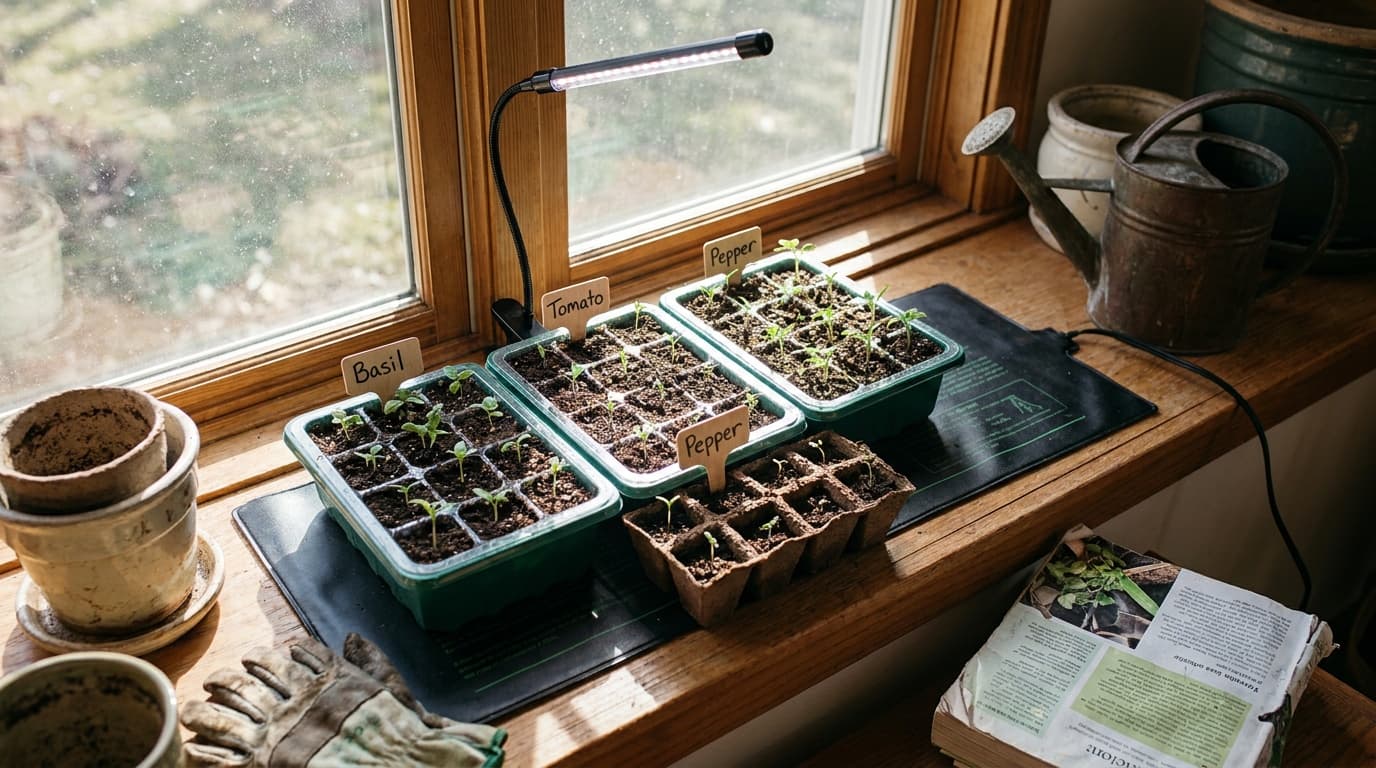
There are real reasons to start seeds indoors instead of buying transplants: far more variety, a big head start on the season, and seedlings grown exactly how you want them. It is also easy once you understand the few things that actually matter. Most failures come down to two mistakes, sowing at the wrong time and not giving enough light, and both are simple to fix.
Work backward from your last frost
The most important decision happens before you open a seed packet: when to sow. Start too early and your seedlings get leggy and root-bound waiting for spring; start too late and you lose the head start entirely. Everything keys off your last spring frost date.
Most seed packets tell you to start a crop a certain number of weeks before your last frost (tomatoes around 6 to 8 weeks before, peppers 8 to 10, and so on). To use that, you need to know your actual last frost date, which depends on where you live.
What you actually need
You do not need much, but a few things make a real difference between a strong tray and a struggling one.
The short shopping list
A seed-starting mix
Trays that drain
A strong light
Gentle bottom heat
A humidity dome
Trays and mix
Reusable trays that drain well are the foundation. They pair with any insert, dome, and heat mat, and unlike flimsy disposable trays they survive scrubbing and reuse, which also keeps damping-off pathogens from carrying over.
Some links on this page are affiliate links. As an Amazon Associate I earn from qualifying purchases.
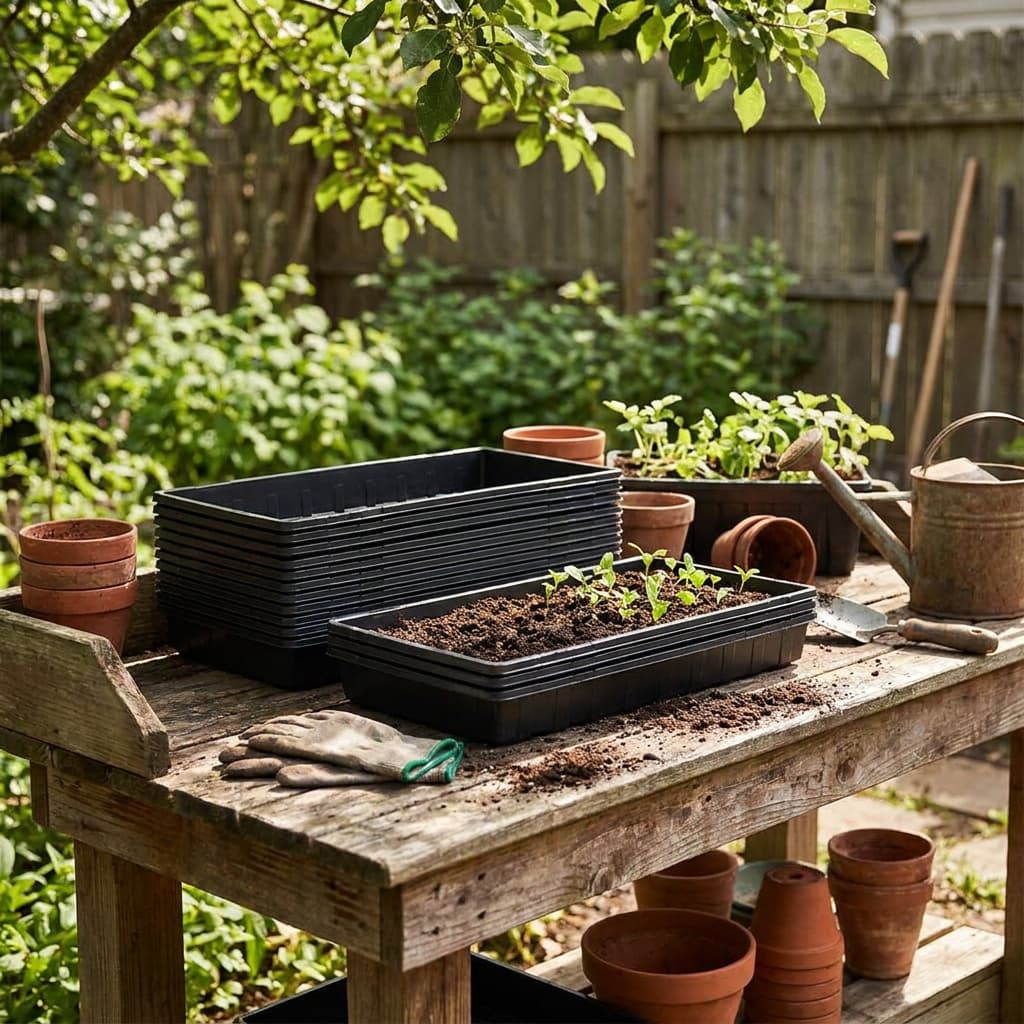
Durable, reusable
Bootstrap Farmer 1020 Trays (Heavy-Duty, No Holes)
Best for: Gardeners tired of replacing cracked trays every season.
Keep in mind: Much pricier upfront than disposable trays
Amazon price as of the checked date, subject to change. The price on Amazon at checkout applies.
Full research
- Footprint
- Standard 1020 (10 x 20 in)
- Material
- Thick BPA-free plastic, USA-made
- Drainage
- No-hole bottom tray (use as base or with inserts)
- Reusability
- Multi-season, dishwasher/heat-mat safe
Thick, USA-made 1020 trays built to survive many seasons rather than crack after one. The standard footprint pairs with any insert, dome, or heat mat.
This catalog-wide research score is separate from this guide's use-case ranking. How we research
Strengths
- Far more durable than standard nursery trays
- Standard 1020 size fits the whole ecosystem of inserts and domes
- Reusable for years, lowering long-term cost
Weaknesses
- Much pricier upfront than disposable trays
- No-hole base needs separate inserts for drainage
Sprout Score breakdown
Best for
Gardeners tired of replacing cracked trays every season.
Owner rating snapshot
Amazon · 21 reviews · 4.8 stars
Warmth for germination
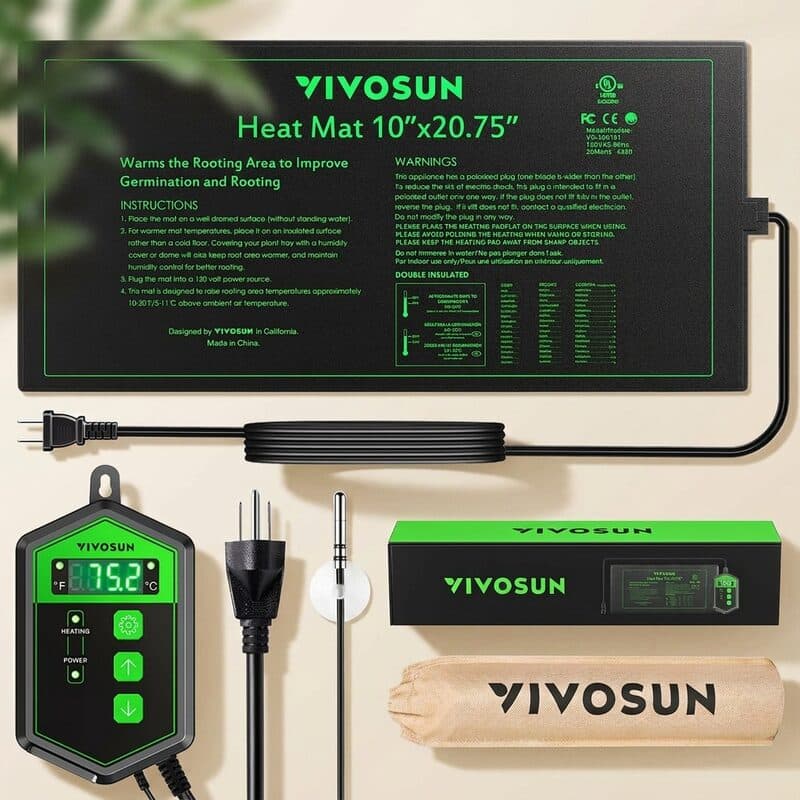
Warm-season seeds germinate slowly and unevenly in a cool room, and slow germination is exactly when seeds are most at risk of rotting. A heat mat under the tray holds the root zone warm so seeds come up fast and strong.
Faster germination
VIVOSUN Seedling Heat Mat (10 x 20.75 in)
Best for: Speeding germination of warm-season seeds like tomatoes and peppers.
Keep in mind: No thermostat included (pair with one)
Amazon price as of the checked date, subject to change. The price on Amazon at checkout applies.
Full research
- Size
- 10 x 20.75 in (fits a 1020 tray)
- Power
- 18W
- Construction
- Waterproof, MET-certified
- Warmth
- Raises root-zone temp ~10-20 F above ambient
A waterproof germination mat sized to fit a standard 1020 tray, warming the root zone to speed and improve seed germination. A cheap, high-impact upgrade.
This catalog-wide research score is separate from this guide's use-case ranking. How we research
Strengths
- Fits a standard 1020 tray exactly
- Noticeably faster, more even germination
- Inexpensive and waterproof
Weaknesses
- No thermostat included (pair with one)
- Long-term durability varies between units
Sprout Score breakdown
Best for
Speeding germination of warm-season seeds like tomatoes and peppers.
Owner rating snapshot
Amazon · 14 reviews · 4.5 stars
Light is non-negotiable
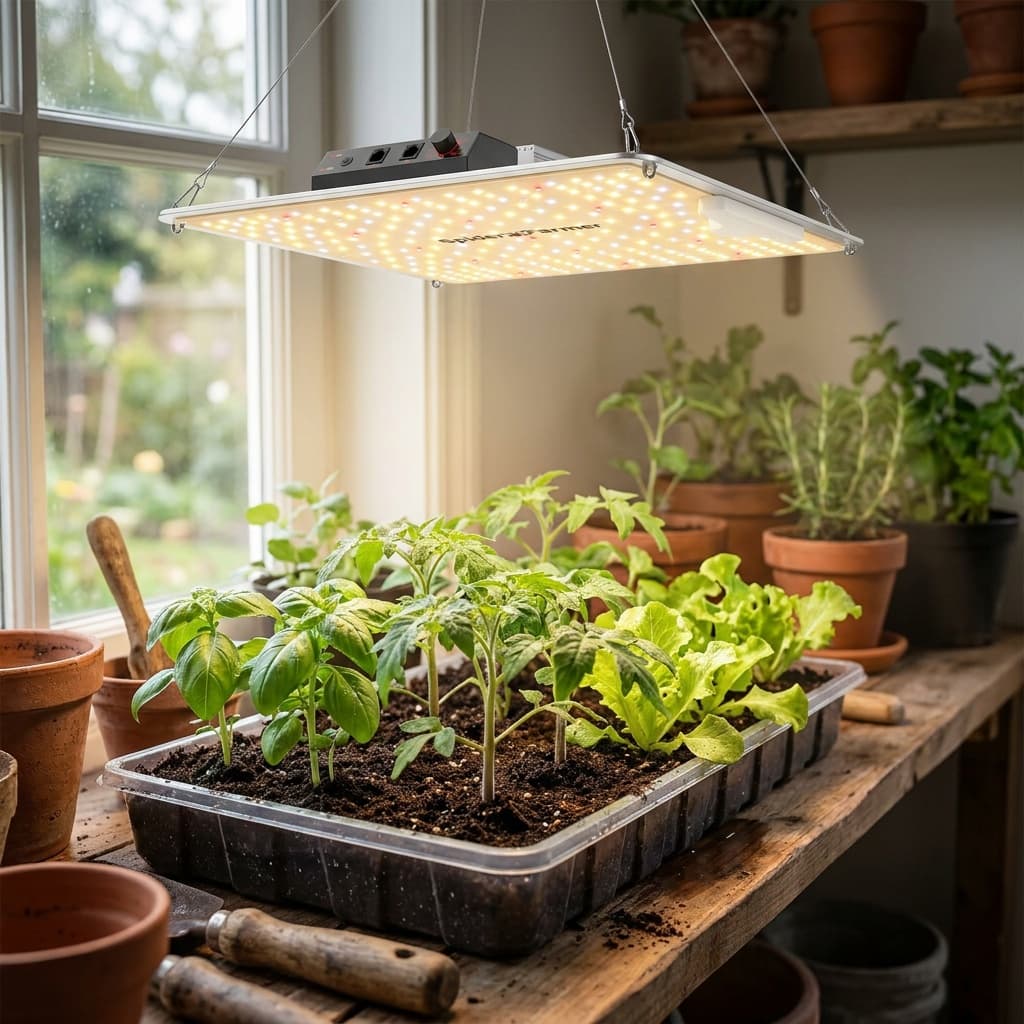
This is where most first-time seed starters go wrong. A south-facing window simply does not deliver enough light in late winter, and seedlings respond by stretching tall, thin, and weak. A grow light like the dimmable Spider Farmer SF-1000 kept just a few inches above the canopy keeps stems short and stocky.
Strong, dimmable light
Spider Farmer SF-1000 LED Grow Light
Best for: Growers who want a quality dimmable panel for a 2x2 footprint.
Keep in mind: Covers a smaller footprint than its strip-light cost equivalent
Amazon price as of the checked date, subject to change. The price on Amazon at checkout applies.
Full research
- Type
- Quantum-board LED panel
- Diodes
- Samsung LM301B, full spectrum
- Power draw
- 100W
- Core coverage
- 2 x 2 ft
A dimmable full-spectrum quantum-board panel with Samsung diodes, fanless and quiet. A step up from strip lights for vigorous seedlings or a small grow.
This catalog-wide research score is separate from this guide's use-case ranking. How we research
Strengths
- High-quality Samsung LM301B diodes
- Dimmable for hardening off and stage control
- Silent, fanless operation
Weaknesses
- Covers a smaller footprint than its strip-light cost equivalent
- Overkill for a casual seed tray or two
Sprout Score breakdown
Best for
Growers who want a quality dimmable panel for a 2x2 footprint.
Owner rating snapshot
Amazon · 123 reviews · 4.6 stars
Humidity for sprouting, then air
A vented dome traps the humidity seeds need to germinate, and the vents let you open it up the moment sprouts appear so the surface dries and air can move. That switch from humid to airy is what keeps seedlings healthy after they emerge.

Vent after sprouting
VIVOSUN 6-Pack Seed Starter Trays with Humidity Domes
Best for: Gardeners starting several compact seed batches who want cells, base trays, and vented domes together.
Keep in mind: Thin plastic can crack with rough handling
Amazon price as of the checked date, subject to change. The price on Amazon at checkout applies.
Full research
- Quantity
- 6 complete tray sets
- Cells
- 12 cells per insert
- Vents
- Adjustable top vents for humidity control
- Material
- Clear plastic
Six compact 12-cell propagation trays with base trays and adjustable humidity domes. The complete sets retain germination moisture while keeping small seed batches organized.
This catalog-wide research score is separate from this guide's use-case ranking. How we research
Strengths
- Adjustable vents control humidity as seedlings mature
- Includes cell inserts, base trays, and domes
- Good value for several small seed batches
Weaknesses
- Thin plastic can crack with rough handling
- Smaller cells need timely potting-on
Sprout Score breakdown
Best for
Gardeners starting several compact seed batches who want cells, base trays, and vented domes together.
The step-by-step process
From seed to seedling
Fill and moisten
Sow at the right depth
Cover and warm
Light up at emergence
Bottom water
Thin and feed
Hardening off, the step people skip
Indoor seedlings have never felt direct sun, wind, or temperature swings, and moving them straight outside will shock or scorch them. Hardening off is a gradual introduction over about 7 to 10 days: set them outside in a sheltered, shady spot for an hour or two the first day, then add time and sun exposure each day until they handle a full day out. Then they are ready to transplant.
Time the move using your frost-free date. Tender crops should not go out until after your last frost has reliably passed, which the planting calendar maps out for your location.
Good crops to start indoors
Warm-season crops that need a long runway are the classic indoor starters. Tomatoes and peppers are the headline crops, both wanting bottom heat and a head start of a couple of months before transplant. Eggplant, basil, and many flowers follow the same playbook. Fast, cold-tolerant crops like lettuce and radish are often easier to sow directly outdoors, though you can start lettuce inside for an early jump.
When should I start seeds indoors?
Work backward from your average last spring frost date. Most seed packets list how many weeks before last frost to sow each crop (tomatoes around 6 to 8 weeks, peppers 8 to 10). Look up your frost date, then use a planting calendar for your ZIP to turn those week counts into real calendar dates, since timing depends entirely on your location.
Can I start seeds indoors without a grow light?
You can try with a very bright south-facing window, but in late winter most windows do not provide enough light, and seedlings stretch tall, thin, and weak. An inexpensive LED grow light kept a few inches above the seedlings is the single biggest upgrade for sturdy, healthy starts.
Do I need a heat mat to start seeds indoors?
Not for everything, but it helps a lot for warm-season crops like tomatoes and peppers, which germinate slowly and unevenly in a cool room. Faster germination also means seeds spend less time vulnerable to rot. Cool-season crops germinate fine at normal room temperature without one.
What is the best soil for starting seeds indoors?
Use a light, sterile seed-starting mix, not garden soil or heavy potting soil. Garden soil compacts and can carry disease, and heavy mixes hold too much water, which invites damping off. A fine, well-draining seed-starting mix gives tender roots air and lets excess water escape.
What to do next
For sturdy transplants, sow from a schedule based on your frost date and place strong light close above the seedlings. Provide gentle warmth and good drainage, then harden the plants off gradually before transplanting.