Our recommendations
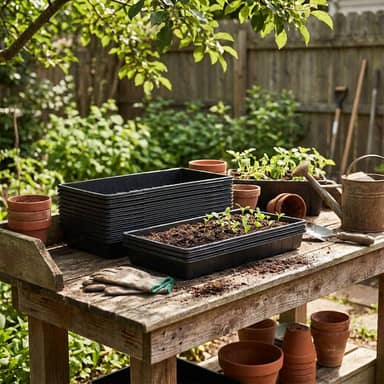
Bootstrap Farmer 1020 Trays (Heavy-Duty, No Holes)
Why this pick →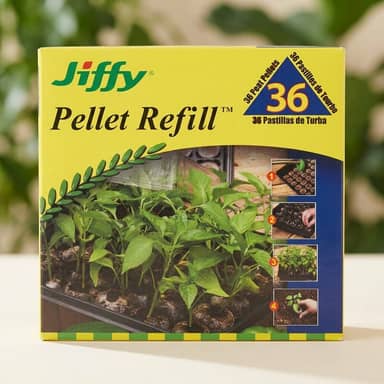
Jiffy Peat Pellets (Greenhouse Refill, 36mm)
Why this pick →
iPower Seedling Heat Mat (10 x 20.75 in)
Why this pick →
VIVOSUN 6-Pack Seed Starter Trays with Humidity Domes
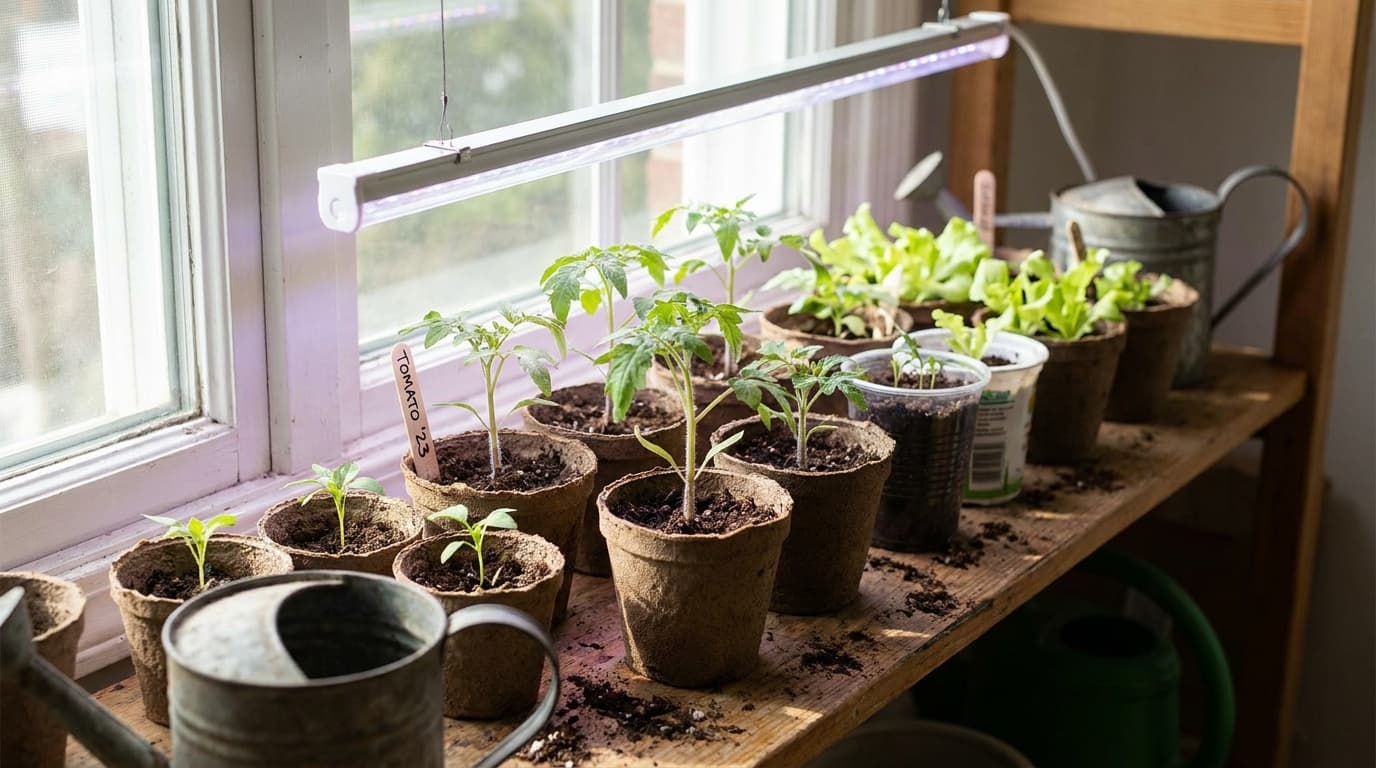
Why this pick →Starting seeds indoors is the highest-leverage skill a gardener learns: it gives you varieties no nursery stocks, gets you a head start on the season, and costs a fraction of buying transplants. The setup is simple once you see the four jobs it has to do, which are to hold the seedlings (trays), give them a medium to root in (pellets or mix), warm the soil so seeds wake up (a heat mat), and keep humidity high until they sprout (a dome). Get those four right and germination stops being a gamble.
The other half of seed starting is timing, and this is where most beginners stumble. Sow too early and seedlings get leggy waiting for warm weather; sow too late and you lose the head start. Count back from your last frost date using the planting calendar for your ZIP, then start warm-season crops like tomatoes and peppers on that schedule. The grow guides for growing tomatoes and growing peppers walk through the indoor-to-garden handoff in detail.
The foundation: Bootstrap Farmer 1020 trays
Most durable
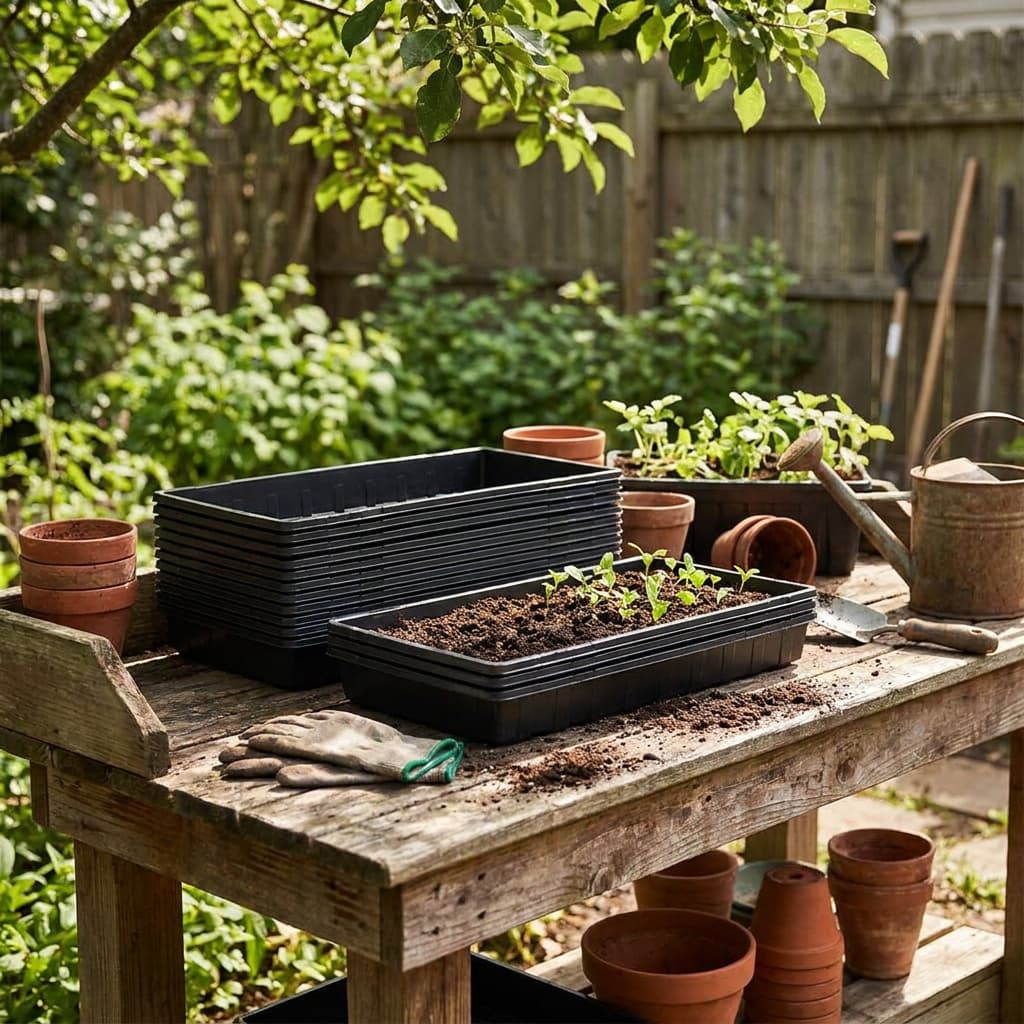
Bootstrap Farmer 1020 Trays (Heavy-Duty, No Holes)
Best for: Gardeners tired of replacing cracked trays every season.
Keep in mind: Much pricier upfront than disposable trays
Amazon price as of the checked date, subject to change. The price on Amazon at checkout applies.
Full research
- Footprint
- Standard 1020 (10 x 20 in)
- Material
- Thick BPA-free plastic, USA-made
- Drainage
- No-hole bottom tray (use as base or with inserts)
- Reusability
- Multi-season, dishwasher/heat-mat safe
Thick, USA-made 1020 trays built to survive many seasons rather than crack after one. The standard footprint pairs with any insert, dome, or heat mat.
This catalog-wide research score is separate from this guide's use-case ranking. How we research
Strengths
- Far more durable than standard nursery trays
- Standard 1020 size fits the whole ecosystem of inserts and domes
- Reusable for years, lowering long-term cost
Weaknesses
- Much pricier upfront than disposable trays
- No-hole base needs separate inserts for drainage
Sprout Score breakdown
Best for
Gardeners tired of replacing cracked trays every season.
Owner rating snapshot
Amazon · 21 reviews · 4.8 stars
Every seed-starting setup is built on a 1020 tray (so named because it is roughly 10 by 20 inches), the standard footprint that cell inserts, pellets, and humidity domes are all sized to fit. The catch is that the thin black trays sold cheaply crack within a season or two. Bootstrap Farmer trays are the heavyweight answer: thick, BPA-free plastic that survives years of filling, watering, and stacking without splitting at the corners.
Because they last, they are cheaper over time than replacing flimsy trays every spring, and they hold water in the bottom for bottom-watering (the gentlest way to keep seedlings moist). They are the foundation the rest of the kit sits in. You can check current pricing on Bootstrap Farmer trays and reuse them for years.
The easiest medium: Jiffy peat pellets
Easiest start
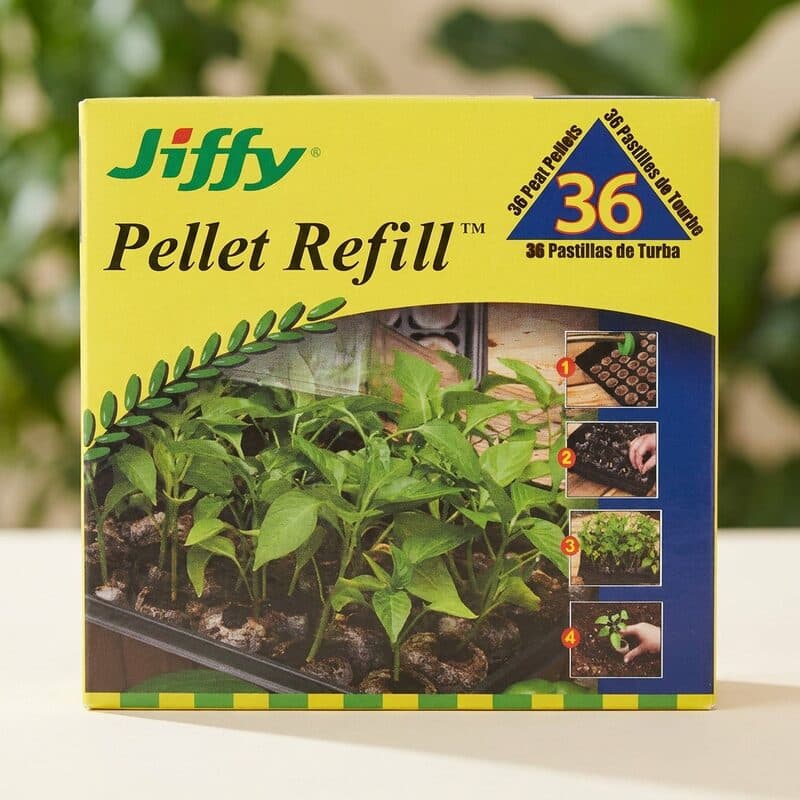
Jiffy Peat Pellets (Greenhouse Refill, 36mm)
Best for: Beginners wanting the fastest, simplest way to start a tray of seeds.
Keep in mind: Single-use; not reusable like cell trays
Amazon price as of the checked date, subject to change. The price on Amazon at checkout applies.
Full research
- Type
- Compressed peat pellets, expand with water
- Diameter
- 36 mm expanded
- Use
- Single-use, transplant whole pellet
- Netting
- Mesh-wrapped (peel before transplant)
Compressed peat pellets that swell into ready-to-sow plugs when watered, then transplant whole. The simplest, cheapest way to start a batch of seeds.
This catalog-wide research score is separate from this guide's use-case ranking. How we research
Strengths
- Almost zero setup, just add water
- Transplant the whole plug with little root disturbance
- Very low cost per seed
Weaknesses
- Single-use; not reusable like cell trays
- Mesh netting can girdle roots if left on
Sprout Score breakdown
Best for
Beginners wanting the fastest, simplest way to start a tray of seeds.
Owner rating snapshot
Amazon · 16 reviews · 4.5 stars
For a first-timer, peat pellets remove the messiest step of seed starting: mixing and filling seed-starting medium. Each Jiffy pellet is a compressed disc that swells into a self-contained plug when you add water, held together by a fine mesh. You poke a seed into the top and you are done, with no loose mix to spill and no cells to fill one by one.
When the seedling is ready to move up, you transplant the whole pellet, mesh and all, into a bigger pot or the garden. This avoids disturbing the roots. Pellets can stay soggy when overwatered, so let the surface dry slightly between waterings. You can compare Jiffy peat pellets' current price as your starting medium.
The germination booster: iPower seedling heat mat

Faster germination
iPower Seedling Heat Mat (10 x 20.75 in)
Best for: A no-frills germination mat for warm-season seed starting.
Keep in mind: No thermostat included
Amazon price as of the checked date, subject to change. The price on Amazon at checkout applies.
Full research
- Size
- 10 x 20.75 in (fits a 1020 tray)
- Power
- 20W
- Construction
- Waterproof, MET-listed
A waterproof 1020-sized germination mat that warms the root zone for faster, more even seed starting. A direct, dependable alternative to the VIVOSUN mat.
This catalog-wide research score is separate from this guide's use-case ranking. How we research
Strengths
- Fits a standard 1020 tray
- Even, reliable warmth
- Very low cost
Weaknesses
- No thermostat included
- Plain build with no extras
Sprout Score breakdown
Best for
A no-frills germination mat for warm-season seed starting.
Soil temperature is the single biggest lever on germination speed and rate, and it is the one most beginners overlook. A windowsill or basement is often well below the 75 to 85 F that warm-season seeds want, so they sprout slowly or rot first. The iPower seedling heat mat sits under your trays and gently lifts the root-zone temperature by roughly 10 to 20 degrees above ambient, which is exactly the nudge that gets tomatoes, peppers, and eggplant up fast and even.
It is a low-wattage mat sized to the standard 1020 footprint, so it slides right under the trays in this kit. Pair it with a thermostat if you want precise control, but for most beginners the mat alone transforms germination. Once seeds sprout, move them off the mat and under light, since seedlings no longer need bottom heat.
The moisture lock: Vivosun tray-and-dome kit

Best dome
VIVOSUN 6-Pack Seed Starter Trays with Humidity Domes
Best for: Gardeners starting several compact seed batches who want cells, base trays, and vented domes together.
Keep in mind: Thin plastic can crack with rough handling
Amazon price as of the checked date, subject to change. The price on Amazon at checkout applies.
Full research
- Quantity
- 6 complete tray sets
- Cells
- 12 cells per insert
- Vents
- Adjustable top vents for humidity control
- Material
- Clear plastic
Six compact 12-cell propagation trays with base trays and adjustable humidity domes. The complete sets retain germination moisture while keeping small seed batches organized.
This catalog-wide research score is separate from this guide's use-case ranking. How we research
Strengths
- Adjustable vents control humidity as seedlings mature
- Includes cell inserts, base trays, and domes
- Good value for several small seed batches
Weaknesses
- Thin plastic can crack with rough handling
- Smaller cells need timely potting-on
Sprout Score breakdown
Best for
Gardeners starting several compact seed batches who want cells, base trays, and vented domes together.
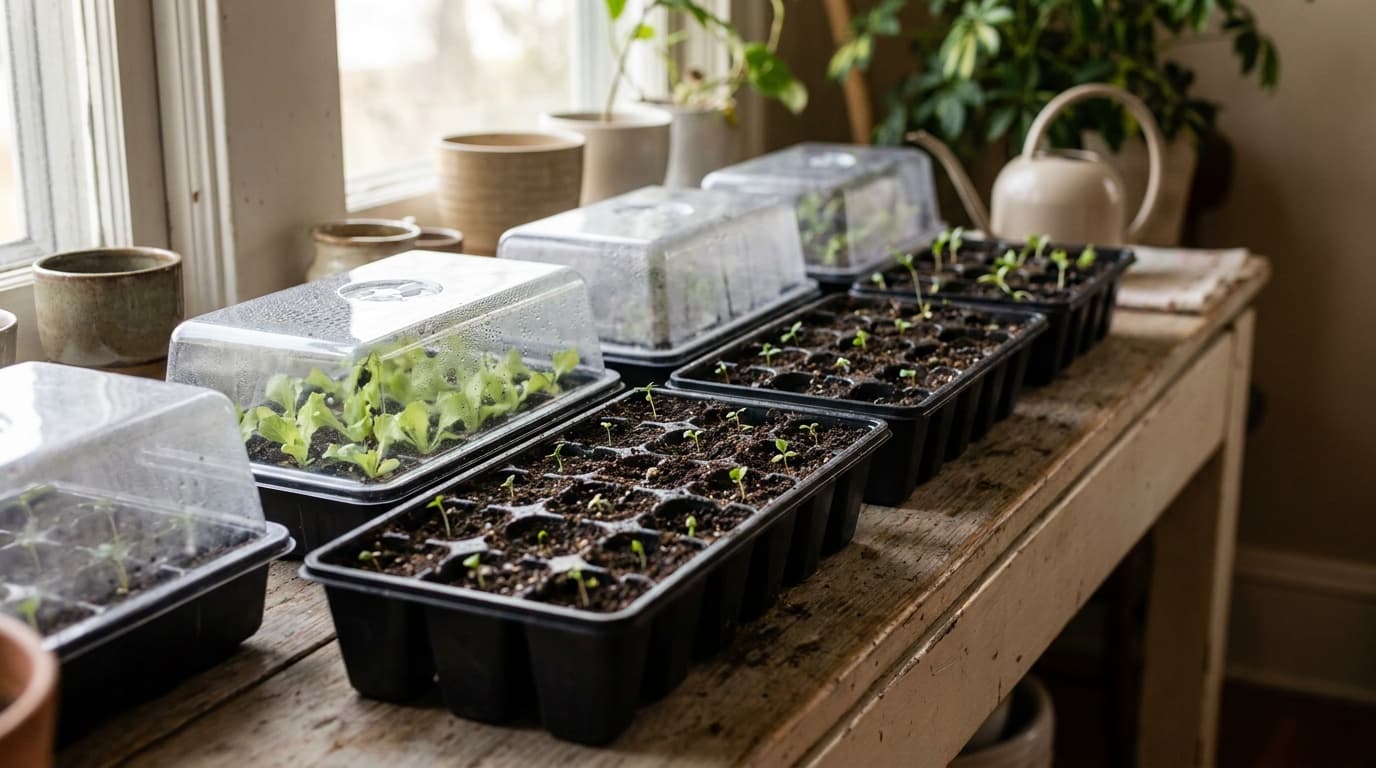
Seeds need consistently moist surface conditions to germinate, and a clear dome over the tray is what holds that humidity in. The current Vivosun kit includes six 12-cell inserts, base trays, and clear domes with adjustable vents. That venting matters, because a dome left fully closed after germination traps too much humidity and invites mold and damping-off.
Used correctly (closed until seeds sprout, then cracked open and removed within a few days of emergence) the domes improve germination consistency on a windowsill or under lights. The compact cells are best for organized small batches, but seedlings need to move into larger pots before their roots become crowded.
How to choose and assemble a seed-starting kit
The decision usually comes down to four principles.
Buy durable trays once. The 1020 tray is the platform everything else fits, so spend here for thick, reusable trays rather than replacing cracked ones every spring. Get a mix of holed inner trays and solid outer trays for bottom-watering.
Pick a medium that matches your patience. Peat pellets are the cleanest, easiest start and great for beginners. As you scale up, loose seed-starting mix in cell inserts becomes cheaper per seedling. Either works in the same trays.
Add bottom heat for warm-season crops. A heat mat is optional for cool-season seeds but close to essential for tomatoes, peppers, and eggplant, which germinate poorly in cool rooms. It is the upgrade that most improves germination rate.
Vent the dome on schedule. A humidity dome is only helpful before and during germination. Open the vents when sprouts appear and remove the dome within a few days, or you trade better germination for worse seedling health.
| Product | Price | Best for | Buy |
|---|---|---|---|
| Bootstrap Farmer 1020 Trays (Heavy-Duty, No Holes)#1 · MOST DURABLE | Typical price range · $25-$50 | Gardeners tired of replacing cracked trays every season. | Shop Amazon |
| Jiffy Peat Pellets (Greenhouse Refill, 36mm)#2 · EASIEST START | Typical price range · Under $25 | Beginners wanting the fastest, simplest way to start a tray of seeds. | Shop Amazon |
| iPower Seedling Heat Mat (10 x 20.75 in)#3 · FASTER GERMINATION | Typical price range · Under $25 | A no-frills germination mat for warm-season seed starting. | Search Amazon |
| VIVOSUN 6-Pack Seed Starter Trays with Humidity Domes#4 · BEST DOME | Typical price range · Under $25 | Gardeners starting several compact seed batches who want cells, base trays, and vented domes together. | Shop Amazon |
Frequently asked questions
What do I need in a seed starting kit for beginners?
Four things cover it: durable 1020 trays to hold everything, a growing medium (peat pellets are the easiest), a seedling heat mat to warm the soil for faster germination, and a humidity dome to keep the surface moist until seeds sprout. Once seeds come up, you also need a grow light, since most windowsills do not provide enough light to prevent leggy seedlings.
Do I really need a heat mat to start seeds?
For cool-season crops like lettuce and brassicas, no, they germinate fine at room temperature. For warm-season crops like tomatoes, peppers, and eggplant, a heat mat makes a real difference, because those seeds need soil around 75 to 85 F to sprout quickly and reliably. In a typical cool room, a mat is close to essential for strong germination of heat-loving crops.
When should I start seeds indoors?
Count backward from your last expected frost date, since most seed packets list how many weeks before the last frost to sow. Tomatoes and peppers typically start 6 to 8 weeks before last frost. Use the planting calendar for your ZIP to get your actual dates rather than guessing, then sow on that schedule so seedlings are the right size at transplant time.
Are peat pellets good for starting seeds?
Yes, especially for beginners. Peat pellets expand into ready-made plugs, so there is no mixing or filling, and you transplant the whole pellet without disturbing roots. The main caution is overwatering, since the pellets can stay soggy, so let the surface dry slightly between waterings and make sure your tray drains. They work in any standard 1020 tray.
When do I take the humidity dome off?
Crack the vents as soon as seeds start to sprout, then remove the dome entirely within a few days of germination. Leaving a closed dome over emerged seedlings traps too much humidity and encourages mold and damping-off. The dome's job is to hold moisture during germination only; once sprouts are up, they need airflow and light instead.
Our recommendation
Build the kit around durable Bootstrap Farmer 1020 trays, sow into Jiffy peat pellets for the easiest start, set the trays on an iPower seedling heat mat to speed warm-season germination, and use the vented Vivosun tray-and-dome sets for compact batches. Then add a grow light and time everything to your real dates with the planting calendar. When seedlings are ready to move out, the guides for growing lettuce and growing eggplant cover hardening off and transplanting.