Our recommendations
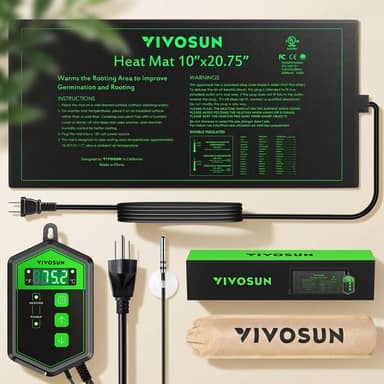

Soil temperature, not air temperature, controls germination speed, and most seeds germinate fastest in soil that is warmer than a typical house. A heat mat sits under your seed tray and raises the root-zone temperature by roughly 10 to 20 degrees Fahrenheit over ambient, which wakes up warm-season seeds that would otherwise sit and sulk on a cool windowsill. The two mats here are both inexpensive, both sized for a standard tray, and both do the core job well. The differences are small, which is why this guide spends as much time on how to use a heat mat correctly as on which one to buy.
Why soil warmth matters more than a sunny sill
Seeds read soil temperature as the signal to germinate. Heat-loving crops like peppers, tomatoes, and eggplant germinate best with soil around 75F to 85F, far warmer than most homes in late winter when you are starting seeds. On a cool windowsill that same seed may take two or three times as long to sprout, and slow, cold germination is also when damping-off and rot take hold.
A heat mat fixes this by warming the root zone directly. The catch worth understanding up front: a heat mat is for germination, not for growing on. Once seedlings are up, most should come off the mat, because continued bottom heat with bright light can stretch them and dry the mix too fast. The mat is a starter, not a permanent home.
Best overall: VIVOSUN Seedling Heat Mat
Best budget
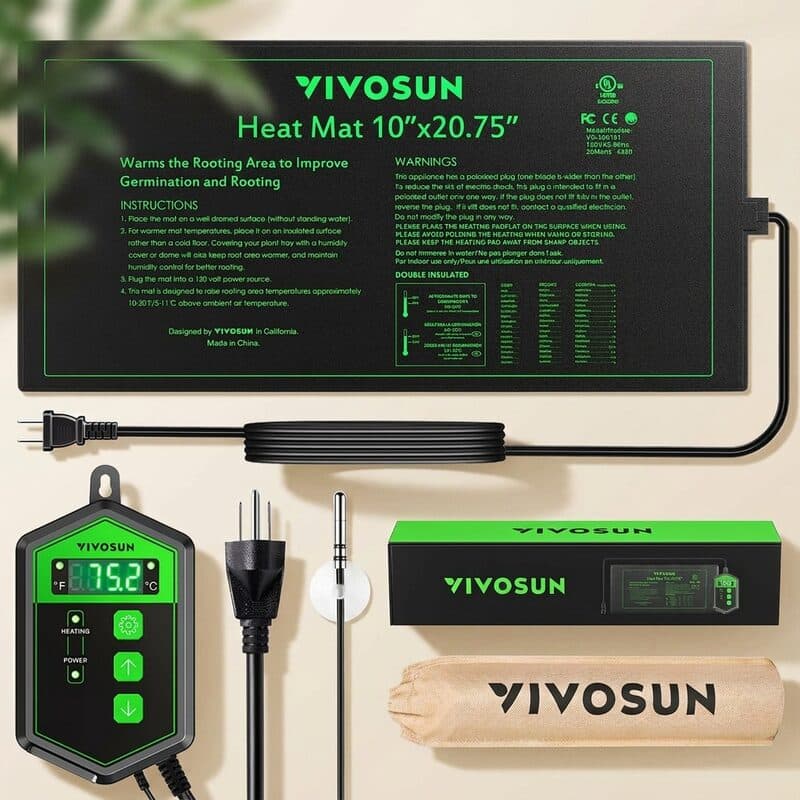
VIVOSUN Seedling Heat Mat (10 x 20.75 in)
Best for: Speeding germination of warm-season seeds like tomatoes and peppers.
Keep in mind: No thermostat included (pair with one)
Amazon price as of the checked date, subject to change. The price on Amazon at checkout applies.
Full research
- Size
- 10 x 20.75 in (fits a 1020 tray)
- Power
- 18W
- Construction
- Waterproof, MET-certified
- Warmth
- Raises root-zone temp ~10-20 F above ambient
A waterproof germination mat sized to fit a standard 1020 tray, warming the root zone to speed and improve seed germination. A cheap, high-impact upgrade.
This catalog-wide research score is separate from this guide's use-case ranking. How we research
Strengths
- Fits a standard 1020 tray exactly
- Noticeably faster, more even germination
- Inexpensive and waterproof
Weaknesses
- No thermostat included (pair with one)
- Long-term durability varies between units
Sprout Score breakdown
Best for
Speeding germination of warm-season seeds like tomatoes and peppers.
Owner rating snapshot
Amazon · 14 reviews · 4.5 stars
The VIVOSUN Seedling Heat Mat is the mat we recommend first, and it happens to also be the budget choice, which is a rare and welcome overlap. It puts out gentle, even warmth across the standard 10 by 20.75 inch surface that fits a single 1020 tray, the waterproof construction shrugs off the inevitable spills and condensation of seed starting, and it carries safety certification. Owners consistently report faster, more uniform germination once they put their trays on it.
On its own the mat runs at a fixed output and has no temperature control, so in a warm room it can push soil higher than ideal. The fix is a separate thermostat, which VIVOSUN and others sell, and which we strongly recommend for anyone starting many trays. With a thermostat dialed to your target soil temperature, it is excellent. Without one, simply lift trays off once they sprout.
Best alternative: iPower Seedling Heat Mat

Great value
iPower Seedling Heat Mat (10 x 20.75 in)
Best for: A no-frills germination mat for warm-season seed starting.
Keep in mind: No thermostat included
Amazon price as of the checked date, subject to change. The price on Amazon at checkout applies.
Full research
- Size
- 10 x 20.75 in (fits a 1020 tray)
- Power
- 20W
- Construction
- Waterproof, MET-listed
A waterproof 1020-sized germination mat that warms the root zone for faster, more even seed starting. A direct, dependable alternative to the VIVOSUN mat.
This catalog-wide research score is separate from this guide's use-case ranking. How we research
Strengths
- Fits a standard 1020 tray
- Even, reliable warmth
- Very low cost
Weaknesses
- No thermostat included
- Plain build with no extras
Sprout Score breakdown
Best for
A no-frills germination mat for warm-season seed starting.
The iPower Seedling Heat Mat is the equally affordable, equally reliable alternative, and an easy pick if it is in stock or on sale when the VIVOSUN is not. It shares the same standard 10 by 20.75 inch footprint for a 1020 tray, the same waterproof build, and the same gentle even heating, with safety certification as well. In practice the two are close enough that you can choose on price and availability.
Like the VIVOSUN, it has no built-in thermostat, so the same advice applies: add a thermostat for precise control if you start seeds in volume, or pull trays off the mat at germination. Owners report dependable, consistent warmth and faster sprouting, which is all you are asking a heat mat to do.
How to choose a seedling heat mat
Size to your trays. The standard 10 by 20.75 inch mat fits one 1020 tray, which is the right starting size for most home growers. Larger mats and multi-tray sizes exist if you start many flats at once; measure your shelf and trays before buying.
Thermostat or not. A bare mat warms at a fixed output and cannot hold a target temperature. A thermostat with a soil probe lets you set an exact soil temperature and is well worth it for serious seed starters. If you are starting a single tray, you can skip it and just remove the tray at germination.
Even heating and build. Look for waterproof construction and reports of uniform warmth without cold spots. Seed starting is a wet activity, so a sealed, spill-tolerant mat lasts longer.
Safety certification. Choose a mat with recognized safety certification (such as UL or ETL listing), since it is an electrical device that runs warm under wet trays for weeks at a time.
Remember it is for germination. A heat mat speeds sprouting; it is not for growing seedlings on. Plan to move most seedlings off the mat once they emerge so they grow stocky rather than leggy.
| Product | Price | Best for | Buy |
|---|---|---|---|
| VIVOSUN Seedling Heat Mat (10 x 20.75 in)#1 · BEST BUDGET | Typical price range · Under $25 | Speeding germination of warm-season seeds like tomatoes and peppers. | Shop Amazon |
| iPower Seedling Heat Mat (10 x 20.75 in)#2 · GREAT VALUE | Typical price range · Under $25 | A no-frills germination mat for warm-season seed starting. | Search Amazon |
Do I really need a heat mat to start seeds?
For cool-season crops started in a warm room, often no. For heat-loving seeds like peppers, tomatoes, and eggplant, a heat mat makes a real difference, cutting germination from weeks to days and improving the percentage that sprout. If your seed-starting area is cool, a mat is one of the cheapest ways to dramatically improve results.
What temperature should a seedling heat mat be?
Aim for soil temperature in the range each seed prefers, commonly around 75F to 85F for warm-season crops. A heat mat typically raises soil about 10 to 20 degrees above room temperature, so in a warm room a bare mat can overshoot. A thermostat with a soil probe lets you hold an exact target.
Should I leave seedlings on the heat mat after they sprout?
No. A heat mat is for germination. Once most seeds have sprouted, move the tray off the mat, because continued bottom heat encourages leggy growth and dries the mix quickly. Keep seedlings under bright light at normal room temperature after they emerge.
Do seedling heat mats use a lot of electricity?
No. A standard 10 by 20.75 inch mat draws only around 15 to 20 watts, similar to a small night light, so running it for the few weeks of germination season costs very little. Pairing it with a thermostat reduces draw further, since the mat only powers on to hold the target temperature.
Can a heat mat be used outside on its own?
These mats are designed for indoor use under seed trays and should be kept dry and out of the weather. They warm soil a fixed amount above the surrounding temperature, so they are not a substitute for frost protection outdoors. For outdoor season extension, a cold frame or mini greenhouse is the right tool.
A heat mat is one of the highest-return purchases in seed starting, especially for the warm-season crops that define a summer garden. Match it to your tray, add a thermostat if you start seeds in volume, and remember to take seedlings off once they sprout. For the complete indoor sowing routine, read our guide to how to start seeds indoors.