Our recommendations
Every gardener who skips labels learns the same lesson: by mid-season the seedling trays are a mystery, and you cannot tell the sweet peppers from the hot ones until something surprises you at dinner. Labels are cheap insurance against that, but the category has one real pitfall, ink that fades. A marker that looks crisp in April can be a blank white tag by July, which defeats the entire purpose. We sorted the field by the things that actually matter: how well a label survives sun and rain, and what you should write on it so the text lasts.
Label each tray or row when you sow it so the date and variety stay with the right plants. The planting calendar can help you map out those sowing dates for your ZIP.
Best value: Homenote plastic plant labels
Best value
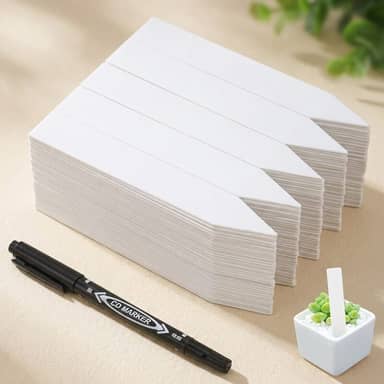
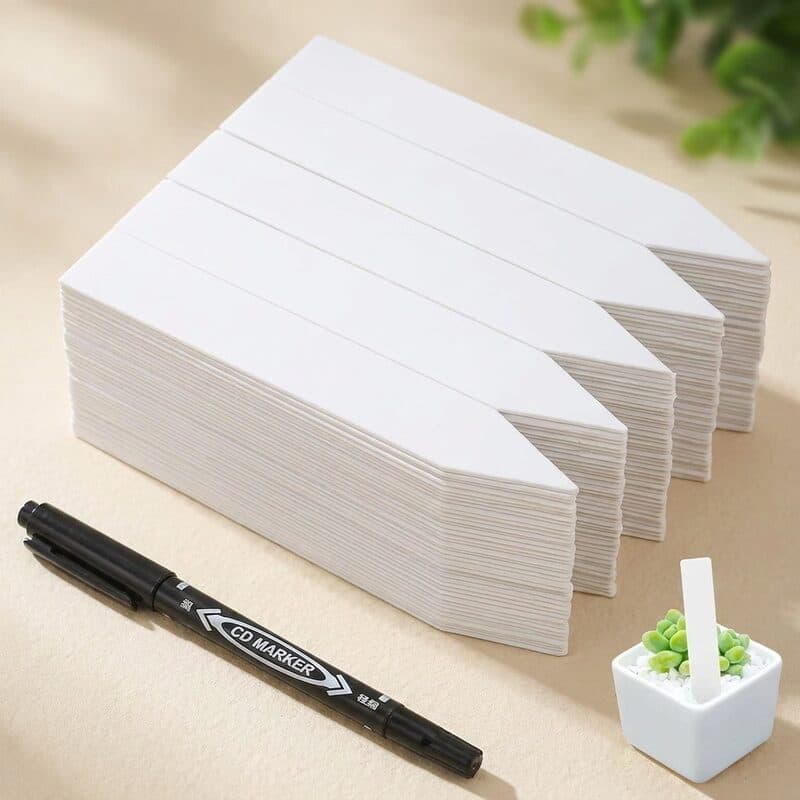
HOMENOTE Waterproof Plastic Plant Labels with Marker (4 in, 200-Pack)
Best for: Seed starters and bed gardeners who want a large, cheap supply of rain-resistant labels that stay legible from sowing through harvest.
Keep in mind: Thin tags can crack in hard freezes or snap if forced into compacted soil
Amazon price as of the checked date, subject to change. The price on Amazon at checkout applies.
Full research
- Quantity
- 200 labels + 1 marker pen
- Label size
- 3.94 x 0.7 in (4 in)
- Shape
- Pointed push-in tags
- Material
- Waterproof plastic
HOMENOTE's 200-piece pack of 4-inch waterproof plastic tags ships with a rain-resistant marker, giving seed starters a durable, multi-season labeling supply at a very low per-label cost.
This catalog-wide research score is separate from this guide's use-case ranking. How we research
Strengths
- Waterproof plastic will not rust, mold, or break down across multiple seasons
- Included marker resists rain wash-off and sun fade better than ordinary pens
- 200-count pack is enough to label an entire seed-starting operation cheaply
Weaknesses
- Thin tags can crack in hard freezes or snap if forced into compacted soil
- Plastic is not biodegradable, so end-of-life disposal is less tidy than wood
Sprout Score breakdown
Best for
Seed starters and bed gardeners who want a large, cheap supply of rain-resistant labels that stay legible from sowing through harvest.
Owner rating snapshot
Amazon · 22 reviews · 4.7 stars
The Homenote labels are the practical default: a large pack of weatherproof plastic T-markers that cost very little per label and last for years. The plastic does not become brittle as fast as the cheapest tags, and the surface takes pencil cleanly, which is the secret to labels that stay readable (more on that below). Because you get so many in a pack, you can label generously, every cell in a seed tray, every row in a bed, without feeling stingy.
What earns it the value slot is cost per use. These are reusable: at season's end, wipe off the pencil, store them dry, and write fresh next spring. You can check current pricing on the Homenote labels before deciding.
Best eco pick: Whaline bamboo plant labels
Best eco pick
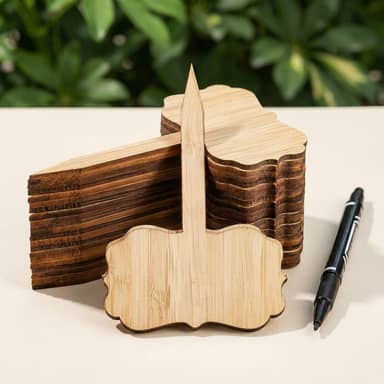
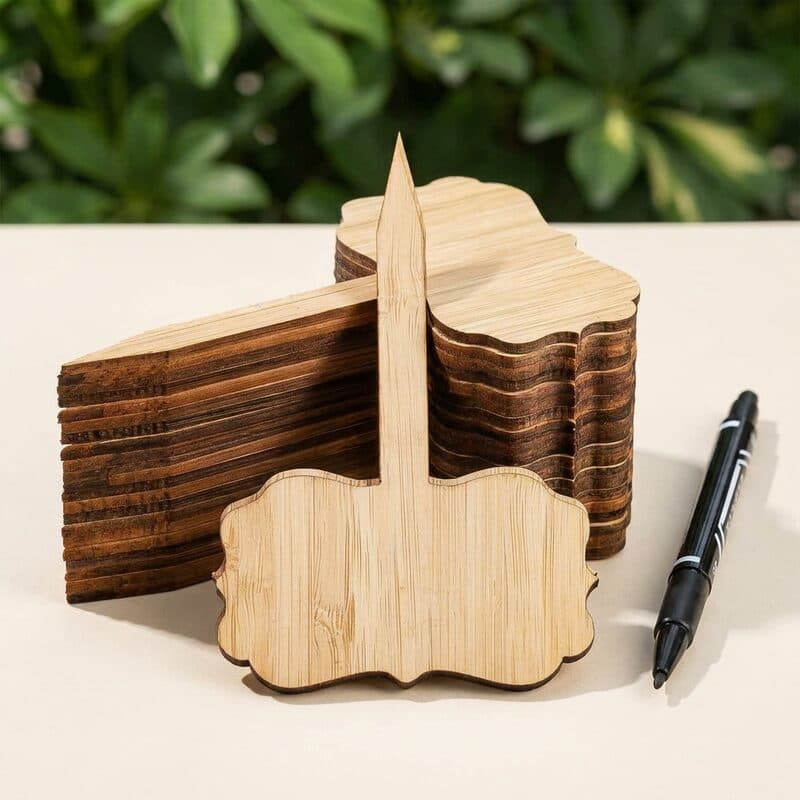
Whaline Bamboo Plant Labels with Marker Pen (T-Type, 60-Pack)
Best for: Gardeners who want attractive, eco-friendly seed-tray and bed labels for a single season and prefer natural materials over plastic.
Keep in mind: Unsealed bamboo grays and softens after a full season of wet weather
Amazon price as of the checked date, subject to change. The price on Amazon at checkout applies.
Full research
- Quantity
- 60 labels + 1 marker pen
- Label size
- Approx. 10 cm x 6.5 cm (4 x 2.5 in)
- Shape
- T-type push-in
- Material
- Natural bamboo
Whaline's 60-piece T-type bamboo labels give generous double-sided writing space and include a marker pen, offering a rustic, biodegradable way to tag seed trays and beds for the season.
This catalog-wide research score is separate from this guide's use-case ranking. How we research
Strengths
- Natural bamboo looks at home in a garden bed rather than reading as disposable plastic
- Ships with a marker pen, so the set is ready to use out of the box
- Fully biodegradable once a label has done its job
Weaknesses
- Unsealed bamboo grays and softens after a full season of wet weather
- Ink can fade in direct sun and rain unless you use a true garden marker
Sprout Score breakdown
Best for
Gardeners who want attractive, eco-friendly seed-tray and bed labels for a single season and prefer natural materials over plastic.
Owner rating snapshot
Amazon · 938 reviews · 4.3 stars
The Whaline labels swap plastic for bamboo, which appeals to gardeners who would rather not put more plastic in the soil. They look good (a clean, natural tag suits a kitchen garden) and they take pencil and marker well. Being biodegradable, they can eventually go in the compost when they are spent, which closes the loop in a way plastic cannot.
Bamboo softens and breaks down in moist soil, so these labels generally last a season or two instead of the many years a plastic tag can survive. That may be enough for an annual vegetable garden that gets new labels each spring. For permanent labels on perennials, choose plastic or metal.
How to choose plant labels
A few things separate labels that work from ones that disappear by midsummer.
Material and lifespan. Plastic lasts for years and reuses well, but it is plastic in the garden. Bamboo and wood are biodegradable and attractive but last a season or two in wet soil. Metal (zinc or aluminum) lasts the longest and suits permanent plantings, at a higher price. Match the material to whether the label is seasonal or permanent.
Surface and what you write with. The label is only as good as the writing on it. A matte surface holds pencil and paint pen far better than a glossy one. Regardless of material, a soft pencil resists UV fading better than most markers, which is why faded labels are usually an ink problem, not a label problem.
Size and style. T-shaped stake markers push into soil and sit at a readable angle, ideal for rows and trays. Tags that hang or wrap suit potted plants and woody stems. Bigger labels fit more text (variety plus sow date), which is worth it if you grow many varieties.
Pack count. Labels are most useful when you have enough to label everything. A large pack removes the temptation to skip rows, which is exactly when the mystery-seedling problem creeps back in.
| Product | Price | Best for | Buy |
|---|---|---|---|
| HOMENOTE Waterproof Plastic Plant Labels with Marker (4 in, 200-Pack)#1 · BEST VALUE | Typical price range · Under $20 | Seed starters and bed gardeners who want a large, cheap supply of rain-resistant labels that stay legible from sowing through harvest. | Shop Amazon |
| Whaline Bamboo Plant Labels with Marker Pen (T-Type, 60-Pack)#2 · BEST ECO PICK | Typical price range · Under $20 | Gardeners who want attractive, eco-friendly seed-tray and bed labels for a single season and prefer natural materials over plastic. | Shop Amazon |
Frequently asked questions
What is the best thing to write on plant labels so it does not fade?
A soft graphite pencil is the most reliable choice. Pencil resists the UV fading that erases most marker ink within a season, and it works on matte plastic, wood, and bamboo surfaces. It also erases for reuse. If you prefer a marker, use a UV-resistant garden paint pen, but pencil is cheaper and holds up better in the sun.
Are plastic or bamboo plant labels better?
Plastic labels last for years and reuse well, making them the better value for an annual garden, but they are plastic in the soil. Bamboo labels are biodegradable and attractive but typically last a season or two before softening in moist soil. Choose plastic for longevity and reuse, bamboo for a lower environmental footprint and a natural look.
How long do plant labels last in the garden?
Plastic labels last several years if stored dry over winter. Bamboo and wood labels generally last one to two seasons before breaking down in wet soil. Metal labels last the longest and suit permanent plantings. In all cases, what fades first is usually the writing, so use pencil to keep labels readable for their full lifespan.
Can you reuse plant labels?
Yes, plastic and metal labels reuse readily: wipe off pencil or rub out marker at the end of the season, store them dry, and relabel in spring. This is part of why a large pack of plastic markers is such good value. Bamboo and wood labels can sometimes be reused for a second season but eventually break down and go to the compost.
Our recommendation
Buy the Homenote plastic labels if you want the best value and labels that reuse for years; a large pack lets you mark everything without rationing. Choose the Whaline bamboo labels if you would rather keep plastic out of the soil and do not mind relabeling each season. Whichever you pick, write with a pencil and add the date, and your labels will still make sense come harvest.