Our recommendations

QueenBird Heavy Duty Garden Trellis Netting (5.9 ft x 16.4 ft)
Why this pick →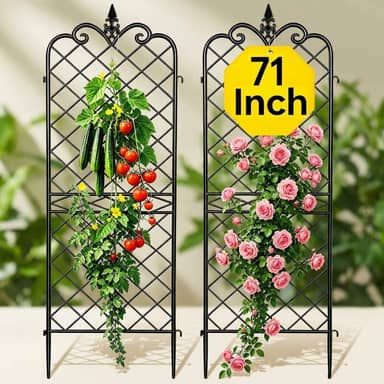
AMAGABELI Metal Garden Trellis for Climbing Plants (60 x 18 in, 4-Pack)
Why this pick →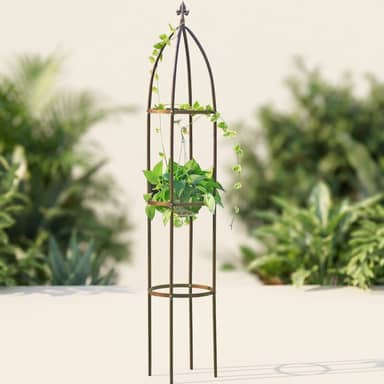
LeJoy Metal Garden Obelisk Trellis (75.6 in, Bronze)
Why this pick →
GROWNEER Foldable A-Frame Cucumber Trellis (34 x 48 in)
Why this pick →Vertical growing is the single fastest way to get more yield from a small garden. A cucumber sprawling on the ground takes 8-10 square feet of space and produces fruit you cannot see until it is too big. The same plant on a trellis takes 2 square feet and puts every fruit where you can find it. The same logic applies to peas, pole beans, climbing squash, and flowering vines.
The hard part is matching the trellis to the plant. Netting handles soft, tendrilling climbers. Rigid panels support heavier fruiting vines. An obelisk suits a single climbing rose or a decorative focal point. An A-frame doubles your production per linear foot of raised bed. This guide covers the best option in each category.
Matching the trellis to the plant
Before you buy, know what you are growing:
Soft tendrilling climbers (peas, sweet peas, beans, cucumbers) grip netting or thin wire with their tendrils and stems. They are light enough that any of these options works, but they prefer mesh with openings in the 4-6 inch range that tendrils can find quickly.
Heavy fruiting vines (cucumbers with full fruit load, squash, small melons) need a structure that can take sustained weight without swaying. Rigid metal panels or a staked A-frame handle this better than unsupported netting.
Single-stem climbers (climbing roses, clematis, morning glories) suit an obelisk or a flat wall trellis. They need something to wind around or attach to, not a wide expanse of mesh.
Best overall: QueenBird Nylon Trellis Netting

Best overall
QueenBird Heavy Duty Garden Trellis Netting (5.9 ft x 16.4 ft)
Best for: Gardeners running a row of peas, cucumbers, or beans and wanting affordable, multi-season netting they can cut to fit.
Keep in mind: Needs posts, stakes, or a fence to hang from; does not stand alone
Amazon price as of the checked date, subject to change. The price on Amazon at checkout applies.
Full research
- Dimensions
- 5.9 ft x 16.4 ft
- Mesh size
- 4 x 4 in
- Material
- UV-stabilized HDPE
- Use
- Peas, cucumbers, beans, tomatoes, flowers
QueenBird's UV-stabilized HDPE netting spans nearly 17 feet with a 4-inch mesh, providing durable, stem-friendly support for climbing crops along a fence, posts, or raised bed frame.
This catalog-wide research score is separate from this guide's use-case ranking. How we research
Strengths
- UV-stabilized HDPE holds up through multiple seasons without fraying or brittling
- Soft weave supports stems without abrading young growth
- Can be cut to exact length with ordinary scissors for tight spaces
Weaknesses
- Needs posts, stakes, or a fence to hang from; does not stand alone
- Large single panel can tangle if rolled instead of folded for storage
Sprout Score breakdown
Best for
Gardeners running a row of peas, cucumbers, or beans and wanting affordable, multi-season netting they can cut to fit.
The QueenBird Trellis Netting is the place we send most home gardeners because it solves the common problem cheaply and reliably. Nearly 17 feet of UV-stabilized HDPE mesh covers a full raised bed run or a fence row from end to end, and the 4-inch square openings are the right size for pea tendrils, cucumber vines, and bean shoots to find a grip quickly.
The material is soft enough that it does not abrade young stems or damage flowers, and it has enough UV stabilization to last three or more seasons in direct sun. You cut it to fit with scissors, tie it to posts, a metal frame, or an existing fence, and you are done. Owners consistently note that it handles heavy crop loads without fraying, which is the one thing cheap netting always fails to do.
What it is not: a freestanding structure. It needs something to hang from. Pair it with two 6-foot wooden stakes or metal T-posts and it is the most productive $13 you can spend in the vegetable garden.
Best metal panels: AMAGABELI Metal Trellis Panels
Best metal panels
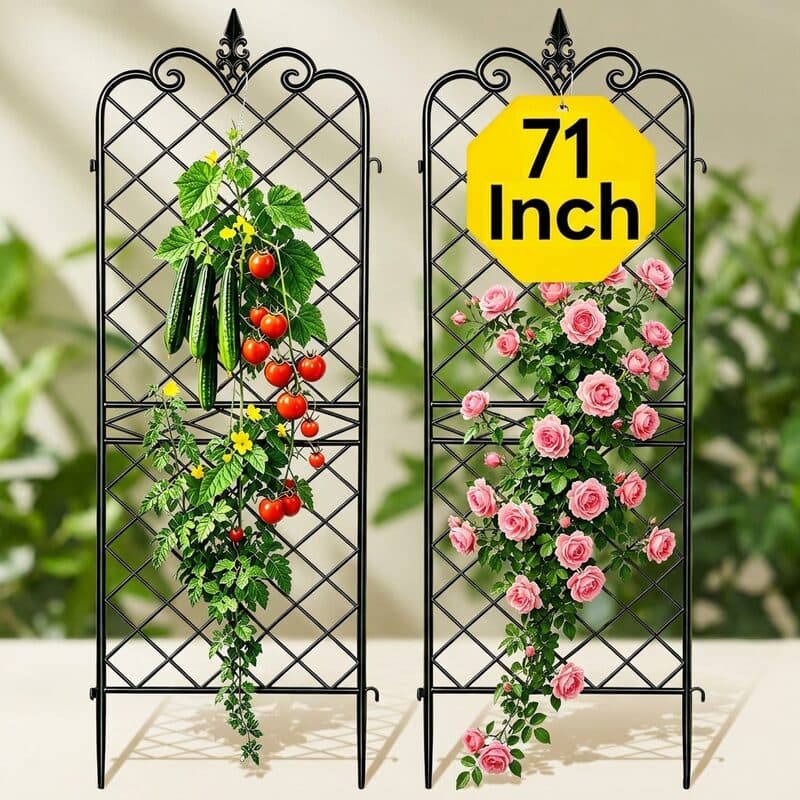
AMAGABELI Metal Garden Trellis for Climbing Plants (60 x 18 in, 4-Pack)
Best for: Gardeners who want sturdy, attractive metal panels to line a raised bed or pot with a support that outlasts netting.
Keep in mind: 18-inch width means multiple panels are needed to cover a longer row
Amazon price as of the checked date, subject to change. The price on Amazon at checkout applies.
Full research
- Dimensions
- 60 in x 18 in per panel
- Pack
- 4 panels
- Material
- Rust-proof powder-coated iron
- Finish
- Black
AMAGABELI's four-pack of 60 x 18 inch powder-coated black iron panels provides a clean, rust-resistant climbing lattice for cucumbers, beans, roses, and clematis in beds or pots.
This catalog-wide research score is separate from this guide's use-case ranking. How we research
Strengths
- Rust-proof powder-coated iron survives seasons of outdoor rain without flaking
- Four-panel pack covers a full raised bed row at a reasonable per-panel price
- Clean grid design works in both vegetable beds and ornamental borders
Weaknesses
- 18-inch width means multiple panels are needed to cover a longer row
- Upright panels need to be staked or tied to avoid leaning under a heavy loaded vine
Sprout Score breakdown
Best for
Gardeners who want sturdy, attractive metal panels to line a raised bed or pot with a support that outlasts netting.
Owner rating snapshot
Amazon · 82 reviews · 4.6 stars
The AMAGABELI panels are the right answer when you want a permanent, low-maintenance structure. Four 60 x 18-inch powder-coated black iron panels for around $30 covers a full 6-foot raised bed side with room to spare, and the clean grid design looks presentable in an ornamental border as well as a vegetable row.
The rust-proof coating holds up well across seasons, which is the core job. You push the panel stakes into the soil behind the bed, or tie them to a fence or wooden frame, and leave them. Owners praise the build quality relative to the price; the main note is that individual panels flex slightly under a very heavy vine, which is easily solved by driving a stake behind the panel at mid-height.
For cucumbers, pole beans, and climbing roses in a raised bed or a border, AMAGABELI gives you a structure you will still be using in five years.
Best obelisk: LeJoy Metal Garden Obelisk
Best obelisk
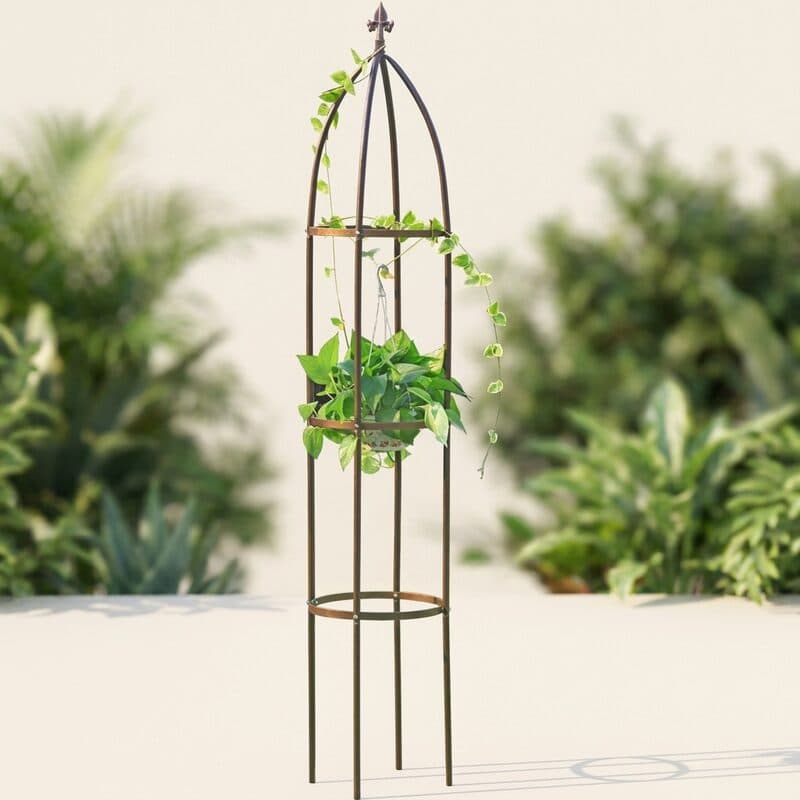
LeJoy Metal Garden Obelisk Trellis (75.6 in, Bronze)
Best for: Gardeners who want a single elegant vertical structure for a pot or focal point in a bed, supporting a climbing rose, clematis, or pole bean.
Keep in mind: Decorative obelisk footprint is narrower than a flat trellis panel; suits a single plant per tower
Amazon price as of the checked date, subject to change. The price on Amazon at checkout applies.
Full research
- Height
- 75.6 in (6.3 ft)
- Base width
- 17.76 in
- Material
- Powder-coated metal
- Finish
- Bronze
LeJoy's 75.6-inch powder-coated obelisk provides a sturdy, attractive vertical structure for climbing plants, earning strong owner ratings for stability, ease of assembly, and finish quality.
This catalog-wide research score is separate from this guide's use-case ranking. How we research
Strengths
- 784 owner reviews with a 4.5-star average is a strong real-world satisfaction signal
- 6.3-foot height supports tall climbing varieties through a full season
- Bronze finish blends into the garden rather than reading as purely utilitarian
Weaknesses
- Decorative obelisk footprint is narrower than a flat trellis panel; suits a single plant per tower
- Powder coat can chip if the tower is repeatedly forced into hard, rocky soil
Sprout Score breakdown
Best for
Gardeners who want a single elegant vertical structure for a pot or focal point in a bed, supporting a climbing rose, clematis, or pole bean.
Owner rating snapshot
Amazon · 801 reviews · 4.5 stars
If you want a single vertical focal point rather than a row trellis, the LeJoy obelisk is the one to buy. At 75.6 inches it is tall enough for a full-season climbing rose, clematis, or pole bean, and its 784 owner reviews at 4.5 stars is one of the strongest satisfaction signals in the category.
Assembly takes around 10 minutes with no tools, and the bronze powder-coat finish integrates into the garden rather than reading as purely utilitarian. You stake the four feet into the soil at the center of a bed, in a large pot, or at the back of a border, and train your climbing plant up the column from the base.
It is not a row trellis: each obelisk supports one plant in one spot. But for a single climbing focal point, it is the most durable and attractive option in this guide.
Best for raised-bed cucumbers: GROWNEER A-Frame Trellis

Best for raised beds
GROWNEER Foldable A-Frame Cucumber Trellis (34 x 48 in)
Best for: Raised-bed gardeners growing cucumbers, peas, or beans who want to double their vertical planting surface with a fold-flat structure.
Keep in mind: Powder coating scratches easily during assembly; touch-up paint extends life
Amazon price as of the checked date, subject to change. The price on Amazon at checkout applies.
Full research
- Dimensions
- 34 in W x 48 in L
- Grid
- 4 in x 2 in openings
- Material
- Powder-coated steel wire
- Assembly
- Rotating spring connectors, no tools
GROWNEER's foldable A-frame lets you plant a climbing row on both sides of a 34 x 48-inch steel arch, folding flat between seasons and including 328 feet of twist ties.
This catalog-wide research score is separate from this guide's use-case ranking. How we research
Strengths
- Dual-sided planting doubles the usable climbing space per linear foot of bed
- Folds flat for compact off-season storage
- 328 feet of included twist ties means you can start training immediately
Weaknesses
- Powder coating scratches easily during assembly; touch-up paint extends life
- 34-inch width limits it to a single cucumber or pea row; not suited to wider beds
Sprout Score breakdown
Best for
Raised-bed gardeners growing cucumbers, peas, or beans who want to double their vertical planting surface with a fold-flat structure.
The GROWNEER A-Frame earns a specific recommendation for raised-bed cucumber and pea growers: it doubles your vertical growing surface by letting you plant a row on each side of the arch.
At 34 inches wide and 48 inches long, it fits neatly across a standard 4-foot raised bed and provides a 4 x 2 inch grid on both sides of the arch, which cucumber tendrils grip well. The fold-flat design means it stores in almost no space between seasons, and the included 328 feet of twist ties means you can start training immediately.
The powder coating can scratch during assembly, so handle the panels carefully on the first setup. Its low price and two growing surfaces make it a good fit for cucumbers or peas in a raised bed. Pair it with our vertical gardening guide to use both sides.
How to choose a garden trellis
Match the structure to the plant weight. Light tendrilling climbers (peas, beans, sweet peas) work with netting or light mesh. Cucumbers in full fruit, squash, and heavy vines need a rigid panel or staked A-frame that does not sway.
Match the height to the variety. Most peas need 4-6 feet. Cucumbers want at least 5-6 feet; training them higher reduces disease pressure by improving airflow. Climbing roses and clematis can use all the height an obelisk offers.
Freestanding or attached. Netting and flat panels need something to hang from. An A-frame or obelisk stands alone. If you do not have fence posts or a raised bed frame, a standalone structure is easier.
Metal vs. netting. Metal panels last indefinitely with basic care. Quality HDPE netting lasts three or more seasons. If you rotate crops and want to move the trellis, netting is lighter and easier to reposition.
Give climbers a head start. Clip or tie the first 6 inches of growth to the trellis as soon as the plant has a few true leaves. Once a vine finds the structure it trains itself. Waiting until it is 2 feet long means untangling a lot of horizontal growth.
| Product | Price | Best for | Buy |
|---|---|---|---|
| QueenBird Heavy Duty Garden Trellis Netting (5.9 ft x 16.4 ft)#1 · BEST OVERALL | Typical price range · Under $20 | Gardeners running a row of peas, cucumbers, or beans and wanting affordable, multi-season netting they can cut to fit. | Search Amazon |
| AMAGABELI Metal Garden Trellis for Climbing Plants (60 x 18 in, 4-Pack)#2 · BEST METAL PANELS | Typical price range · $25-$40 | Gardeners who want sturdy, attractive metal panels to line a raised bed or pot with a support that outlasts netting. | Shop Amazon |
| LeJoy Metal Garden Obelisk Trellis (75.6 in, Bronze)#3 · BEST OBELISK | Typical price range · $30-$45 | Gardeners who want a single elegant vertical structure for a pot or focal point in a bed, supporting a climbing rose, clematis, or pole bean. | Shop Amazon |
| GROWNEER Foldable A-Frame Cucumber Trellis (34 x 48 in)#4 · BEST FOR RAISED BEDS | Typical price range · $18-$30 | Raised-bed gardeners growing cucumbers, peas, or beans who want to double their vertical planting surface with a fold-flat structure. | Shop Amazon |
Do cucumbers need a trellis?
No, but they are far easier to grow on one. A trellised cucumber keeps the fruit off the ground (cleaner, less rot), improves airflow (less powdery mildew), and puts every fruit where you can see it at harvest. Plants also yield better because the fruit hangs straight and does not get misshapen by soil contact. For a full raised-bed season, a trellis is almost always worth the few dollars and ten minutes to set up.
How do I get peas to climb a trellis?
Peas are natural climbers and will find netting or mesh on their own once the tendrils reach it, but you can help by clipping or loosely tying the stem to the lowest wire at planting time. Use the spacing calculator to set plants 2-3 inches apart along the trellis base; a dense row creates a productive, self-supporting wall of vines by peak season.
Can I use garden trellis netting for tomatoes?
For a single-stem trained tomato, yes. You can weave the main stem up through netting as it grows. For a bushy indeterminate variety, a rigid cage or panel is a better fit because netting compresses and tangles under the weight of a fully leafed plant. See our best tomato cages guide for tomato-specific support options.
What spacing should I leave between trellis posts?
For nylon netting, keep posts no more than 4-6 feet apart or the netting will sag under a loaded vine. For rigid metal panels, 18-inch panels butt up against each other without gaps. An A-frame or obelisk is self-contained and does not need posts. If you are using wooden stakes, drive them at least 12 inches into the ground or they will pull out when the vines are heavy.
Do garden trellises work in containers?
Yes, with the right structure. An obelisk drops straight into a large pot (14 inches or more). A single AMAGABELI panel stakes into a deep container planter. Netting is harder to use in containers unless you attach it to a dedicated pot trellis frame. For containers specifically, the LeJoy obelisk is the most practical pick.
Vertical growing is the highest-leverage upgrade you can make to a small vegetable garden. Match the trellis to the plant, get the structure in before the vine needs it, and train the first few inches of growth onto the support. The plant does the rest. For more on maximizing a small space, see our guide to vertical gardening in the vegetable garden.