Our recommendations


A staked plant is a healthier plant. Lifting tomatoes, peppers, and climbing beans off the ground keeps fruit clean, improves airflow to cut down on disease, and makes picking far easier. The job has two parts that gardeners often get half-right: the stake that does the supporting and the tie that attaches the plant to it. Use a stake that is too short or too flimsy and a loaded tomato will pull it over; tie with thin wire or zip ties and you will girdle the stem. We cover both, because they only work together.
Staking lines up with transplanting season for tall crops, so it pays to set stakes early, ideally when you plant, before the roots are big enough to disturb. If you are still timing your sowings and transplants, run your ZIP through the planting calendar so the stakes go in at the right moment.
Best value: Cambaverd 4ft bamboo garden stakes
Best value
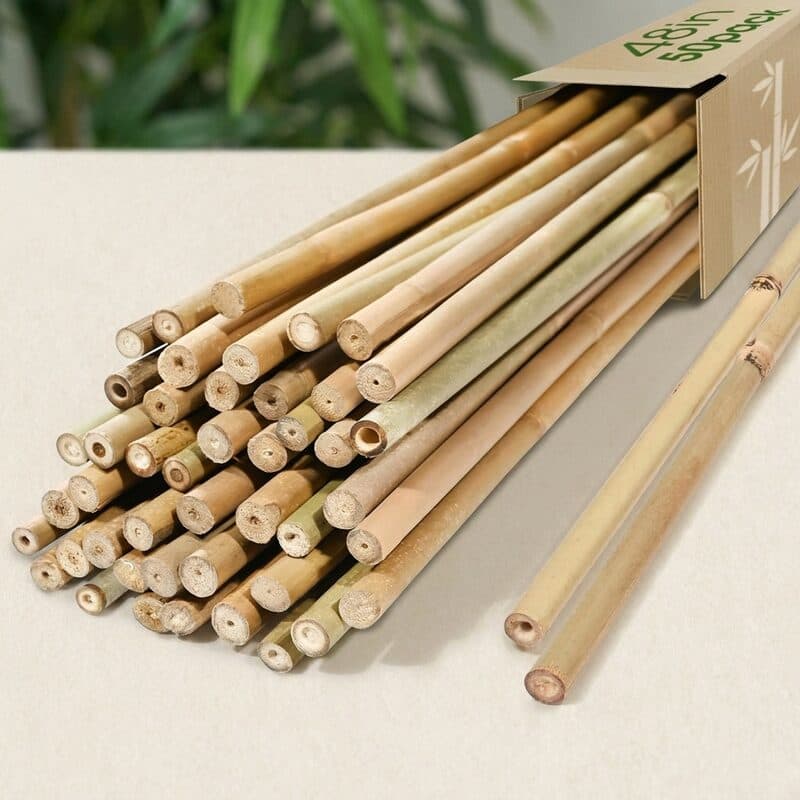
Cambaverd Natural Bamboo Garden Stakes (4 ft, 50-Pack)
Best for: Gardeners who need an affordable, renewable bulk supply of all-purpose stakes for tomatoes, peppers, beans, and young plants.
Keep in mind: Large packs can include the occasional thin or split cane
Amazon price as of the checked date, subject to change. The price on Amazon at checkout applies.
Full research
- Length
- 4 ft (48 in)
- Quantity
- 50 stakes
- Material
- Natural bamboo
- Treatment
- Fumigated twice for durability
Cambaverd's 50-pack of fumigated 4-foot bamboo canes provides an affordable, renewable bulk supply of all-purpose stakes for tomatoes, peppers, beans, and young trees.
This catalog-wide research score is separate from this guide's use-case ranking. How we research
Strengths
- Bulk 50-count pack covers a full bed or row at a very low per-stake cost
- Renewable bamboo is a sustainable alternative to plastic or fiberglass stakes
- 4-foot length suits the majority of staked vegetables and young trees
Weaknesses
- Large packs can include the occasional thin or split cane
- Natural bamboo can grow brittle and split after a couple of seasons outdoors
Sprout Score breakdown
Best for
Gardeners who need an affordable, renewable bulk supply of all-purpose stakes for tomatoes, peppers, beans, and young plants.
Owner rating snapshot
Amazon · 143 reviews · 4.4 stars
For most gardeners, bamboo is the right starting point, and the Cambaverd stakes are the value version: a large bundle of 4-foot canes at a low price per stake. Four feet is the practical length for staking indeterminate tomatoes and peppers, because you lose several inches to the depth you sink the stake and the plant grows to fill the rest. Bamboo is rigid enough to support a fruiting plant and natural enough to look at home in a kitchen garden.
The bundle includes enough stakes for a bed of tomatoes plus peppers and beans at the cost of a few premium stakes. Bamboo eventually splits and rots at the soil line, so expect each stake to last a season or two. You can check current pricing on the Cambaverd stakes before deciding.
Best premium: Ecostake 4ft fiberglass plant stakes

Best premium
EcoStake Fiberglass Garden Plant Stakes (4 ft, 20-Pack)
Best for: Gardeners who want a slim, rot-proof, multi-season staking solution for tomatoes, dahlias, and young trees and are willing to pay more up front.
Keep in mind: Higher up-front cost than a comparable bulk bamboo pack
Amazon price as of the checked date, subject to change. The price on Amazon at checkout applies.
Full research
- Length
- 4 ft (48 in)
- Quantity
- 20 stakes
- Material
- Fiberglass-reinforced rod
- Weather resistance
- Will not rot, rust, or splinter
EcoStake's fiberglass rods deliver a slim, rot-proof, multi-season alternative to bamboo, flexing under wind instead of snapping while supporting tomatoes, dahlias, and young trees.
This catalog-wide research score is separate from this guide's use-case ranking. How we research
Strengths
- Fiberglass will not rot, rust, or splinter, so the stakes last many seasons
- Slim, smooth rods support plants without bulk or snagging stems
- Flexes under wind load rather than snapping like a dry bamboo cane
Weaknesses
- Higher up-front cost than a comparable bulk bamboo pack
- Cut or broken ends can shed fine fiberglass slivers, so gloves help when handling
Sprout Score breakdown
Best for
Gardeners who want a slim, rot-proof, multi-season staking solution for tomatoes, dahlias, and young trees and are willing to pay more up front.
The Ecostake stakes solve bamboo's one weakness: they do not rot, split, or splinter, so they last for many seasons rather than one or two. Fiberglass is strong for its weight and flexes slightly under load without snapping, which actually helps in wind by giving rather than breaking. The smooth finish is also gentle on plant stems and on your hands, no splinters when you pull them in fall.
This is the buy-once pick. The stakes cost more up front than a bundle of bamboo, but spread across the years they keep working, the cost per season is low. They suit a gardener building a permanent setup who would rather store a set of durable stakes each winter than rebuy bamboo every spring. For supporting heavy tomatoes and tall peppers over the long run, they are the more economical choice in disguise.
The tie that matters: Nutscene jute twine

Companion Jute twine
Nutscene Fillis Natural Jute Twine (3-Ply, 80 m Spool)
Best for: Gardeners who want a strong, stem-friendly, biodegradable twine for tying tomatoes and training climbers through the season.
Keep in mind: Costs more than bulk imported jute of the same length
Amazon price as of the checked date, subject to change. The price on Amazon at checkout applies.
Full research
- Length
- Approx. 80 m (262 ft)
- Ply
- 3-ply
- Material
- 100% natural jute
- Origin
- Made in Scotland
Nutscene's Fillis 3-ply jute twine is a Scottish-made garden classic: strong enough to train heavy climbers, soft enough to spare growing stems, and fully compostable at the end of the season.
This catalog-wide research score is separate from this guide's use-case ranking. How we research
Strengths
- Strong 3-ply spin holds knots and trains heavy climbers without snapping
- Soft natural fiber does not cut into growing stems the way wire ties can
- Heritage Scottish maker with a long track record for consistent quality
Weaknesses
- Costs more than bulk imported jute of the same length
- As a natural fiber it eventually rots, so it is not a permanent multi-year tie
Sprout Score breakdown
Best for
Gardeners who want a strong, stem-friendly, biodegradable twine for tying tomatoes and training climbers through the season.
A stake is only half the job; the tie is the other half, and it is where plants get damaged. Nutscene jute twine is the right answer: soft enough that it will not cut into a swelling stem, strong enough to hold a loaded branch, and biodegradable so it composts at the end of the season instead of becoming plastic waste. Tie with a loose figure-eight (twine around the stake, cross, then loosely around the stem) so the loop supports the plant without strangling it as it grows.
Avoid thin wire, fishing line, and zip ties for this. They concentrate pressure on a single line and girdle the stem as it thickens, which can kill the growth above the tie. Jute spreads the load and gives a little, which is exactly what a growing stem needs. A roll lasts a long time across a garden's worth of plants. You can check current pricing on Nutscene jute twine before deciding.
How to choose plant stakes
A few specs decide whether a stake does its job.
Length. Buy taller than the support height you need, because you sink 8 to 12 inches into the soil and lose it. For indeterminate tomatoes and tall peppers, a 4-foot stake leaves roughly 3 feet above ground, which suits most varieties. Very tall heirloom tomatoes may want taller stakes or a different system entirely.
Material and lifespan. Bamboo is cheap, rigid, and natural-looking but lasts a season or two before splitting and rotting. Fiberglass costs more but does not rot, splinter, or split, so it lasts many seasons and is gentle on stems. Steel and coated metal also last but can be heavier and pricier. Match the material to whether you want low up-front cost or long-term value.
Diameter and strength. A loaded tomato is heavier than it looks. A stake too thin will bow or snap, so choose a diameter substantial enough to stay rigid under a full plant. Fiberglass gets strength from the material; bamboo gets it from thickness, so do not buy the thinnest canes for heavy crops.
The tie. Always pair stakes with a soft, forgiving tie. Jute or soft cloth strips spread pressure and give as the stem grows. Thin wire and zip ties girdle stems and should be kept out of the vegetable garden.
| Product | Price | Best for | Buy |
|---|---|---|---|
| Cambaverd Natural Bamboo Garden Stakes (4 ft, 50-Pack)#1 · BEST VALUE | Typical price range · $20-$30 | Gardeners who need an affordable, renewable bulk supply of all-purpose stakes for tomatoes, peppers, beans, and young plants. | Shop Amazon |
| EcoStake Fiberglass Garden Plant Stakes (4 ft, 20-Pack)#2 · BEST PREMIUM | Typical price range · $25-$40 | Gardeners who want a slim, rot-proof, multi-season staking solution for tomatoes, dahlias, and young trees and are willing to pay more up front. | Shop Amazon |
| Nutscene Fillis Natural Jute Twine (3-Ply, 80 m Spool)Companion · JUTE TWINE | Typical price range · Under $20 | Gardeners who want a strong, stem-friendly, biodegradable twine for tying tomatoes and training climbers through the season. | Search Amazon |
Frequently asked questions
How tall should stakes be for tomatoes?
For indeterminate (vining) tomatoes, use stakes that stand at least 3 to 4 feet above the soil, which usually means buying a 4-to-6-foot stake since you sink 8 to 12 inches into the ground. Determinate (bush) tomatoes are shorter and a 3-to-4-foot stake is plenty. Always buy taller than the plant's expected height to allow for the buried portion.
What is the best material to tie plants to stakes?
Soft, forgiving material is best: jute twine, soft cloth strips, or stretchy plant tape. These spread pressure across the stem and give as it grows, so they do not cut in. Avoid thin wire, fishing line, and zip ties, which concentrate pressure and girdle the stem as it thickens, damaging or killing the growth above the tie.
How deep should you drive a plant stake?
Drive stakes at least 8 to 12 inches into the soil so a fruit-laden plant cannot lever them out in wind or heavy rain. The taller and heavier the plant, the deeper the stake should go. Set stakes at planting time rather than later, because driving a stake next to an established plant can damage the root ball.
Are bamboo or fiberglass plant stakes better?
Bamboo is cheaper and looks natural but splits and rots at the soil line, lasting a season or two. Fiberglass costs more up front but does not rot, splinter, or split, lasting many seasons and staying gentle on stems. Choose bamboo for low cost and a natural look, fiberglass for long-term value if you stake the same crops every year.
Our recommendation
Buy the Cambaverd bamboo stakes if you want plenty of capable support for the lowest cost this season. Step up to the Ecostake fiberglass stakes if you would rather buy once and reuse them for years. Either way, pair them with soft Nutscene jute twine, set the stakes at planting time, and add ties as the plant climbs, and your tomatoes and peppers will stay upright and clean all season.