Our recommendations

Corona RazorTOOTH Folding Pruning Saw (RS 7265, 10 in)
Why this pick →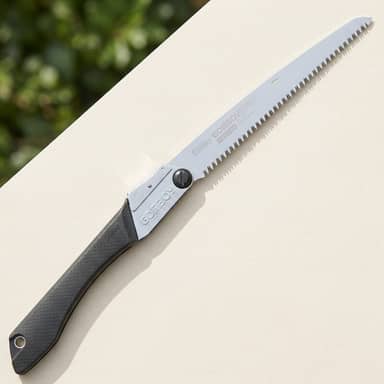
Silky GOMBOY 240 Professional Folding Saw (Medium Teeth)
Why this pick →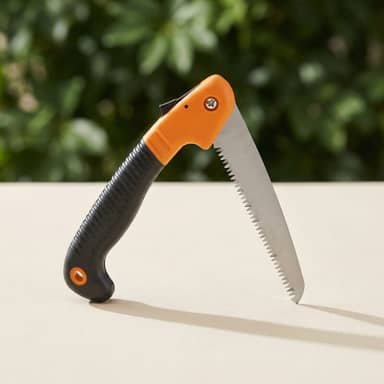
Fiskars Power Tooth Softgrip Folding Saw (7 in)
Why this pick →A pruning saw starts where loppers stop. Once a branch is too thick for a lopper to close on cleanly, usually past 2 inches, a folding pruning saw is the tool that finishes the job without the bulk and danger of a chainsaw. The modern folding hand saw is remarkably capable: a curved, impulse-hardened blade with aggressive teeth that cut on the pull stroke, slicing through a 4-inch limb in a handful of strokes.
The defining trait of a good pruning saw is the pull-cut design. Unlike a carpentry saw that cuts as you push, a pruning saw does its work as you draw it toward you. This keeps the thin blade in tension rather than buckling, so it tracks straight and clears sawdust efficiently. We sorted the field by blade quality and hardening, tooth geometry, the locking mechanism, and how comfortably the saw works through a long pruning session.
Best overall value: Corona RazorTooth folding saw (RS7265)

Best overall value
Corona RazorTOOTH Folding Pruning Saw (RS 7265, 10 in)
Best for: Gardeners who want one fast, reliable folding saw for branches a lopper cannot reach.
Keep in mind: Impulse-hardened teeth cannot be resharpened; you replace the blade when dull
Amazon price as of the checked date, subject to change. The price on Amazon at checkout applies.
Full research
- Type
- Folding pull-stroke saw
- Blade length
- 10 in
- Cut capacity
- Branches up to ~4 in
- Teeth
- Impulse-hardened, 3-sided razor teeth
Corona's RazorTOOTH RS 7265 packs a 10-inch curved, impulse-hardened blade that cuts aggressively on the pull stroke through branches up to 4 inches, folding and locking for safe carry.
This catalog-wide research score is separate from this guide's use-case ranking. How we research
Strengths
- Impulse-hardened curved blade cuts fast and aggressively on the pull stroke
- Teeth hold their edge far longer than a conventional pruning saw
- Folds and locks securely for safe carry in a pocket or belt
Weaknesses
- Impulse-hardened teeth cannot be resharpened; you replace the blade when dull
- Folding design is less rigid on the largest 4-inch cuts than a fixed-blade saw
Sprout Score breakdown
Best for
Gardeners who want one fast, reliable folding saw for branches a lopper cannot reach.
The Corona RazorTooth RS7265 is the saw most home gardeners should buy first. Its curved impulse-hardened blade has aggressive teeth that bite into wood fast, cutting limbs well over 3 inches with little effort, and it does so at a price that makes it an easy addition to any kit. It captures most of what makes a premium saw good, an impulse-hardened pull-cut blade, for a fraction of the cost.
The blade locks open for cutting and folds into the handle for storage. Its co-molded grip stays comfortable through repeated cuts. The Corona does not cut as smoothly as the Silky, but it handles ordinary branches at a much lower price. You can compare the Corona RazorTooth's current price against the premium pick.
Best premium: Silky GOMBOY 240 folding saw
Best premium
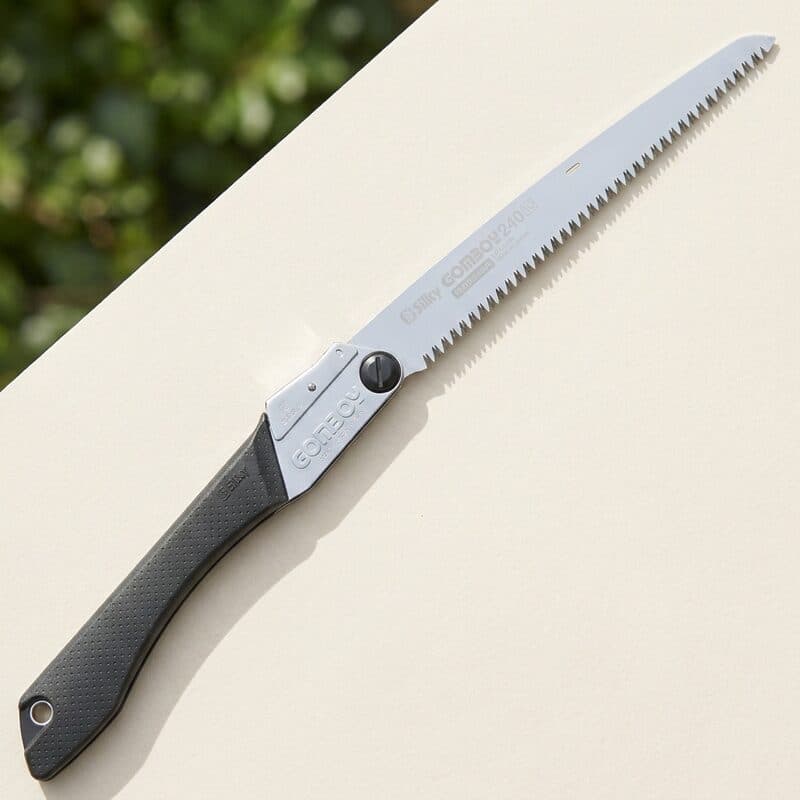
Silky GOMBOY 240 Professional Folding Saw (Medium Teeth)
Best for: Serious gardeners and arborists who want the cleanest, fastest folding-saw cut available and will use it often enough to justify the price.
Keep in mind: Premium price, well above mass-market folding saws
Amazon price as of the checked date, subject to change. The price on Amazon at checkout applies.
Full research
- Type
- Folding pull-stroke saw
- Blade length
- 240 mm (9.45 in)
- Folded length
- 270 mm (10.6 in)
- Teeth
- Medium, 8.5 teeth per inch, non-set taper-ground
Silky's GOMBOY 240 is the benchmark folding saw: a 240mm taper-ground, hard chrome-plated Japanese steel blade with non-set teeth that cuts glass-smooth, with a replaceable blade for long service.
This catalog-wide research score is separate from this guide's use-case ranking. How we research
Strengths
- Taper-ground non-set teeth deliver a glass-smooth, fast cut that pruning wounds heal cleanly from
- Hard chrome-plated Japanese steel blade is the durability benchmark in folding saws
- Replaceable blade and arborist-grade build justify the investment for heavy users
Weaknesses
- Premium price, well above mass-market folding saws
- Aggressive teeth demand care; the sharp blade is unforgiving of careless handling
Sprout Score breakdown
Best for
Serious gardeners and arborists who want the cleanest, fastest folding-saw cut available and will use it often enough to justify the price.
Owner rating snapshot
Amazon · 33 reviews · 4.8 stars
Silky is the Japanese name that serious arborists reach for, and the GOMBOY 240 shows why. The 240mm blade carries precision-ground, impulse-hardened teeth that cut with a smoothness and speed that sets the standard for hand saws. It glides through green and seasoned wood alike, and the hardened teeth hold their edge far longer than a conventional blade, which is the quiet reason the higher price pays off over years of use.
The two-position lock holds the blade rigid even in awkward overhead cuts, and the rubberized handle stays secure when your hands are sweaty or gloved. This is the saw to buy if you prune regularly, value a fast clean cut, and want a tool that will outlast cheaper replacements several times over. You can check current pricing on the Silky GOMBOY 240 before committing.
Best budget all-rounder: Fiskars Power Tooth softgrip saw
Best budget all-rounder
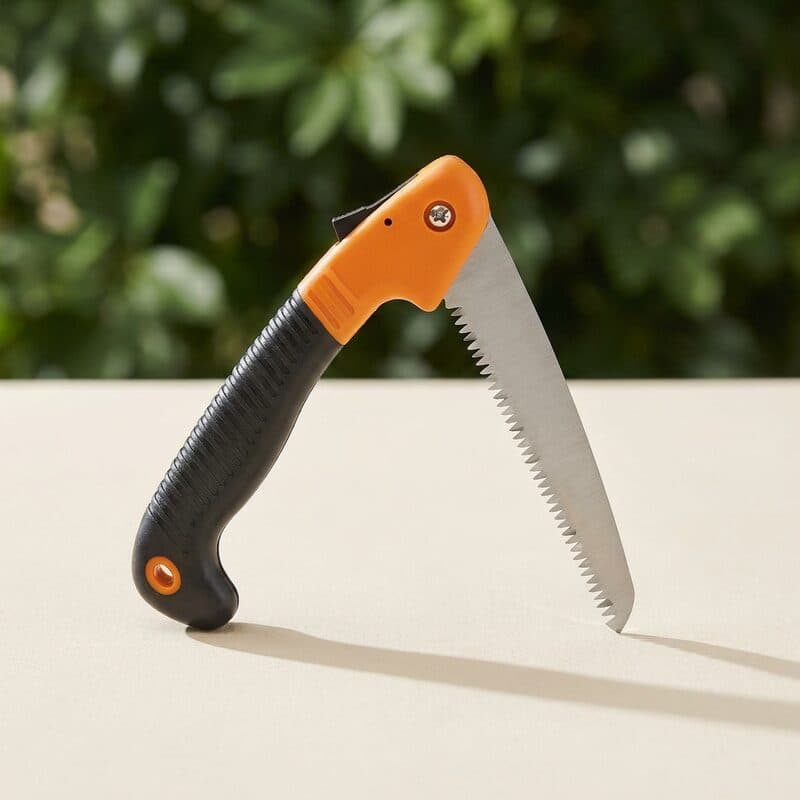
Fiskars Power Tooth Softgrip Folding Saw (7 in)
Best for: Gardeners who want an inexpensive, pocketable folding saw for small branches and tight pruning spots.
Keep in mind: Shorter blade limits how large a branch you can comfortably cut
Amazon price as of the checked date, subject to change. The price on Amazon at checkout applies.
Full research
- Type
- Folding pull-stroke saw
- Blade length
- 7 in
- Teeth
- Triple-ground, precision-cut
- Blade
- Steel with low-friction coating
Fiskars' Power Tooth Softgrip folding saw pairs a 7-inch triple-ground blade with a comfortable locking SoftGrip handle, an affordable, pocketable saw for small branches and tight spaces.
This catalog-wide research score is separate from this guide's use-case ranking. How we research
Strengths
- Compact 7-inch blade reaches into tight spaces and dense growth a long saw cannot
- SoftGrip handle and secure lock make it comfortable and safe to carry
- Under-$20 price with the Fiskars lifetime guarantee
Weaknesses
- Shorter blade limits how large a branch you can comfortably cut
- Coated teeth are not replaceable; it is a homeowner saw, not a pro tool
Sprout Score breakdown
Best for
Gardeners who want an inexpensive, pocketable folding saw for small branches and tight pruning spots.
Owner rating snapshot
Amazon · 22 reviews · 4.5 stars
The Fiskars Power Tooth is the comfortable, affordable everyday saw for gardeners who want a dependable tool without studying blade metallurgy. The Power Tooth blade has hardened teeth designed to cut on both the push and pull stroke, which speeds up shallow cuts on small-to-medium branches, and the softgrip handle is easy on the hands during routine work.
It is best matched to the steady diet of garden pruning, shaping shrubs, cutting back fruit trees, and clearing branches in the 1-to-3-inch range, rather than the largest limbs. For a gardener who prunes a few times a season and wants one comfortable, low-cost saw that simply works, it is an easy recommendation. You can see the Fiskars Power Tooth's current price if comfort and value top your list.
How to choose a pruning saw
The decision comes down to four things.
Blade hardening and teeth. The best pruning saws use impulse-hardened (induction-hardened) teeth, identifiable by the darkened tooth tips. They cut faster and stay sharp far longer than untreated blades, but they cannot be resharpened, so you replace the blade when it dulls. Aggressive, widely-spaced teeth (around 6 to 8 per inch) clear sawdust well and cut green wood fast, while finer teeth give a smoother finish on dry wood.
Blade length and curve. A longer blade (240mm and up) cuts thicker branches in fewer strokes, while a shorter blade is nimbler in tight, crowded growth. A curved blade pulls itself into the cut as you draw it back, which makes it more efficient than a straight blade for overhead and angled limbs.
Folding vs fixed. Folding saws fold the blade safely into the handle, making them the right choice for a pocket, a tool belt, or carrying up a ladder. The locking mechanism matters: look for a positive lock that holds the blade rigid in more than one position, so the saw stays stable in awkward cuts and folds away without nicking you.
Comfort and grip. Pruning is repetitive work, so a co-molded or rubberized handle that stays secure when wet or gloved reduces fatigue and slipping. The handle should fill your hand without forcing your wrist into an awkward angle on the pull stroke.
| Product | Price | Best for | Buy |
|---|---|---|---|
| Corona RazorTOOTH Folding Pruning Saw (RS 7265, 10 in)#1 · BEST OVERALL VALUE | Typical price range · $20-$30 | Gardeners who want one fast, reliable folding saw for branches a lopper cannot reach. | Search Amazon |
| Silky GOMBOY 240 Professional Folding Saw (Medium Teeth)#2 · BEST PREMIUM | Typical price range · $45-$65 | Serious gardeners and arborists who want the cleanest, fastest folding-saw cut available and will use it often enough to justify the price. | Shop Amazon |
| Fiskars Power Tooth Softgrip Folding Saw (7 in)#3 · BEST BUDGET ALL-ROUNDER | Typical price range · Under $20 | Gardeners who want an inexpensive, pocketable folding saw for small branches and tight pruning spots. | Shop Amazon |
Frequently asked questions
Why do pruning saws cut on the pull stroke?
Pulling keeps the thin blade in tension so it tracks straight instead of buckling, and the curved shape pulls itself deeper into the cut as you draw it back. This makes a pull-cut pruning saw faster and more controllable than a push saw for live branches, especially in overhead and angled cuts where you cannot put your weight behind a push.
What size branch can a folding pruning saw cut?
A good folding pruning saw with a 240mm blade comfortably cuts branches up to about 4 inches in diameter, and skilled users go larger with patience. Below roughly 2 inches, loppers are faster. Much above 5 or 6 inches, a bow saw or chainsaw is the safer, more efficient tool.
Can you sharpen impulse-hardened pruning saw blades?
No. Impulse-hardened teeth, recognizable by their darkened tips, are too hard to file and are designed to be replaced rather than sharpened. The upside is they stay sharp far longer than a standard blade. On most quality saws the blade is a replaceable part, so you swap it when it finally dulls rather than buying a whole new saw.
When is the best time to prune branches with a saw?
For most trees and woody shrubs, late dormancy in late winter or very early spring is ideal, before new growth begins and while the plant's structure is visible. Spring-flowering plants are an exception and are best pruned right after they bloom. Avoid heavy cutting in late summer and fall, which can push tender new growth that winter then damages.
Our recommendation
Buy the Corona RazorTooth RS7265 if you want the best value and a saw that handles real branches without fuss, step up to the Silky GOMBOY 240 for the smoothest cut and a blade that lasts for years, and choose the Fiskars Power Tooth for a comfortable, affordable everyday saw. Whichever you pick, use long pull strokes, match the blade to the limb size, and prune in the right season for the cleanest cuts and the healthiest plants.