Our recommendations
Felco F-2 Classic Bypass Pruner
Why this pick →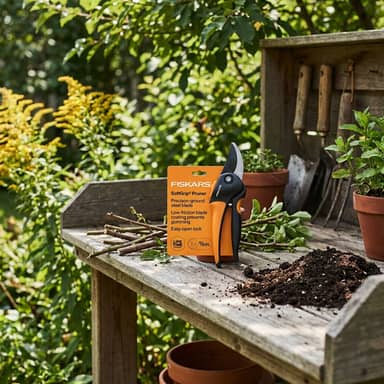
Fiskars Steel Bypass Pruning Shears
Why this pick →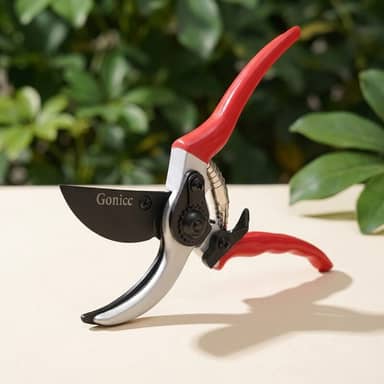
Gonicc 8 in Professional Bypass Pruning Shears (GPPS-1002)
Why this pick →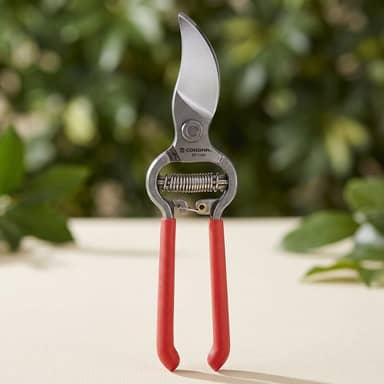
Corona ClassicCUT Forged Bypass Pruner (BP 3180D)
Why this pick →Start with your hand and the job
Medium to large right hand
Everyday cuts on a budget
Small or left hand
Dead wood or branches over 1 inch
A good pair of pruners is the tool you reach for most and notice least until it tears a stem instead of slicing it. The choices that matter are bypass versus anvil, how thick a stem the pruner can cut, whether it fits your hand, and whether you can replace worn parts or have to rebuy the whole tool. This guide sorts the picks by budget and use, from a buy-it-for-life standard to a dependable budget cutter.
These shears also work well for pinching and pruning suckers from tomatoes, where a clean cut on a soft stem matters as much as it does on woody growth.
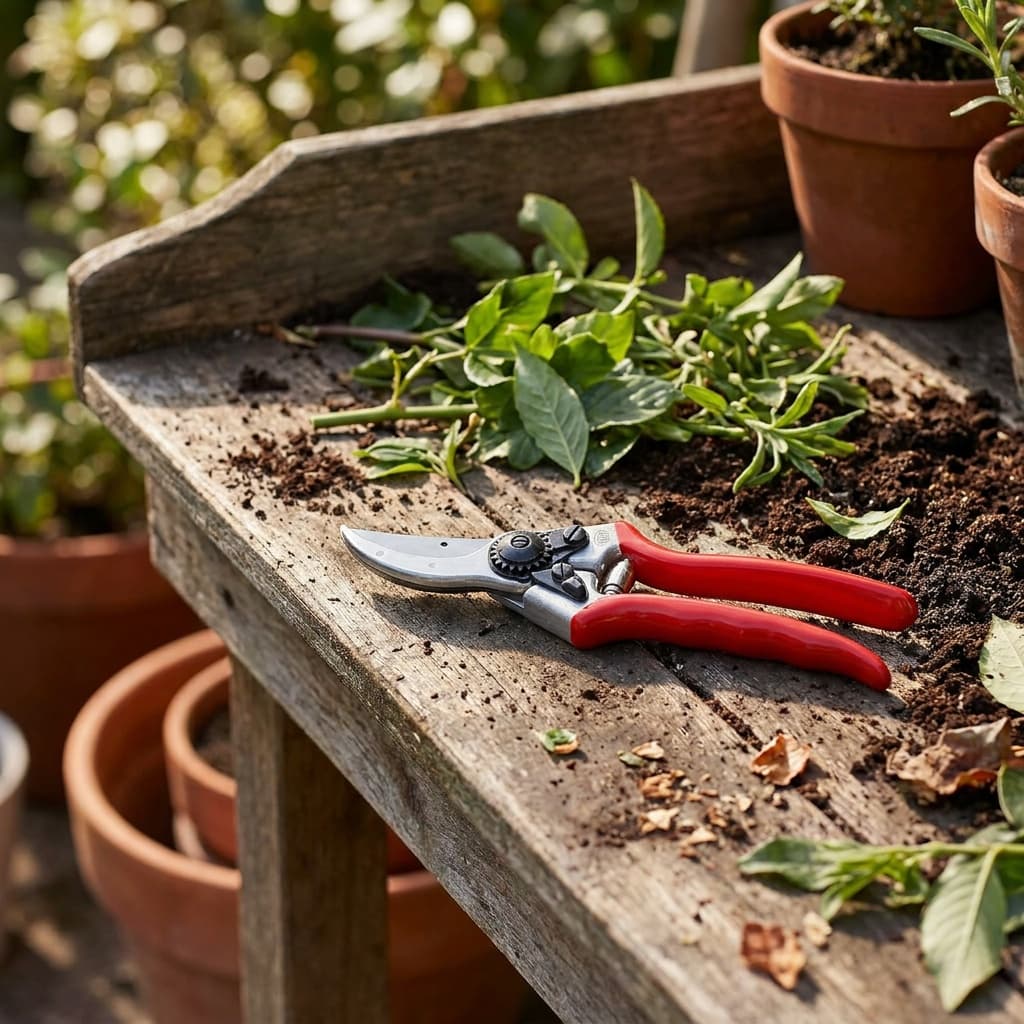
Best overall: Felco F-2
Best overall
Felco F-2 Classic Bypass Pruner
Best for: Gardeners who want one pruner they can rebuild and keep for decades.
Keep in mind: One size fits average to larger hands; no compact body
Amazon price as of the checked date, subject to change. The price on Amazon at checkout applies.
Full research
- Type
- Bypass
- Cutting capacity
- Up to 1 in (25 mm)
- Handle
- Forged aluminum
- Blade
- Hardened steel, replaceable
The Felco F-2 is the long-standing reference bypass pruner, with forged handles and a fully replaceable parts system that keeps it cutting season after season.
This catalog-wide research score is separate from this guide's use-case ranking. How we research
Strengths
- Fully serviceable: blades, springs, and other parts are replaceable
- Precise bypass cut that protects living stems
- Backed by a long owner track record across decades of use
Weaknesses
- One size fits average to larger hands; no compact body
- Premium price relative to entry-level pruners
Sprout Score breakdown
Best for
Gardeners who want one pruner they can rebuild and keep for decades.
Owner rating snapshot
Amazon · 312 reviews · 4.8 stars
The Felco F-2 is the reference hand pruner, and the reason is the part most pruners skip: every component is individually replaceable. Blade, spring, and the rest can all be swapped, so when something wears, you rebuild the tool instead of buying a new one. That is why gardeners and arborists keep the same pair for decades.
It is a bypass design with forged aluminum handles, a hardened steel blade, and a clean cut up to about 1 inch (25 mm) of green or dead wood. The body fits average to larger hands and there is no compact version, so smaller hands may prefer something else. It costs more than mass-market pruners, but spread across decades of service it is the cheapest tool here.
Best value: Fiskars Bypass
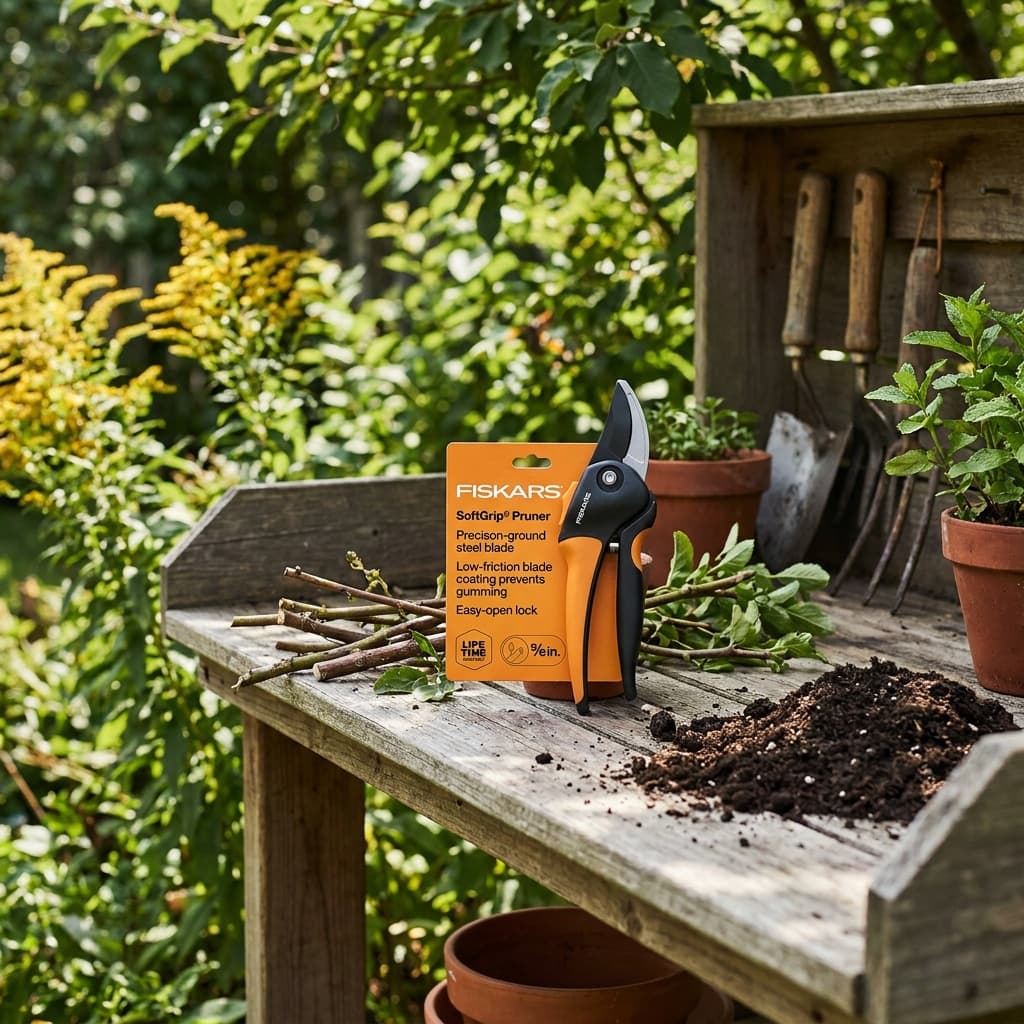
Best value
Fiskars Steel Bypass Pruning Shears
Best for: Beginning gardeners who want a dependable pruner without the premium price.
Keep in mind: Parts are not replaceable when worn
Amazon price as of the checked date, subject to change. The price on Amazon at checkout applies.
Full research
- Type
- Bypass
- Cutting capacity
- Up to 5/8 in
- Blade
- Fully hardened, precision-ground steel
- Coating
- Low-friction blade coating
Fiskars' steel bypass shears deliver clean cuts on everyday garden stems at a budget price, making them a common first pruner.
This catalog-wide research score is separate from this guide's use-case ranking. How we research
Strengths
- Sharp, coated blade slices cleanly out of the box
- Inexpensive enough to keep several around the garden
- Self-locking mechanism is simple to operate one-handed
Weaknesses
- Parts are not replaceable when worn
- Handle comfort trails premium ergonomic models on long sessions
Sprout Score breakdown
Best for
Beginning gardeners who want a dependable pruner without the premium price.
Owner rating snapshot
Amazon · 69 reviews · 4.6 stars
If you want a pruner that simply works without spending much, the Fiskars Bypass is the easy answer. The fully hardened, low-friction-coated steel blade slices cleanly straight out of the package, handling everyday stems and light branches up to about 5/8 inch, and the easy-open safety lock protects the blade in storage.
The parts are not user-replaceable, so it is a rebuy rather than a rebuild when the blade finally dulls past sharpening. But at this price it is inexpensive enough to keep a pair in the shed and another by the back door, and for most home gardeners that is exactly the right call.
Budget: Gonicc 8in Bypass
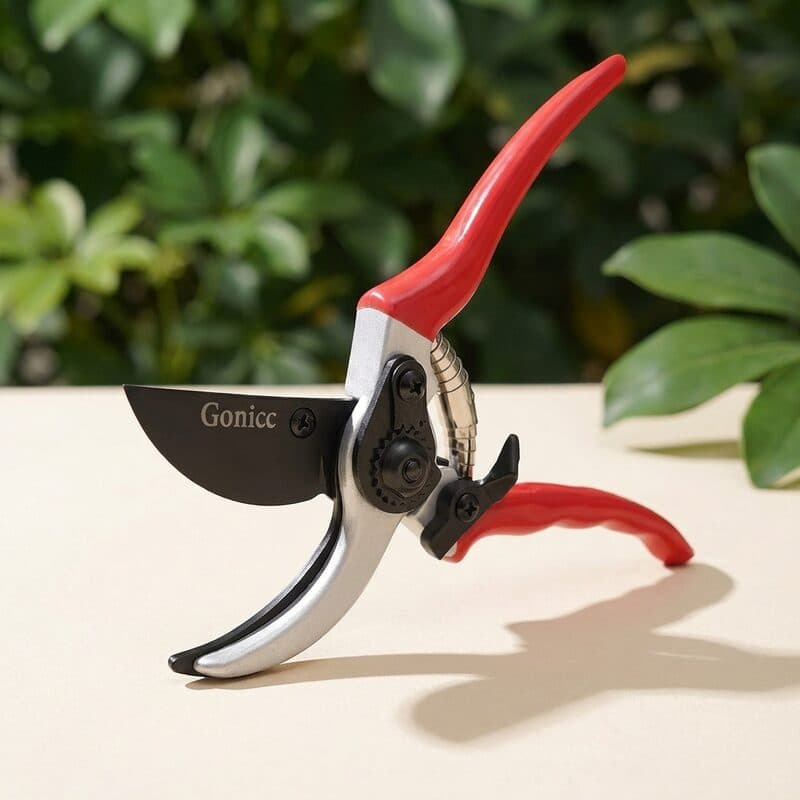
Budget
Gonicc 8 in Professional Bypass Pruning Shears (GPPS-1002)
Best for: Cost-conscious gardeners who want a comfortable bypass pruner that still cuts cleanly.
Keep in mind: Not a fully rebuildable, lifetime tool
Amazon price as of the checked date, subject to change. The price on Amazon at checkout applies.
Full research
- Type
- Bypass
- Length
- 8 in
- Blade
- SK-5 steel with sap groove
- Handle
- Non-slip, ergonomic
The Gonicc 8 inch bypass shears pair an SK-5 steel blade with a sap groove and cushioned handles, a popular budget pruner for routine garden work.
This catalog-wide research score is separate from this guide's use-case ranking. How we research
Strengths
- Low price with a sap groove that resists sticking
- Comfortable non-slip handles for the cost
- Strong everyday owner sentiment as a starter pruner
Weaknesses
- Not a fully rebuildable, lifetime tool
- Spring can need attention over heavy use
Sprout Score breakdown
Best for
Cost-conscious gardeners who want a comfortable bypass pruner that still cuts cleanly.
Owner rating snapshot
Amazon · 135 reviews · 4.6 stars
The Gonicc 8 inch bypass shears are the cheapest cutter here that still cuts cleanly and locks reliably. The SK-5 steel blade has a sap groove that resists sticking, the handles are cushioned and non-slip, and owner sentiment as a starter pruner is broadly positive.
It is not rebuildable, and the spring can need attention under heavy use. Its low price makes it suitable as a first pruner, a backup, or a pair shared with a helper.
Best midrange: Corona ClassicCUT
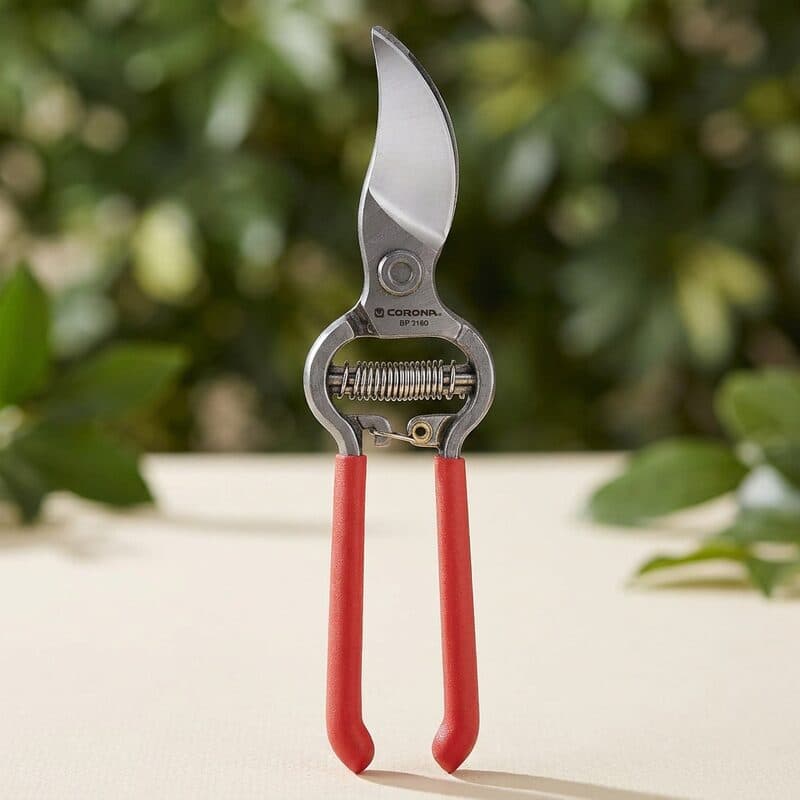
Best midrange
Corona ClassicCUT Forged Bypass Pruner (BP 3180D)
Best for: Gardeners who want a forged, blade-replaceable pruner at a mid-range price.
Keep in mind: Heavier than lightweight aluminum-handled pruners
Amazon price as of the checked date, subject to change. The price on Amazon at checkout applies.
Full research
- Type
- Bypass
- Cutting capacity
- Up to 1 in
- Blade
- Forged steel, replaceable
- Handle
- Forged steel with grips
Corona's ClassicCUT forged bypass pruner offers a durable steel body and a replaceable blade, a solid step up from stamped budget shears.
This catalog-wide research score is separate from this guide's use-case ranking. How we research
Strengths
- Forged construction is sturdier than stamped budget pruners
- Replaceable blade extends the tool's life
- Comfortable in the hand for routine pruning
Weaknesses
- Heavier than lightweight aluminum-handled pruners
- Fewer replaceable parts than a fully serviceable premium model
Sprout Score breakdown
Best for
Gardeners who want a forged, blade-replaceable pruner at a mid-range price.
Owner rating snapshot
Amazon · 64 reviews · 4.7 stars
The Corona ClassicCUT sits between the budget shears and the Felco. It is a forged bypass pruner (sturdier than stamped budget tools) with a replaceable blade, cutting live growth up to roughly 1 inch. That combination, forged construction plus a swappable blade at a moderate price, is what makes it the value-minded step up.
It is heavier than lightweight aluminum-handled models and has fewer replaceable parts than a fully serviceable premium pruner. But for a gardener who wants a durable tool with a blade they can renew without paying Felco money, it is the sensible middle.
How to choose pruning shears
Four things decide whether a pruner serves you for one season or twenty.
What to weigh before you buy
Bypass vs anvil
Cutting capacity
Hand size and ergonomics
Replaceable parts
For the great majority of gardeners, the decision is simply bypass plus a capacity that matches their plants, then a budget choice between rebuy and rebuild. Anvil pruners have their place for dry deadwood, but if you are buying one pair to do everything, buy bypass.
| Product | Price | Best for | Buy |
|---|---|---|---|
| Felco F-2 Classic Bypass Pruner#1 · BEST OVERALL | Typical price range · $50-$100 | Gardeners who want one pruner they can rebuild and keep for decades. | Shop Amazon |
| Fiskars Steel Bypass Pruning Shears#2 · BEST VALUE | Typical price range · Under $25 | Beginning gardeners who want a dependable pruner without the premium price. | Shop Amazon |
| Gonicc 8 in Professional Bypass Pruning Shears (GPPS-1002)#3 · BUDGET | Typical price range · Under $25 | Cost-conscious gardeners who want a comfortable bypass pruner that still cuts cleanly. | Shop Amazon |
| Corona ClassicCUT Forged Bypass Pruner (BP 3180D)#4 · BEST MIDRANGE | Typical price range · $25-$50 | Gardeners who want a forged, blade-replaceable pruner at a mid-range price. | Shop Amazon |
What is the difference between bypass and anvil pruners?
Bypass pruners use two curved blades that pass each other like scissors, making a clean cut that living stems heal from quickly. Anvil pruners press a single blade down onto a flat surface, crushing the stem, which works for dead wood but can damage live growth. For most garden pruning, including soft stems and green branches, bypass is the better choice.
What size branch can hand pruners cut?
Most quality hand pruners are rated to cut stems up to about 5/8 to 1 inch in diameter, depending on the model. Stay within the rated capacity: forcing a pruner through a branch too thick for it strains the tool and leaves a ragged, torn cut. For anything beyond roughly an inch, step up to loppers or a pruning saw.
Are expensive pruning shears worth it?
For occasional use, an inexpensive pair that cuts cleanly is plenty. The case for a premium pruner like the Felco F-2 is replaceable parts: you rebuild it instead of rebuying it, so a single pair can last decades. If you prune often or want one tool to keep, the higher upfront cost pays off over the long run.
What pruning shears fit small or left hands?
The standard Felco F-2 is a right-handed tool for medium to large hands. For a small right hand, the compact FELCO 14 has a shorter 7.09-inch body and a 0.71-inch cutting capacity. For left-handed gardeners, the FELCO 16 fits medium hands and the FELCO 9 fits larger hands. Match the handle span and blade orientation before comparing price.
Is Corona or Fiskars better for pruning shears?
Choose the Corona ClassicCUT for forged construction, a replaceable blade, and branches up to about 1 inch. Choose the Fiskars for smaller live stems and a lower purchase price, with the expectation that you will replace the tool when it wears out. Corona is repairable; Fiskars costs less.
How do I keep pruning shears sharp and clean?
Wipe the blade after each use, and clean it with rubbing alcohol after cutting any diseased plant so you do not spread problems. Touch up the edge with a sharpening stone or file regularly rather than letting it get dull, and add a drop of oil to the pivot and spring. A clean, sharp blade cuts better and helps plants heal faster.
Our recommendation
If you prune often or want a tool you can keep for life, the Felco F-2 rebuilds rather than rebuys and is worth every cent over time. If you just want a clean cut without spending much, the Fiskars Bypass is the value pick to grab. The Gonicc is the budget cutter that still performs, and the Corona ClassicCUT is the forged, blade-replaceable middle ground. Whichever you choose, keep it bypass, keep it sharp, and keep it clean.