Our recommendations

Haws Deluxe Plastic Watering Can, 1.8-Gallon (V105)
Why this pick →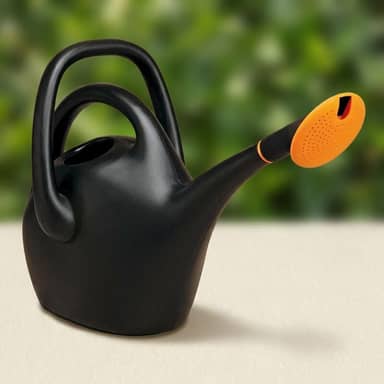
Bloem Easy Pour Watering Can, 2.6-Gallon
Why this pick →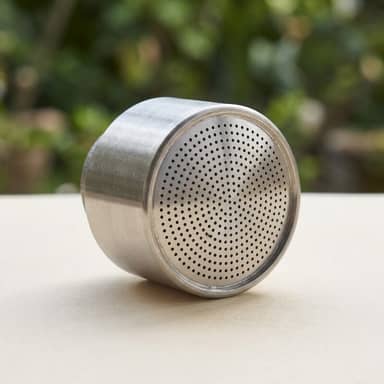
Dramm 400AL Aluminum Water Breaker Nozzle
Why this pick →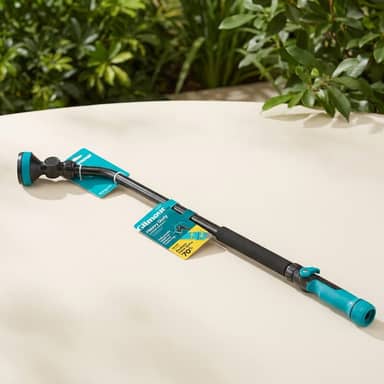
Gilmour Heavy Duty Swivel Connect Watering Wand (820522-1001)
Why this pick →A watering can sounds like one of the least complicated garden purchases you will make, but a bad one, too heavy when full, poorly balanced, with a shower head that blasts instead of sprinkles, teaches you exactly why the design matters. Seedlings do not need more water than established plants. They need gentler water, delivered with control, at the base of the stem or across the flat of a tray without washing seeds to one corner or snapping stems at the soil line. The tools here cover the full range: a well-engineered traditional can for general outdoor use, a budget-friendly large-capacity alternative, the best greenhouse nozzle in the business, and a long-reach hose wand for gardeners who prefer to water from the hose rather than carry a can.
Best overall: Haws Deluxe Watering Can V105

Best overall
Haws Deluxe Plastic Watering Can, 1.8-Gallon (V105)
Best for: Gardeners who want a well-balanced outdoor watering can that handles both seedling trays and established beds without hand strain.
Keep in mind: Higher price than utility-grade plastic cans
Amazon price as of the checked date, subject to change. The price on Amazon at checkout applies.
Full research
- Capacity
- 1.8 gal (7 L)
- Rose
- Removable oval brass rose included
- Material
- Heavy-duty injection-molded plastic
- Handles
- Two-handle balanced design
The Haws V105 brings the brand's 140-year kitchen-garden pedigree to heavy-duty plastic, with a two-handle balance and removable brass rose that makes precise pouring feel effortless.
This catalog-wide research score is separate from this guide's use-case ranking. How we research
Strengths
- Two-handle balance makes a full 1.8-gallon can easy to control
- Removable brass rose switches from gentle shower to directed stream
- Durable plastic survives UV and freezing better than galvanized metal
Weaknesses
- Higher price than utility-grade plastic cans
- Plastic lacks the aesthetic of a traditional galvanized or copper can
Sprout Score breakdown
Best for
Gardeners who want a well-balanced outdoor watering can that handles both seedling trays and established beds without hand strain.
The Haws V105 is what happens when a company that has been making watering cans since 1886 applies 140 years of engineering attention to a plastic can. The two-handle system is the thing that actually matters: one handle at the back for support, one on top of the body for pouring control, so the weight of the water works with you rather than pulling the can over as it empties. The result is that a full 1.8-gallon can feels manageable even with one hand tired from a long session.
The removable oval brass rose is the same design used on Haws' galvanized metal cans and produces a full, gentle shower across the breadth of a seedling tray or a planting row. Pull the rose off and the long curved spout delivers a directed stream that drops water exactly at the base of a plant without wetting the foliage. The heavy-duty injection-molded plastic survives UV exposure and winter freeze-thaw cycles better than galvanized metal and needs no maintenance beyond rinsing.
Best value: Bloem Easy Pour 2.6-Gallon
Best value
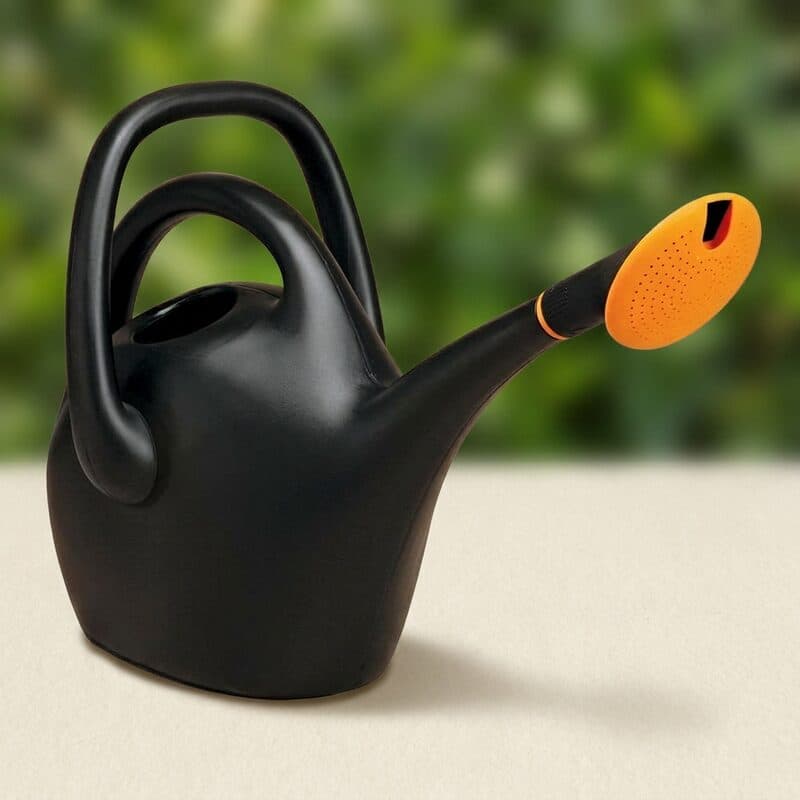
Bloem Easy Pour Watering Can, 2.6-Gallon
Best for: Budget-conscious gardeners who want a capable, large-capacity outdoor watering can with adjustable flow.
Keep in mind: All-plastic construction lacks the feel of a metal or premium brass-fittings can
Amazon price as of the checked date, subject to change. The price on Amazon at checkout applies.
Full research
- Capacity
- 2.6 gal (333 fl oz)
- Spout
- Rotatable head, shower to stream
- Handles
- Dual handle, multiple hand positions
- Fill hole
- Offset to clear handles under spigot
Bloem's Easy Pour 2.6-gallon can combines dual handles, a rotating spout, and UV-resistant resin for outdoor watering. It is made in the USA.
This catalog-wide research score is separate from this guide's use-case ranking. How we research
Strengths
- Rotatable spout adjusts water delivery without changing grip
- Dual handles reduce wrist strain while carrying and pouring
- Offset fill hole fits under most hose spigots without awkward angles
Weaknesses
- All-plastic construction lacks the feel of a metal or premium brass-fittings can
- 2.6 gallons is heavy when full for gardeners with wrist or grip issues
Sprout Score breakdown
Best for
Budget-conscious gardeners who want a capable, large-capacity outdoor watering can with adjustable flow.
Owner rating snapshot
Amazon · 48 reviews · 4.0 stars
The Bloem Easy Pour trades the Haws' two-handle engineering for a practical large-capacity design at roughly half the price. At 2.6 gallons it holds more water per fill, which matters if you are walking back and forth to a spigot across a large garden. The rotatable spout head adjusts from a gentle shower to a direct stream without changing your grip, and the offset fill hole clears both handles when filling from a spigot, a small design detail that Bloem gets right where cheaper cans get it wrong.
The dual handles distribute the weight of a full can across both hands, which is the right approach for a 2.6-gallon load. Build quality is thick-wall UV-resistant resin made in the USA, not the thin-walled imported plastic that cracks after one season. It does not have the precision of a Haws balance or a brass rose, but for everyday outdoor vegetable-bed watering where you need capacity and durability more than precision, it does the job well.
Best seedling nozzle: Dramm 400AL Water Breaker
Companion Seedling nozzle
Dramm 400AL Aluminum Water Breaker Nozzle
Best for: Growers who hand-water seedling trays, transplants, or newly seeded beds and need a gentle, thorough shower that does not disturb fine roots.
Keep in mind: Nozzle only, no flow control; pairs best with a separate wand
Amazon price as of the checked date, subject to change. The price on Amazon at checkout applies.
Full research
- Holes
- 400 tiny holes for full-flow gentle shower
- Material
- Cast aluminum body
- Threads
- 3/4 in brass hose threads
- Compatibility
- Any Dramm wand or standard hose end
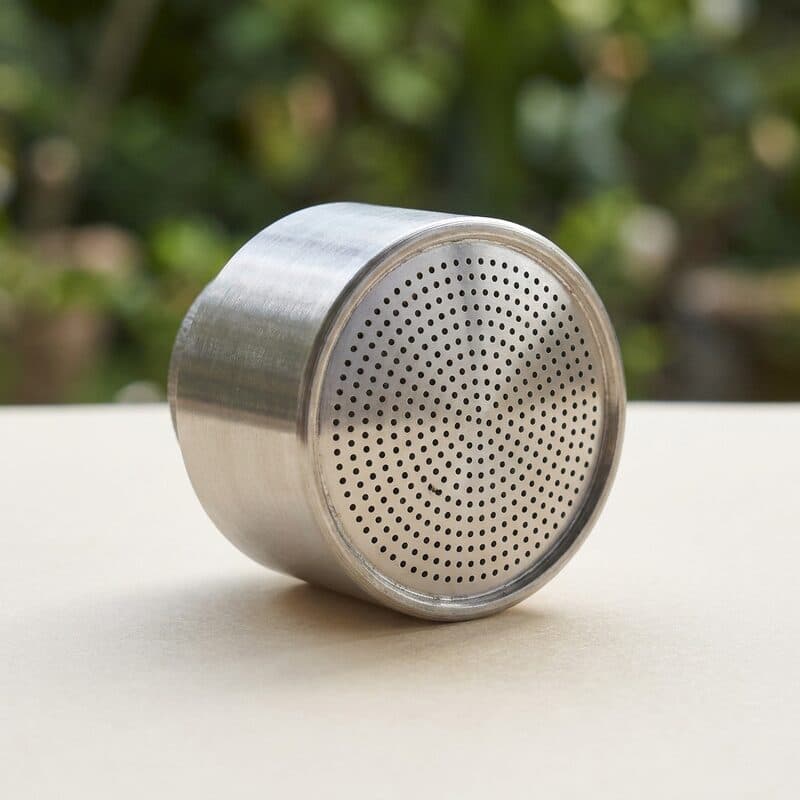
The Dramm 400AL has been the greenhouse watering standard since 1941. Four hundred tiny holes break the flow into a gentle shower that waters thoroughly without knocking seeds loose or snapping seedling stems.
This catalog-wide research score is separate from this guide's use-case ranking. How we research
Strengths
- Gentle 400-hole shower will not displace seeds or flatten seedlings
- Cast aluminum and brass threads are far more durable than plastic nozzles
- Attaches to any wand or hose end, so it improves any setup
Weaknesses
- Nozzle only, no flow control; pairs best with a separate wand
- Full flow is high volume, not suited to light misting of very small seedlings
Sprout Score breakdown
Best for
Growers who hand-water seedling trays, transplants, or newly seeded beds and need a gentle, thorough shower that does not disturb fine roots.
Owner rating snapshot
Amazon · 824 reviews · 4.7 stars
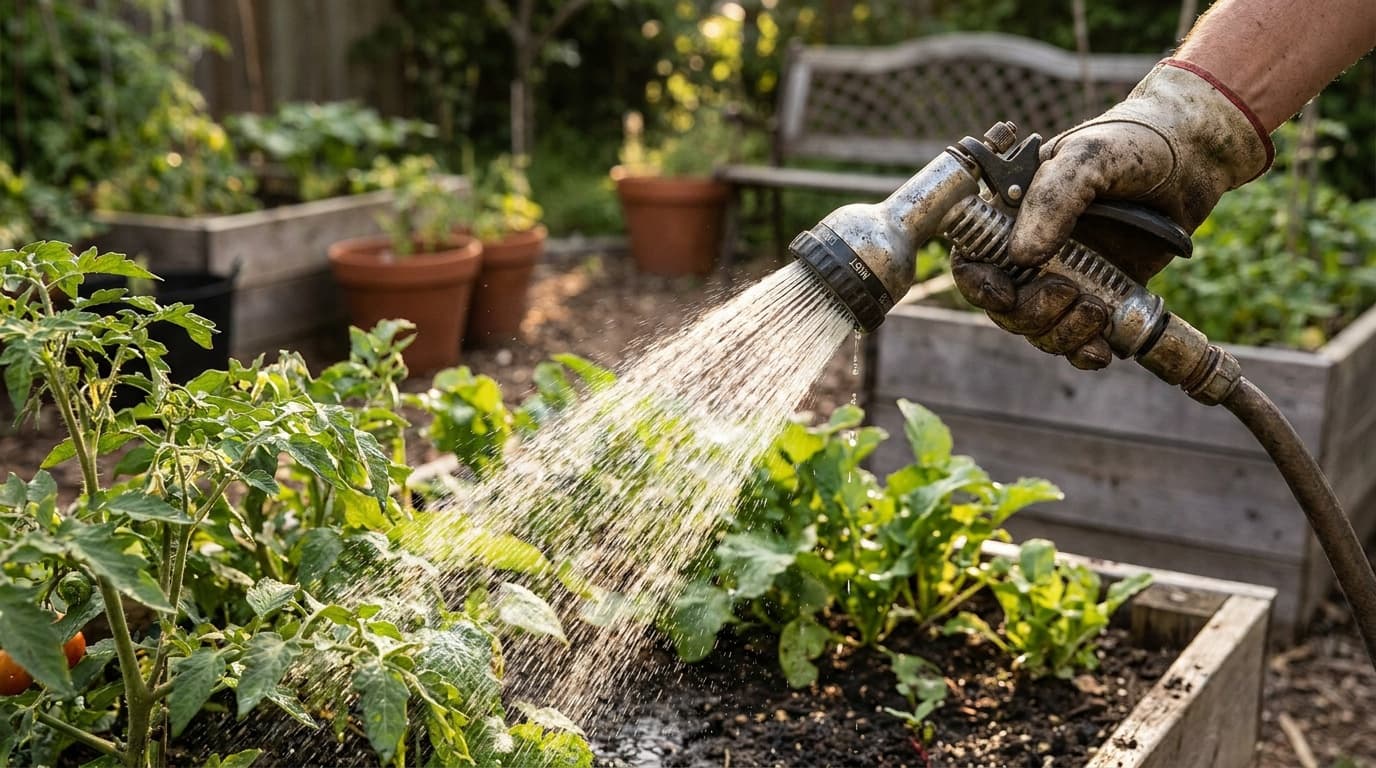
The Dramm 400AL is not a watering can, it is a nozzle, and it is arguably the most important watering tool in this guide. Dramm invented the water breaker nozzle in 1941 for the greenhouse industry, where watering thousands of seedling flats by hand every day made gentle, high-volume delivery a professional necessity. The 400 tiny holes break the water flow into a full-volume gentle shower that delivers plenty of water without the velocity needed to dislodge seeds, wash away fine growing medium, or snap a seedling at the stem.
It threads onto the end of any Dramm wand or any standard 3/4-inch hose end, which means you can keep your existing watering setup and add a water breaker for the delicate work. Pair it with a long wand for reaching the back of a raised bed without leaning over the edge, or use it directly on a hose for watering flats at a potting bench. The cast aluminum body and brass threads are built for decades of commercial greenhouse use, not one season of home gardening.
For any gardener who starts seeds indoors and hand-waters transplants during the first week in the ground, the 400AL is the single most protective tool you can add to your watering routine. It is also well-suited to broadcasting seeds in a newly prepared bed, where even a standard sprinkler nozzle creates enough force to cluster seeds in one corner.
Best watering wand: Gilmour Swivel Connect Wand
Alternative Hose wand
Gilmour Heavy Duty Swivel Connect Watering Wand (820522-1001)
Best for: Gardeners who water a mix of containers, hanging baskets, and raised beds and want one wand that handles all of them.
Keep in mind: Plastic pattern-selector ring is the most common wear point
Amazon price as of the checked date, subject to change. The price on Amazon at checkout applies.
Full research
- Length
- Approx. 34 in extended reach
- Spray patterns
- 5 patterns via thumb-twist head
- Flow control
- Thumb lever on/off
- Connector
- Swivel connect reduces hose kinking
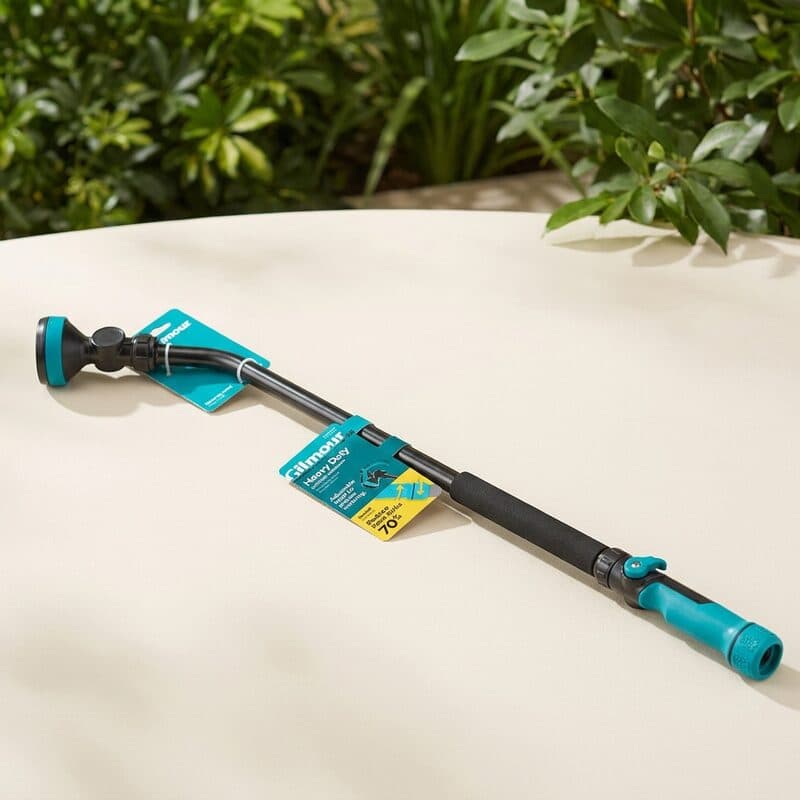
Gilmour's swivel-connect wand combines extended reach, a thumb-control lever, and five spray patterns into a versatile hose wand that kinks less and reaches hanging baskets without stretching.
This catalog-wide research score is separate from this guide's use-case ranking. How we research
Strengths
- Swivel connector pivots at the hose coupling to prevent kinking
- Thumb lever gives one-handed on/off without releasing grip
- Extended reach handles containers on shelves and hanging baskets without stretching
Weaknesses
- Plastic pattern-selector ring is the most common wear point
- Not as gentle on seedlings as a dedicated water breaker nozzle
Sprout Score breakdown
Best for
Gardeners who water a mix of containers, hanging baskets, and raised beds and want one wand that handles all of them.
Owner rating snapshot
Amazon · 516 reviews · 4.1 stars
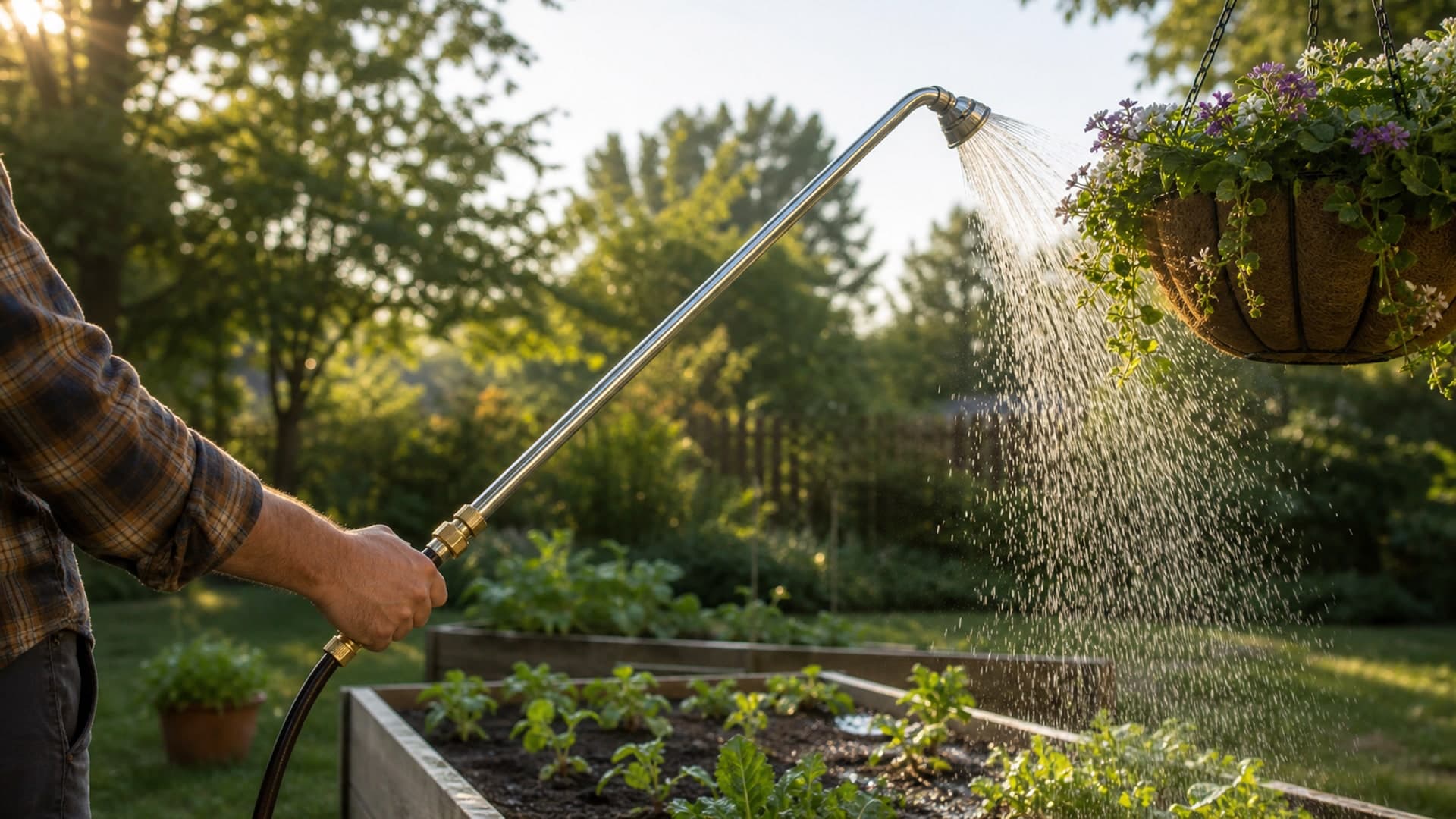
For gardeners who primarily water from a hose rather than a can, a good wand is the equivalent tool. The Gilmour swivel-connect wand reaches hanging baskets, the back rows of deep raised beds, and planters on lower shelving without straining, and the kink-reducing swivel connector at the hose coupling stops the maddening hose twist that turns into a kink two feet from the faucet. Five spray patterns on the thumb-twist head handle everything from a light mist on seeds to a jet for clearing debris or rinsing foliage.
The thumb lever on the shaft gives one-handed on/off control without releasing your grip, which matters when you are moving quickly between containers. For a vegetable garden with a mix of raised beds, containers, and hanging herbs, the extended reach and adjustable patterns make this a more practical daily-use tool than a watering can for the main watering pass. Save the can for the seedling tray and new transplants where the Dramm-style gentle shower matters most. Pair it with the watering vegetable gardens guide for timing and depth guidance.
How to choose a watering can or wand
Start with your primary use. Seedling trays and new transplants need a gentle rose or water breaker nozzle above everything else. Established outdoor vegetable beds care more about capacity and reach than precision. Containers and hanging baskets benefit from the reach of a wand. Most serious gardeners end up with two tools: a can for indoor seedlings and a wand for outdoor beds.
Balance matters more than capacity. A 2-gallon can that sits perfectly balanced in your hand is easier to use than a 3-gallon can that pulls your wrist over at half-empty. The Haws two-handle design solves this. Cheaper single-handle cans with the handle at the top center are noticeably harder to control as they empty.
Plastic vs. galvanized vs. copper. Plastic is the practical choice for outdoor use: it resists rust, survives freeze-thaw cycles, and weighs less than metal. Galvanized steel develops character over time but eventually rusts from the inside if left with water sitting in it. Copper is beautiful and durable but priced accordingly.
Rose type. A long oval rose produces a gentle wide shower suited to seedlings and beds. A round fine-mist rose works for very delicate indoor plants. If you are buying a can primarily for outdoor vegetable beds, make sure the rose is removable so you can switch between shower and directed stream.
Wand length. For raised beds, a 24 to 36-inch wand reaches the back row without leaning over the side and disturbing the soil. For hanging baskets at or above head height, look for 36 inches or more.
| Product | Price | Best for | Buy |
|---|---|---|---|
| Haws Deluxe Plastic Watering Can, 1.8-Gallon (V105)#1 · BEST OVERALL | Typical price range · $25-$50 | Gardeners who want a well-balanced outdoor watering can that handles both seedling trays and established beds without hand strain. | Search Amazon |
| Bloem Easy Pour Watering Can, 2.6-Gallon#2 · BEST VALUE | Typical price range · Under $25 | Budget-conscious gardeners who want a capable, large-capacity outdoor watering can with adjustable flow. | Shop Amazon |
| Dramm 400AL Aluminum Water Breaker NozzleCompanion · SEEDLING NOZZLE | Typical price range · Under $25 | Growers who hand-water seedling trays, transplants, or newly seeded beds and need a gentle, thorough shower that does not disturb fine roots. | Shop Amazon |
| Gilmour Heavy Duty Swivel Connect Watering Wand (820522-1001)Alternative · HOSE WAND | Typical price range · Under $25 | Gardeners who water a mix of containers, hanging baskets, and raised beds and want one wand that handles all of them. | Shop Amazon |
What size watering can is best for a vegetable garden?
For outdoor raised beds and container gardens, 1.5 to 2.5 gallons is a practical range. A larger can becomes tiring when full, while a smaller one needs frequent refilling. The 1.8-gallon Haws and 2.6-gallon Bloem both fall within that range. For indoor seedling trays, use a 1-quart to half-gallon can with a fine rose for better control.
How do I water seedlings without washing away the soil?
Use a watering can with a removable rose or a dedicated water breaker nozzle like the Dramm 400AL. Hold the rose close to the soil surface, 6 to 8 inches above, to minimize drop height and impact. Water slowly and evenly until the medium is thoroughly moist but not pooling. Avoid overhead watering from a hose or sprinkler nozzle on newly seeded flats: even low pressure creates enough velocity at the soil surface to displace seeds and compact the growing medium.
How often should I water a vegetable garden?
Frequency depends on your soil, weather, and what you are growing, but most established vegetable beds need about an inch of water per week from rain or irrigation. Check the soil 2 to 3 inches below the surface: if it is dry at that depth, water deeply. Shallow daily watering encourages shallow roots. Seedlings and newly transplanted starts need more consistent moisture while establishing, but still benefit from deep, infrequent watering rather than light daily sprinkles. The watering vegetable gardens guide covers the full approach.
What is the difference between a watering wand and a watering can?
A watering can is a self-contained vessel you fill and carry, giving you complete portability independent of a hose. It is the right tool for indoor seedlings, for precise base-watering of individual plants, and anywhere a hose does not reach easily. A watering wand attaches to a garden hose and extends your reach, handling large or spread-out areas faster than a can. Most vegetable gardeners use both: a can for seedlings and new transplants, a wand for the main daily watering pass over established beds.
Do I need a water breaker for a vegetable garden?
Not strictly, but it is a significant upgrade if you hand-water seedling trays or newly transplanted starts. A standard hose nozzle or even a basic watering can spout delivers water fast enough to disturb fine growing medium and snap young stems. A water breaker like the Dramm 400AL slows and spreads the flow through 400 holes, producing a gentle high-volume shower that moistens the whole flat evenly without the force that concentrates water and seeds in one corner. For seed starting and transplant care, it is a $14 purchase that protects weeks of work.
Getting watering right in the early weeks of the season, from indoor seed starting through the first few weeks after transplanting, is where the precision tools pay off. A good can with a removable rose for seedling work, a water breaker nozzle for the most delicate stages, and a reach wand for the main outdoor pass covers every situation in the vegetable garden. For more on building a complete watering system that reduces the work you do by hand, see the best garden hose timers guide.