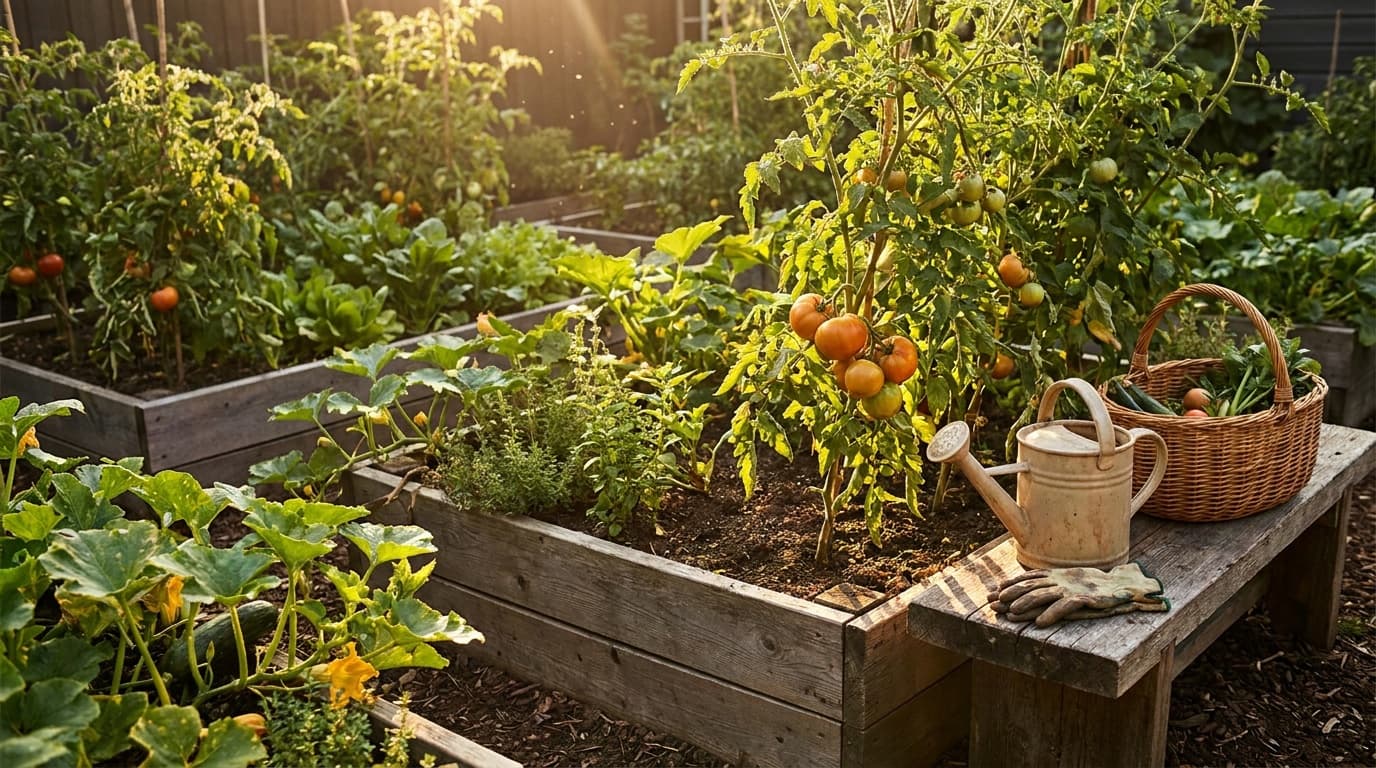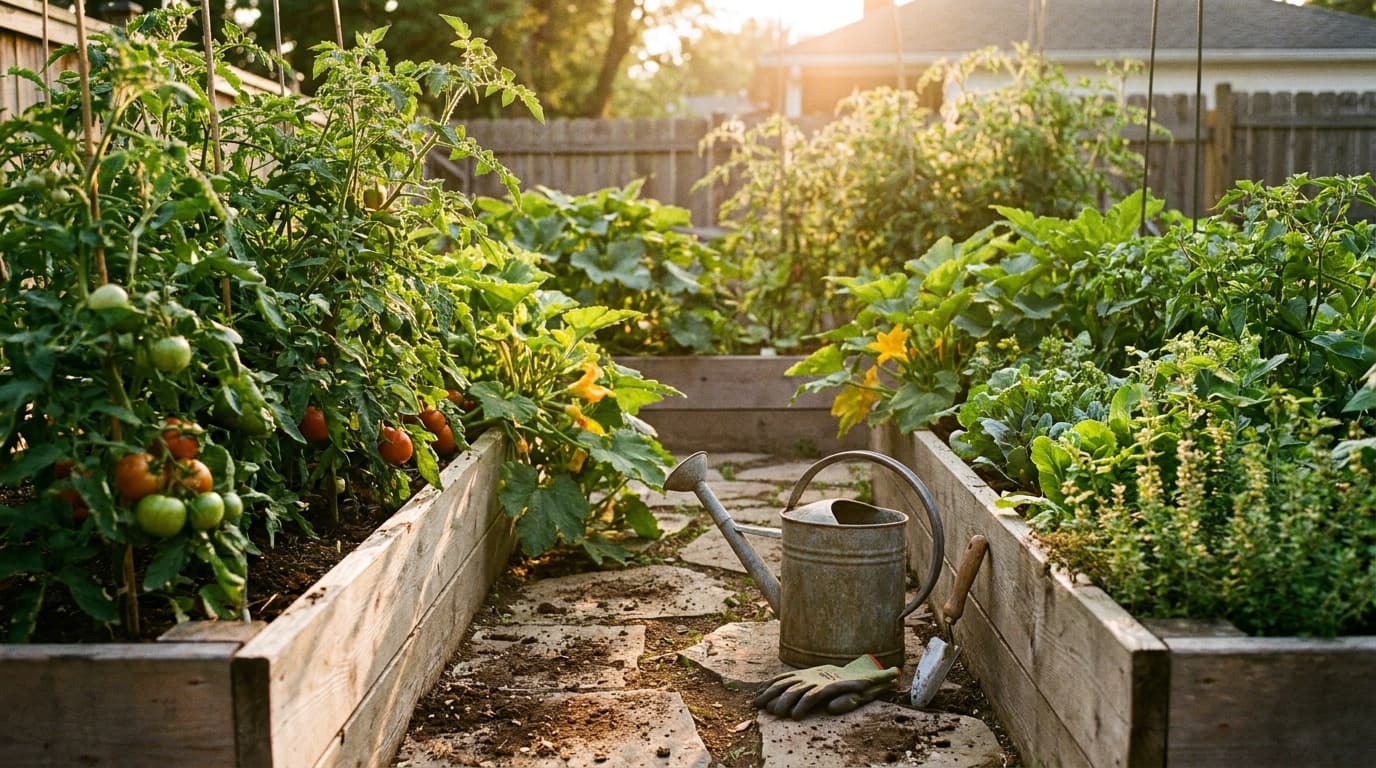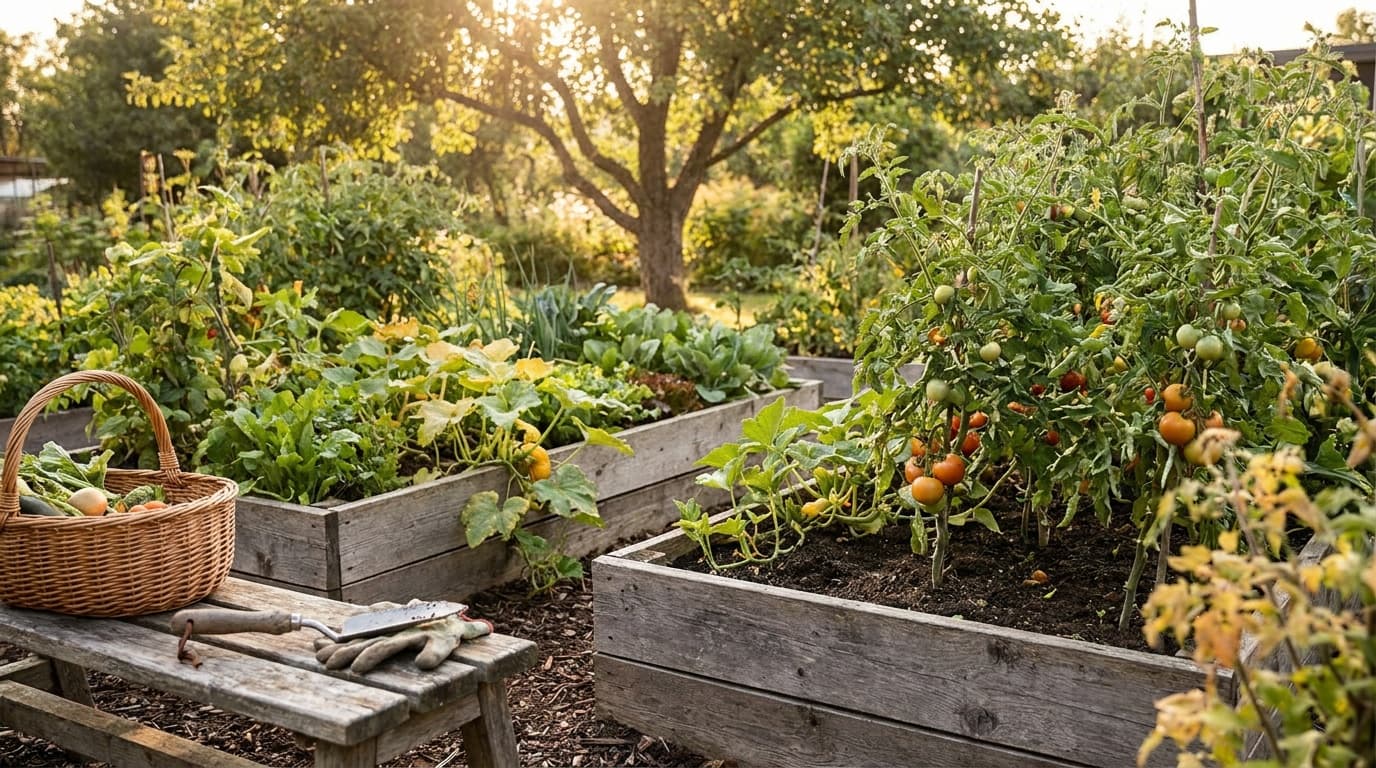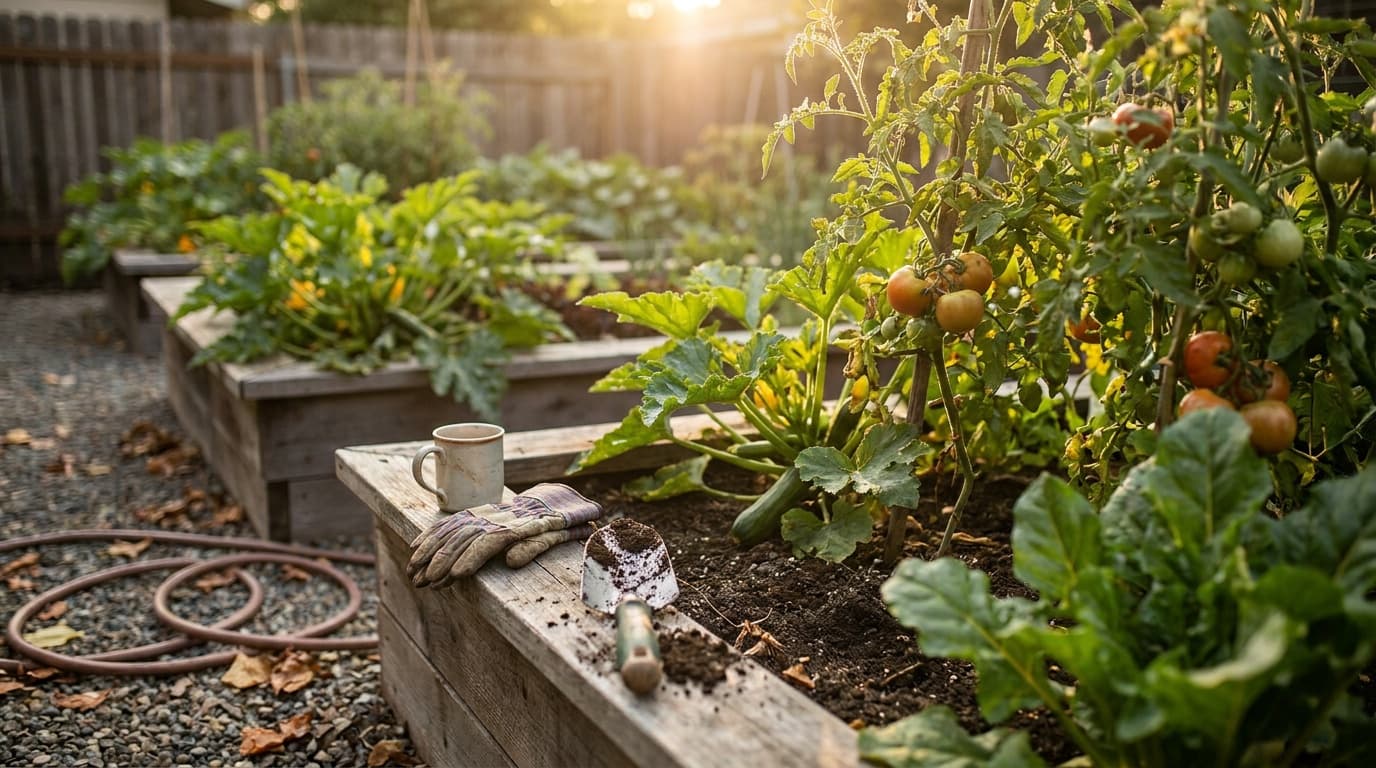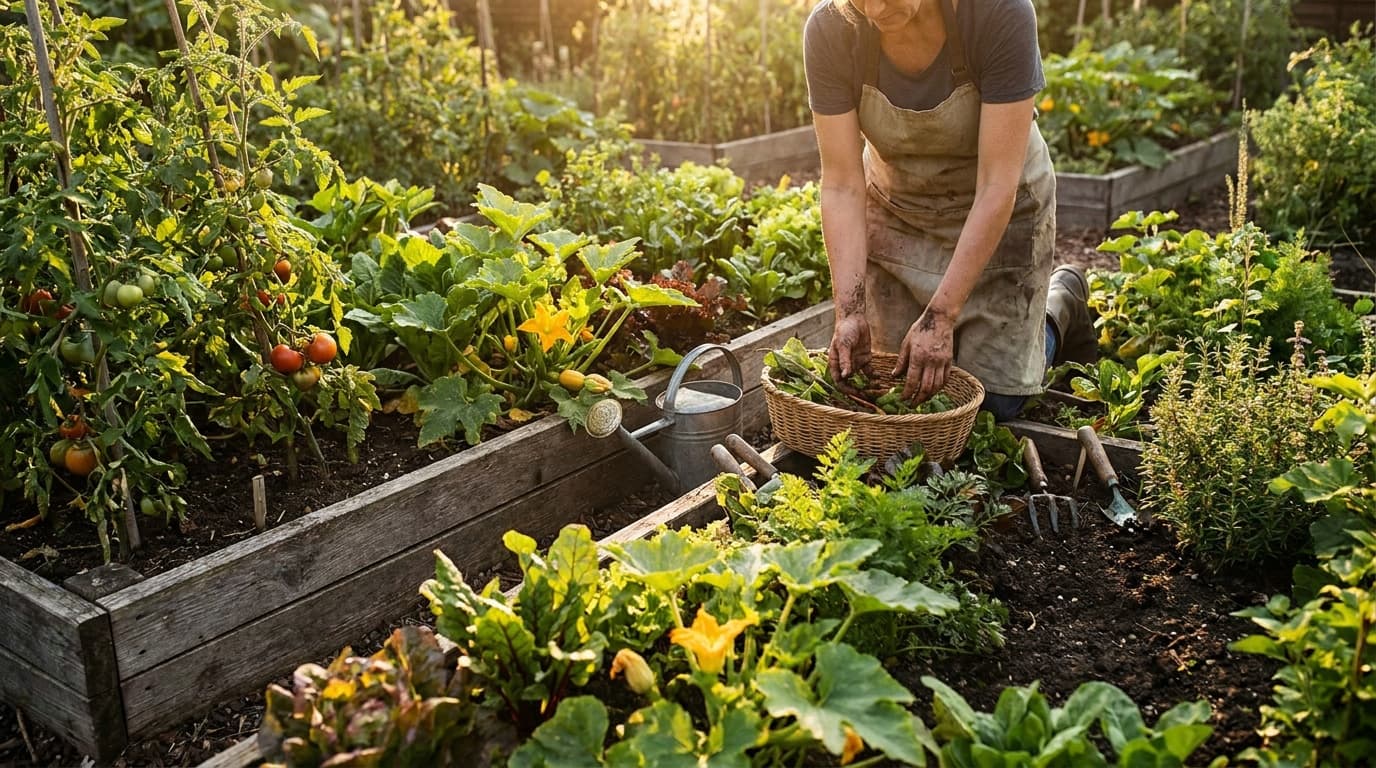
The amount of water matters, but the pattern matters too. Deep watering encourages roots to grow down. The same amount spread across small daily sips keeps roots near the surface. Water deeply, then check the root zone before watering again.
The target: about an inch a week, but it depends
A useful baseline for most vegetables in most soils is around 1 inch of water per week, counting rainfall. An inch sounds abstract, so here is what it means in practice: it is enough to wet the soil to a depth of roughly 6 inches, where the bulk of vegetable roots live.
That baseline shifts with conditions:
What changes the weekly need
Heat and wind
Soil type
Crop and stage
Mulch
Why deep and infrequent beats little and often
This is the single most important watering principle, and it is counterintuitive. A daily light sprinkle feels caring but trains roots to stay shallow, clustering near the surface where the water is. Shallow roots dry out the instant you skip a day and leave the plant fragile.
Deep watering, soaking the soil thoroughly then letting the top dry before the next round, pulls roots downward chasing the moisture. Deep roots reach more water and nutrients, ride out hot spells, and need watering less often. You are training the root system every time you water.
When and how to water
The mechanics matter almost as much as the amount.
- Water in the early morning. Plants take it up before the heat, and leaves dry quickly, which limits the leaf-wetness that fuels disease like powdery mildew and downy mildew. Evening watering leaves foliage damp overnight, the worst case for fungal disease.
- Aim at the soil, not the leaves. The roots drink, not the foliage. Overhead sprinklers waste water to evaporation and wet leaves unnecessarily.
- Water slowly enough to soak in. A fast blast runs off the surface before it penetrates. Slow and steady reaches the root zone.
This is exactly where a soaker hose or drip system pays off: it delivers water slowly, right at the soil line, with no leaf-wetting and minimal evaporation.
Some links on this page are affiliate links. As an Amazon Associate I earn from qualifying purchases.
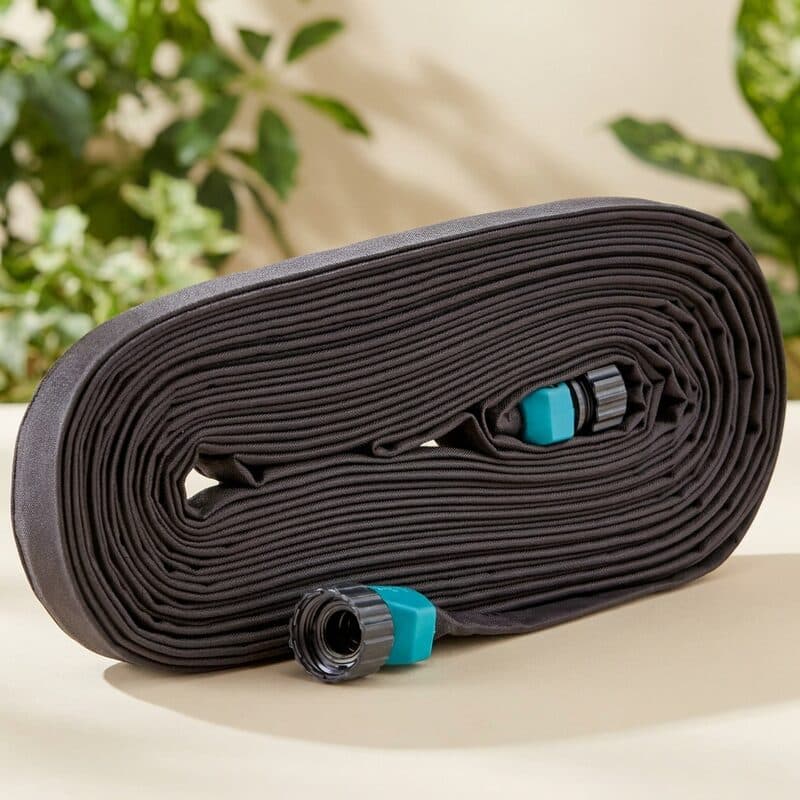
Soil-level watering
Gilmour Flat Weeper Soaker Hose
Best for: Row and border gardeners who want low-waste, root-zone watering on a budget.
Keep in mind: Even output drops over very long runs and on slopes
Amazon price as of the checked date, subject to change. The price on Amazon at checkout applies.
Full research
- Type
- Flat weeper soaker hose
- Lengths
- Available in multiple lengths
- Delivery
- Seeps along the full length
- Connection
- Standard hose faucet
Gilmour's flat weeper soaker hose seeps water along its length to deliver moisture at the root zone, lying flat along rows and borders.
This catalog-wide research score is separate from this guide's use-case ranking. How we research
Strengths
- Delivers water directly to the root zone with little waste
- Flat profile lies neatly along rows and borders
- Inexpensive and easy to route through a bed
Weaknesses
- Even output drops over very long runs and on slopes
- Should be drained and stored to avoid winter damage
Sprout Score breakdown
Best for
Row and border gardeners who want low-waste, root-zone watering on a budget.
Owner rating snapshot
Amazon · 49 reviews · 4.2 stars
A flat soaker hose snakes through the bed and weeps water directly into the soil along its length, which is the deep, slow, leaf-dry delivery vegetables want. Compare full systems in our best drip irrigation kits guide.
Take yourself out of the equation
The hardest part of watering is consistency, and inconsistent watering causes its own problems, notably blossom end rot on tomatoes and peppers, where the plant swings between bone-dry and flooded. A timer on your soaker or drip line delivers the same deep soak on the same rhythm whether or not you remember.
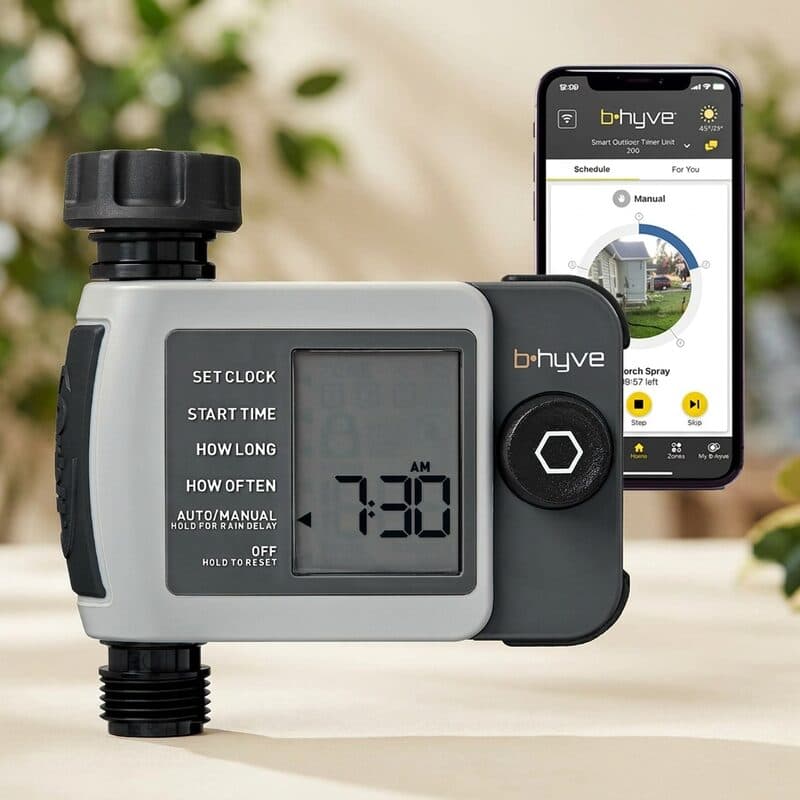
Consistency on autopilot
Orbit B-hyve Smart Hose Faucet Timer
Best for: Gardeners who want app control and weather-aware automatic watering.
Keep in mind: WiFi setup can be finicky at the faucet's signal range
Amazon price as of the checked date, subject to change. The price on Amazon at checkout applies.
Full research
- Connectivity
- WiFi and Bluetooth
- Scheduling
- App-based, weather-adjusting
- Zones
- Single outlet (multi-outlet models available)
- Power
- Battery powered
Orbit's B-hyve smart timer adds WiFi and Bluetooth control with weather-based scheduling, automating faucet watering from a phone app.
This catalog-wide research score is separate from this guide's use-case ranking. How we research
Strengths
- Weather-based scheduling skips watering after rain
- Controllable from a phone over WiFi or Bluetooth
- Flexible programs for multiple watering windows
Weaknesses
- WiFi setup can be finicky at the faucet's signal range
- Costs more than a basic mechanical dial timer
Sprout Score breakdown
Best for
Gardeners who want app control and weather-aware automatic watering.
Owner rating snapshot
Amazon · 17 reviews · 4.1 stars
The B-hyve runs your watering on a set schedule (adjustable from your phone), so the deep-and-infrequent pattern happens automatically. Some models even pull local weather to skip watering after rain. See the best garden hose timers guide for the comparison.
Containers are a different rule entirely
Everything above is for in-ground and raised beds. Containers have a tiny soil volume with no surrounding earth to buffer them, so they dry out far faster, often needing water daily, sometimes twice a day in summer heat. For pots, the inch-per-week guideline does not apply; check them daily and water until it runs from the drainage holes. Those daily summer rounds are thirsty work for the gardener as well: our sister site Kit Authority's guide to the best insulated water bottles covers bottles that keep water cold through a hot morning outside.
Signs you are over or under watering
Wilting in the afternoon heat that recovers by evening is normal. Wilting that persists into morning means too little water (or, confusingly, too much, drowned roots cannot drink). Yellowing lower leaves and soggy soil point to overwatering and possible root rot. Dry, crispy leaf edges and rock-hard soil point to underwatering. When unsure, check the soil moisture before reaching for the hose.
How much water do vegetables need per week?
About 1 inch per week including rainfall is the standard baseline, enough to wet the soil to roughly 6 inches deep. That number rises in hot, windy weather (sometimes to 2 inches), drops in cool spells, and shifts with your soil type. Treat it as a starting point and confirm with the finger test rather than watering strictly by the inch.
Is it better to water every day or deeply less often?
Deeply, less often. Daily light watering keeps roots shallow and weak; deep soakings a couple of times a week train roots to grow down, making plants far more drought-resilient. The exception is containers, which dry out fast and often do need daily water, and freshly seeded or just-transplanted beds, which need lighter, more frequent water until established.
What time of day should I water the garden?
Early morning is best. Plants take up water before the day's heat, and any wet foliage dries quickly, which limits fungal disease. Avoid evening watering, which leaves leaves damp overnight and invites mildew. Midday watering wastes a lot to evaporation. If morning is impossible, late afternoon (with time for leaves to dry before dark) is the next-best option.
Should I water the leaves or the soil?
The soil. Roots absorb water, not leaves, and wetting foliage encourages fungal diseases like powdery and downy mildew while wasting water to evaporation. Soaker hoses and drip systems deliver water at the soil line, which is why they are recommended over overhead sprinklers for vegetable gardens.
Water deeply, water in the morning, aim at the soil, and let the finger test, not the calendar, decide when. Get the rhythm right and your garden becomes more drought-tolerant and less disease-prone all at once. Pair good watering with mulching to cut your watering need substantially.