Our recommendations
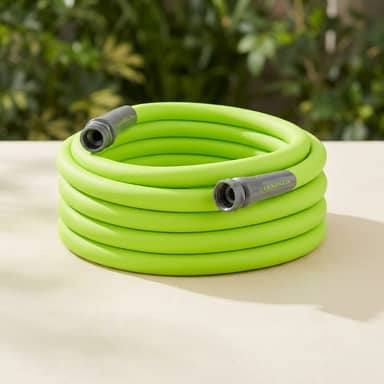
Flexzilla Garden Hose, 5/8 in. x 50 ft.
Why this pick →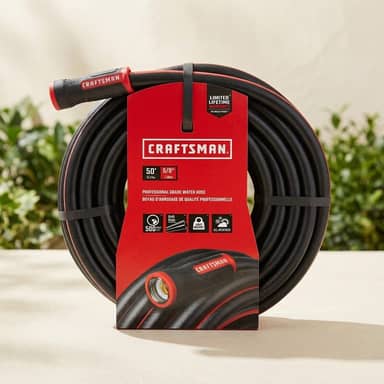
Craftsman Heavy-Duty Rubber Garden Hose, 5/8 in. x 50 ft.
Why this pick →
Gilmour Drinking Water Safe Hose, 5/8 in. x 50 ft.
Why this pick →
TheFitLife Expandable Garden Hose, 50 ft.
Why this pick →The garden hose is the piece of equipment most vegetable growers use every single day, yet it tends to get purchased once without much thought and then cursed every morning it kinks, leaks, or freezes stiff. A good hose makes watering a two-minute task. A poor one turns it into a wrestling match with the side of the house.
The main variables to think through before buying: the material (rubber, vinyl, or hybrid polymer), the length you actually need, whether food safety matters to you, and how much storage space you have. Below, we break down four real picks that cover the different buyer situations, then explain exactly how to choose.
Best overall: Flexzilla Garden Hose
Best overall
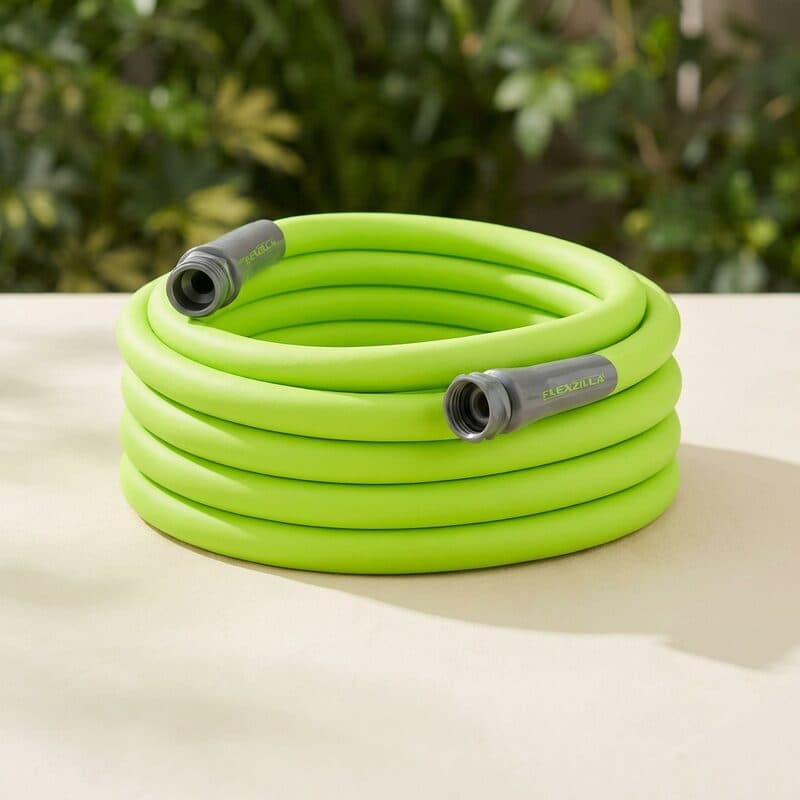
Flexzilla Garden Hose, 5/8 in. x 50 ft.
Best for: Gardeners who want a single hose that handles cold mornings, long runs, and daily use without kinking.
Keep in mind: Costs more than basic vinyl hoses at the same length
Amazon price as of the checked date, subject to change. The price on Amazon at checkout applies.
Full research
- Diameter
- 5/8 in
- Length
- 50 ft (also in 25, 75, 100 ft)
- Material
- Flexible Hybrid Polymer (FHP)
- Working pressure
- 150 PSI
Flexzilla's Hybrid Polymer hose stays flexible in freezing temperatures and rated to 150 PSI, with anodized aluminum fittings and a lifetime warranty. It is one of the most consistently recommended garden hoses across retail channels.
This catalog-wide research score is separate from this guide's use-case ranking. How we research
Strengths
- Stays pliable and kink-free in cold weather when rubber and vinyl hoses stiffen
- Lightweight for its length, comfortable to drag across the yard
- Lifetime warranty and a well-documented track record across thousands of owners
Weaknesses
- Costs more than basic vinyl hoses at the same length
- The bright green color is visible but can fade with extended UV exposure
Sprout Score breakdown
Best for
Gardeners who want a single hose that handles cold mornings, long runs, and daily use without kinking.
Owner rating snapshot
Amazon · 1,006 reviews · 4.4 stars
The Flexzilla Garden Hose is the hose we recommend first for most vegetable gardeners because it solves the three most common daily frustrations: kinking mid-drag, stiffening in cool morning weather, and leaking at the fittings. Its Flexible Hybrid Polymer (FHP) construction stays pliable at -40 F, which means it uncoils readily on a cold spring morning when a standard vinyl hose is still a rigid loop. The 150 PSI working pressure is well above what any residential faucet delivers, and the anodized aircraft aluminum fittings seat cleanly without the slow drip that plagues cheaper plastic connections.
It is available in 25, 50, 75, and 100-foot lengths. For most backyard vegetable plots, 50 feet is the practical choice: long enough to reach all corners of a typical 20-by-20 garden from a single faucet without the drag weight of a 75- or 100-foot hose. The lifetime warranty from Flexzilla means if the hose splits, they cover it.
It costs more than an entry-level vinyl hose, and the bright yellow-green color fades after long UV exposure. Neither issue affects performance.
Best rubber hose: Craftsman Heavy-Duty Rubber Hose
Most durable
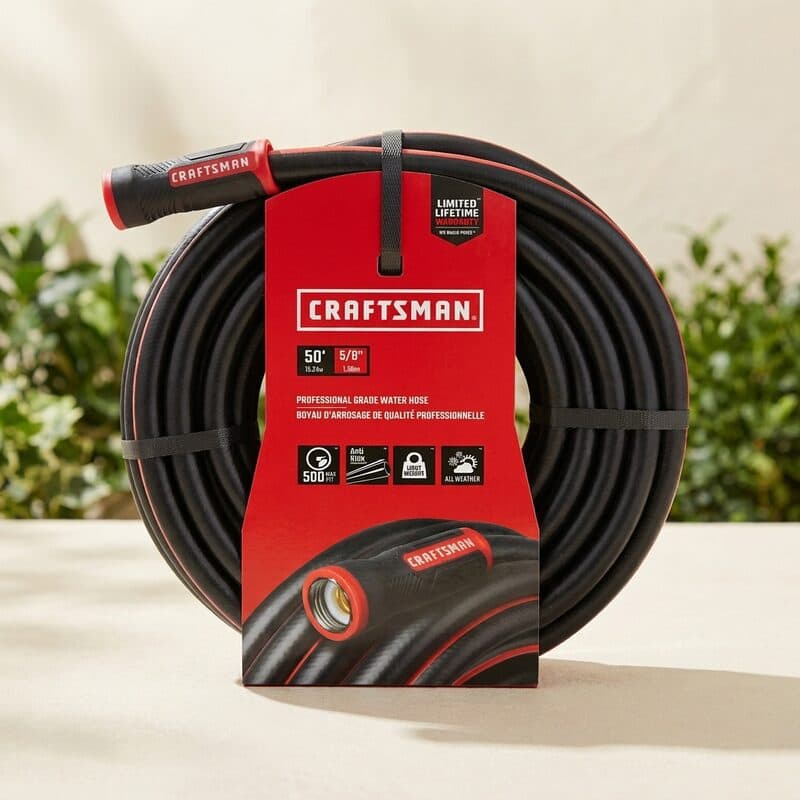
Craftsman Heavy-Duty Rubber Garden Hose, 5/8 in. x 50 ft.
Best for: Gardeners who drag hoses across gravel, tools, or pavers daily and want a hose built to withstand rough use for years.
Keep in mind: Heavier than polymer or expandable hoses of the same length
Amazon price as of the checked date, subject to change. The price on Amazon at checkout applies.
Full research
- Diameter
- 5/8 in
- Length
- 50 ft (also in 100 ft)
- Material
- Rubber
- Burst pressure
- 300 PSI
Craftsman's heavy-duty rubber hose offers a 300 PSI burst rating, cold-weather flexibility, and crush-resistant fittings in a traditional rubber build suited to hard daily use.
This catalog-wide research score is separate from this guide's use-case ranking. How we research
Strengths
- Rubber construction is more puncture- and abrasion-resistant than vinyl under rough handling
- 300 PSI burst rating well above typical household water pressure
- Compatible with hot-water connections, useful for washing equipment
Weaknesses
- Heavier than polymer or expandable hoses of the same length
- Higher price point than mid-range vinyl or hybrid alternatives
Sprout Score breakdown
Best for
Gardeners who drag hoses across gravel, tools, or pavers daily and want a hose built to withstand rough use for years.
Owner rating snapshot
Amazon · 715 reviews · 4.4 stars
If you garden in a situation where the hose gets dragged over gravel paths, caught under wheelbarrow wheels, or left in full sun for hours, a rubber hose earns its premium over polymer. The Craftsman Heavy-Duty Rubber Hose is rated to 300 PSI burst (double the Flexzilla's working pressure spec), resists cuts and abrasions better than vinyl or polymer, and handles hot-water connections if you ever need to wash tools or equipment from the spigot.
The trade-off is weight. A 50-foot rubber hose weighs noticeably more than a hybrid polymer of the same length, and you will feel that on long runs across the yard. In exchange, rubber hoses reliably last a decade or more under hard use, making the per-season cost lower than it looks upfront.
Best food-safe hose: Gilmour Drinking Water Safe Hose

Best for edibles
Gilmour Drinking Water Safe Hose, 5/8 in. x 50 ft.
Best for: Vegetable and edible gardeners who want a certified food-safe hose for watering crops, filling barrels, or rinsing harvests.
Keep in mind: Costs more than a standard non-certified hose of equivalent length
Amazon price as of the checked date, subject to change. The price on Amazon at checkout applies.
Full research
- Diameter
- 5/8 in
- Length
- 50 ft (also in 25, 75 ft)
- Construction
- 5-layer
- Burst pressure
- 300 PSI
Gilmour's drinking-water-safe hose carries NSF certification and is free of lead, BPA, and phthalates, with a 5-layer construction and 300 PSI burst strength suited to edible gardens.
This catalog-wide research score is separate from this guide's use-case ranking. How we research
Strengths
- NSF certified and free of lead, BPA, and phthalates for safe use around edible crops
- Five-layer construction resists kinking and UV degradation
- Lifetime warranty backed by a long-established irrigation brand
Weaknesses
- Costs more than a standard non-certified hose of equivalent length
- Not dramatically lighter than rubber despite multi-layer construction
Sprout Score breakdown
Best for
Vegetable and edible gardeners who want a certified food-safe hose for watering crops, filling barrels, or rinsing harvests.
Standard garden hoses are manufactured with plasticizers and metal-based pigments that can leach into water sitting in a warm hose. For most ornamental or lawn watering, this is a non-issue. For vegetable growers who rinse harvests with the hose, fill drinking water containers from the spigot, or water young seedlings with sensitive root systems, a certified food-safe hose removes the uncertainty.
The Gilmour Drinking Water Safe Hose is NSF certified and free of lead, BPA, and phthalates, with an FDA-approved liner and a 300 PSI burst-strength five-layer construction. It costs a bit more than a standard hose of the same length, but for edible gardens it is the straightforward safe choice. Gilmour backs it with a lifetime warranty.
A simple practice regardless of which hose you use: let the water run for 30 seconds before filling anything you will drink from, especially on hot days when water has been sitting in the hose.
Best expandable hose: TheFitLife Expandable Hose

Best for small spaces
TheFitLife Expandable Garden Hose, 50 ft.
Best for: Container gardeners, balcony growers, and anyone with limited storage space who does not need a full-season heavy-use hose.
Keep in mind: Latex cores have a shorter service life than rubber or hybrid polymer under daily hard use
Amazon price as of the checked date, subject to change. The price on Amazon at checkout applies.
Full research
- Expanded length
- 50 ft
- Retracted length
- About 17 ft
- Core
- Triple-layer latex
- Sleeve
- 3750D polyester fabric
TheFitLife's expandable hose uses a triple-layer latex core in a 3750D polyester sleeve to shrink for storage and extend under pressure, with solid brass fittings and an included spray nozzle.
This catalog-wide research score is separate from this guide's use-case ranking. How we research
Strengths
- Retracts to a fraction of its extended length, easy to hang or store in small spaces
- Lightweight even at full extension, no heavy coiling at the end of a session
- Includes an 8-pattern spray nozzle so it is ready to use out of the box
Weaknesses
- Latex cores have a shorter service life than rubber or hybrid polymer under daily hard use
- Pressure-dependent expansion means low-pressure faucets may not fully extend the hose
Sprout Score breakdown
Best for
Container gardeners, balcony growers, and anyone with limited storage space who does not need a full-season heavy-use hose.
Expandable hoses serve a specific situation well: balcony gardens, small raised-bed plots, patios, or any setup where storing a 50-foot coil of rubber or polymer is impractical. The TheFitLife Expandable Hose shrinks from 50 feet down to about 17 feet when empty, light enough to hang on a single hook in a small shed or lay in the bottom of a storage bin.
The latex core expands under water pressure to full length and retracts when the tap is off. Solid brass 3/4-inch fittings connect to any standard hose faucet, and the kit includes an 8-pattern nozzle. Latex cores have a shorter service life than rubber or hybrid polymer under daily heavy use, so this hose suits seasonal container watering better than a large in-ground plot.
If you are setting up drip irrigation or connecting a hose timer for automated watering, an expandable hose can work but the pressure-dependent extension can affect timer-controlled flow. A fixed-length hose is more predictable in automated setups.
How to choose a garden hose
Material. Rubber is the most durable and UV-resistant, but heavy. Hybrid polymer (like Flexzilla's FHP) is nearly as durable, significantly lighter, and stays flexible in cold weather. Vinyl is the cheapest but cracks faster under UV and temperature swings. Expandable hoses trade longevity for storage convenience.
Diameter. Most residential garden hoses are 5/8 inch. This diameter balances flow volume and weight well for typical garden beds and raised plots. Three-quarter-inch hoses move more water but weigh more per foot.
Length. Measure the actual distance from your faucet to the farthest point you water, add 10 feet of slack, and buy that length. Buying more hose than you need adds drag weight and shortens hose life (more hose piled up means more UV exposure and abrasion cycles).
Fittings. Aluminum or brass fittings outlast plastic ones by a wide margin. The most common hose failure point is a slow drip at the fitting-to-faucet connection: rubber-washer seat, clean threads, and hand-tight-plus-a-quarter-turn is all that is usually needed to fix it.
Food safety. If you water edible crops, rinse harvests, or fill water containers from the spigot, look for a hose with NSF certification and "drinking water safe" on the label. The Gilmour above is the most widely available certified option.
| Product | Price | Best for | Buy |
|---|---|---|---|
| Flexzilla Garden Hose, 5/8 in. x 50 ft.#1 · BEST OVERALL | Typical price range · $25-$75 | Gardeners who want a single hose that handles cold mornings, long runs, and daily use without kinking. | Shop Amazon |
| Craftsman Heavy-Duty Rubber Garden Hose, 5/8 in. x 50 ft.#2 · MOST DURABLE | Typical price range · $50-$75 | Gardeners who drag hoses across gravel, tools, or pavers daily and want a hose built to withstand rough use for years. | Shop Amazon |
| Gilmour Drinking Water Safe Hose, 5/8 in. x 50 ft.#3 · BEST FOR EDIBLES | Typical price range · $25-$75 | Vegetable and edible gardeners who want a certified food-safe hose for watering crops, filling barrels, or rinsing harvests. | Search Amazon |
| TheFitLife Expandable Garden Hose, 50 ft.#4 · BEST FOR SMALL SPACES | Typical price range · Under $50 | Container gardeners, balcony growers, and anyone with limited storage space who does not need a full-season heavy-use hose. | Search Amazon |
How long should a garden hose last?
A quality rubber or hybrid polymer hose stored out of UV when not in use should last 5 to 10 years or more. Vinyl hoses typically last 2 to 5 years. Expandable hoses with latex cores tend toward the shorter end of that range if used daily. The most common early failure modes are UV cracking of the outer jacket and dripping fittings from worn rubber washers, both of which can be addressed before they become full failures.
Is it safe to water vegetables with a garden hose?
It depends on the hose. Standard garden hoses can leach lead, BPA, or phthalates into water that has been sitting in the sun. For vegetable gardens, edibles, or any water that might be consumed, use a hose certified as drinking-water safe (NSF certified, lead-free, BPA-free) like the Gilmour Drinking Water Safe Hose, and let water run for 30 seconds before use on warm days.
What is the best length garden hose to buy?
Measure the distance from your faucet to the farthest point you water and add 10 feet of slack. Most backyard vegetable plots are well served by a 50-foot hose. Buying more hose than you need means extra weight to drag and more hose lying on the ground accumulating UV damage and abrasion.
Why does my garden hose kink?
Kinking usually happens at one of three points: tight bends near the faucet connection, spots where the hose was stored in a tight coil, or worn areas where the hose jacket has softened. Hybrid polymer hoses like the Flexzilla resist kinking because the material stays flexible under tension. A hose reel that keeps the coil consistent also reduces kinking versus a hose thrown in a pile.
Can I leave my garden hose outside all year?
Rubber and hybrid polymer hoses handle outdoor storage better than vinyl, but all hoses last longer when drained, coiled, and stored out of direct sun between uses. In climates with hard freezes, drain the hose completely before temperatures drop below freezing: water left in any hose can crack fittings or split the jacket.
The right garden hose is the one that matches how you actually water: a premium flexible hose for daily use across a large plot, a rubber hose for rough handling, a certified hose for edibles, or an expandable hose when storage is the real constraint. Pair whichever you choose with a watering wand or nozzle for targeted watering and a hose timer for consistent, hands-off scheduling during the busiest growing weeks.