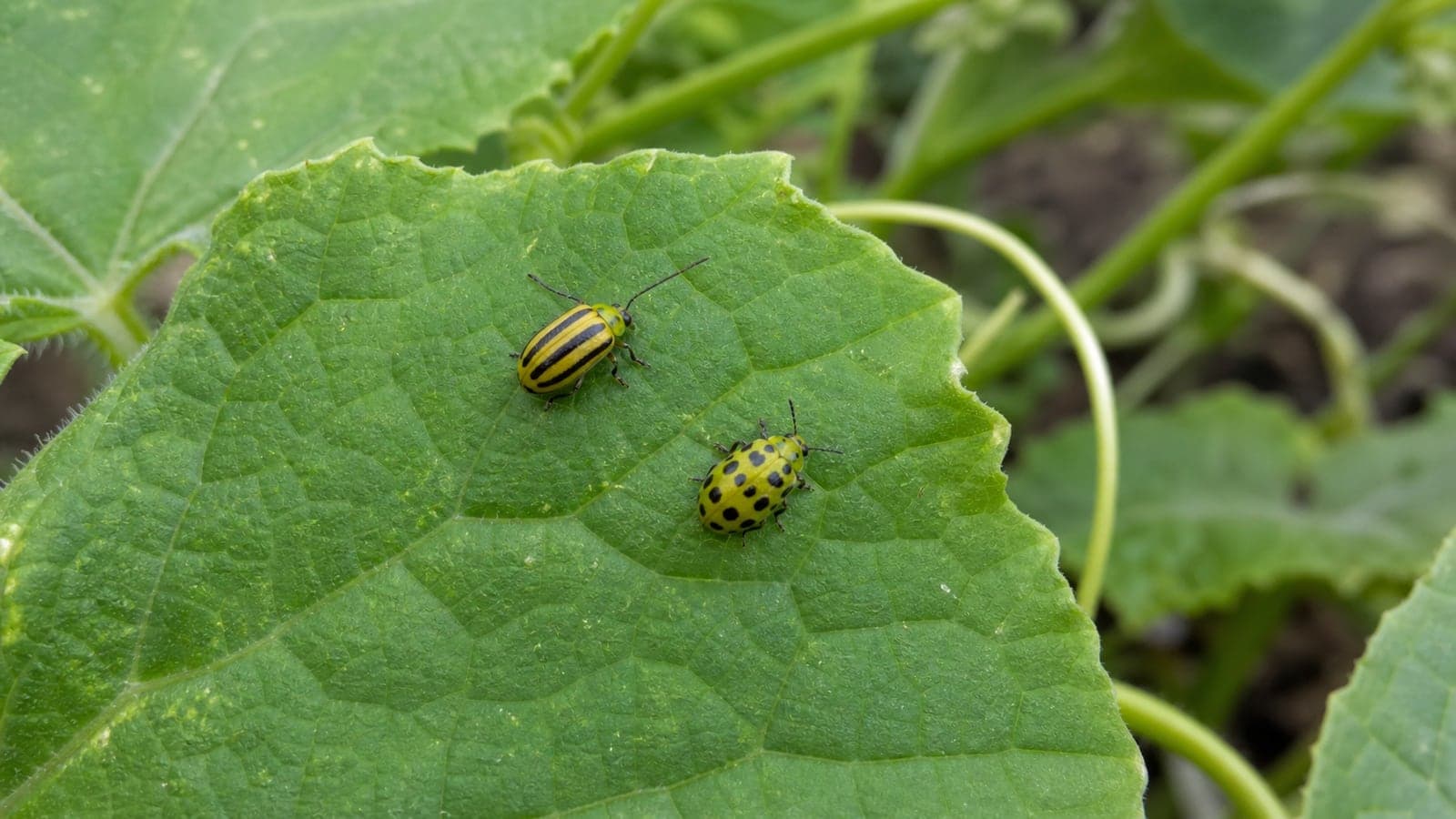
The adult Colorado potato beetle is a rounded, hard-shelled insect about three eighths of an inch long, tan to yellow with ten black stripes down its wing covers. The larvae do the most damage: fat, humpbacked, brick-red grubs with two rows of black dots along each side. Both stages chew the foliage, and a colony can defoliate a potato plant astonishingly fast. Without leaves, the plant cannot size up its tubers, so yield drops sharply.
Why sprays often fail and physical control wins
The Colorado potato beetle is famous among entomologists for its ability to develop resistance, having beaten one chemical class after another over the decades. That history is exactly why a home gardener is better served by physical and cultural control: you cannot out-spray a beetle this adaptable, but you can out-manage it. Excluding the beetles, removing them by hand, and disrupting their overwintering all sidestep the resistance problem entirely.
The first sign of an emerging defoliation problem is usually the bright orange egg clusters on the undersides of leaves. Catching those is your highest-leverage move, because each cluster becomes a swarm of hungry larvae.
How to control them, step by step
The plan
Cover emerging plants
Crush egg clusters
Hand-pick adults and larvae
Rotate crops
Mulch deeply
Clean up in fall
Row cover gives potatoes a real head start
Because potatoes are not insect-pollinated, a floating row cover is an especially good fit here: you can leave it on through the vulnerable early growth without worrying about excluding bees. Anchored over the row, it keeps the overwintered adults from ever reaching young plants.
Some links on this page are affiliate links. As an Amazon Associate I earn from qualifying purchases.
Exclude overwintered adults
Agribon AG-19 Floating Row Cover
Best for: Gardeners who want cheap frost protection and pest exclusion in one fabric.
Keep in mind: Lightweight fabric tears and wears over seasons
Amazon price as of the checked date, subject to change. The price on Amazon at checkout applies.
Full research
- Weight
- 0.55 oz per sq yd
- Frost protection
- Down to roughly 28F
- Light transmission
- About 85%
- Material
- Spun-bonded polypropylene
A lightweight spun-bonded row cover that drapes over crops to add a few degrees of frost protection while still letting in light and water. It doubles as a physical barrier against many insect pests.
This catalog-wide research score is separate from this guide's use-case ranking. How we research
Strengths
- Extends the growing season at both ends
- Excludes many pests without chemicals
- Passes most light and water so it can stay on
Weaknesses
- Lightweight fabric tears and wears over seasons
- Needs hoops or pins to stay put in wind
Sprout Score breakdown
Best for
Gardeners who want cheap frost protection and pest exclusion in one fabric.
Hand-picking and egg crushing are the daily habit
For beetles that get past the cover, or on uncovered plantings, steady hand control is the backbone of organic management. Gloves keep your hands clean during daily picking and let you crush egg clusters on leaf undersides without missing any.

For picking and egg crushing
Pine Tree Tools Bamboo Working Gloves
Best for: Gardeners who want breathable, dexterous gloves for planting and weeding.
Keep in mind: Not thorn-proof for roses or brambles
Amazon price as of the checked date, subject to change. The price on Amazon at checkout applies.
Full research
- Shell
- Bamboo fiber blend
- Palm
- Coated for grip
- Fit
- Snug, stretch fit
- Sizes
- Multiple sizes
Pine Tree Tools' bamboo gloves combine a breathable knit shell with a coated palm, a comfortable choice for everyday planting and weeding.
This catalog-wide research score is separate from this guide's use-case ranking. How we research
Strengths
- Breathable bamboo fabric stays cooler in heat
- Coated palm grips tools and damp soil
- Snug fit preserves dexterity for planting
Weaknesses
- Not thorn-proof for roses or brambles
- Coating wears with heavy, abrasive use
Sprout Score breakdown
Best for
Gardeners who want breathable, dexterous gloves for planting and weeding.
Which plants get hit, and how to plan
The Colorado potato beetle is a nightshade specialist. Potatoes are its preferred host and take the heaviest damage, but it also attacks eggplant, which can be hit hard, and to a lesser extent tomatoes and peppers. Grouping all your nightshades far from where they grew last year makes rotation more effective.
Timing your planting helps you anticipate the beetle's emergence. Use the planting calendar for your ZIP to know when your potatoes and eggplant break ground, so you can have row cover ready and start scouting for eggs right away. Knowing your frost dates supports planning a fall cleanup that exposes overwintering adults before the cold sets in.
Why do insecticides stop working on Colorado potato beetles?
This beetle is exceptionally good at developing resistance and has overcome many insecticide classes over the years. Repeated use of the same product selects for survivors that pass on resistance, so sprays that worked one season may fail the next. That is why home gardeners get more reliable results from physical and cultural control: exclusion, hand-picking, egg crushing, rotation, and mulch, none of which the beetle can adapt around.
What do Colorado potato beetle eggs look like?
They are bright orange to yellow-orange, oval, and laid in tidy clusters on the undersides of leaves. Spotting and crushing these clusters every few days is the single most effective organic tactic, because each cluster hatches into a group of fat red larvae that do the bulk of the defoliation. Catch the eggs and you prevent the swarm.
Can I leave a row cover on potatoes the whole season?
You can leave it on far longer than with squash, because potatoes do not need insect pollination, so there is no need to uncover at flowering. Keeping the cover on through the period when overwintered beetles emerge protects young plants effectively. Seal the edges well, since the adults come up from the soil and will use any gap to get underneath.
Does crop rotation really reduce potato beetles?
Yes. The beetles overwinter as adults in the soil near where their host plants grew, then emerge in spring and walk to the nearest nightshade. Moving potatoes and other nightshades to a bed well away from last year's location forces emerging beetles to search for food, slowing colonization and giving you time to get control measures in place. Combine it with row cover and hand-picking for the best results.
What to do now
You will not out-spray the Colorado potato beetle, but you can out-manage it. Cover emerging plants, crush the orange egg clusters before they hatch, hand-pick adults and larvae daily, rotate your nightshades, and mulch deeply. Time your plantings with the calendar so you are ready the moment beetles emerge, and organic control holds the line where chemicals fail.