Fusarium and Verticillium wilt are difficult to separate by eye because they fail the plant in the same place: the vascular tissue that carries water upward. The useful question is not only which fungus is present. It is whether the pattern is truly a vascular wilt, and whether the rotation and resistance plan needs to account for Fusarium's host-specialized strains or Verticillium's broader host range.
Fusarium versus Verticillium at a glance
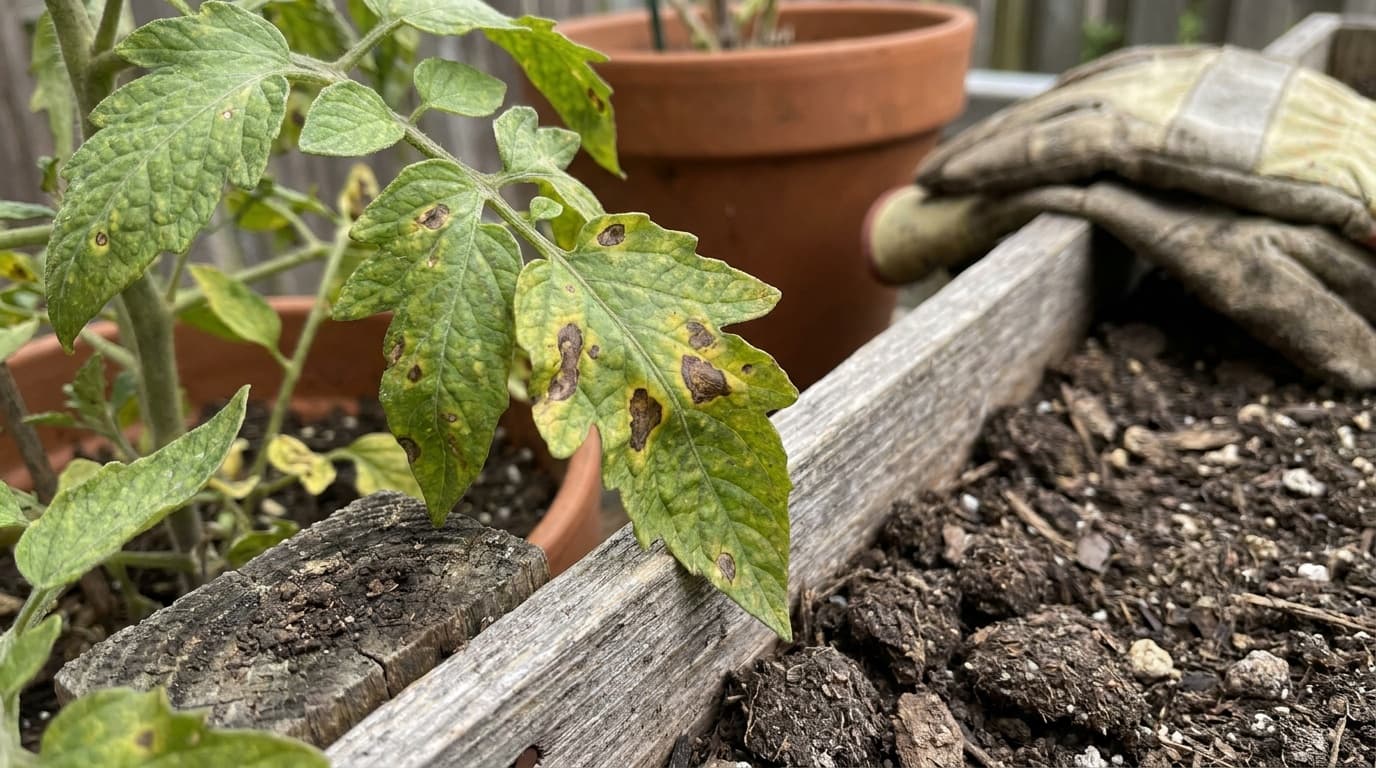
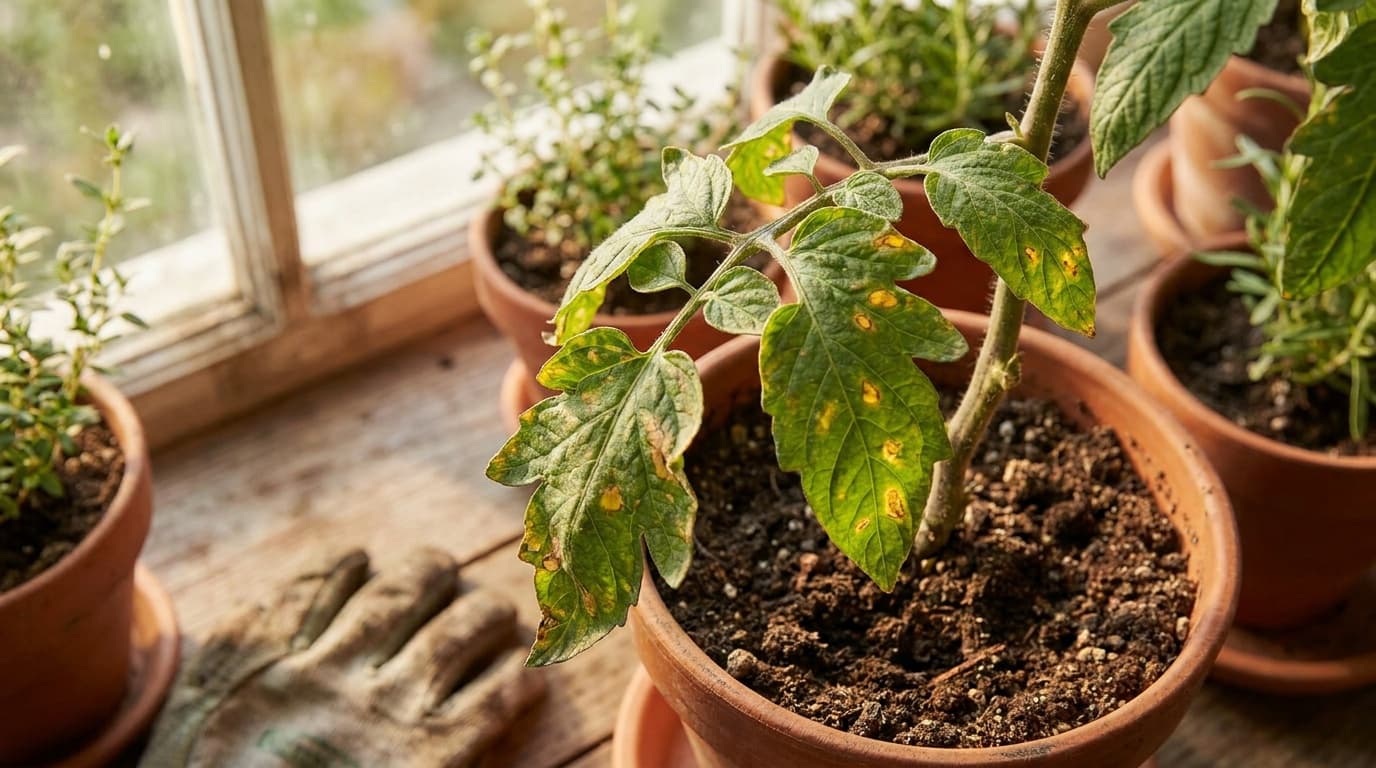
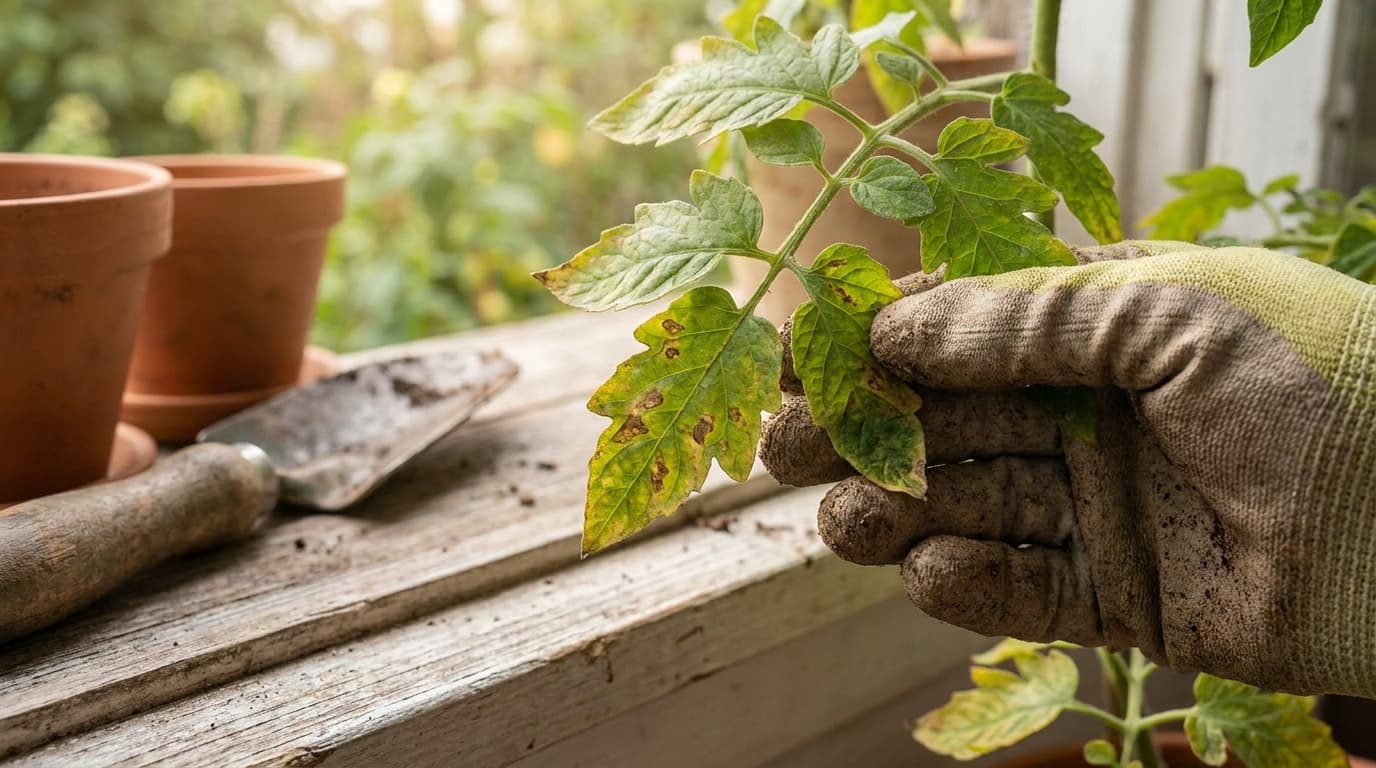
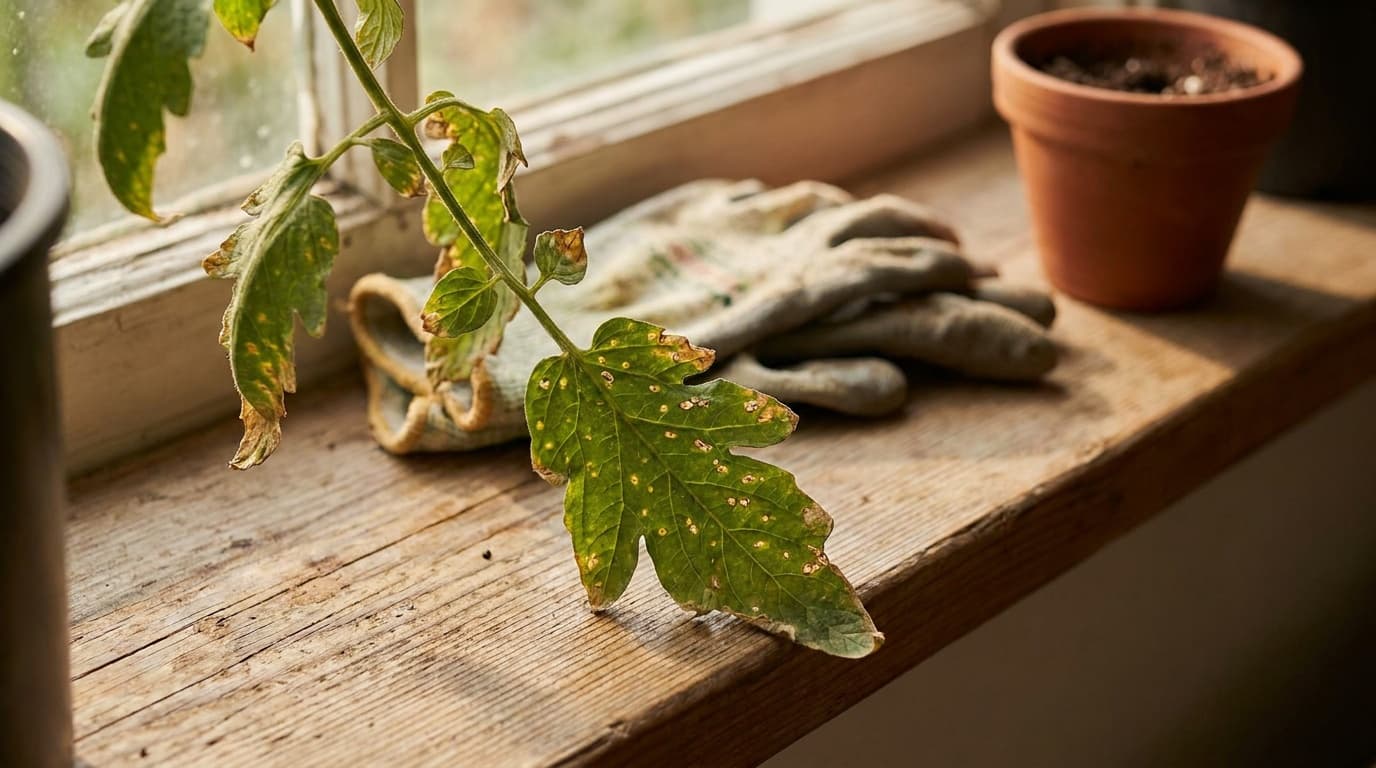
Both diseases usually begin on older lower leaves. Yellowing and wilt can appear on one side of the plant or one side of a leaf before spreading upward. A lengthwise cut through the lower stem may reveal discolored vascular tissue while the center remains green.
Temperature, leaf shape, and streak color can narrow the diagnosis. They cannot prove it. University extension programs recommend a diagnostic lab because the symptoms overlap with each other and with several root, stem, and water problems.
Confirm vascular wilt before changing the bed
Start with the soil. A plant that wilts because the root zone is dry should recover after thorough watering. A plant in saturated soil may have damaged roots or a water-mold disease instead. Fusarium and Verticillium wilt persist even when soil moisture is adequate because the blockage is inside the stem.
Cut a lower stem lengthwise with a clean blade. Brown or tan lines running through the vascular tissue support a wilt diagnosis. A dark, soft stem base, decayed roots, or a water-soaked lesion points elsewhere. Photograph the whole plant, both sides of affected leaves, roots, and the cut stem before removing it.
What the difference changes
Fusarium wilt is caused by specialized forms of Fusarium oxysporum. A strain adapted to tomatoes is not automatically the same strain that attacks melons or another crop. Tomato resistance can also be race-specific, which is why seed labels may list F, F1, F2, or F3.
Verticillium wilt is caused primarily by Verticillium dahliae and related species. Its host list is broader and includes many vegetables, fruits, flowers, weeds, shrubs, and trees. Rotating from one susceptible broadleaf crop to another may give the pathogen a new host rather than a break.
That distinction changes rotation. A Fusarium plan rotates away from the affected host or crop family and uses resistance for the known crop. A Verticillium plan needs a nonhost interval, often with grasses, corn, or small grains, plus control of susceptible weeds.
Manage an affected plant and bed
Respond to suspected vascular wilt
Document the pattern
Confirm when it changes the plan
Remove the plant
Clean tools and footwear
Choose resistance
Rotate with a true nonhost
There is no home spray that clears either fungus from an infected plant. Repeated watering cannot reopen blocked vessels, and extra fertilizer adds stress without removing the pathogen.
Containers with fresh potting mix provide a practical route for a susceptible crop when a bed has a confirmed history of vascular wilt. Keep container drainage separate from the affected soil and do not fill pots with garden soil from that bed.
Choose the next crop carefully
Fusarium wilt can affect tomatoes, peppers, eggplant, cucurbits, legumes, and many other plants, but individual Fusarium strains are commonly adapted to particular hosts. Record which crop was diagnosed and choose resistance for that crop.
Verticillium has a wider host range that includes tomato, pepper, eggplant, potato, strawberry, many flowers, and woody plants. Check a proposed replacement against a local extension host list rather than assuming a different vegetable family is safe.
Use the planting calendar to establish transplants in their appropriate local window. Good timing does not eliminate a soilborne pathogen, but a well-established plant handles ordinary heat and moisture stress better, making abnormal wilt easier to recognize.
Can Fusarium or Verticillium wilt be cured?
No. Once either fungus has colonized a plant's vascular tissue, there is no curative home treatment. Remove the declining plant, avoid moving its soil, clean tools, and plan the next crop around resistant varieties and a true nonhost rotation.
How can I tell Fusarium wilt from Verticillium wilt?
Warm conditions above about 80 F and darker brown vascular streaks favor Fusarium. Cooler conditions around 68 to 75 F, V-shaped yellow leaf lesions, and lighter tan streaking favor Verticillium. The overlap is large enough that a diagnostic laboratory is the reliable way to distinguish them.
What do V and F mean on a tomato seed label?
V indicates resistance or tolerance to Verticillium wilt. F indicates Fusarium wilt resistance, and F1, F2, or F3 can identify the Fusarium races covered. Check the supplier's legend because label conventions can vary.
Can I plant tomatoes in the same bed next year?
A confirmed wilt history makes that risky unless the replacement variety carries the relevant resistance. Rotation is stronger when the bed receives a true nonhost crop for several years. For Verticillium, broadleaf vegetables may still be hosts, so grasses, corn, or small grains are more dependable rotation choices.
What to do now
Fusarium and Verticillium wilt share a symptom pattern and a prevention-first response, so one diagnostic workflow serves both. Use temperature and stem clues to triage, confirm the pathogen when crop planning depends on it, then remove the plant, keep contaminated soil in place, select resistance deliberately, and rotate with a true nonhost.