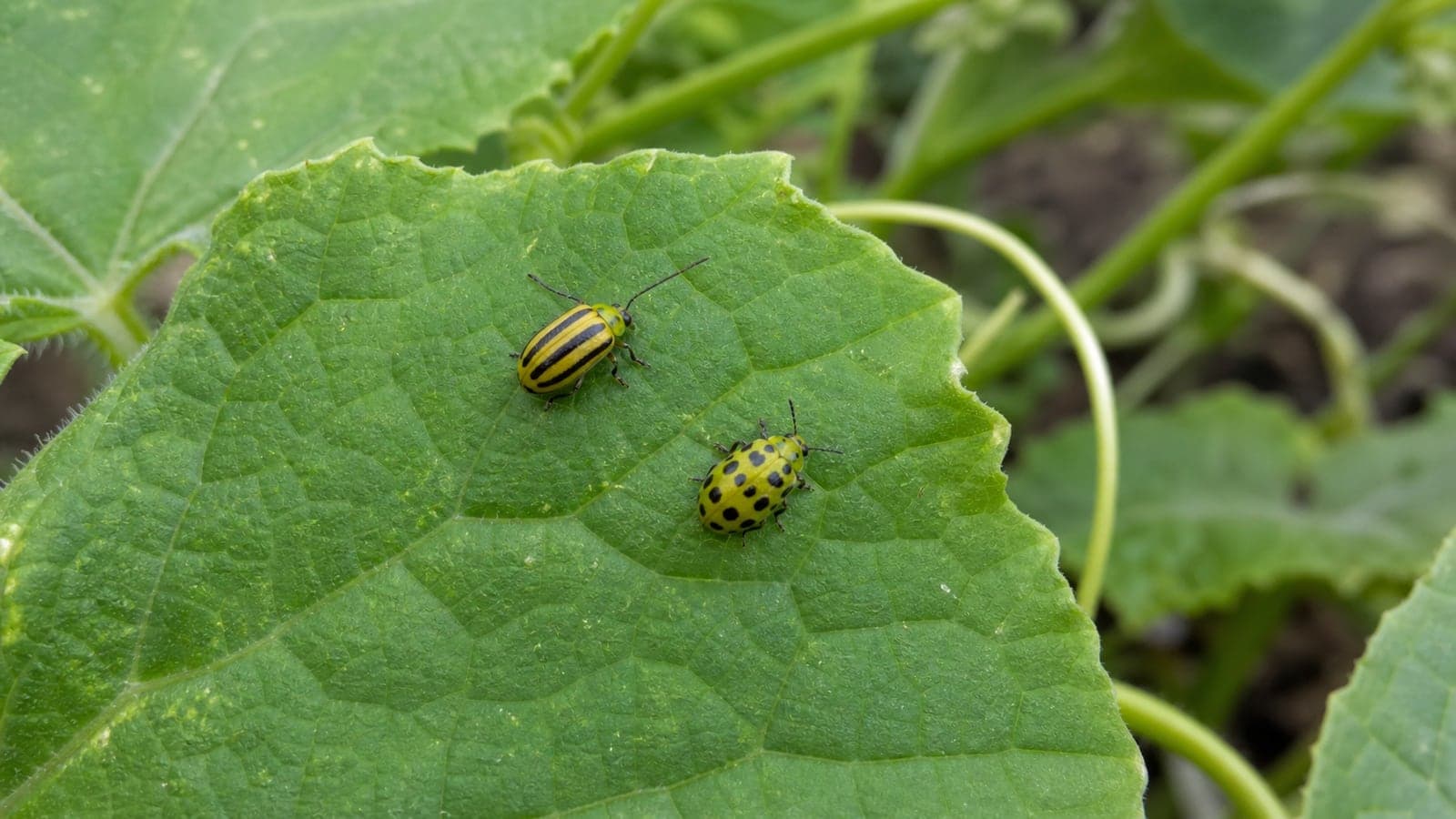
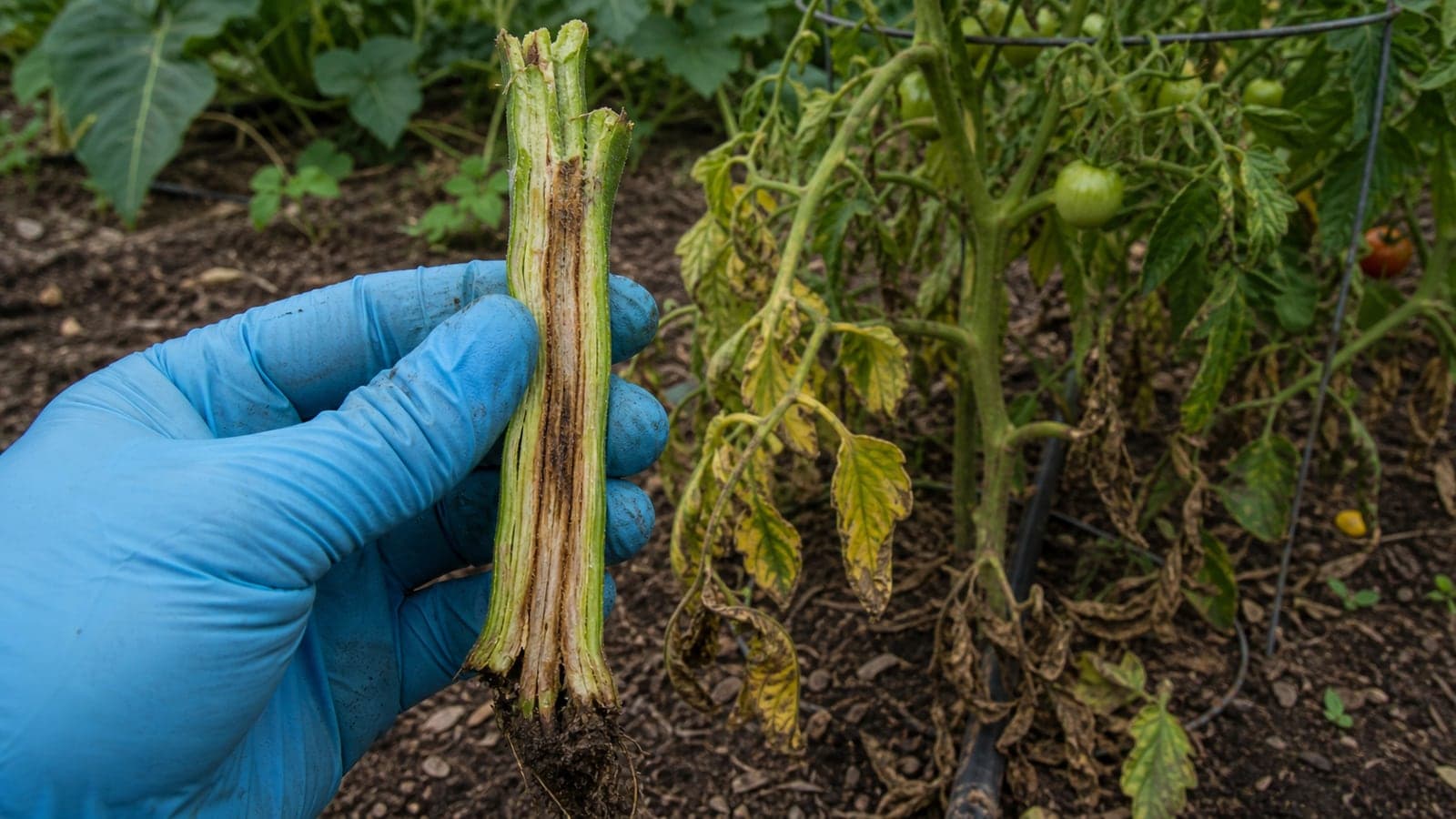
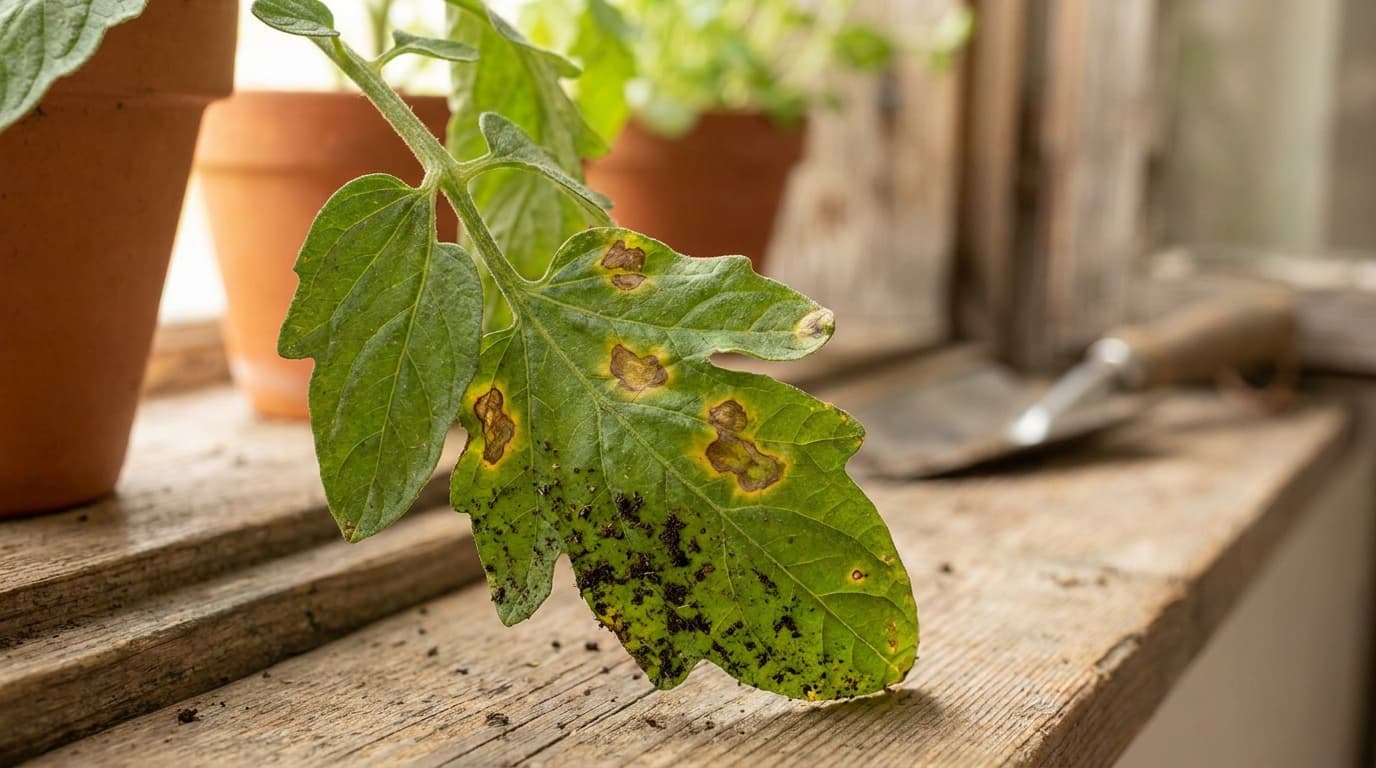
Bacterial wilt is one of the most frustrating diseases in the vegetable garden because by the time you see it, the plant is already lost. It is caused by a bacterium that lives in the gut of cucumber beetles and is introduced into the plant when those beetles feed and leave bacteria in the fresh wounds. Inside the vine, the bacteria multiply and clog the vascular tissue that carries water, so the plant wilts in the heat of the day, recovers somewhat at night, then declines further each day until it collapses for good. Because the disease rides in on the beetle, the two problems are really one problem.
Why this is a beetle problem, not a spray problem
There is no bactericide that cures an infected vine, and no way to flush the bacteria out of the plant's clogged plumbing. That changes everything about how you respond. The only effective intervention happens before infection, by keeping the beetles that carry the bacteria from feeding on your young, vulnerable plants. A handful of beetle bites in the first two weeks, when seedlings are small, can doom a plant; the same beetles on a large, established vine matter far less. So the entire control program for bacterial wilt is, in practice, a control program for striped cucumber beetles.
How to manage it, step by step
The plan
Confirm the diagnosis
Exclude beetles early
Uncover for pollination
Hand-pick daily at first light
Pull infected vines immediately
Rotate and clean up
Row cover breaks the beetle-to-wilt chain
Since the disease only arrives via beetle feeding, keeping beetles off young plants is the most reliable way to prevent it. A lightweight floating row cover laid over hoops admits light, water, and air while physically excluding the beetles during the early weeks when a single infectious bite can doom a seedling.
Some links on this page are affiliate links. As an Amazon Associate I earn from qualifying purchases.
Exclude the beetle, stop the wilt
Agribon AG-19 Floating Row Cover
Best for: Gardeners who want cheap frost protection and pest exclusion in one fabric.
Keep in mind: Lightweight fabric tears and wears over seasons
Amazon price as of the checked date, subject to change. The price on Amazon at checkout applies.
Full research
- Weight
- 0.55 oz per sq yd
- Frost protection
- Down to roughly 28F
- Light transmission
- About 85%
- Material
- Spun-bonded polypropylene
A lightweight spun-bonded row cover that drapes over crops to add a few degrees of frost protection while still letting in light and water. It doubles as a physical barrier against many insect pests.
This catalog-wide research score is separate from this guide's use-case ranking. How we research
Strengths
- Extends the growing season at both ends
- Excludes many pests without chemicals
- Passes most light and water so it can stay on
Weaknesses
- Lightweight fabric tears and wears over seasons
- Needs hoops or pins to stay put in wind
Sprout Score breakdown
Best for
Gardeners who want cheap frost protection and pest exclusion in one fabric.
Which plants are at risk, and how to plan
Bacterial wilt affects the cucurbit family, and within it the most wilt-prone are cucumbers and winter squash, with zucchini, pumpkin, and watermelon also vulnerable. Cucumbers and melons tend to suffer the worst collapse; some squash tolerate the bacteria better but still feed the beetles and can pass the disease along.
Timing is your biggest lever. Use the planting calendar for your ZIP to know when your cucurbits emerge or transplant, so you can have row cover in place from day one and a clear plan to remove it at flowering. Knowing your frost dates helps you avoid rushing tender transplants into cold soil, where slow-growing seedlings linger in the vulnerable size class longer. For the full beetle playbook, see our guide to striped cucumber beetles.
What causes bacterial wilt in cucumbers?
Bacterial wilt is caused by a bacterium carried in the gut of cucumber beetles and introduced into the plant when the beetles feed and leave bacteria in the fresh wounds. The bacteria then multiply and clog the vine's water-carrying tissue. Because the disease is spread by beetles, controlling the beetles is the only effective way to prevent the wilt.
Is there a cure for bacterial wilt?
No. Once a plant is infected there is no cure and no spray that clears the bacteria from the clogged vascular tissue. The infected vine should be pulled and discarded to protect the rest of the bed. All effective management happens before infection, by keeping cucumber beetles off young, vulnerable plants with row cover, hand-picking, timing, and rotation.
How do I tell bacterial wilt from drought stress?
Drought wilt recovers fully after watering. Bacterial wilt shows the classic pattern of wilting in daytime heat, partial overnight recovery, then progressively worse wilting that does not respond to water. To confirm, cut a wilting stem and slowly pull the halves apart; infected stems often draw out a thin, sticky white strand of bacterial ooze that drought-stressed stems do not.
How do I prevent bacterial wilt?
Prevent it by controlling cucumber beetles before they can infect young plants. Cover cucurbits with a sealed floating row cover from emergence until flowering, then uncover for pollination and switch to daily early-morning hand-picking. Pull any wilting vine immediately, and rotate cucurbits to a new bed each year while clearing old vines in fall. Stop the beetle and you stop the wilt.
What to do now
Bacterial wilt cannot be cured, so prevention is the entire game, and prevention means beetle control. Confirm the diagnosis with the sticky-thread stem test, exclude beetles from young cucurbits with row cover, uncover for pollination and hand-pick daily, pull infected vines without delay, and rotate each year. Time it all against your planting calendar and frost dates, and pair it with the full striped cucumber beetle plan, and the disease that collapses vines rarely gets a foothold.