The tomato hornworm is a fat green caterpillar up to four inches long, with diagonal white stripes and a soft horn on its rear end. A closely related look-alike, the tobacco hornworm, behaves the same way in the garden. They are superbly camouflaged against tomato stems, which is why most gardeners notice the damage before the caterpillar: whole branches suddenly stripped of leaves, chewed green fruit, and scattered dark pellets of frass on the leaves and ground below.
How to find them
The trick to spotting a hornworm is to stop looking for the caterpillar and start looking for its signs. Dark green or black frass pellets on lower leaves or the soil tell you one is feeding directly above. Stripped stems point you to the active area. Scout in the late afternoon when they move to feed, or after dark with a flashlight, since hornworms fluoresce slightly and stand out under light. Work methodically along each stem from the frass upward.
How to control them, step by step
The plan
Follow the frass
Scout at dusk
Hand-pick and remove
Spare the parasitized ones
Use BT for heavy outbreaks
Till in fall
Hand-picking is the whole strategy for most gardens
Because hornworms are so large, hand removal is fast and effective and needs no product at all. A snug pair of gloves makes the task more pleasant if you would rather not grab a four-inch caterpillar bare-handed, while keeping the dexterity to pluck them off cleanly.
Some links on this page are affiliate links. As an Amazon Associate I earn from qualifying purchases.
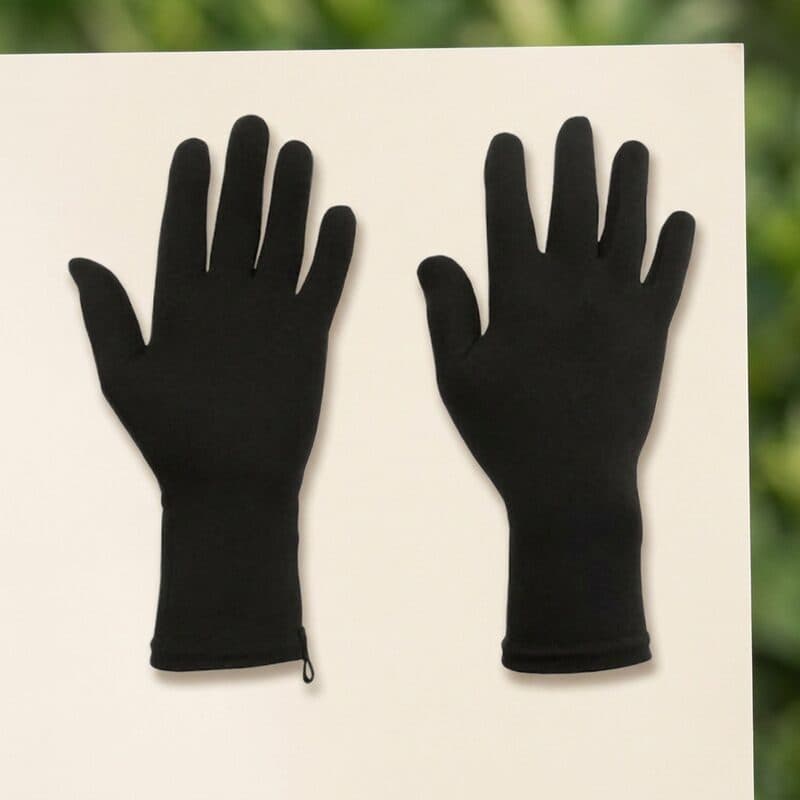
For hand-picking
Foxgloves Original Gardening Gloves
Best for: Gardeners who want a snug, dexterous glove for detailed work over heavy protection.
Keep in mind: Thin shell is not puncture- or thorn-proof
Amazon price as of the checked date, subject to change. The price on Amazon at checkout applies.
Full research
- Material
- Nylon-spandex blend
- Fit
- Second-skin stretch
- Coverage
- Extended wrist cuff
- Care
- Machine washable
Foxgloves Original gloves use a stretch nylon-spandex shell for a second-skin fit, favored for dexterity and wrist coverage on detailed tasks.
This catalog-wide research score is separate from this guide's use-case ranking. How we research
Strengths
- Second-skin fit preserves fine dexterity
- Extended cuff protects wrists from scrapes
- Machine washable for easy upkeep
Weaknesses
- Thin shell is not puncture- or thorn-proof
- Higher price than basic utility gloves
Sprout Score breakdown
Best for
Gardeners who want a snug, dexterous glove for detailed work over heavy protection.
Which plants get hit, and how to plan
Hornworms are named for tomatoes and hit tomatoes hardest, but they also feed on other members of the nightshade family, including peppers, eggplant, and potatoes. On peppers and eggplant the damage is usually lighter, but the same scouting and hand-picking approach works across all of them.
The adult is a large hawk moth that emerges in late spring and lays eggs through summer, often in more than one generation in warm regions. Use the planting calendar for your ZIP to know when your nightshades are growing fast and most worth scouting, and check your frost dates to plan a fall cleanup that disrupts the pupae before the next season.
What are the little dark pellets on my tomato leaves?
That is frass, the droppings of a tomato hornworm feeding above. It is the easiest way to find these well-camouflaged caterpillars: spot the dark green or black pellets on lower leaves or the soil, then look directly above them along the stem. Where you find frass and stripped stems, a hornworm is usually close by.
Should I kill a hornworm covered in white cocoons?
No, leave it in place. Those white rice-like cocoons mean a beneficial braconid wasp has parasitized the hornworm. The caterpillar will stop feeding and die, and the emerging wasps will go on to attack more hornworms. Removing it would waste a free, self-sustaining form of natural control that you want to encourage.
Are tomato hornworms dangerous to touch?
No. Despite the menacing horn on the rear, hornworms do not sting or bite and the horn is soft and harmless. You can pick them off by hand safely. Many gardeners wear gloves simply because the caterpillars are large and a bit unpleasant to handle, not because there is any real danger.
Is BT safe to use on vegetables I will eat?
BT-based caterpillar controls are widely used in organic vegetable gardening and target only caterpillars that eat treated foliage, sparing bees and other beneficial insects. Follow the label for timing and any pre-harvest interval, wash produce before eating, and apply in the evening to protect pollinators. For a handful of hornworms, hand-picking is simpler and needs no product at all.
What to do now
Tomato hornworms look alarming and eat fast, but their size is their weakness. Follow the frass, scout at dusk, and pick them off by hand, which handles most home gardens entirely. Save BT for a real outbreak, leave parasitized caterpillars to feed the wasps that help you, and cultivate the bed in fall. Scout your nightshades hardest during their peak growth and the damage stays small.