Our recommendations
Spreading granular fertilizer, lime, or amendments by hand almost guarantees an uneven result: heavy stripes that burn, thin patches that starve, and product flung into beds where you do not want it. A spreader's only job is to lay material down at a consistent rate across a consistent width, and the right one for you depends mostly on how much ground you are covering. The two picks below bracket the realistic range for a home garden, from a whole lawn to a single bed edge.
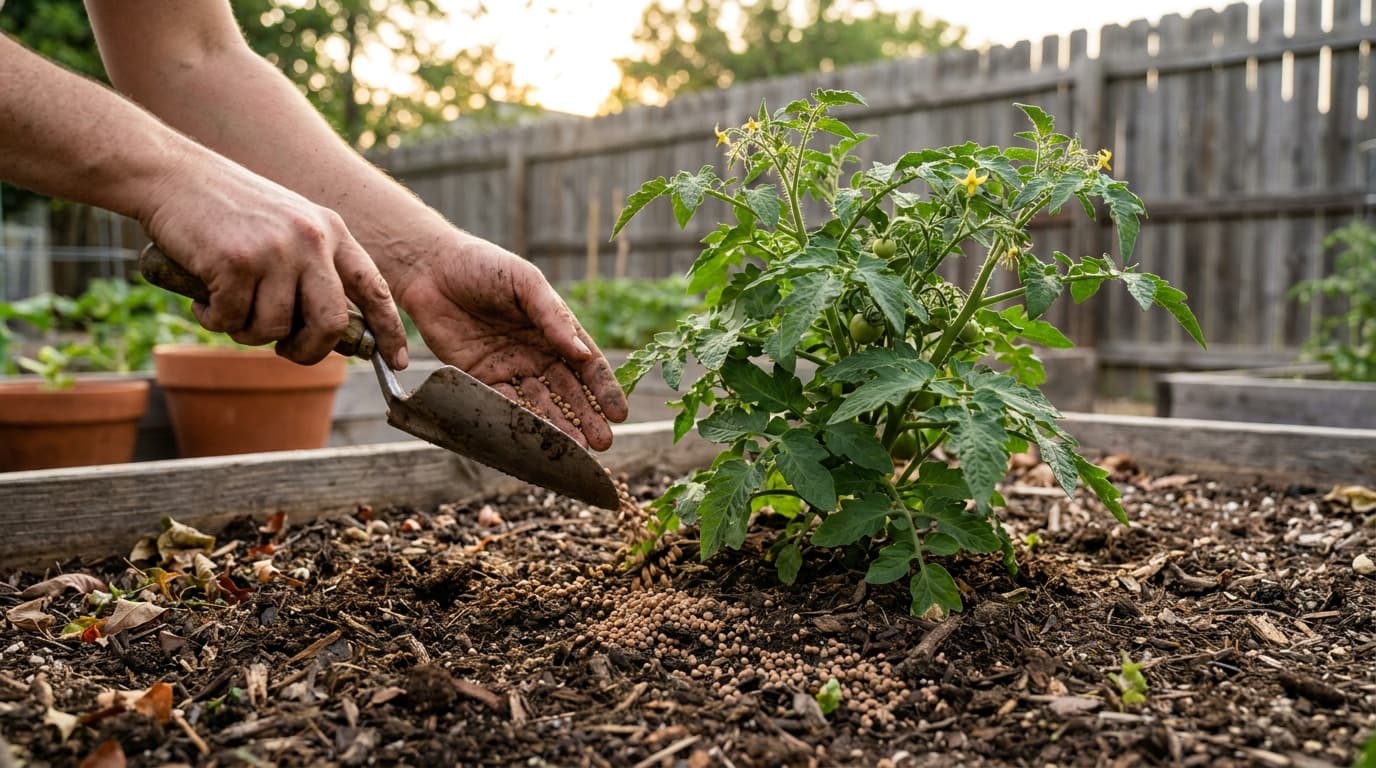
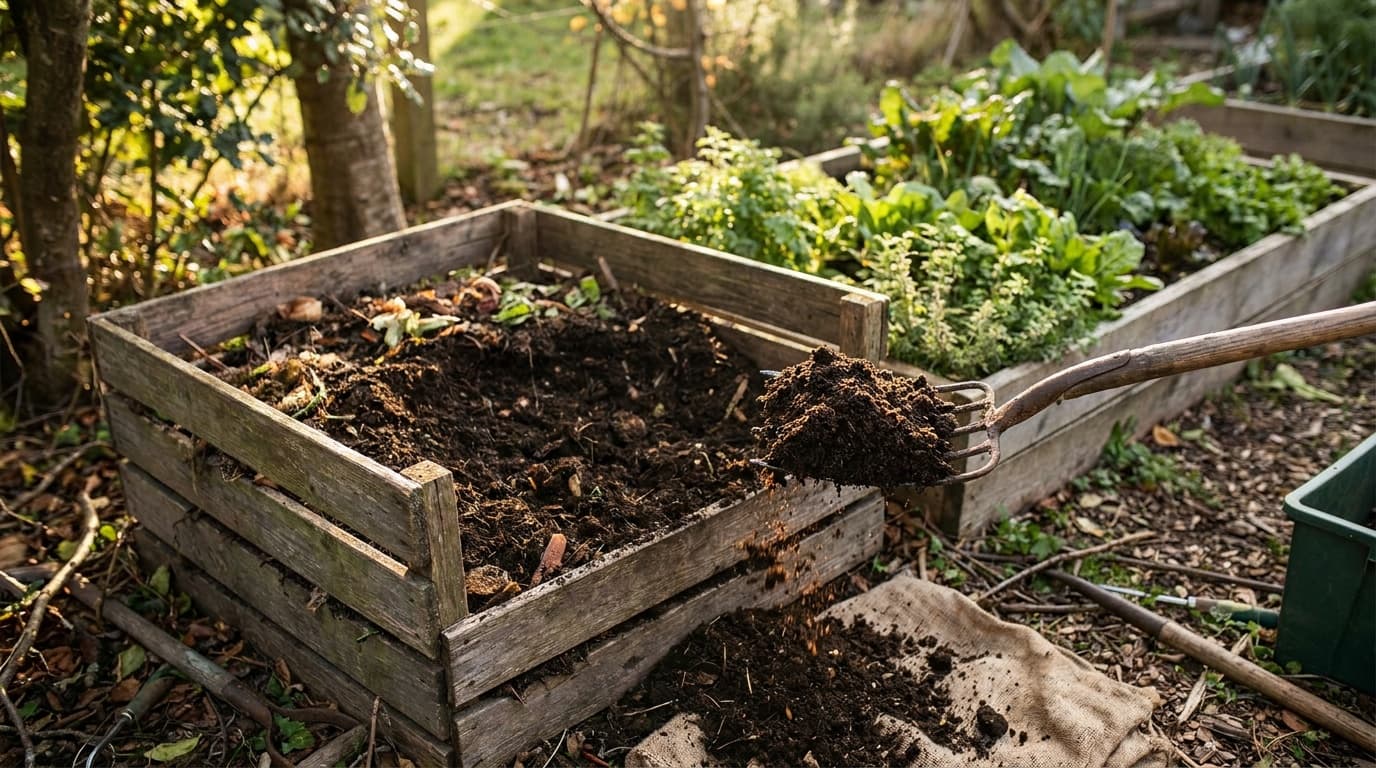
Even feeding matters as much in the vegetable garden as on the lawn, and timing it to your growing season makes the difference. Line up your feedings with the planting calendar so amendments go down when crops can actually use them.
Broadcast vs drop vs handheld
There are three ways a spreader puts material on the ground, and the difference is worth a sentence each.
Broadcast (rotary) spreaders fling material in a wide arc from a spinning disc. They cover ground fast and are the standard choice for lawns, though the spread pattern needs edge control to keep product out of beds.
Drop spreaders release material straight down in a precise band the width of the hopper. They are slower but give razor-sharp control along borders and are favored where overspray is unacceptable.
Handheld spreaders are small broadcast units you carry, either crank-operated or battery-powered. They are made for small areas, spot feeding, edges, and ice melt, not for covering a large lawn quickly.
Both picks here are broadcast-style: one push model for area, one handheld for precision and small jobs.
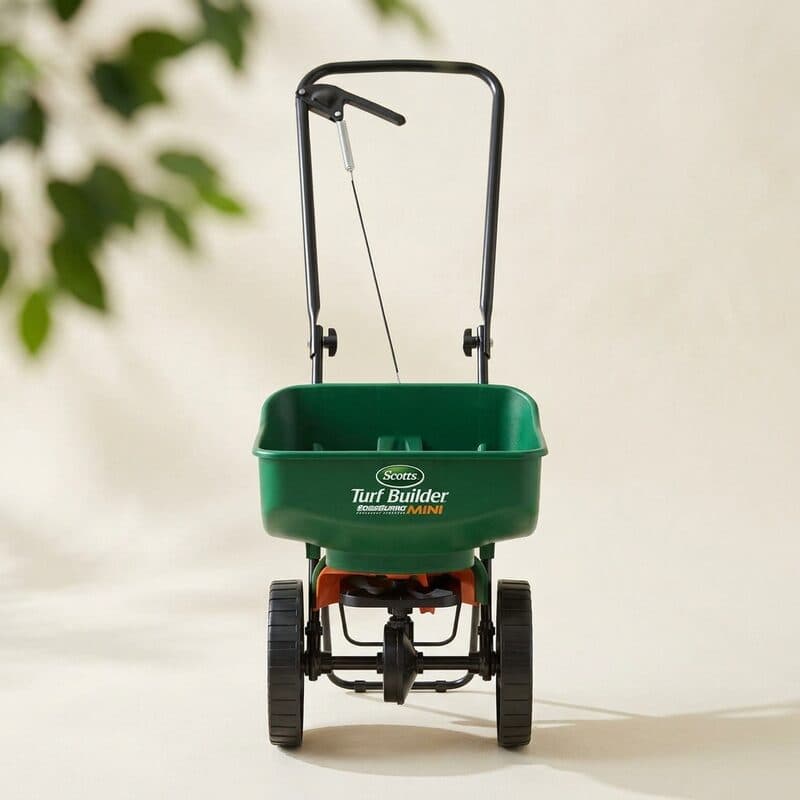
Best overall: Scotts Turf Builder EdgeGuard Mini
Best overall
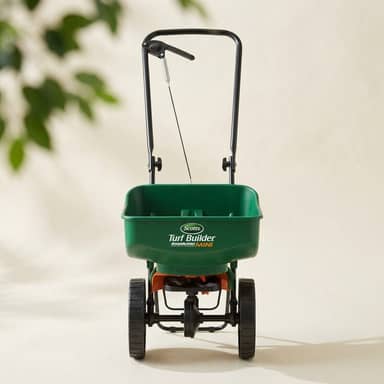
Scotts Turf Builder EdgeGuard Mini Broadcast Spreader
Best for: Homeowners feeding and seeding a typical lawn who want a calibrated, ready-to-use broadcast spreader.
Keep in mind: Plastic wheels and frame are not built for heavy commercial daily use
Amazon price as of the checked date, subject to change. The price on Amazon at checkout applies.
Full research
- Type
- Push broadcast spreader
- Coverage
- Holds up to 5,000 sq ft of product
- Edge control
- EdgeGuard side-blocking
- Calibration
- Pre-calibrated out of the box
The Scotts Turf Builder EdgeGuard Mini is a pre-calibrated push broadcast spreader holding up to 5,000 sq ft of product, with EdgeGuard side-blocking to keep fertilizer, seed, lime, or ice melt off beds and walkways.
This catalog-wide research score is separate from this guide's use-case ranking. How we research
Strengths
- 5,000 sq ft hopper covers most home lawns without constant refills
- EdgeGuard blocks the right-side spread to protect beds and walkways
- Ships pre-calibrated and assembled, ready to roll out of the box
Weaknesses
- Plastic wheels and frame are not built for heavy commercial daily use
- Must be rinsed and fully dried after fertilizer or it can corrode internally
Sprout Score breakdown
Best for
Homeowners feeding and seeding a typical lawn who want a calibrated, ready-to-use broadcast spreader.
Owner rating snapshot
Amazon · 231 reviews · 4.6 stars
The EdgeGuard Mini is our top pick because it helps set a consistent rate and keeps material within the lawn. It arrives calibrated and assembled, and its hopper holds enough product to cover up to 5,000 square feet. EdgeGuard blocks the spread on the right side so fertilizer, seed, lime, or ice melt stays off beds, driveways, and walkways.
The plastic wheels and frame are built for home use, not daily commercial work. Rinse and dry the spreader after handling fertilizer so the internal parts do not corrode. For feeding and seeding a typical lawn, it provides a consistent spread at a practical size. You can check current pricing on the EdgeGuard Mini before buying.
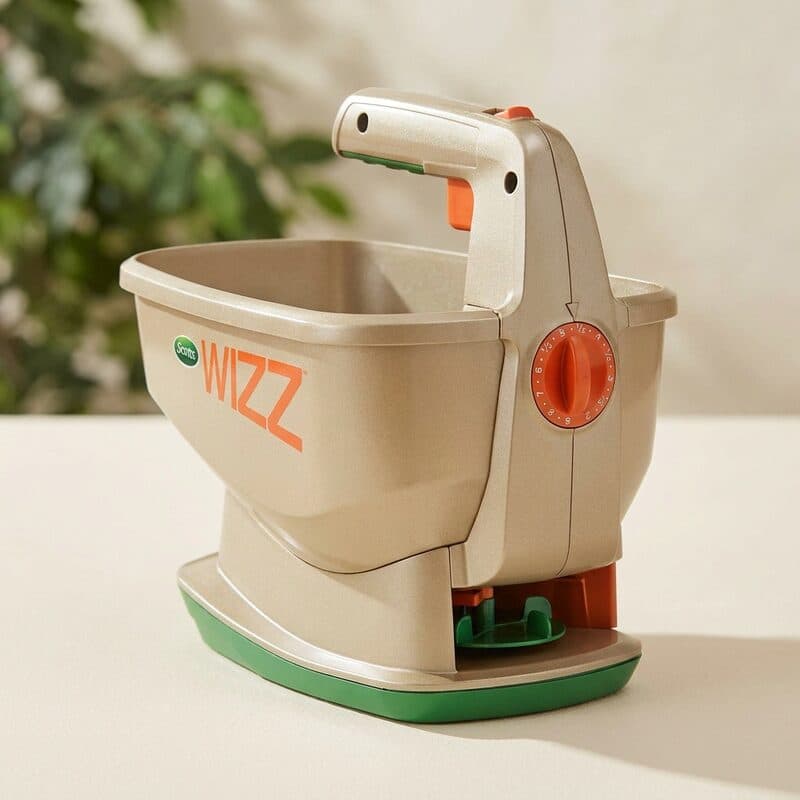
Best handheld: Scotts Wizz
Best handheld
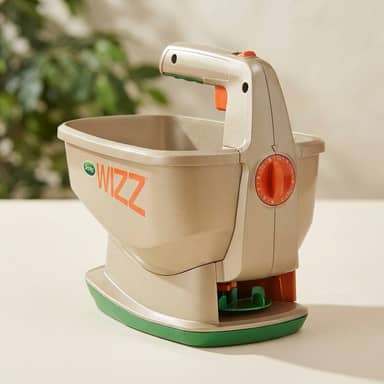
Scotts Wizz Handheld Power Spreader
Best for: Owners of small lawns and beds who want quick, even handheld spreading of seed, fertilizer, or ice melt.
Keep in mind: Limited 2,500 sq ft hopper means frequent refills on larger lawns
Amazon price as of the checked date, subject to change. The price on Amazon at checkout applies.
Full research
- Type
- Battery-powered handheld broadcast
- Coverage
- Holds up to 2,500 sq ft of product
- Power
- 4 AA batteries
- Edge control
- EdgeGuard technology
The Scotts Wizz is a battery-powered handheld broadcast spreader covering up to 2,500 sq ft, with EdgeGuard control and an adjustable rate dial for spreading seed, fertilizer, salt, and ice melt on small areas.
This catalog-wide research score is separate from this guide's use-case ranking. How we research
Strengths
- Battery power gives an even broadcast without the wrist fatigue of crank handhelds
- EdgeGuard control keeps product off driveways, beds, and walkways
- Compact and handy for small lawns, spot feeding, and ice melt
Weaknesses
- Limited 2,500 sq ft hopper means frequent refills on larger lawns
- Fine or damp materials can bridge or clog the small hopper opening
Sprout Score breakdown
Best for
Owners of small lawns and beds who want quick, even handheld spreading of seed, fertilizer, or ice melt.
Owner rating snapshot
Amazon · 631 reviews · 4.4 stars
The Wizz is the right tool when the EdgeGuard Mini is too much spreader for the job. It is a battery-powered handheld broadcast unit running on four AA batteries, covering up to 2,500 square feet of product and handling seed, fertilizer, salt, and ice melt. The battery power is the point: it gives an even, effortless throw without the wrist fatigue of cranking a manual handheld, and it carries the same EdgeGuard control to keep product off beds and paths.
The trade-offs match its size. The smaller hopper means frequent refills on a larger lawn, and fine or damp materials can bridge or clog the small opening. But for small lawns, raised-bed edges, spot feeding, and winter ice melt, it is compact, even, and handy. You can compare current pricing on the Scotts Wizz here.
How to choose a fertilizer spreader
A few points cover most buyers.
Size your spreader to your area. A push broadcast spreader suits a large lawn because its bigger hopper cuts refill trips. A handheld is easier on small lawns, bed edges, and spot jobs where a full-size spreader is awkward.
Prioritize edge control. EdgeGuard or a similar side-blocking feature is what keeps fertilizer out of your vegetable beds and off hard surfaces, where it stains and runs off into waterways. For a yard with beds and borders, this matters more than raw capacity.
Check calibration. A pre-calibrated spreader that matches common product settings saves guesswork and prevents over-application. If yours is not calibrated, start low, measure your coverage over a known area, and adjust.
Clean it every time. Granular fertilizer is corrosive when wet. Rinse the hopper and spinner thoroughly and let the spreader dry fully before storage, and it will last for many seasons instead of seizing up.
| Product | Price | Best for | Buy |
|---|---|---|---|
| Scotts Turf Builder EdgeGuard Mini Broadcast Spreader#1 · BEST OVERALL | Typical price range · $40–$55 | Homeowners feeding and seeding a typical lawn who want a calibrated, ready-to-use broadcast spreader. | Shop Amazon |
| Scotts Wizz Handheld Power Spreader#2 · BEST HANDHELD | Typical price range · $30–$45 | Owners of small lawns and beds who want quick, even handheld spreading of seed, fertilizer, or ice melt. | Shop Amazon |
Frequently asked questions
What is the difference between a broadcast and a drop spreader?
A broadcast (rotary) spreader flings material in a wide arc from a spinning disc, covering ground quickly, which suits lawns. A drop spreader releases material straight down in a precise band the width of the hopper, giving sharp control along borders but covering more slowly. Broadcast is faster for open areas; drop is more precise where overspray is unacceptable.
How do I avoid stripes when spreading fertilizer?
Spread at half the labeled rate in two passes that cross at right angles, the second perpendicular to the first. This crosshatch evens out any gaps a single pass leaves behind. Keeping a steady walking pace and slightly overlapping each pass also helps, since uneven speed is a common cause of light and heavy bands.
Can you use a lawn spreader for garden amendments?
Yes. The same broadcast or handheld spreader that applies lawn fertilizer also spreads lime, granular amendments, and other dry materials evenly over beds and borders. Fine or damp materials can bridge in a small hopper, so keep them dry and free-flowing, and rinse the spreader thoroughly afterward to prevent corrosion.
Do you need to calibrate a new spreader?
Many home spreaders, including the EdgeGuard Mini, ship pre-calibrated to match common product settings, so you can often use the recommended dial setting straight away. If yours is not calibrated or you are using an unfamiliar product, start at a low setting, measure your coverage over a known area, and adjust upward until the rate matches the product label.
Our recommendation
Buy the Scotts Turf Builder EdgeGuard Mini if you are feeding and seeding a typical lawn and want a calibrated, ready-to-use broadcast spreader, and reach for the Scotts Wizz handheld for small lawns, bed edges, spot feeding, and ice melt. Either way, spread evenly in a crosshatch, keep product off your beds, and time your feedings to your planting calendar.