Our recommendations
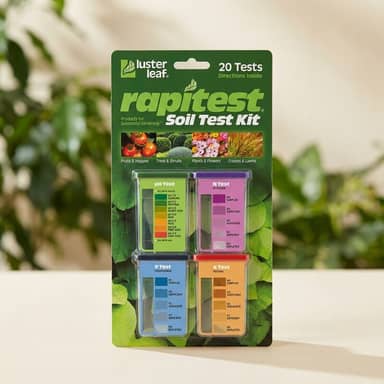
Luster Leaf Rapitest Soil Test Kit (1601)
Why this pick →
MySoil Soil Test Kit (Mail-In Lab)
Why this pick →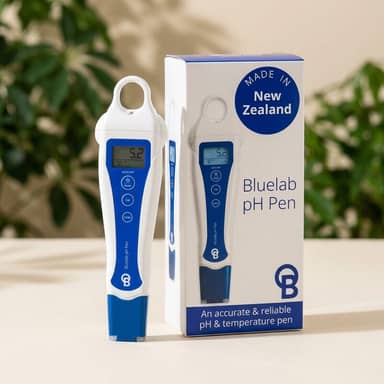
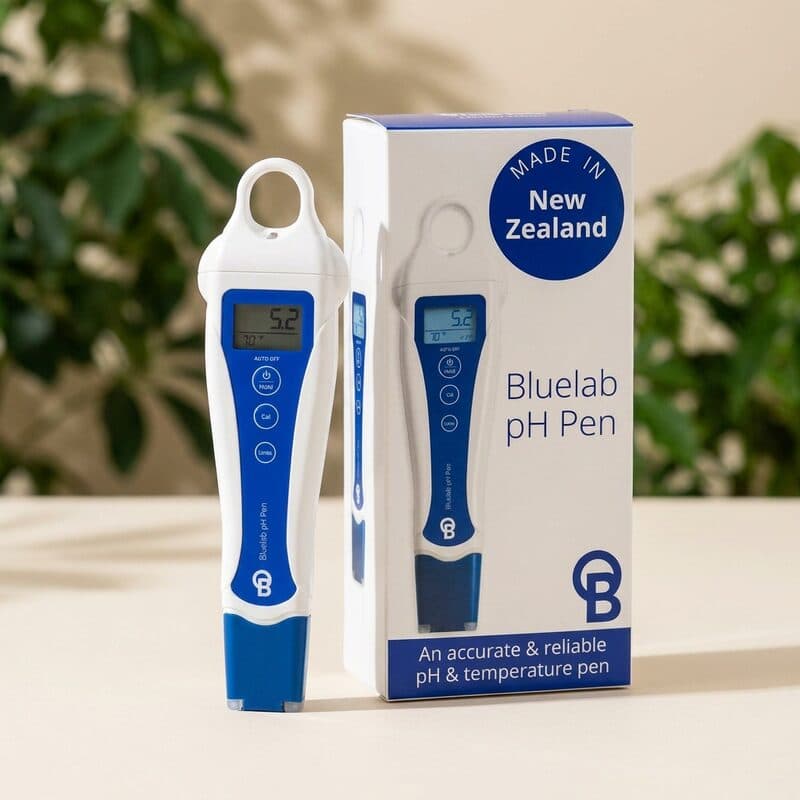
Bluelab Soil pH Pen (PENSOILPH)
Why this pick →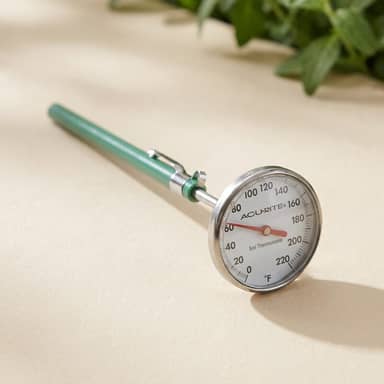
AcuRite Stainless Steel Soil Thermometer (00661)
Why this pick →Soil pH can limit nutrient uptake, low nitrogen can stunt leafy crops, and cold soil can delay germination. Test before planting or fertilizing so you add only what the soil needs. These four tools cover at-home NPK testing, mail-in lab analysis, digital pH monitoring, and soil temperature. Pair the thermometer with your frost dates when timing sowing and transplants.
Best overall: Luster Leaf Rapitest 1601
Best overall
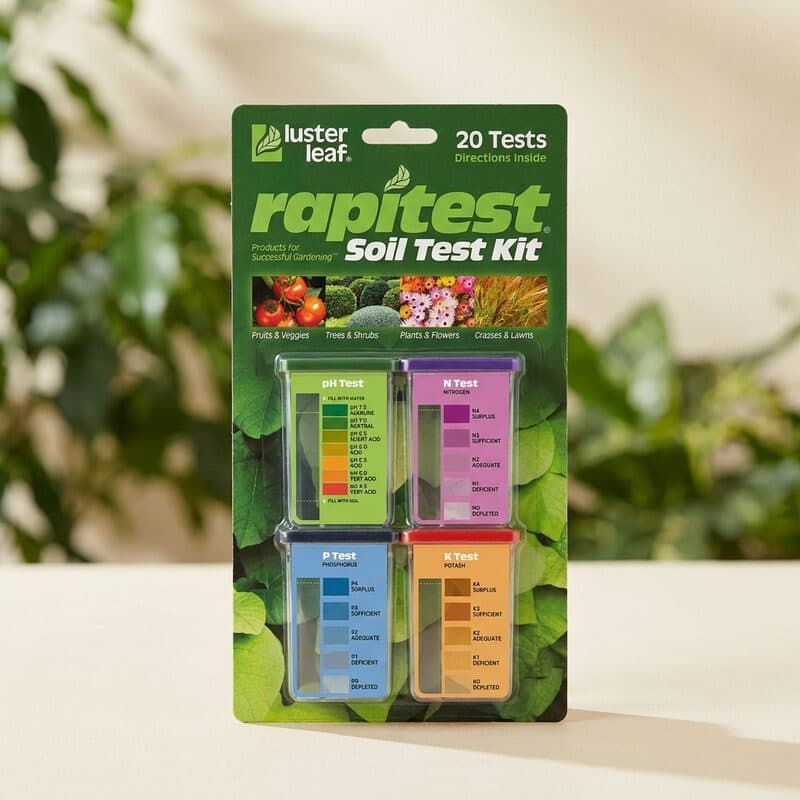
Luster Leaf Rapitest Soil Test Kit (1601)
Best for: Home gardeners who want a fast, affordable picture of soil pH and basic NPK before planting or amending.
Keep in mind: Colorimetric accuracy is narrower than a lab analysis
Amazon price as of the checked date, subject to change. The price on Amazon at checkout applies.
Full research
- Tests included
- 40 total: 10 pH, 10 N, 10 P, 10 K
- Parameters
- pH, nitrogen, phosphorus, potassium
- Method
- Chemical capsule + color comparator
- Reference chart
- pH and NPK targets for 100+ plants
The Luster Leaf Rapitest 1601 is the go-to home soil test kit, using chemical capsules and a color comparator to measure pH, nitrogen, phosphorus, and potassium in minutes.
This catalog-wide research score is separate from this guide's use-case ranking. How we research
Strengths
- Tests four critical parameters in one kit at low cost
- Color comparator is easier to read than flat printed charts
- Results in minutes with no mailing or waiting
Weaknesses
- Colorimetric accuracy is narrower than a lab analysis
- Does not measure secondary nutrients or organic matter
Sprout Score breakdown
Best for
Home gardeners who want a fast, affordable picture of soil pH and basic NPK before planting or amending.
Owner rating snapshot
Amazon · 22 reviews · 4.1 stars
The Luster Leaf Rapitest 1601 has been the default home soil test kit for decades because it solves the core problem: before you buy a bag of fertilizer or a bottle of pH adjuster, you should know what your soil actually needs. It tests all four basics, pH, nitrogen, phosphorus, and potassium, using color-coded capsules and a comparator that is easier to read than a flat printed chart. Forty tests is enough to check every bed before the season, then retest after amendments to see what changed.
The main limitation is accuracy. A chemical colorimetric kit reads pH in roughly half-unit increments and gives a broad nutrient picture, not a precise parts-per-million analysis. That is enough to help most home gardeners decide whether to add lime, sulfur, or nitrogen. Use a lab test for a new bed with unknown history or a deficiency that simple amendments have not fixed.
Best mail-in lab: MySoil Soil Test Kit

Best lab test
MySoil Soil Test Kit (Mail-In Lab)
Best for: Gardeners who want a full nutrient profile before building or amending a new bed, or troubleshooting persistent deficiencies.
Keep in mind: Results take 6 to 8 days, not instant
Amazon price as of the checked date, subject to change. The price on Amazon at checkout applies.
Full research
- Method
- Mail-in USDA-certified lab analysis
- Parameters
- 13+ nutrients including pH, macro and micro
- Turnaround
- Results online in 6 to 8 days
- Recommendations
- Custom fertilizer prescription per plant type
MySoil sends your soil sample to a USDA-certified lab and returns a 13-nutrient analysis with a custom fertilizer prescription, all in a plain-language online dashboard.
This catalog-wide research score is separate from this guide's use-case ranking. How we research
Strengths
- Lab-precision analysis covers macro and micronutrients beyond basic NPK
- Online dashboard gives plant-specific fertilizer recommendations
- Prepaid mailer makes submission easy
Weaknesses
- Results take 6 to 8 days, not instant
- Higher per-test cost than a chemical colorimetric kit
Sprout Score breakdown
Best for
Gardeners who want a full nutrient profile before building or amending a new bed, or troubleshooting persistent deficiencies.
The MySoil Soil Test Kit is what you reach for when the at-home kit tells you something is off but you are not sure what or how much. You mail a small sample in the prepaid envelope, the USDA-certified lab analyzes it for 13 or more nutrients, and within 6 to 8 days your online dashboard shows a complete nutrient profile plus a fertilizer prescription written for the specific plants you are growing.
That plant-specific recommendation is the part that makes MySoil worth the extra cost for a new bed or a persistent problem. Rather than reading a chart and guessing how much lime to add, you get a rate specific to your soil and your crop, whether that is tomatoes, lettuce, or any other vegetable you are planning. The report covers macronutrients, secondary nutrients like calcium and magnesium, and micronutrients that a home kit cannot measure at all.
The tradeoff is the wait. If you want results before your seed-starting window opens, mail the sample a week or two before you need to act. The how-to-build-healthy-garden-soil guide covers what to do with the results once they arrive.
Best digital pH meter: Bluelab Soil pH Pen
Best digital
Bluelab Soil pH Pen (PENSOILPH)
Best for: Gardeners who want fast, repeatable pH spot checks across beds without the delay of a mail-in test.
Keep in mind: Probe requires calibration and proper storage to maintain accuracy
Amazon price as of the checked date, subject to change. The price on Amazon at checkout applies.
Full research
- Measurement
- pH and temperature (dual display)
- Resolution
- 0.1 pH
- Method
- Direct insertion into moist soil or media
- Temperature compensation
- Automatic
The Bluelab Soil pH Pen inserts directly into moist soil to read pH and temperature simultaneously, giving instant, temperature-compensated results without mixing a slurry.
This catalog-wide research score is separate from this guide's use-case ranking. How we research
Strengths
- Direct insertion reads pH in situ without mixing a soil slurry
- Temperature compensation improves reading accuracy
- Reads pH and soil temperature simultaneously
Weaknesses
- Probe requires calibration and proper storage to maintain accuracy
- Premium price versus a one-time chemical test kit
Sprout Score breakdown
Best for
Gardeners who want fast, repeatable pH spot checks across beds without the delay of a mail-in test.
Once you know your soil is roughly in the right range and you are amending beds over time, the Bluelab Soil pH Pen is the fastest way to keep track of where you are. Push the probe into moist soil, wait a few seconds, and read pH to the nearest 0.1 unit directly on the display without mixing a slurry or waiting for color to develop. Temperature compensation runs automatically, so readings are accurate regardless of whether the soil is cold in early spring or warm in summer.
Serious growers who maintain multiple beds and check pH regularly before and after amendments tend to reach for a direct-insertion meter like this over a colorimetric kit because the speed and repeatability of spot checks matters. The pen needs occasional two-point calibration using the included pH 4.0 and pH 7.0 solutions, and the probe tip needs to be stored in storage solution between uses. Those are small habits that come naturally once you make weekly or biweekly pH checks part of your garden routine.
Best soil thermometer: AcuRite 00661
Companion Soil temperature
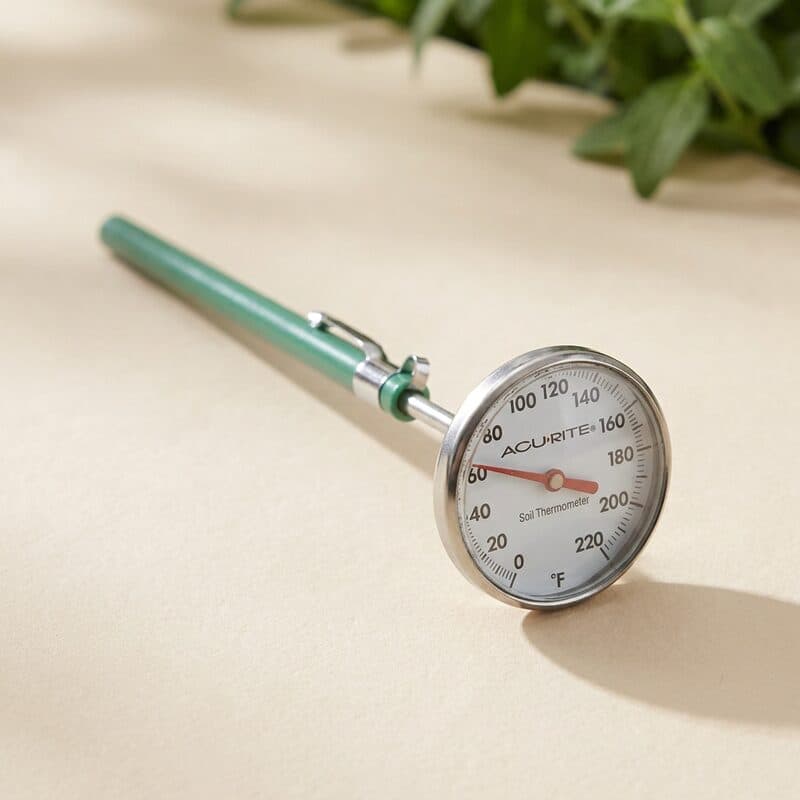
AcuRite Stainless Steel Soil Thermometer (00661)
Best for: Gardeners who want to check soil temperature before planting or sowing and need a simple, affordable, long-lasting tool.
Keep in mind: Analog dial is less precise than a digital display
Amazon price as of the checked date, subject to change. The price on Amazon at checkout applies.
Full research
- Probe length
- 7 in (18 cm) stainless steel
- Range
- 0 to 220 degrees F
- Type
- Analog dial thermometer
- Protective sheath
- Included with pocket clip
The AcuRite 00661 is a 7-inch stainless steel analog soil thermometer that reads 0 to 220 degrees F, the simplest and most durable way to know whether your soil is warm enough to plant.
This catalog-wide research score is separate from this guide's use-case ranking. How we research
Strengths
- Low price for an all-stainless, durable soil probe
- 7-inch probe reaches the root zone for transplant readings
- Protective sheath keeps needle accurate between uses
Weaknesses
- Analog dial is less precise than a digital display
- No memory or logging, single reading at a time
Sprout Score breakdown
Best for
Gardeners who want to check soil temperature before planting or sowing and need a simple, affordable, long-lasting tool.
Owner rating snapshot
Amazon · 596 reviews · 4.4 stars
Soil temperature is the most underused piece of information in the home garden. Germination rates for most vegetables drop sharply below their minimum soil temperature even when air temperatures are warm enough to make the bed look ready. Tomatoes slow and sulk in cold soil; beans rot in the ground below 60 degrees F; carrots germinate erratically below 45 degrees F. The AcuRite 00661 is an analog stainless-steel soil probe that costs about $10, lasts essentially forever, and gives you a direct ground-temperature reading in a couple of minutes.
Push the 7-inch probe 2 to 3 inches deep for seed-sowing checks, or 4 to 6 inches deep when evaluating transplant conditions. Cross the reading against the minimum soil temperature for what you are planting, which you can find in any plant profile on this site or in extension service tables. Pair this habit with the planting calendar for your zone and you will stop losing seedlings to cold-soil rot. The protective sheath keeps the needle accurate and the probe tip safe between uses.
How to choose a soil test kit
What you need to know. If you are setting up a bed for the first time or have never tested, a lab kit like MySoil gives you the most complete picture. For year-to-year maintenance, the Rapitest 1601 is fast and cheap enough to test every bed before each season. For ongoing pH monitoring through a season of amendments, a digital pen pays for itself in saved time.
Chemical colorimetric vs. lab analysis. Chemical kits read pH and NPK in broad increments. They are accurate enough to tell you whether to add lime or sulfur and whether your nitrogen is high, medium, or low. They cannot reliably distinguish between a pH of 6.3 and 6.5, or measure secondary nutrients and trace minerals. Lab analysis fills both gaps.
How often to test. The extension-service standard is every two to three years for established beds that are amended consistently, but every year for new beds, any bed that is underperforming despite amendments, or any time you see nutrient-deficiency symptoms like yellowing between veins or persistent blossom drop. Soil temperature should be checked every time you sow seeds or transplant.
Digital pH meter vs. colorimetric kit for pH. A digital meter wins on speed and repeatability when you are checking pH frequently. A chemical kit is more than adequate when you are testing once or twice a year. Both require that soil is moist for accurate readings.
| Product | Price | Best for | Buy |
|---|---|---|---|
| Luster Leaf Rapitest Soil Test Kit (1601)#1 · BEST OVERALL | Typical price range · Under $25 | Home gardeners who want a fast, affordable picture of soil pH and basic NPK before planting or amending. | Shop Amazon |
| MySoil Soil Test Kit (Mail-In Lab)#2 · BEST LAB TEST | Typical price range · $25-$50 | Gardeners who want a full nutrient profile before building or amending a new bed, or troubleshooting persistent deficiencies. | Shop Amazon |
| Bluelab Soil pH Pen (PENSOILPH)#3 · BEST DIGITAL | Typical price range · $50-$100 | Gardeners who want fast, repeatable pH spot checks across beds without the delay of a mail-in test. | Search Amazon |
| AcuRite Stainless Steel Soil Thermometer (00661)Companion · SOIL TEMPERATURE | Typical price range · Under $25 | Gardeners who want to check soil temperature before planting or sowing and need a simple, affordable, long-lasting tool. | Shop Amazon |
How accurate are home soil test kits?
Chemical colorimetric kits like the Rapitest 1601 are accurate enough for practical garden decisions. They read pH in roughly half-unit increments and give a broad low, medium, or high result for NPK. For most home gardeners deciding whether to add lime, sulfur, or a balanced fertilizer, that resolution is sufficient. If you need precise nutrient levels for a troubleshooting diagnosis, a certified lab test like MySoil is more reliable.
When should I test my soil?
Test in fall after harvest or in early spring before planting, when you have time to act on the results before seeds go in. For a new bed, test before you add any amendments so you have a true baseline. If you are adding lime or sulfur to adjust pH, retest six to eight weeks later because those adjustments take time to work through the soil. See the how-to-test-your-garden-soil guide for a step-by-step walkthrough.
What is the ideal soil pH for vegetables?
Most vegetables grow best in soil between pH 6.0 and 7.0, with 6.5 as a common target. In that range, nitrogen, phosphorus, potassium, and most micronutrients are available to roots. Potatoes prefer slightly more acidic soil around pH 5.5 to 6.0. Brassicas prefer about pH 6.5 to 7.0, which also helps suppress clubroot. Each plant profile lists the crop's preferred pH range.
What soil temperature do I need for planting?
It depends on the crop. Cool-season crops like lettuce, peas, and spinach germinate at soil temperatures as low as 40 to 45 degrees F. Warm-season crops need more: tomatoes need at least 60 degrees F for reliable germination, beans need 60 degrees F, and cucumbers and melons need 65 to 70 degrees F. Check your local last-frost date on the frost dates tool, then measure actual soil temperature before you commit transplants or seeds.
Can I improve my soil after getting a test result?
Yes, that is the point. A lime application raises pH in acidic soil; sulfur or acidifying fertilizers lower it in alkaline soil. Compost, blood meal, or balanced fertilizers address nitrogen. Bone meal or rock phosphate addresses phosphorus. The MySoil lab report gives you specific amendment rates by crop. After any amendment, wait six to eight weeks and retest before adding more, since both over-liming and excess fertilizer cause their own problems. The how-to-build-healthy-garden-soil guide covers the full amendment process.
Test before planting so you can choose amendments from the results. Use an at-home kit before each season, a mail-in lab test for a new bed, and a soil thermometer before sowing. Check the raised bed soil mix guide to build a bed from scratch, or the watering vegetable gardens guide after planting.