Our recommendations
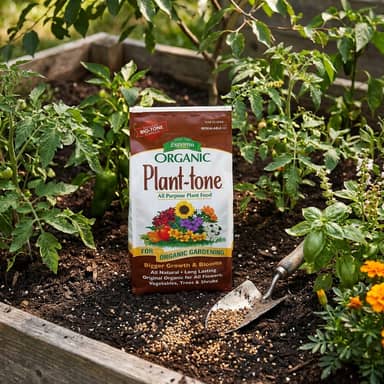
Espoma Plant-tone Organic All-Purpose Fertilizer
Why this pick →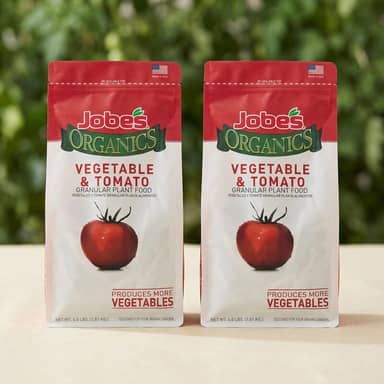
Jobe's Organics Vegetable & Tomato Granular Fertilizer
Why this pick →
Down to Earth All Purpose Mix 4-6-2
Why this pick →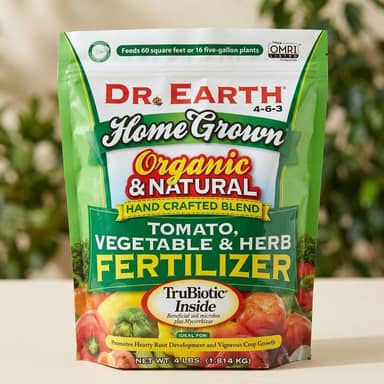
Dr. Earth Home Grown Tomato, Vegetable & Herb Fertilizer
Why this pick →Healthy soil grows healthy vegetables, and fertilizer is how you keep that soil stocked through a demanding season. Organic fertilizers feed differently than synthetics: they release slowly, build soil biology, and are far harder to overdo. The choices below cover the whole garden and the specific case of tomatoes, but first it helps to understand what those three numbers on every bag actually mean.
NPK basics: what the three numbers mean
Every fertilizer lists three numbers, like 5-3-3 or 4-6-2. They are the percentages by weight of the three primary nutrients:
- N (nitrogen) drives leafy, green growth. Great for lettuce, greens, and early growth, but too much on fruiting crops gives you a giant plant with few tomatoes.
- P (phosphorus) supports roots, flowers, and fruit. Fruiting and root crops lean on it.
- K (potassium) supports overall plant health, water movement, and disease resistance.
A balanced all-purpose blend (numbers close together, like 4-6-2 or 5-3-3) suits most vegetables. For fruiting crops like tomatoes and peppers, a profile with phosphorus equal to or higher than nitrogen helps the plant put energy into fruit rather than only leaves.
Best overall: Espoma Plant-tone
Best overall
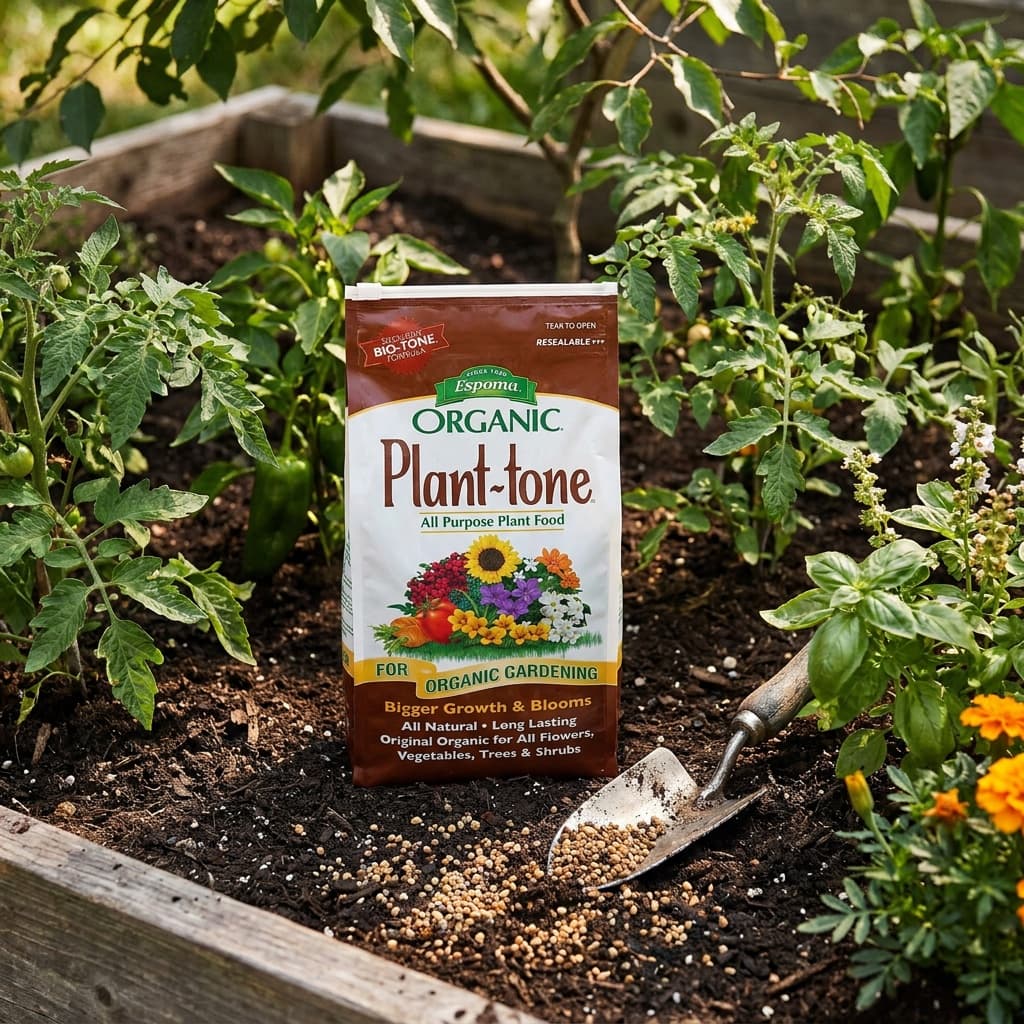
Espoma Plant-tone Organic All-Purpose Fertilizer
Best for: Gardeners who want one safe, all-purpose organic feed for the whole garden.
Keep in mind: Granular organics have a noticeable earthy smell
Amazon price as of the checked date, subject to change. The price on Amazon at checkout applies.
Full research
- NPK
- 5-3-3
- Type
- Granular slow-release organic
- Microbes
- Bio-tone beneficial microbe blend
- Use
- All-purpose: vegetables, flowers, trees, shrubs
A slow-release granular organic fertilizer with a 5-3-3 NPK and the brand's Bio-tone microbe blend. An all-purpose feed for vegetables, flowers, trees, and shrubs that releases gradually over the season.
This catalog-wide research score is separate from this guide's use-case ranking. How we research
Strengths
- Gentle slow-release feeding that resists burning
- Bio-tone microbes support soil biology
- Truly all-purpose across the garden
Weaknesses
- Granular organics have a noticeable earthy smell
- Slower visible response than synthetic feeds
Sprout Score breakdown
Best for
Gardeners who want one safe, all-purpose organic feed for the whole garden.
Owner rating snapshot
Amazon · 15 reviews · 4.7 stars
Plant-tone is our all-purpose pick for vegetables, flowers, trees, and shrubs. It is a slow-release granular feed with a 5-3-3 NPK ratio and Espoma's Bio-tone microbe blend. The gradual release supplies nutrients over several weeks and lowers the risk of fertilizer burn when applied as directed.
Like all granular organics, it has a noticeable earthy smell and works more slowly than a synthetic, so you will not see an overnight green-up. A large bag covers a lot of ground for the price, which makes it our value-and-versatility champion in one product.
Best value: Jobe's Organics Vegetable & Tomato
Best value
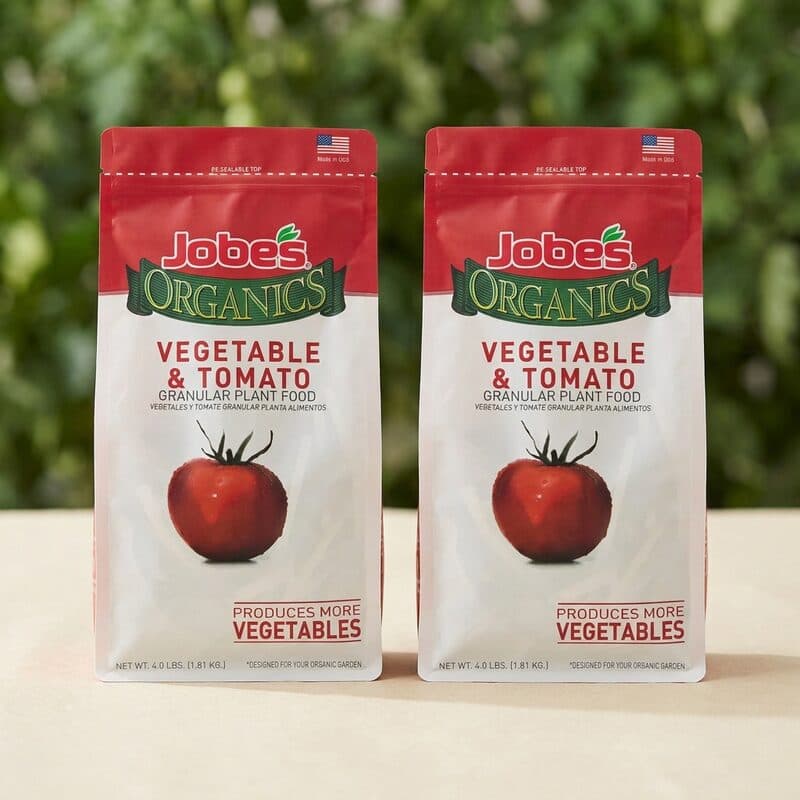
Jobe's Organics Vegetable & Tomato Granular Fertilizer
Best for: Budget-minded growers feeding tomatoes and vegetable beds organically.
Keep in mind: Strong odor that can attract animals
Amazon price as of the checked date, subject to change. The price on Amazon at checkout applies.
Full research
- NPK
- 2-5-3
- Type
- Granular organic
- Microbes
- Biozome beneficial microbe package
- Use
- Vegetables, tomatoes, and fruiting crops
An affordable certified-organic granular fertilizer formulated for vegetables and tomatoes, with a higher phosphorus ratio to support fruiting and the brand's Biozome microbe package.
This catalog-wide research score is separate from this guide's use-case ranking. How we research
Strengths
- Phosphorus-forward profile suits fruiting crops
- Very affordable certified-organic option
- Biozome microbes aid nutrient breakdown
Weaknesses
- Strong odor that can attract animals
- Best as a targeted feed rather than all-purpose
Sprout Score breakdown
Best for
Budget-minded growers feeding tomatoes and vegetable beds organically.
Owner rating snapshot
Amazon · 68 reviews · 4.6 stars
For the lowest cost per feeding while staying certified organic, Jobe's is the pick. Its 2-5-3 NPK is phosphorus-forward, tuned for vegetables and fruiting crops, and it includes the brand's Biozome microbe package to help break nutrients down in the soil. It is one of the most affordable OMRI-listed vegetable feeds you can buy.
The recurring owner complaint is the smell: it is strong, and the odor can attract animals to dig at freshly fed beds, so work it in and water it down. It performs best as a targeted feed for vegetable and tomato beds rather than a whole-yard all-purpose.
Best all-purpose: Down to Earth 4-6-2

Best all-purpose
Down to Earth All Purpose Mix 4-6-2
Best for: Organic gardeners who want a balanced, plastic-free all-purpose feed.
Keep in mind: Sometimes harder to find in big-box stores
Amazon price as of the checked date, subject to change. The price on Amazon at checkout applies.
Full research
- NPK
- 4-6-2
- Type
- Granular organic blend
- Use
- All-purpose: vegetables, flowers, herbs
- Packaging
- Compostable cardboard box
A balanced 4-6-2 all-purpose organic fertilizer blended from quality natural inputs and sold in a compostable box. A versatile feed for vegetable gardens, flower beds, and herbs.
This catalog-wide research score is separate from this guide's use-case ranking. How we research
Strengths
- Balanced all-purpose organic formulation
- Compostable, plastic-free packaging
- No synthetic additives or fillers
Weaknesses
- Sometimes harder to find in big-box stores
- Organic granules release slowly
Sprout Score breakdown
Best for
Organic gardeners who want a balanced, plastic-free all-purpose feed.
The Down to Earth All Purpose Mix is a balanced 4-6-2 organic blend made from quality natural inputs with no synthetic fillers, and it ships in a compostable cardboard box rather than a plastic bag, which is a genuine draw for low-waste gardeners. The balanced profile makes it versatile across vegetables, flower beds, and herbs.
It can be harder to find in big-box stores than the more mainstream brands, and like any granular organic it releases slowly. For a gardener who wants one balanced, plastic-free feed for mixed plantings, it is a strong choice.
Best for tomatoes: Dr. Earth Home Grown
Best for tomatoes
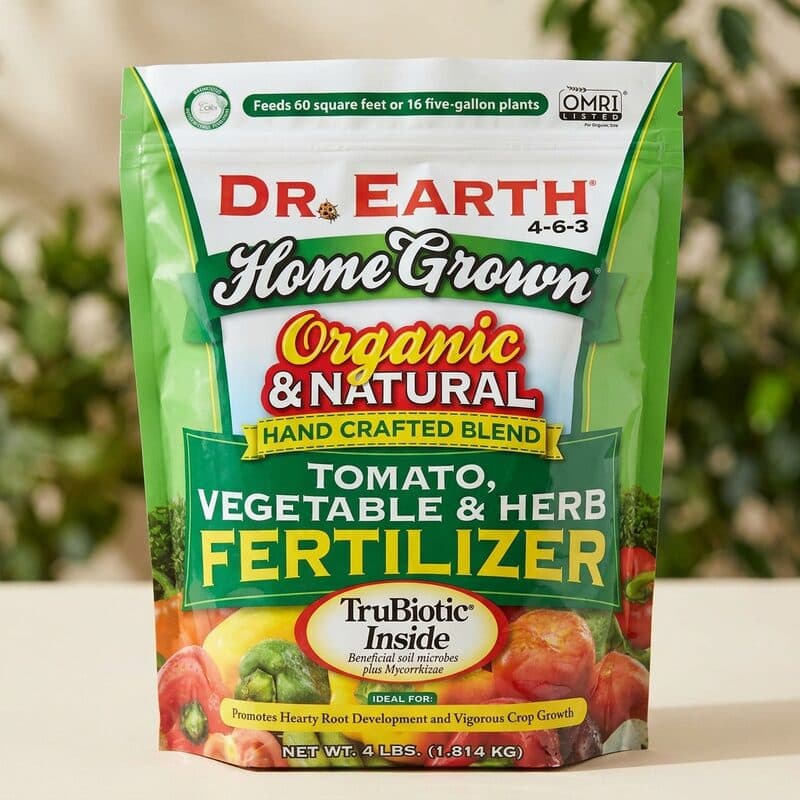
Dr. Earth Home Grown Tomato, Vegetable & Herb Fertilizer
Best for: Organic growers feeding tomatoes, vegetables, and herbs through the season.
Keep in mind: Earthy organic smell on application
Amazon price as of the checked date, subject to change. The price on Amazon at checkout applies.
Full research
- NPK
- 4-6-3
- Type
- Granular organic
- Microbes
- Probiotic soil microbes + mycorrhizae
- Use
- Tomatoes, vegetables, and herbs
A hand-crafted organic fertilizer for tomatoes, vegetables, and herbs, fortified with probiotic soil microbes and mycorrhizae to support root and soil health on edible crops.
This catalog-wide research score is separate from this guide's use-case ranking. How we research
Strengths
- Probiotic microbes and mycorrhizae support soil life
- Balanced profile tuned for edible crops
- Non-GMO, OMRI-listed inputs
Weaknesses
- Earthy organic smell on application
- Granular feeds act more slowly than synthetics
Sprout Score breakdown
Best for
Organic growers feeding tomatoes, vegetables, and herbs through the season.
Owner rating snapshot
Amazon · 82 reviews · 4.6 stars
For tomato growers specifically, the Dr. Earth Home Grown mix is our pick. Its 4-6-3 profile gives fruiting plants the phosphorus and potassium they want, and it is a hand-crafted organic blend fortified with probiotic soil microbes and mycorrhizae to support root and soil health, which matters over a long tomato season. Non-GMO, OMRI-listed inputs round it out.
As with every granular organic here, expect an earthy smell on application and a slower response than a synthetic feed. For tomatoes, vegetables, and herbs grown organically, it is a well-tuned, microbe-rich option.
How to feed your garden
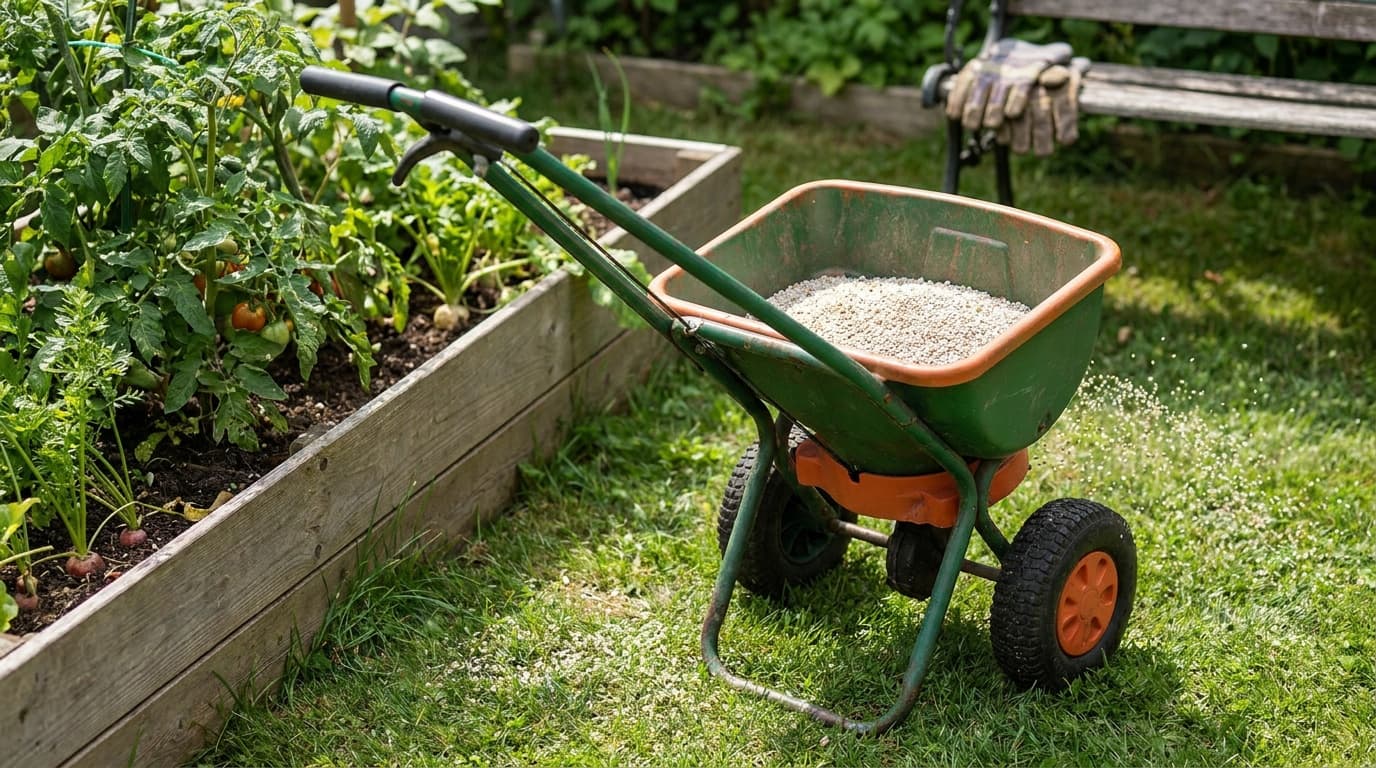
Granular vs liquid. Granular fertilizers (all four picks here) are dry, slow-release, and long-lasting: work them into the soil at planting and side-dress through the season for steady feeding. Liquid fertilizers act fast and are absorbed quickly, useful for a mid-season boost or for container plants that leach nutrients with every watering, but they need reapplying often. Most gardeners build on a granular base and use liquids as a top-up.
When to feed. Work a granular organic into the bed at planting time so nutrients are in place as roots develop. Then side-dress (sprinkle around the base and scratch in) every 4 to 6 weeks during active growth, more often for heavy feeders like tomatoes, squash, and corn. Stop feeding nitrogen-heavy blends to fruiting crops once they flower, or you will grow leaves at the expense of fruit. Line up your feeding schedule with your planting calendar so it tracks each crop's growth.
Organic vs synthetic. Synthetic fertilizers deliver nutrients in immediately available form: fast results, but easy to overapply, prone to burning roots, and they do nothing for long-term soil health. Organic fertilizers release slowly as soil microbes break them down, feed the soil biology along with the plant, and are far more forgiving of a heavy hand. The trade-off is patience: organics work over weeks, not overnight.
| Product | Price | Best for | Buy |
|---|---|---|---|
| Espoma Plant-tone Organic All-Purpose Fertilizer#1 · BEST OVERALL | Typical price range · Under $25 | Gardeners who want one safe, all-purpose organic feed for the whole garden. | Shop Amazon |
| Jobe's Organics Vegetable & Tomato Granular Fertilizer#2 · BEST VALUE | Typical price range · Under $25 | Budget-minded growers feeding tomatoes and vegetable beds organically. | Shop Amazon |
| Down to Earth All Purpose Mix 4-6-2#3 · BEST ALL-PURPOSE | Typical price range · Under $25 | Organic gardeners who want a balanced, plastic-free all-purpose feed. | Shop Amazon |
| Dr. Earth Home Grown Tomato, Vegetable & Herb Fertilizer#4 · BEST FOR TOMATOES | Typical price range · Under $25 | Organic growers feeding tomatoes, vegetables, and herbs through the season. | Shop Amazon |
What is the best NPK ratio for vegetables?
For general vegetable growing, a balanced or slightly nitrogen-forward organic blend (numbers fairly close together, like 5-3-3 or 4-6-2) suits most crops. For fruiting crops like tomatoes and peppers, choose a blend where phosphorus is equal to or higher than nitrogen to encourage flowers and fruit rather than only foliage. Leafy greens can take more nitrogen.
How often should I fertilize vegetables?
Work a slow-release granular organic into the bed at planting, then side-dress every 4 to 6 weeks during active growth. Heavy feeders like tomatoes, squash, and corn benefit from more frequent feeding; light feeders like beans and herbs need less. Always follow the product's label rates rather than overdoing it.
Is organic fertilizer better than synthetic for vegetables?
For long-term soil and edible gardening, organic has real advantages: it releases slowly, builds soil biology, and is far harder to overapply or burn plants with. Synthetic fertilizers work faster but do nothing for soil health and are easy to overdo. The trade-off is speed; organics feed over weeks rather than instantly.
What fertilizer is best for tomatoes?
Tomatoes are heavy feeders that want phosphorus and potassium for fruiting, not just nitrogen. A blend like a 4-6-3 organic tomato-and-vegetable formula fits well. Avoid high-nitrogen feeds once plants flower, which push leaves over fruit. Pair good feeding with steady watering to help prevent calcium-related issues like blossom end rot.
Can you over-fertilize an organic garden?
Yes, though it is harder than with synthetics. Too much fertilizer, even organic, pushes excess leafy growth, attracts pests, and can build up salts that stress roots and soil life. Follow label rates, feed on a schedule rather than constantly, and remember that healthy compost-rich soil reduces how much added fertilizer you need.
Feed the soil and the soil feeds your plants. A slow-release organic granular at planting plus regular side-dressing keeps most vegetable gardens productive all season, with a tomato-tuned blend for your fruiting crops. Match the feeding to each crop's stage with our planting calendar, and if your tomatoes show trouble, check our guide to blossom end rot before you reach for more fertilizer.