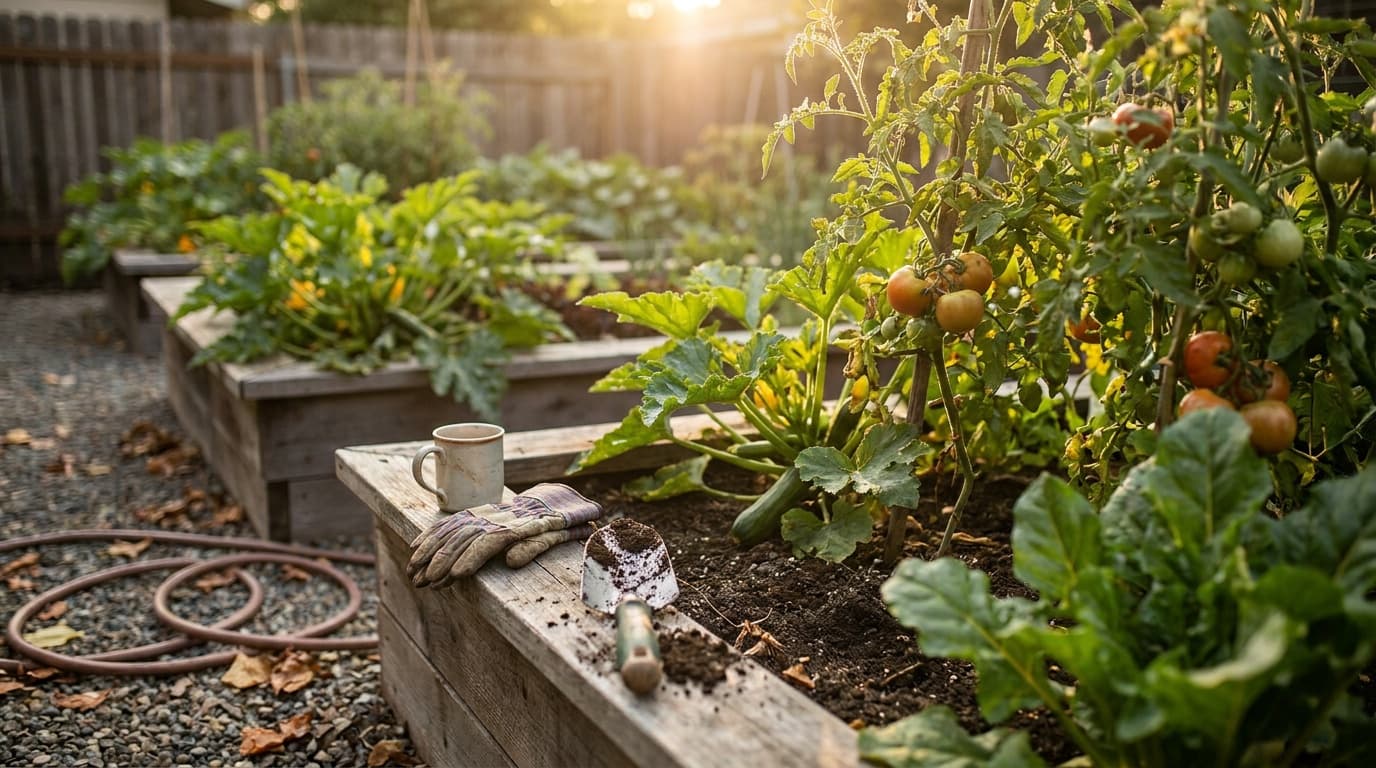
Why grow vegetables vertically
Growing up instead of out does three valuable things. It multiplies your space, because a vine that would sprawl across several square feet of ground instead occupies a single footprint at the base of a trellis. It improves plant health, because lifting foliage off the soil increases airflow and keeps leaves dry, which cuts down on the fungal diseases that thrive in damp, crowded growth. And it makes harvest easier, since beans, cucumbers, and tomatoes hang in plain sight at a comfortable height instead of hiding under a tangle on the ground.
The crops below are the natural fit. Each links to its profile for spacing and support details, and you can plan the base footprint with the spacing calculator.
The best vegetables for vertical gardening
Pole beans: the easiest climber
Green beans in pole form are made for vertical growing. They twine up almost any support on their own, crop heavily over a long season, and a single teepee or net of them produces far more than the bush types in the same ground space. Give them something 6 to 8 feet tall and they will use all of it.
Peas: spring's natural climber
Peas send out tendrils that grab netting or twine without any help. Grown up a trellis they stay clean, dry, and easy to pick, and the vertical habit keeps the pods off cold spring soil where they would rot. They are one of the first crops you can grow vertically each year.
Cucumbers: cleaner and straighter on a trellis
Cucumbers are among the best vertical crops. Trellised, the fruit hangs straight and clean instead of curling on damp ground, the foliage dries fast (cutting down on the powdery mildew cucumbers are prone to), and harvest is effortless. Guide the young vines onto the support and their tendrils take over.
Indeterminate tomatoes: built to climb (with help)
Indeterminate tomatoes grow as long vines all season and are far healthier trained upward. Unlike beans and peas, they do not climb on their own, so you tie the main stem to a stake, string, or tall cage as it grows. Vertical training improves airflow and dramatically reduces disease, and consistent watering up the support helps prevent blossom end rot.
Small winter squash: vining up, fruit slung in slings
Compact-fruited winter squash, and smaller pumpkins, can be trained up a sturdy trellis to reclaim huge amounts of ground. The plants will climb with some guidance; for heavier fruit, support each one in a fabric sling so the stem is not strained. Stick to smaller varieties, because a full-size pumpkin is too heavy to hang.
Match the support to the crop
A vertical garden works only if the support suits the plant. Getting this right is most of the job.
Choosing and using a trellis
Self-climbers want netting or twine
Cucumbers and squash need guiding
Tomatoes must be tied
Heavy fruit needs slings
For cucumbers, squash, and other crops that climb with a little guiding, a rigid metal trellis panel gives the vines something sturdy to grab and holds the load without sagging the way netting can. A panel like this anchors at the north side of a bed and lasts for years.
Some links on this page are affiliate links. As an Amazon Associate I earn from qualifying purchases.
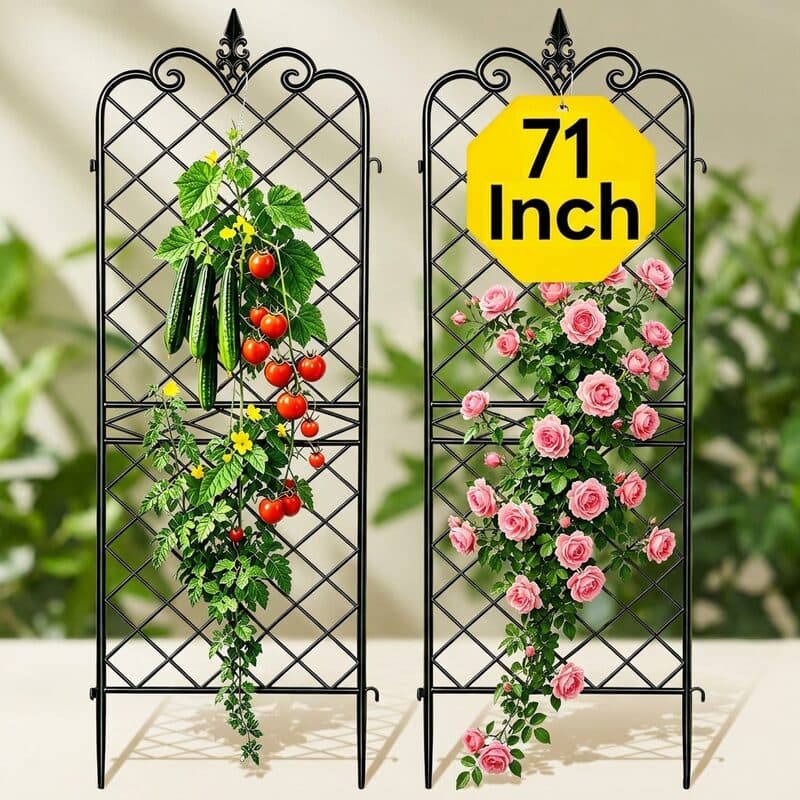
Metal trellis panel
AMAGABELI Metal Garden Trellis for Climbing Plants (60 x 18 in, 4-Pack)
Best for: Gardeners who want sturdy, attractive metal panels to line a raised bed or pot with a support that outlasts netting.
Keep in mind: 18-inch width means multiple panels are needed to cover a longer row
Amazon price as of the checked date, subject to change. The price on Amazon at checkout applies.
Full research
- Dimensions
- 60 in x 18 in per panel
- Pack
- 4 panels
- Material
- Rust-proof powder-coated iron
- Finish
- Black
AMAGABELI's four-pack of 60 x 18 inch powder-coated black iron panels provides a clean, rust-resistant climbing lattice for cucumbers, beans, roses, and clematis in beds or pots.
This catalog-wide research score is separate from this guide's use-case ranking. How we research
Strengths
- Rust-proof powder-coated iron survives seasons of outdoor rain without flaking
- Four-panel pack covers a full raised bed row at a reasonable per-panel price
- Clean grid design works in both vegetable beds and ornamental borders
Weaknesses
- 18-inch width means multiple panels are needed to cover a longer row
- Upright panels need to be staked or tied to avoid leaning under a heavy loaded vine
Sprout Score breakdown
Best for
Gardeners who want sturdy, attractive metal panels to line a raised bed or pot with a support that outlasts netting.
Owner rating snapshot
Amazon · 82 reviews · 4.6 stars
A few crops that climb but rarely pay off
You can train large pumpkins, full-size melons, and winter squash with big fruit up a structure, but the engineering rarely justifies it: every fruit needs its own sling, and a strong wind can bring the whole thing down. Likewise, sprawling determinate tomatoes and bush squash do not climb and gain little from a trellis. Keep vertical space for the true climbers and the small-fruited vines, and let the heavyweights ramble on the ground or up a substantial arch built for the load.
What vegetables grow best vertically?
Natural climbers and vines: pole beans, peas, cucumbers, indeterminate tomatoes, and small-fruited winter squash. Beans and peas climb on their own, cucumbers and squash need light guiding, and tomatoes must be tied to a support. These crops gain the most from the better airflow, smaller footprint, and easier harvest that vertical growing provides.
How tall should a vegetable trellis be?
For most climbers, 6 to 8 feet is ideal. Pole beans and indeterminate tomatoes will happily use that full height over a season, while peas and cucumbers manage well at 5 to 6 feet. The support must be sturdy and well anchored, because a mature vine catches a lot of wind and carries real weight.
Does growing vegetables vertically save space?
Significantly. A vining crop that would sprawl across several square feet on the ground instead occupies a single footprint at the base of its trellis, freeing the surrounding bed for other crops. Vertical growing is one of the most effective ways to increase yield in a small garden or raised bed.
Can I grow cucumbers and tomatoes vertically in containers?
Yes. Both grow well in large containers with a trellis or stake set into the pot or anchored behind it. Use at least a 5-gallon container, keep watering consistent, and tie tomatoes to the support as they grow. See our guide to the best vegetables for containers for pot sizing.
Vertical growing is the closest thing gardening has to a free upgrade: more food, healthier plants, and easier picking, all from the same patch of ground. Start with pole beans or peas, since they climb themselves, add a trellis of cucumbers, and train your tomatoes up instead of letting them sprawl. Your small garden will start to feel a lot bigger.