Our recommendations
Manual hedge shears give you something a powered trimmer cannot: control. For shaping shrubs, squaring up a formal hedge, and making the crisp, deliberate cuts that define a clean line, a sharp pair of hand shears is more precise, quieter, and gentler on the plant than a motor. They cut soft and semi-woody growth, the new flush on a boxwood, privet, or yew, with a scissoring action that leaves a clean edge rather than the torn, browning tips a dull powered blade can leave behind.
The work splits into two jobs. Long-bladed hedge shears handle the broad sweeping cuts that shape and flatten a hedge, while a small precision snip handles the close, fiddly work: deadheading, shaping a topiary detail, and reaching into tight growth. Most gardeners are best served by owning one of each. We sorted the field by blade steel and sharpness, the cutting and leverage mechanism, weight and balance over a long session, and how cleanly each holds an edge.
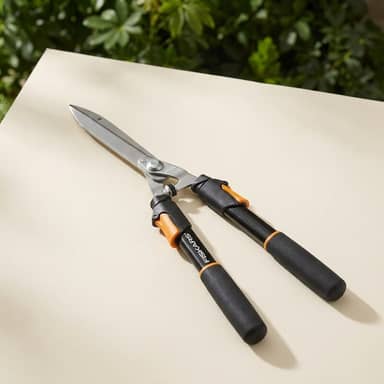
Best overall: Fiskars Power-Lever extendable hedge shears
Best overall
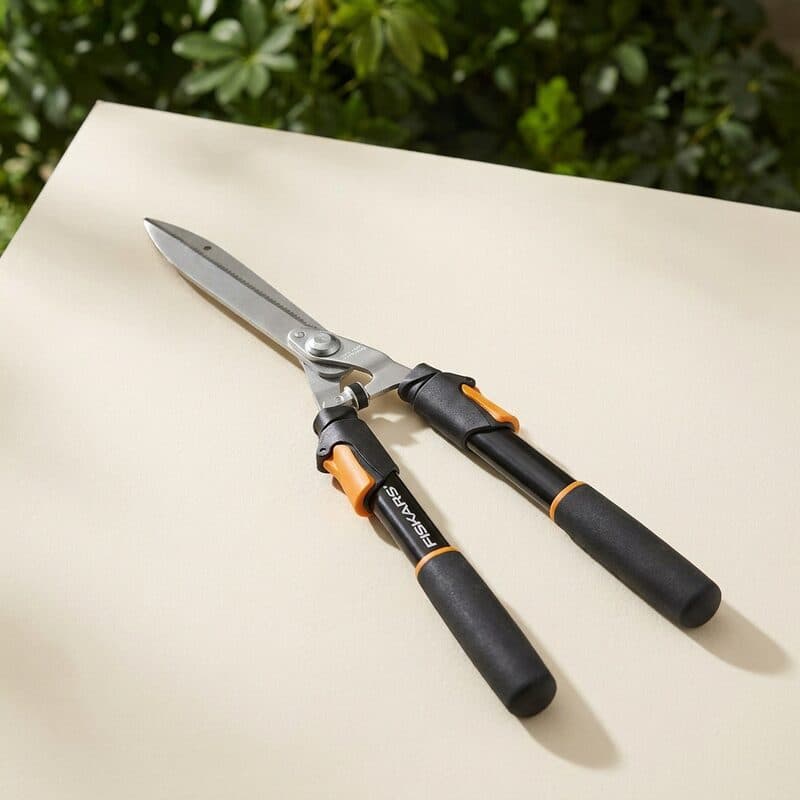
Fiskars Power-Lever Extendable Hedge Shears (25-33 in)
Best for: Homeowners shaping hedges and shrubs who want geared leverage to cut thicker growth with less hand fatigue.
Keep in mind: The shock-absorbing bumper can loosen and need re-tightening over time
Amazon price as of the checked date, subject to change. The price on Amazon at checkout applies.
Full research
- Type
- Manual hedge shears
- Length
- 25-33 in, extendable
- Mechanism
- Power-Lever compound pivot
- Blades
- 10 in serrated, fully hardened steel
Fiskars' Power-Lever extendable hedge shears reach from 25 to 33 inches and pair a compound pivot with 10-inch serrated, fully hardened steel blades.
This catalog-wide research score is separate from this guide's use-case ranking. How we research
Strengths
- Power-Lever compound action reduces the effort needed to shear thick hedge growth
- Precision-ground hardened steel blades make clean cuts and resist sap buildup
- Extendable handles add reach for taller and wider hedges
Weaknesses
- The shock-absorbing bumper can loosen and need re-tightening over time
- Geared action adds a little weight versus a plain straight-pivot shear
Sprout Score breakdown
Best for
Homeowners shaping hedges and shrubs who want geared leverage to cut thicker growth with less hand fatigue.
Owner rating snapshot
Amazon · 28 reviews · 4.5 stars
The Fiskars Power-Lever is the hedge shear most home gardeners should buy. Its signature feature is a compound-lever hinge that increases your cutting power so dense, twiggy growth gives way with noticeably less hand and forearm effort. For anyone who has finished a long trimming session with aching hands, that boost is the difference between a chore and a manageable afternoon.
The 10-inch serrated steel blades grip stems while they cut, and the handles extend from 25 to 33 inches when a taller or wider hedge calls for more reach. It captures most of what makes a great shear, a clean cut with low effort, at a price that suits any budget. You can compare the Fiskars Power-Lever's current price against the premium pick.
Best premium: Okatsune 217 hedge shears
Best premium
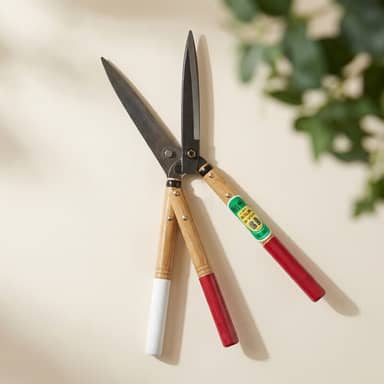
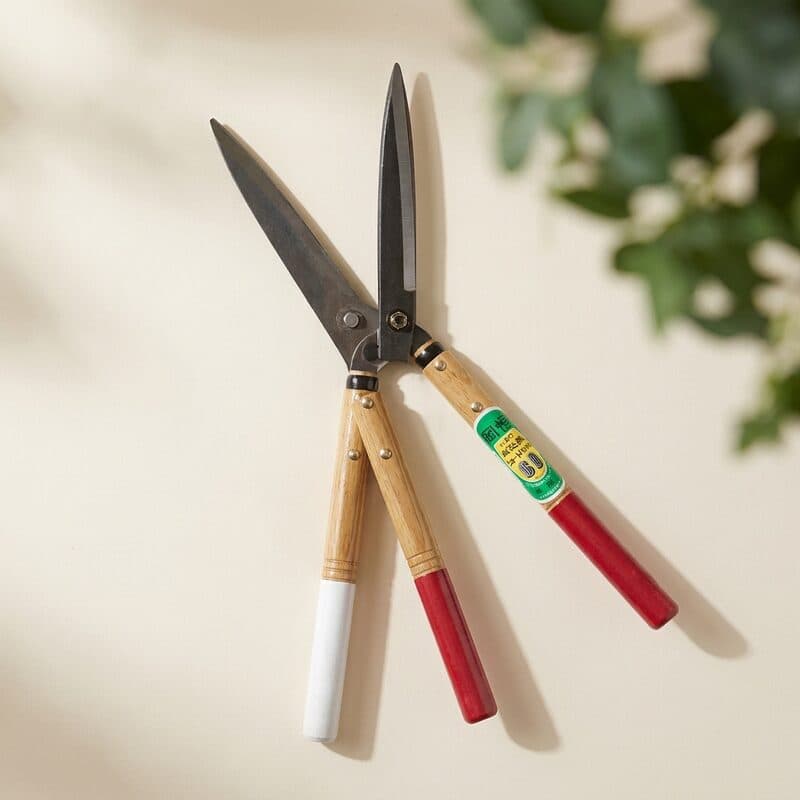
Okatsune 217 Hedge Shears (Short Handle)
Best for: Topiary, Japanese-garden, and detail-pruning enthusiasts who want a forged-steel shear with class-leading cut quality and control.
Keep in mind: Premium price relative to mass-market hedge shears
Amazon price as of the checked date, subject to change. The price on Amazon at checkout applies.
Full research
- Type
- Japanese hedge shears
- Overall length
- Approx. 53.5 cm (21 in)
- Blade length
- Approx. 175 mm (6.9 in)
- Weight
- Approx. 790 g
Okatsune's 217 short-handle shears are hand-forged from Izumo Yasuki special steel on white oak handles, delivering the razor-sharp, precise cut that topiary and detail work demand.
This catalog-wide research score is separate from this guide's use-case ranking. How we research
Strengths
- Hand-forged special-steel blades take and hold an exceptional razor edge
- Short, light handles give precise control for topiary and detail shaping
- Professional fit and finish built to last decades with care
Weaknesses
- Premium price relative to mass-market hedge shears
- Short handles trade reach for control; not the tool for cutting back tall, heavy hedges
Sprout Score breakdown
Best for
Topiary, Japanese-garden, and detail-pruning enthusiasts who want a forged-steel shear with class-leading cut quality and control.
Owner rating snapshot
Amazon · 1 reviews · 4.8 stars
Okatsune is a Japanese maker used by professional gardeners. The 217 blades are forged from high-carbon Izumo Yasugi steel, the same steelmaking tradition used for fine Japanese knives, and they arrive very sharp. The blades cut growth cleanly with little bruising, and the simple design is easy to sharpen when the edge dulls.
The white-and-red handles are a deliberate choice, easy to spot when you set them down in the hedge, and the balance is light and lively in the hand. This is the pick for the gardener who shapes hedges often, appreciates a tool that performs flawlessly, and wants to buy once. You can check current pricing on the Okatsune 217 before committing.
For detail work, add a micro-tip snip
Full-size hedge shears are wrong for close work. A compact, spring-loaded micro-tip snip reaches into tight growth for the precise cuts a big shear cannot make: deadheading spent flowers, pinching back herbs, shaping a small topiary, and harvesting in crowded beds.
Look for blades that close cleanly all the way to the tip, a spring that reopens the handles without excess resistance, and a lock or sheath that covers the points in storage. Treat the snip as a companion for lettuce, herbs, flowers, and soft stems. It does not replace a full-size hedge shear or a bypass pruner on woody growth.
How to choose hedge shears
The decision comes down to four things.
Blade steel and sharpness. A clean cut depends almost entirely on a sharp, quality blade. High-carbon steel takes and holds a keener edge than basic stainless, which is why the finest shears use it, while coated steel resists the sap and rust that dull and stick a blade. A sharp shear scissors through growth cleanly; a dull one tears and bruises, leaving brown, ragged tips that look bad and invite disease.
Leverage and cutting action. Plain shears rely on blade length and your grip strength. A leverage mechanism like the Power-Lever hinge multiplies your force, which matters most on dense, woody, twiggy growth where a basic shear stalls. If your hedge is thick or you trim a lot at once, the leverage is worth it.
Weight and balance. Hedge trimming is repetitive overhead and reaching work, so a few ounces add up fast. Lighter shears tire you less over a tall hedge, while a well-balanced tool feels controlled rather than tip-heavy. Try to match the tool's heft to the size of the job you do most.
Size for the job. Long-bladed shears are for broad shaping and flat lines. They are clumsy for close detail, which is the job for a small precision snip. Owning both, a full-size shear and a micro-tip snip, covers the whole range from squaring a hedge to deadheading a single bloom.
| Product | Price | Best for | Buy |
|---|---|---|---|
| Fiskars Power-Lever Extendable Hedge Shears (25-33 in)#1 · BEST OVERALL | Typical price range · $30-$45 | Homeowners shaping hedges and shrubs who want geared leverage to cut thicker growth with less hand fatigue. | Shop Amazon |
| Okatsune 217 Hedge Shears (Short Handle)#2 · BEST PREMIUM | Typical price range · $65-$90 | Topiary, Japanese-garden, and detail-pruning enthusiasts who want a forged-steel shear with class-leading cut quality and control. | Shop Amazon |
Frequently asked questions
What is the difference between hedge shears and pruning snips?
Hedge shears have long blades and two long handles for broad, sweeping cuts that shape and flatten a hedge. Precision snips are small, one-hand spring-loaded tools with fine pointed blades for close detail work like deadheading, pinching herbs, and shaping small plants. Most gardeners want both: shears for the big shaping and snips for the fiddly cuts shears cannot reach.
How thick a branch can manual hedge shears cut?
Manual hedge shears are made for soft and semi-woody growth, typically branches up to about three-quarters of an inch. They are for shaping the leafy flush of a hedge, not for cutting thick woody stems. Once a branch is thicker than the shears handle cleanly, switch to bypass loppers or a pruning saw rather than forcing the shears and bending the blades.
When should you trim a hedge?
Most hedges are best trimmed in late spring after the first flush of growth hardens, with a lighter tidy-up in mid to late summer. Avoid heavy cutting in early spring nesting season for wildlife reasons, and avoid late-fall cuts that push tender growth before winter. Formal hedges may need two or three light trims a season to stay crisp.
Why do my hedge cuts turn brown at the tips?
Brown tips usually mean the blades are dull or the cuts are crushing rather than slicing. A dull or powered blade tears the foliage and leaves a ragged wound that browns and dries. Sharpen your shears, make clean scissoring cuts, and trim on a cooler, overcast day when possible so freshly cut edges are less likely to scorch.
Our recommendation
Buy the Fiskars Power-Lever if you want the best all-around hedge shear that cuts dense growth with less effort, step up to the Okatsune 217 for surgically sharp Japanese steel and a tool you will keep for life, and add a micro-tip snip for close work on soft stems. Keep your blades sharp, match the tool to the cut, and trim in the right season for a clean, healthy hedge.