Our recommendations
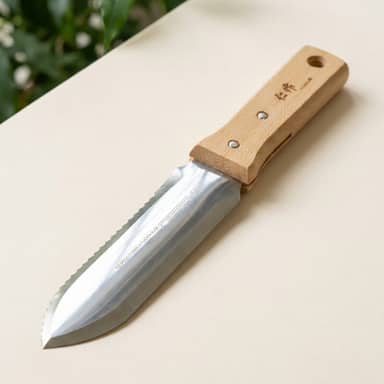
Nisaku NJP650 The Original Hori Hori Namibagata Knife
Why this pick →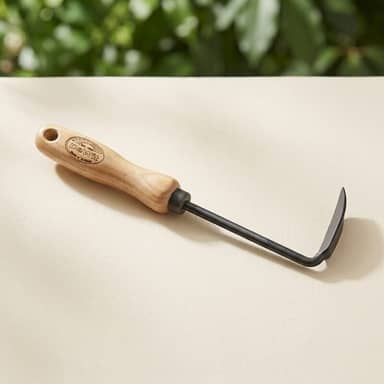
DeWit Cape Cod Weeder (Right Hand)
Why this pick →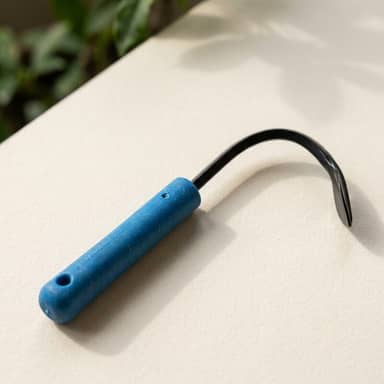
CobraHead Original Weeder and Cultivator
Why this pick →
Truly Garden Hori Hori Soil Knife
Why this pick →Every gardener eventually learns that pulling the top off a weed is not weeding: it is fertilizing the root. The tools on this list are designed to remove the whole plant, including the root system that regrows from any fragment left behind. The choice between them comes down to how you garden: the hori hori is a Swiss Army knife for general beds, the Cape Cod weeder is built for tight rows where precision matters, and the CobraHead is purpose-built for taproot extraction. None of them are expensive relative to the time they save.
Best overall: Nisaku NJP650 Hori Hori
Best overall
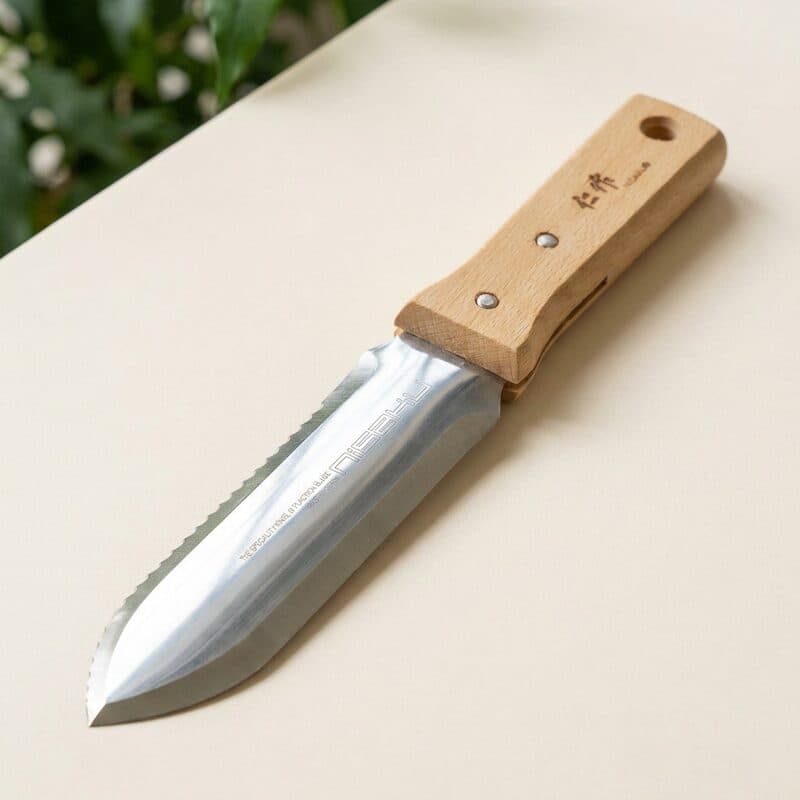
Nisaku NJP650 The Original Hori Hori Namibagata Knife
Best for: Gardeners who want one do-everything soil knife for weeding, planting, and root-slicing.
Keep in mind: Wood handle can absorb moisture and split without occasional oiling
Amazon price as of the checked date, subject to change. The price on Amazon at checkout applies.
Full research
- Blade length
- 7.25 in
- Blade material
- Japanese stainless steel
- Edge
- One straight, one serrated
- Handle
- Wood, full-tang construction
The Nisaku NJP650 is the benchmark hori hori knife, with a 7.25-inch Japanese stainless blade featuring both a straight and a serrated edge and depth markings, in continuous production and widely regarded as the authentic reference for the tool.
This catalog-wide research score is separate from this guide's use-case ranking. How we research
Strengths
- Dual-edge blade (straight and serrated) tackles a wide range of weeding and planting tasks
- Depth markings help set bulbs and seedlings at a consistent depth
- Full-tang construction transfers force efficiently to the blade
Weaknesses
- Wood handle can absorb moisture and split without occasional oiling
- No sheath included at the base price point
Sprout Score breakdown
Best for
Gardeners who want one do-everything soil knife for weeding, planting, and root-slicing.
Owner rating snapshot
Amazon · 93 reviews · 4.8 stars
The Nisaku NJP650 is the benchmark hori hori knife and the single most versatile hand tool for weeding. The 7.25-inch Japanese stainless blade has one straight edge and one serrated edge, with depth markings stamped into the steel. You use the straight edge to slice roots and slice weeds below the soil surface, the serrated edge to saw through thick roots, and the pointed tip to dig, transplant, divide clumps, and set bulbs at the right depth.
The depth markings make it useful when following a planting calendar for bulbs or seedlings that need to go in at a specific depth. Full-tang construction means the blade runs the full length of the tool with no joint to weaken over time. The wood handle is solid but does best with occasional oiling to prevent splitting if it gets wet regularly.
The hori hori is a general-purpose soil knife, not a specialized weeder. The Cape Cod weeder below is faster and more precise in long rows of tightly spaced vegetables. Choose the hori hori when you want one hand tool for digging, cutting, and ordinary weeding.
Best for tight rows: DeWit Cape Cod Weeder
Best for tight rows
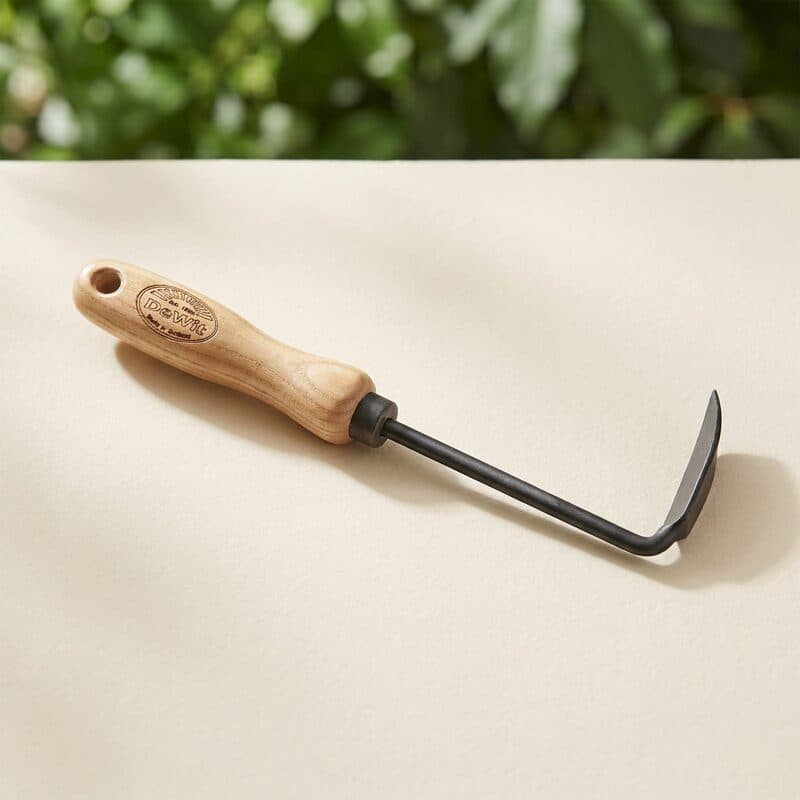
DeWit Cape Cod Weeder (Right Hand)
Best for: Gardeners who do a lot of close-quarters weeding in vegetable rows and raised beds.
Keep in mind: Handedness matters: right- and left-hand versions differ, so verify before ordering
Amazon price as of the checked date, subject to change. The price on Amazon at checkout applies.
Full research
- Total length
- 10.5 in
- Blade material
- Hand-forged tempered boron steel
- Handle
- FSC-certified ash wood
- Weight
- About 0.5 lb
DeWit's Cape Cod Weeder uses a hand-forged boron steel blade angled for a slicing pull stroke, making it one of the most precise hand weeders available for tight spaces and crowded vegetable rows.
This catalog-wide research score is separate from this guide's use-case ranking. How we research
Strengths
- Angled blade pulls cleanly through soil with minimal wrist strain
- Hand-forged boron steel holds an edge better than stamped blades
- Compact, precise head works in tight rows and around seedlings
Weaknesses
- Handedness matters: right- and left-hand versions differ, so verify before ordering
- Premium price relative to basic hand weeders
Sprout Score breakdown
Best for
Gardeners who do a lot of close-quarters weeding in vegetable rows and raised beds.
Owner rating snapshot
Amazon · 248 reviews · 4.7 stars
The DeWit Cape Cod Weeder looks like a small bent blade on a short handle, and that bent-blade geometry is the entire point. You slide the blade just under the soil surface at a low angle, and one pull stroke slices through the weed roots cleanly without disturbing neighboring plants or throwing soil. It is the preferred hand weeder for market gardeners and serious home growers who maintain densely planted vegetable beds.
DeWit has been making hand-forged tools in the Netherlands since 1898. The blade is forged from the same tempered boron steel used in bulldozer blades, attached to an FSC-certified ash handle, and backed by a lifetime guarantee. That is not marketing language: boron steel holds its edge substantially better than the stamped carbon steel used in most budget weeding tools. The Cape Cod weeder will outlast a set of cheaper alternatives by a wide margin.
One important note: the geometry is handed. The right-hand version has the blade angled for a right-handed pull stroke; there is a separate left-hand version. Verify before ordering. See also our best garden trowels guide if you need digging tools alongside your weeding kit.
Best for taproot weeds: CobraHead Original
Best for taproots
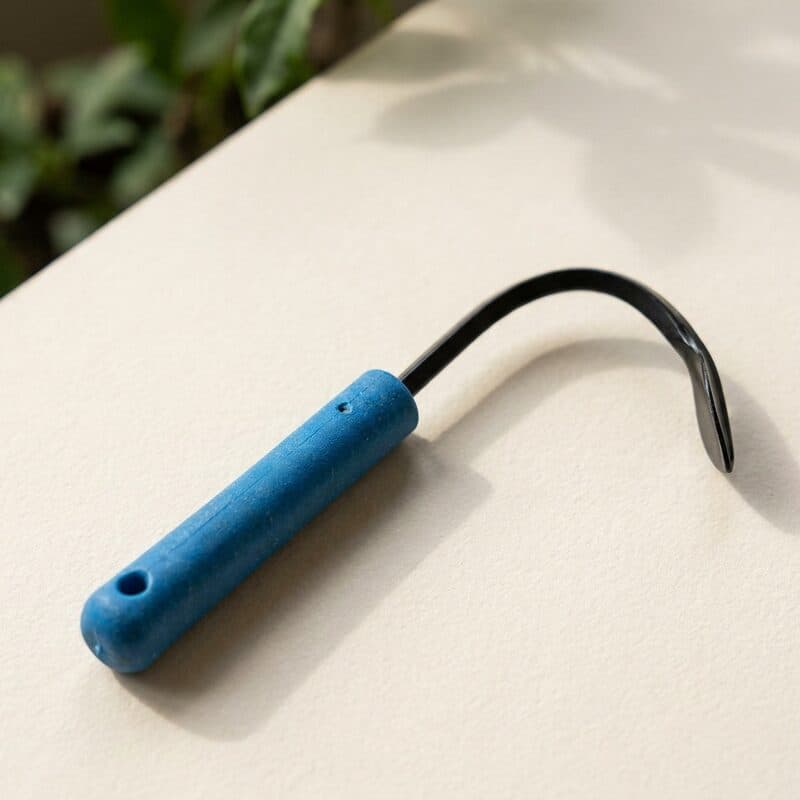
CobraHead Original Weeder and Cultivator
Best for: Gardeners dealing with taprooted weeds like dandelions who also want one tool for multiple cultivation tasks.
Keep in mind: The hook blade is not suited to slicing weeds at the soil surface the way a Cape Cod or hori hori is
Amazon price as of the checked date, subject to change. The price on Amazon at checkout applies.
Full research
- Overall length
- 13 in (33 cm)
- Weight
- 9.2 oz (255 g)
- Blade
- Forged tempered steel hook
- Handle
- Recycled composite plastic
The CobraHead Original uses a forged curved-steel hook to slip under taproots and extract them whole, while doubling as a cultivator, edger, and planting tool, all in a comfortable 13-inch package made in Wisconsin.
This catalog-wide research score is separate from this guide's use-case ranking. How we research
Strengths
- Curved hook geometry slips under taproots and pops them out cleanly
- Doubles as a cultivator, edger, furrow maker, and transplanting tool
- Comfortable ergonomic handle sits naturally in the fist
Weaknesses
- The hook blade is not suited to slicing weeds at the soil surface the way a Cape Cod or hori hori is
- Recycled composite handle, while durable, has less of a premium feel than wood
Sprout Score breakdown
Best for
Gardeners dealing with taprooted weeds like dandelions who also want one tool for multiple cultivation tasks.
Owner rating snapshot
Amazon · 26 reviews · 4.8 stars
Dandelions, thistles, dock, and plantain all share one trait: a taproot that, if you break it, sends up new shoots from any fragment left in the soil. The CobraHead Original is shaped specifically to solve this. The forged steel hook is curved to slip under a taproot and lever it out whole, rather than slice it.
The hook also makes it a competent cultivator for scratching up a light surface crust between plants, edging beds, making planting furrows, and transplanting small seedlings. The recycled composite handle is comfortable and tough. At 9.2 oz and 13 inches overall, it is light enough to carry around the garden for an extended weeding session without fatigue.
The CobraHead is made in Wisconsin and has been in continuous production with consistently positive owner feedback. It is not the tool for slicing weeds at the surface the way a Cape Cod weeder is, but for the specific job of removing taproot weeds from lawns, paths, and open beds, it is purpose-built and very effective.
Best kit: Truly Garden Hori Hori

Best complete kit
Truly Garden Hori Hori Soil Knife
Best for: Gardeners who want a complete hori hori kit with a quality sheath and sharpener included.
Keep in mind: Higher price than the Nisaku and similar bare-knife models
Amazon price as of the checked date, subject to change. The price on Amazon at checkout applies.
Full research
- Blade length
- 7 in
- Blade material
- 420 stainless steel
- Edge
- One straight, one serrated
- Handle
- Hardwood, three-pin fastening
Truly Garden's hori hori pairs a 7-inch 420 stainless blade with a pinned hardwood grip, a thick leather sheath, and a diamond sharpening rod that stows in the handle, making it a well-rounded gift-ready kit.
This catalog-wide research score is separate from this guide's use-case ranking. How we research
Strengths
- Thick leather sheath is among the best included with any hori hori
- Diamond sharpening rod stows in the handle for field sharpening
- Comfortable hardwood grip with a protective hand guard
Weaknesses
- Higher price than the Nisaku and similar bare-knife models
- 420 stainless is softer than some premium blade steels and may need more frequent touching up
Sprout Score breakdown
Best for
Gardeners who want a complete hori hori kit with a quality sheath and sharpener included.
The Truly Garden hori hori covers the same ground as the Nisaku, but it ships as a complete kit: a 7-inch 420 stainless blade, a thick leather sheath that is notably better than the thin cases most competitors include, and a diamond sharpening rod that stows neatly inside the handle. If you want to give a hori hori as a gift, or you simply want a ready-to-use kit without sourcing a sheath separately, this is the cleaner all-in-one option.
The blade is 420 stainless, which is slightly softer than some premium steels but very corrosion-resistant and easy to sharpen. The handguard sits between blade and handle to protect your fingers during aggressive digging. The hardwood grip is pinned with three metal pins and feels substantial in the hand.
How to choose a hand weeder
Match the tool to the weed type. Taprooted weeds (dandelions, thistles) require a tool that can reach the full root: a hori hori, a CobraHead, or a dedicated dandelion fork. Annual surface weeds (chickweed, hairy bittercress) can be sliced at the root with a blade weeder like the Cape Cod and need not be extracted whole.
Match the tool to your garden layout. Dense vegetable rows with closely spaced plants call for a narrow, precise blade like the Cape Cod weeder, which can slide between plants without disturbing them. Open beds and mixed borders are where the hori hori shines as a general-purpose tool.
Consider how many things you want one tool to do. If you only weed, a dedicated weeder is fine. If you also transplant seedlings, divide clumps, set bulbs, and occasionally slice roots, a hori hori pays for itself across all those tasks. Pairing a hori hori with a Cape Cod weeder covers virtually all hand-weeding scenarios.
Blade geometry is not cosmetic. The angled blade of the Cape Cod weeder and the curved hook of the CobraHead are functional decisions, not stylistic ones. Buy the geometry that matches how you weed.
Handle length and grip. Most hand weeders have a short handle sized for kneeling work. If kneeling is uncomfortable, see our best garden kneelers guide for support options, or consider the long-handle tools in our best garden hoes guide for standing weeding.
| Product | Price | Best for | Buy |
|---|---|---|---|
| Nisaku NJP650 The Original Hori Hori Namibagata Knife#1 · BEST OVERALL | Typical price range · $25-$50 | Gardeners who want one do-everything soil knife for weeding, planting, and root-slicing. | Shop Amazon |
| DeWit Cape Cod Weeder (Right Hand)#2 · BEST FOR TIGHT ROWS | Typical price range · $50-$100 | Gardeners who do a lot of close-quarters weeding in vegetable rows and raised beds. | Shop Amazon |
| CobraHead Original Weeder and Cultivator#3 · BEST FOR TAPROOTS | Typical price range · $25-$50 | Gardeners dealing with taprooted weeds like dandelions who also want one tool for multiple cultivation tasks. | Shop Amazon |
| Truly Garden Hori Hori Soil Knife#4 · BEST COMPLETE KIT | Typical price range · $50-$100 | Gardeners who want a complete hori hori kit with a quality sheath and sharpener included. | Search Amazon |
What is the best hand weeder for dandelions?
The CobraHead Original is the most effective hand weeder for dandelions because its hooked blade slips under the taproot and levers the whole root out of the ground. A hori hori knife also works well: use the pointed tip to break up the soil around the root before pulling. The key with any tool is to get the full taproot: dandelions regrow from any root fragment left behind.
What is a hori hori knife used for?
A hori hori knife is a Japanese soil knife with a dual-edge blade (one straight, one serrated) that handles weeding, transplanting, dividing perennials, planting bulbs, slicing roots, and light cultivation. The depth markings on the blade help set plants at a consistent depth. It is one of the most versatile hand tools in the garden and a common "one tool to rule them all" recommendation for serious gardeners.
What is a Cape Cod weeder and how do you use it?
A Cape Cod weeder has a short, angled blade that you slide just under the soil surface at a low angle, then pull toward you to slice weeds at the root. It is designed for precision weeding in tight spaces: between vegetable seedlings, along row edges, and in crowded raised beds where a larger tool would disturb neighboring plants. The blade geometry means you remove weeds without throwing soil.
Are expensive hand weeders worth it?
For tools from proven makers like DeWit or Nisaku, yes. A DeWit Cape Cod Weeder made from forged boron steel will outlast a set of cheaper stamped-steel alternatives and will still slice cleanly after years of use. The Nisaku hori hori is not expensive at all relative to how long it lasts. The tools to avoid are the stamped-steel budget weeders with plastic-riveted handles: they bend and break before they save you money.
How do I keep weeds from coming back after pulling them?
Complete root removal is the first step: any taproot fragment left in the soil regrows. After weeding, a 2 to 3 inch layer of mulch prevents most annual weed seeds from germinating in bare soil. In vegetable beds, dense planting that shades the soil surface is one of the most effective long-term weed suppressors. Regular light weeding when weeds are small (before they set seed) is easier than infrequent heavy sessions. For more on soil management, see our guide to no-dig gardening.
Choose a hand weeder that matches the roots you remove and the space between plants. Keep the blade sharp and work when the soil is moist. For tools used while standing, see our guide to best garden hoes. Our best garden trowels and best garden gloves guides cover the other basics.