Our recommendations
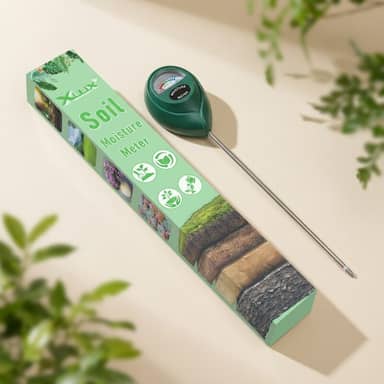
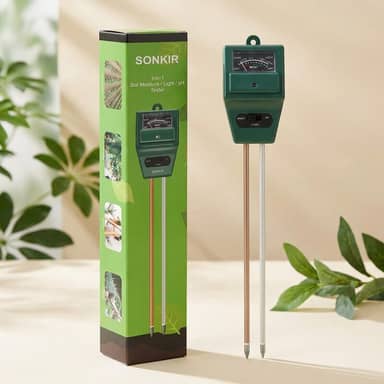
The most common way to kill a plant is watering by habit instead of by need. The surface of the soil dries first and dries fastest, so a dry top inch tells you almost nothing about whether the roots, several inches down, are parched or sitting in water. A moisture meter settles the question in seconds by probing the root zone directly, which is why it is one of the cheapest tools that improves results.
Different crops want different moisture; tomatoes like consistent even watering, while many herbs prefer to dry out between drinks. A meter lets you match your watering to each plant instead of guessing, and pairing it with your planting calendar keeps both timing and watering on track.
How a moisture meter works (and what it does not measure)
Most affordable garden moisture meters are conductivity probes. The metal tip senses how readily the soil conducts a small current, which tracks closely with how wet the soil is, and the meter translates that into a simple dry-to-wet dial reading. Crucially, these meters need no batteries, because the soil itself completes the circuit.
The reading shows relative moisture, not an absolute water percentage. Salty or heavily fertilized soil can read wetter than it is because salts increase conductivity. In ordinary garden and potting soil, the probe is accurate enough to help you decide when to water.
Best overall: XLUX T10
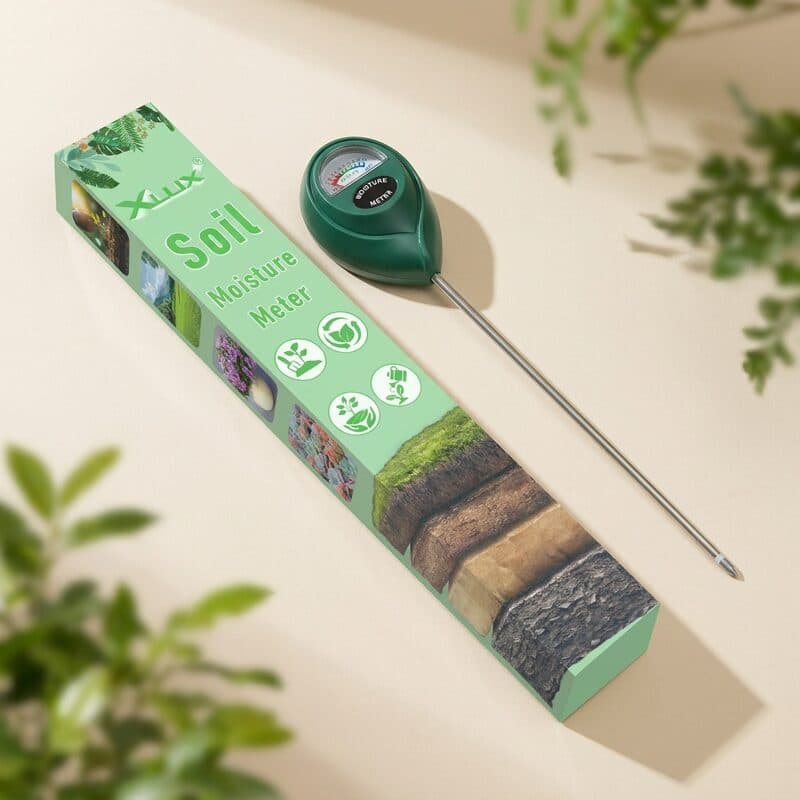
Best overall
XLUX T10 Soil Moisture Meter
Best for: Houseplant and container gardeners who want a simple, reliable, battery-free way to know when to water.
Keep in mind: Single-function: measures moisture only, not pH or light
Amazon price as of the checked date, subject to change. The price on Amazon at checkout applies.
Full research
- Function
- Soil moisture only
- Readout
- 10-point analog dial
- Power
- No batteries required
- Probe length
- Approx. 8 in
The XLUX T10 is a battery-free single-function soil moisture meter with a clear 10-point analog dial, giving an instant root-zone moisture reading that helps prevent over- and under-watering in pots and beds.
This catalog-wide research score is separate from this guide's use-case ranking. How we research
Strengths
- No batteries or electronics means almost nothing can fail
- Clear 10-point dial gives an instant, easy-to-read moisture level
- Dependable for the price and a top-rated pick for preventing watering mistakes
Weaknesses
- Single-function: measures moisture only, not pH or light
- Reads soil conductivity, so very salty soils can skew the reading
Sprout Score breakdown
Best for
Houseplant and container gardeners who want a simple, reliable, battery-free way to know when to water.
Owner rating snapshot
Amazon · 145 reviews · 4.5 stars
The XLUX T10 does one thing and does it well. It is a single-function moisture probe with a clear 10-point analog dial that gives an instant read of root-zone moisture in pots and beds, and because it has no batteries or electronics, there is almost nothing to fail. You push the roughly 8-inch probe into the soil near the roots, read the dial, and water accordingly. It is consistently one of the most positively reviewed garden meters for exactly this reason: it is simple and it is dependable.
That simplicity comes with limits. It measures moisture only, with no pH or light reading, and its conductivity probe can read high in very salty soils. For the core job of knowing when to water, it is a near-foolproof first tool. You can check current pricing on the XLUX T10 before buying.
Best value 3-in-1: Sonkir MS02
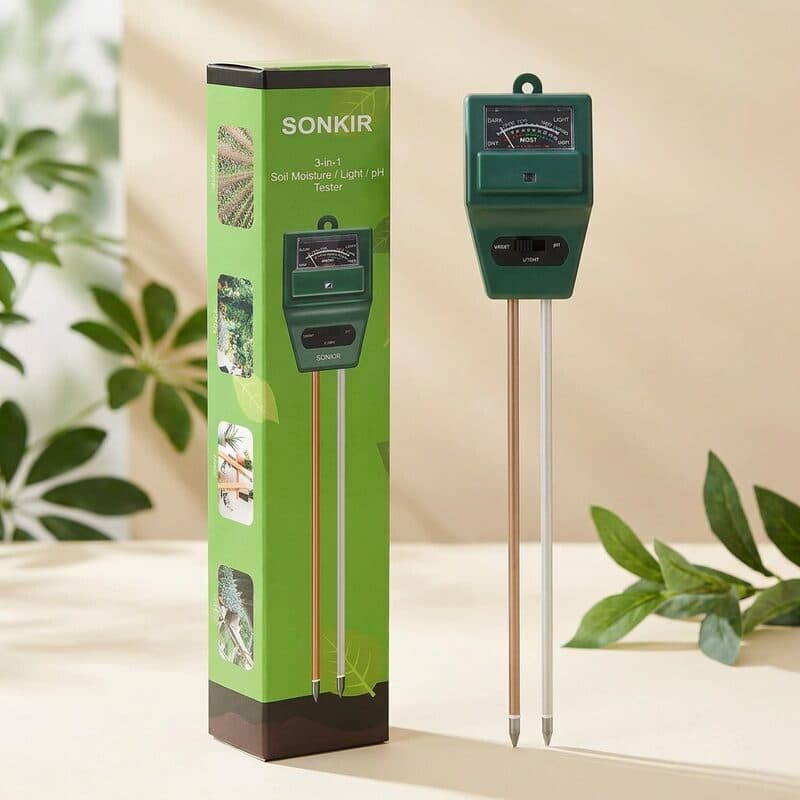
Best value
Sonkir MS02 3-in-1 Soil Meter (Moisture, Light, pH)
Best for: Gardeners who want a cheap all-in-one probe for quick moisture, light, and ballpark pH checks across many plants.
Keep in mind: pH reading is approximate and not a substitute for a real soil test
Amazon price as of the checked date, subject to change. The price on Amazon at checkout applies.
Full research
- Functions
- Moisture, light, pH
- Readout
- Analog dial with mode switch
- Power
- No batteries required
- Length
- Approx. 11 in
The Sonkir MS02 is a battery-free 3-in-1 soil meter that reads moisture, light, and approximate pH on a single switchable dial, serving as a quick all-round check for placing and watering plants indoors and out.
This catalog-wide research score is separate from this guide's use-case ranking. How we research
Strengths
- Three readings (moisture, light, pH) in one inexpensive battery-free tool
- Light meter helps place plants where they get the right exposure
- Long probe reaches the root zone in pots and beds
Weaknesses
- pH reading is approximate and not a substitute for a real soil test
- Thin sensing tips and basic plastic housing limit long-term durability
Sprout Score breakdown
Best for
Gardeners who want a cheap all-in-one probe for quick moisture, light, and ballpark pH checks across many plants.
Owner rating snapshot
Amazon · 463 reviews · 4.1 stars
The Sonkir MS02 packs three readings into one sub-$15, battery-free tool: soil moisture, light level, and a rough pH, selected on a single mode switch. The light meter is handy for placing plants where they get the right exposure, and the long roughly 11-inch probe reaches the root zone in deeper pots and beds. For a gardener who wants a quick all-round check across many different plants, it is an easy, low-risk pickup.
The pH function is approximate and cannot replace a proper soil test. Thin sensing tips and a basic plastic housing also limit long-term durability. Like the XLUX, it reads relative rather than absolute moisture. Choose it for quick checks, not precise measurements. You can compare current pricing on the Sonkir MS02 here.
How to choose a soil moisture meter
A few points cover the decision.
Single-function or 3-in-1. A dedicated moisture meter like the XLUX is the more reliable choice for the one reading you take most often, with fewer parts to fail. A 3-in-1 like the Sonkir trades a little durability for the convenience of light and pH readings in the same tool. Pick based on whether you value rugged simplicity or extra data.
Battery-free is a feature. Conductivity probes that need no batteries cannot die at the moment you want to use them, and there is no electronics to corrode. For garden use, battery-free is a genuine advantage, not a compromise.
Treat the pH reading as a hint, not a verdict. The pH function on cheap 3-in-1 meters is approximate. Use it to spot a rough trend, and if pH matters for your crop, confirm with a dedicated soil test.
Mind the salts. Conductivity meters can read high in heavily fertilized or salty soil. If a reading seems oddly wet right after feeding, that is why; wait and re-check.
| Product | Price | Best for | Buy |
|---|---|---|---|
| XLUX T10 Soil Moisture Meter#1 · BEST OVERALL | Typical price range · Under $15 | Houseplant and container gardeners who want a simple, reliable, battery-free way to know when to water. | Shop Amazon |
| Sonkir MS02 3-in-1 Soil Meter (Moisture, Light, pH)#2 · BEST VALUE | Typical price range · Under $15 | Gardeners who want a cheap all-in-one probe for quick moisture, light, and ballpark pH checks across many plants. | Shop Amazon |
Frequently asked questions
Are cheap soil moisture meters accurate?
For everyday watering decisions, yes. Inexpensive conductivity probes reliably tell you whether the root zone is dry, moist, or wet, which is what most watering choices come down to. They report a relative level rather than an exact water percentage, and very salty soil can skew the reading high, but for knowing when to water a pot or bed they are accurate enough.
Do soil moisture meters need batteries?
Most affordable garden moisture meters, including the XLUX T10 and Sonkir MS02, need no batteries. They work by sensing how well the soil conducts a small current, and the soil itself completes the circuit. That makes them dependable, since there are no batteries to die and no electronics to corrode at the moment you want a reading.
How accurate is the pH function on a 3-in-1 soil meter?
The pH reading on a cheap 3-in-1 meter is approximate and best treated as a rough hint, not a precise figure. It can flag whether soil leans acidic or alkaline, but it is not a substitute for a proper soil test. If pH matters for your crop, confirm with a dedicated test kit or a lab.
Where on the plant should I insert the moisture probe?
Insert the probe into the root zone, several inches deep, near the plant but not jammed against the stem or main roots. The surface dries first and fastest, so a shallow reading is misleading. In a larger pot or bed, check two or three spots, since moisture varies across the container, and wipe the probe clean and dry afterward.
Our recommendation
Buy the XLUX T10 if you want the most reliable single-function moisture meter, with nothing to fail and a clear dial that answers the only question most gardeners need answered. Choose the Sonkir MS02 3-in-1 if you want light and a ballpark pH alongside moisture in one cheap, battery-free tool. Either way, read at root depth, water deeply when it says dry, and keep your timing aligned with the planting calendar.