Our recommendations
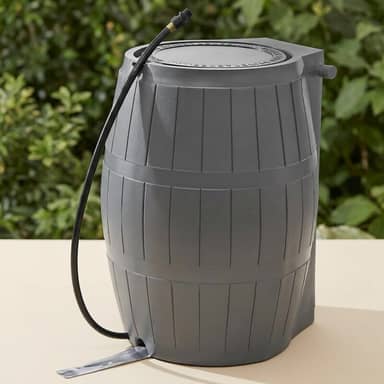
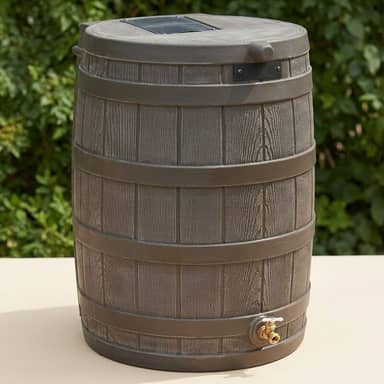

A rain barrel turns your roof into a water source for the garden. A single half-inch of rain on a typical 1,000-square-foot roof sheds hundreds of gallons, and a barrel at the bottom of a downspout captures it for free. That water is soft, unchlorinated, and at ambient temperature, which is exactly what most plants prefer. During a dry spell, having 50 gallons on hand for the tomatoes and the rest of the beds is the difference between watering on your schedule and watering on the utility's.
The category looks simple, but the details that decide whether a barrel is a pleasure or a nuisance are the spigot, the overflow handling, the debris screen, and whether you can link barrels for more storage. We sorted the field by those features rather than by looks alone.
Best value: FCMP Outdoor RC4000 50-Gallon Rain Barrel
Best value
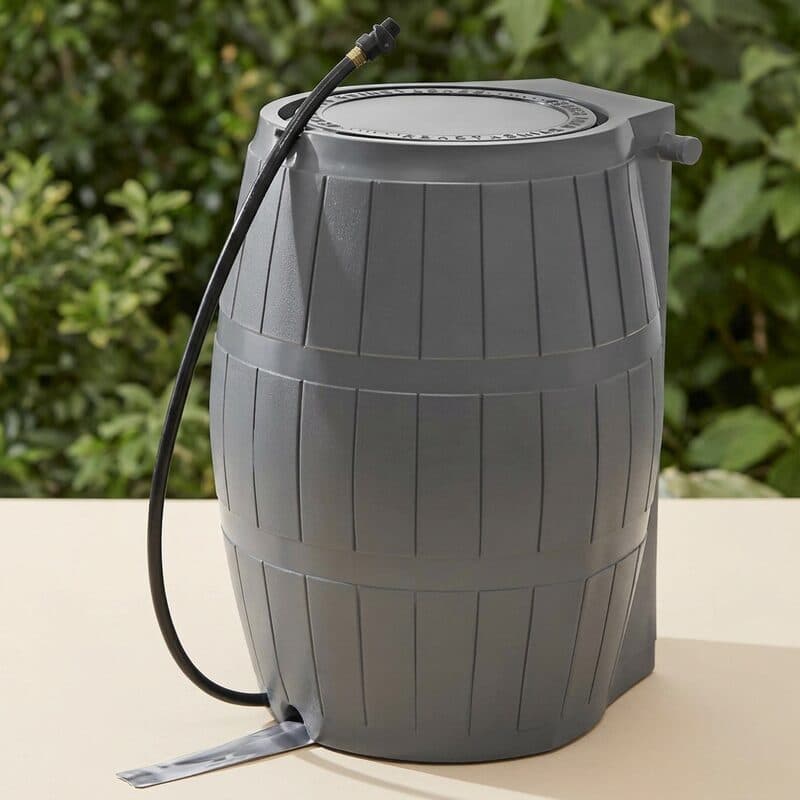
FCMP Outdoor RC4000 Rain Catcher 50-Gallon Rain Barrel
Best for: Homeowners who want an affordable, space-saving 50-gallon barrel that comes ready to install and can be linked for more capacity later.
Keep in mind: Included spigot is plastic and many owners upgrade it to brass
Amazon price as of the checked date, subject to change. The price on Amazon at checkout applies.
Full research
- Capacity
- 50 US gallons (189 L)
- Material
- UV-resistant polyethylene
- Shape
- Flat back, sits flush to wall
- Top
- Corrosion-proof debris screen
FCMP Outdoor's RC4000 is a 50-gallon flat-back rain barrel in UV-resistant poly, with a corrosion-proof debris screen, a thumb-valve hose outlet, and an included overflow hose and linking kit for chaining barrels.
This catalog-wide research score is separate from this guide's use-case ranking. How we research
Strengths
- Flat back sits flush against a wall, saving space and looking tidy
- Wide corrosion-proof debris screen keeps leaves and insects out and is easy to rinse
- Linking kit lets you chain multiple barrels to expand storage capacity
Weaknesses
- Included spigot is plastic and many owners upgrade it to brass
- Flat back can flex slightly when the barrel is completely full
Sprout Score breakdown
Best for
Homeowners who want an affordable, space-saving 50-gallon barrel that comes ready to install and can be linked for more capacity later.
Owner rating snapshot
Amazon · 3 reviews · 4.5 stars
The FCMP Outdoor RC4000 is the barrel we point most gardeners to first because it arrives ready to work and costs less than barrels with fewer features. The 50-gallon tank has a flat back that sits flush against a wall, so it takes up little space, and the wide corrosion-proof screen on top keeps leaves and insects out while letting water in. Critically, it ships with the overflow hose, a hose clip, and a linking kit, so you can chain a second barrel later when you decide 50 gallons is not enough.
The included spigot is plastic, and many owners eventually replace it with an inexpensive brass one. The flat back can also flex slightly when the barrel is full. You can check the current price on the FCMP RC4000 here.
Best brass spigot: Good Ideas Rain Wizard 50
Best upgrade
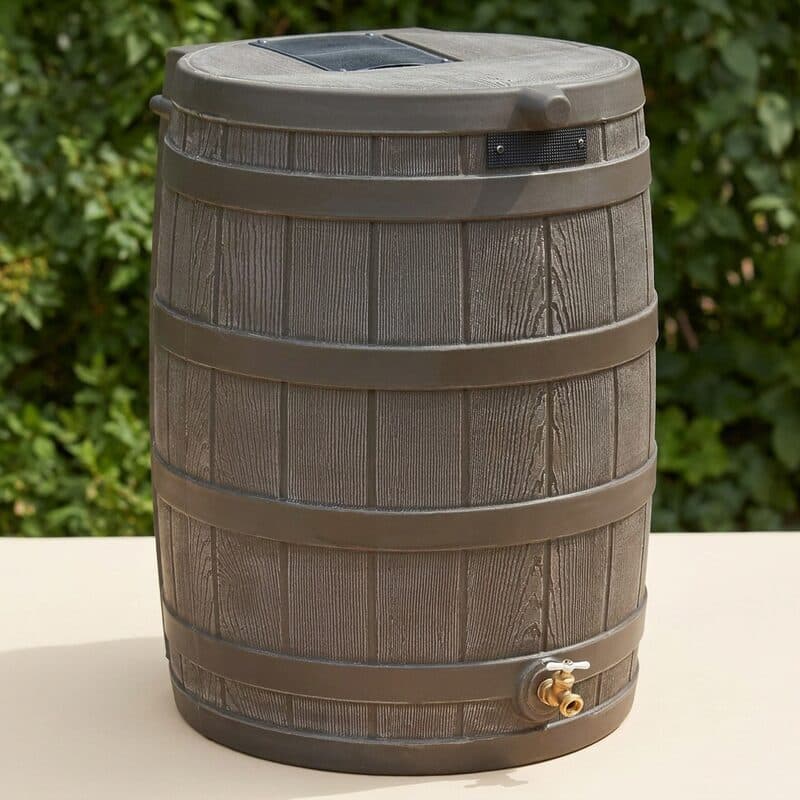
Good Ideas Rain Wizard 50-Gallon Rain Barrel
Best for: Gardeners who want a durable, good-looking 50-gallon barrel that arrives with a brass spigot and is ready to fill a watering can.
Keep in mind: Screened lid needs periodic clearing in heavy leaf-fall areas
Amazon price as of the checked date, subject to change. The price on Amazon at checkout applies.
Full research
- Capacity
- 50 gallons
- Dimensions
- Approx. 23 in W x 22 in D x 30 in H
- Material
- BPA-free molded resin
- Spigot
- 3/4 in brass, included
Good Ideas' Rain Wizard 50 is a 50-gallon flat-back barrel in BPA-free molded resin, with a screened top and an included 3/4-inch brass spigot set high enough to fill a watering can.
This catalog-wide research score is separate from this guide's use-case ranking. How we research
Strengths
- Ships with a real 3/4-inch brass spigot rather than a plastic valve
- BPA-free molded resin body shrugs off impacts and weather
- Spigot height leaves room to slide a watering can underneath
Weaknesses
- Screened lid needs periodic clearing in heavy leaf-fall areas
- Costs a little more than the most basic 50-gallon barrels
Sprout Score breakdown
Best for
Gardeners who want a durable, good-looking 50-gallon barrel that arrives with a brass spigot and is ready to fill a watering can.
Owner rating snapshot
Amazon · 31 reviews · 4.3 stars
If the plastic-spigot caveat on the value pick bothers you, the Good Ideas Rain Wizard 50 solves it out of the box. It is a 50-gallon flat-back barrel in BPA-free molded resin that ships with a real 3/4-inch brass spigot, the part owners most often praise. The spigot sits high enough on the body that you can slide a watering can underneath it, which is a small thing that you will appreciate every single time you fill one.
The molded resin body is sturdy and shrugs off impacts and weather, and the finish looks more finished than a plain utility drum. The screened lid does need occasional clearing in heavy leaf-fall areas, and it costs a little more than the most basic barrels, but the brass spigot and the durable body close most of that gap. You can compare the Rain Wizard 50's price against the others here.
Best capacity and looks: Algreen Cascata 65-Gallon Rain Barrel

Best capacity
Algreen Cascata 65-Gallon Rain Barrel with Planter
Best for: Gardeners who want higher collection capacity in a barrel that looks like decorative pottery and adds a planter to the top.
Keep in mind: Tall and heavy once filled, so it needs a level, stable base
Amazon price as of the checked date, subject to change. The price on Amazon at checkout applies.
Full research
- Capacity
- 65 gallons
- Dimensions
- Approx. 24.5 in diameter x 47 in H
- Material
- Roto-molded resin (pottery look)
- Top
- Built-in planter
Algreen's Cascata is a 65-gallon roto-molded resin rain barrel with a pottery-look finish, a built-in planter top, and a double-spigot system that connects to standard downspouts for high-capacity, good-looking rainwater collection.
This catalog-wide research score is separate from this guide's use-case ranking. How we research
Strengths
- Built-in planter top and pottery-look finish let it double as a decorative garden feature
- 65-gallon capacity holds more than the common 50-gallon barrels
- Roto-molded resin construction is sturdier than thin blow-molded barrels
Weaknesses
- Tall and heavy once filled, so it needs a level, stable base
- Costs more than plain utility barrels of similar capacity
Sprout Score breakdown
Best for
Gardeners who want higher collection capacity in a barrel that looks like decorative pottery and adds a planter to the top.
Choose the Algreen Cascata when you need more storage without the look of a utility tank. It holds 65 gallons, compared with the common 50-gallon size, and its roto-molded resin body resembles a pottery urn. The top includes a planter for flowers or herbs, and two spigots provide separate draw points.
The size brings two considerations. The barrel stands about 47 inches tall and is heavy once filled, so it needs a level, stable base (a paver or stand under it is wise). And it costs more than plain utility barrels, with the premium going to the larger capacity, the planter, and the decorative finish. If you want collection capacity that does not look like a collection tank, this is the one.
How to choose a rain barrel
The decision usually comes down to five features.
Capacity and roof catchment. Roofs produce more water than most barrels can hold, so your barrel will fill in a single decent storm. A 50-gallon barrel suits a small to medium garden; step up to 65 gallons or plan to link multiple barrels if you water a larger plot or want a reserve through a dry stretch. The right answer is usually more capacity than you first guess.
Spigot quality and height. A brass spigot outlasts a plastic one and is less likely to drip. Spigot height matters too: a spigot set high enough to fit a watering can underneath saves you from awkward tilting or a separate hose every time you fill.
Overflow handling. Once a barrel is full, the rest of the water has to go somewhere. A built-in overflow port and a hose that directs excess away from your foundation is essential, not optional. Without it, a full barrel simply backs up and floods the spot it sits on.
Debris screen. A screened top keeps leaves, debris, and mosquitoes out and keeps the water usable. Plan to rinse it periodically, especially in fall when leaves drop.
Linking ability. A barrel that ships with or accepts a linking kit lets you chain a second (or third) barrel later, expanding storage without replacing what you have. If you suspect you will want more capacity, buy a barrel that links.
| Product | Price | Best for | Buy |
|---|---|---|---|
| FCMP Outdoor RC4000 Rain Catcher 50-Gallon Rain Barrel#1 · BEST VALUE | Typical price range · $90-$120 | Homeowners who want an affordable, space-saving 50-gallon barrel that comes ready to install and can be linked for more capacity later. | Shop Amazon |
| Good Ideas Rain Wizard 50-Gallon Rain Barrel#2 · BEST UPGRADE | Typical price range · $100-$130 | Gardeners who want a durable, good-looking 50-gallon barrel that arrives with a brass spigot and is ready to fill a watering can. | Shop Amazon |
| Algreen Cascata 65-Gallon Rain Barrel with Planter#3 · BEST CAPACITY | Typical price range · $130-$180 | Gardeners who want higher collection capacity in a barrel that looks like decorative pottery and adds a planter to the top. | Search Amazon |
Frequently asked questions
How many gallons does a rain barrel hold, and is that enough?
Most home rain barrels hold 50 to 65 gallons. A single half-inch of rain on a 1,000-square-foot roof produces hundreds of gallons, so one barrel fills in a single storm and is enough for a small to medium garden. If you water a larger plot or want a reserve for dry spells, choose a higher-capacity barrel or link multiple barrels together.
Should a rain barrel have a brass or plastic spigot?
A brass spigot lasts longer and is less likely to drip or crack than a plastic one. Some barrels ship with brass; others come with plastic that you can upgrade cheaply. Spigot height also matters: one set high enough to fit a watering can underneath makes filling far easier.
What happens when a rain barrel overflows?
Once full, excess water exits through the overflow port. A good barrel includes an overflow hose so you can direct that water away from your foundation toward a garden bed or drainage area. Without a managed overflow, a full barrel backs up and pools where it sits, which can defeat the purpose of capturing the runoff.
Can I link two rain barrels together for more capacity?
Yes. Many barrels ship with or accept a linking kit that connects them so they fill and drain as one larger reservoir. This is the simplest way to expand storage without replacing your existing barrel. If you expect to want more capacity later, choose a barrel designed to link.
Is rainwater safe to use on a vegetable garden?
Roof-harvested rainwater is widely used for garden irrigation and is well suited to watering soil around vegetables, ornamentals, and lawns. Apply it at soil level rather than spraying the edible parts of food crops directly, keep the barrel screened and covered to block debris and mosquitoes, and let beds dry between waterings.
Our recommendation
Buy the FCMP Outdoor RC4000 if you want a complete, space-saving 50-gallon barrel at the best price, step up to the Good Ideas Rain Wizard 50 for a brass spigot and a more finished look, and choose the Algreen Cascata if you want 65 gallons in a barrel that doubles as a decorative planter. Whichever you pick, manage the overflow away from your foundation, keep the screen clear, and you will have soft, free water on hand the next time the planting calendar has your beds going in.