Our recommendations
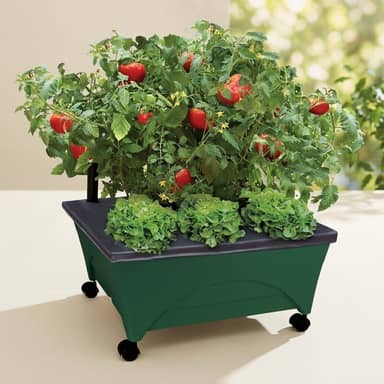
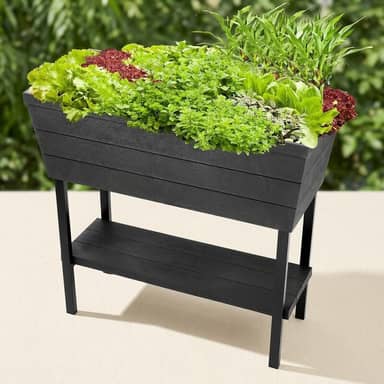

Self-watering planters are the answer for anyone who travels, forgets to water, or simply wants steadier moisture than hand-watering delivers. Instead of pouring water on top and hoping, you fill a reservoir at the base, and the plant draws up exactly what it needs through a wicking system. The result is fewer dead plants, less daily fuss, and noticeably better yields on thirsty crops. The category ranges from cheap plastic boxes to handsome elevated beds, so the right pick depends on what you grow and where it sits.
How a self-watering planter actually works
It helps to understand the mechanism before you buy, because it explains both the benefits and the limits. Every self-watering planter has the same three parts:
The three-part system
A water reservoir
A wicking path
An overflow port
You fill the reservoir through a tube or opening, and the soil stays evenly moist as the plant drinks. Because moisture comes from below, the surface stays drier (which discourages fungus gnats and some diseases) and you water far less often, often once a week instead of daily.
Best overall: City Pickers self-watering planter
Best overall
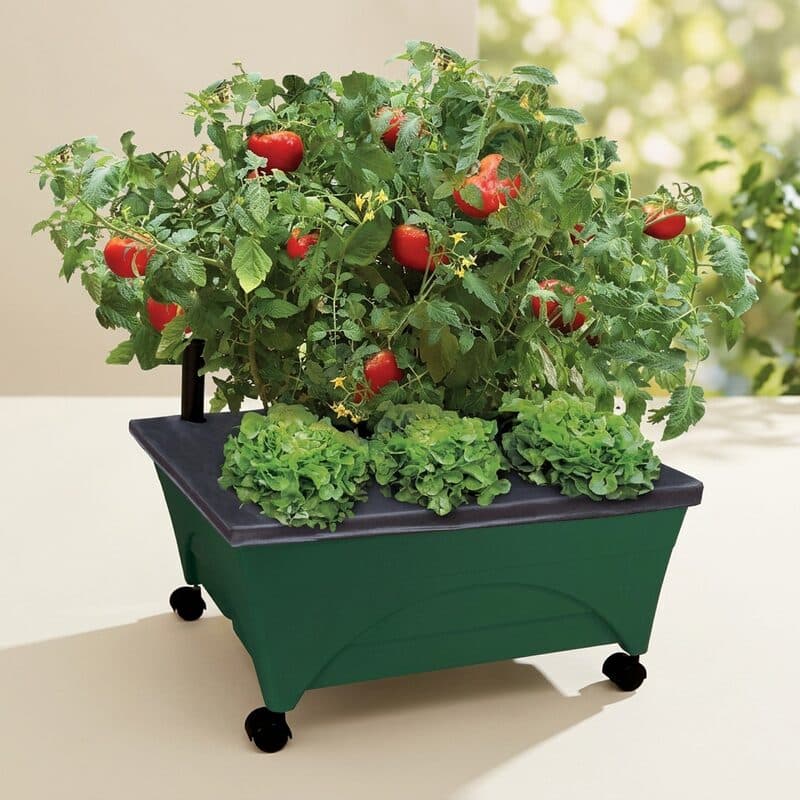
City Pickers Self-Watering Raised Garden Planter
Best for: Apartment and patio growers who want a self-watering box for a couple of plants.
Keep in mind: Small for large or sprawling plants
Amazon price as of the checked date, subject to change. The price on Amazon at checkout applies.
Full research
- Material
- Plastic
- Watering
- Bottom water reservoir
- Mobility
- Caster wheels included
- Use
- Patio vegetables and herbs
City Pickers is a compact self-watering planter kit built for patio vegetable growing. The bottom reservoir buffers watering for small-space gardeners, though it is on the small side for large or sprawling plants.
This catalog-wide research score is separate from this guide's use-case ranking. How we research
Strengths
- Self-watering reservoir eases watering
- Complete kit with casters included
- Compact footprint for patios
Weaknesses
- Small for large or sprawling plants
- Plastic build is functional, not premium
Sprout Score breakdown
Best for
Apartment and patio growers who want a self-watering box for a couple of plants.
Owner rating snapshot
Amazon · 223 reviews · 4.6 stars
The City Pickers planter is built for vegetables, not just decoration. It pairs a large reservoir with a sizable soil area, a clear water-level indicator so you know exactly when to refill, and an overflow that prevents waterlogging. The footprint is big enough for a tomato plus companions or a full salad bed, which is why it edges out prettier but smaller options.
This is the pick if your priority is growing food on a deck or patio with minimal daily maintenance. You can check the current price on the City Pickers planter and see what it ships with.
Best value: Keter Urban Bloomer self-watering planter
Best value
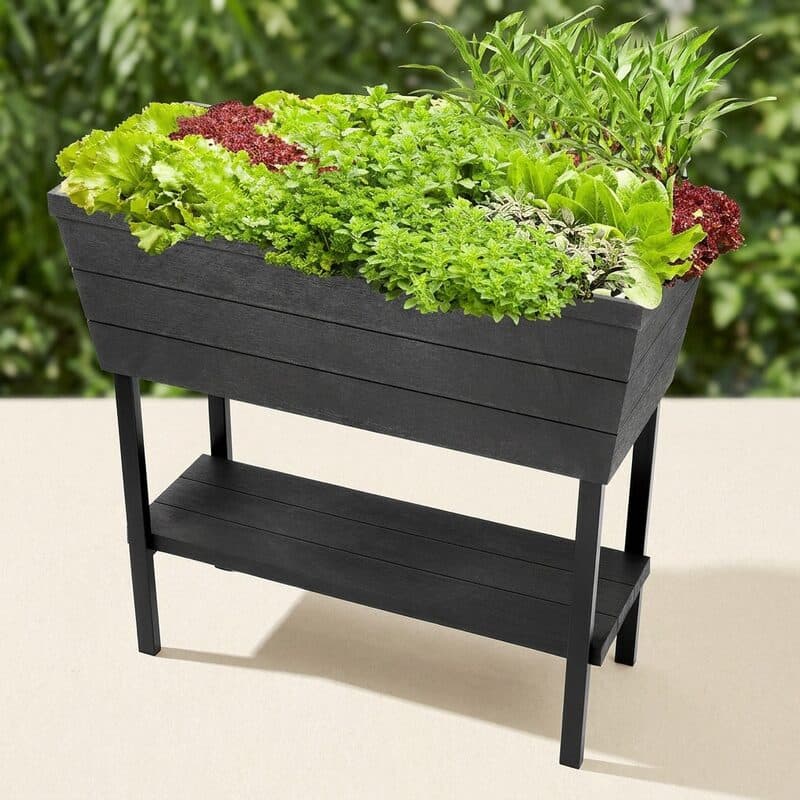
Keter Urban Bloomer Self-Watering Resin Planter
Best for: Patio gardeners who want a tidy, durable self-watering planter for herbs and flowers.
Keep in mind: Modest soil volume limits big crops
Amazon price as of the checked date, subject to change. The price on Amazon at checkout applies.
Full research
- Material
- Weather-resistant resin
- Watering
- Self-watering reservoir
- Finish
- Wood-look texture
- Capacity
- Around 12.7 gal soil
Keter's Urban Bloomer is a good-looking resin planter with a built-in self-watering reservoir and a wood-look finish that holds up outdoors. Soil volume is modest, so it suits herbs, flowers, and compact vegetables.
This catalog-wide research score is separate from this guide's use-case ranking. How we research
Strengths
- Durable weather-resistant resin
- Self-watering reservoir built in
- Attractive wood-look finish for patios
Weaknesses
- Modest soil volume limits big crops
- Less natural look than real wood
Sprout Score breakdown
Best for
Patio gardeners who want a tidy, durable self-watering planter for herbs and flowers.
Owner rating snapshot
Amazon · 3 reviews · 4.5 stars
The Keter Urban Bloomer is the pick when you want a self-watering bed that looks like furniture without paying a premium. It stands on legs at a comfortable height, has a woven-resin finish that suits a modern balcony, and includes a self-watering reservoir with a level gauge. The soil volume is smaller than the City Pickers, so it suits herbs, greens, and one compact fruiting plant rather than a sprawling tomato.
For renters and balcony gardeners who care how the planter looks, the value here is strong. You can compare the Keter Urban Bloomer against the overall pick.
Best for patios: Vego Garden elevated metal planter

Best for patios
Vego Garden Rolling Elevated Metal Garden Bed
Best for: Deck and accessibility gardeners who want a movable, long-lasting standing bed.
Keep in mind: Costs well more than wood standing planters
Amazon price as of the checked date, subject to change. The price on Amazon at checkout applies.
Full research
- Material
- Aluzinc-coated steel
- Type
- Elevated rolling planter
- Watering
- Self-watering wicking-cell reservoir
- Mobility
- Lockable caster wheels
Vego's elevated metal bed combines Aluzinc construction, a wicking-cell self-watering reservoir, and a waist-high rolling frame. Lockable casters let you move it for sun or storage while the reservoir redistributes collected water to the root zone.
This catalog-wide research score is separate from this guide's use-case ranking. How we research
Strengths
- Durable Aluzinc steel at standing height
- Wicking-cell reservoir stores and redistributes water
- Lockable casters make it movable
- Better longevity than wood elevated beds
Weaknesses
- Costs well more than wood standing planters
- Assembly can be fiddly for one person
Sprout Score breakdown
Best for
Deck and accessibility gardeners who want a movable, long-lasting standing bed.
Vego's elevated metal planter uses coated steel in a waist-high bed with a reservoir at the base. The height reduces bending, the metal lasts longer than resin, and the larger growing area supports full-size crops. It is the heaviest option here and suits a permanent patio setup.
Choose this if you have the space and want a planter that doubles as a long-term garden feature rather than a seasonal container. It costs more than the plastic options, and that buys durability, capacity, and a back-saving height.
How to choose a self-watering planter
Match the size to the crop. Reservoir and soil volume decide what you can grow. Small planters suit herbs, lettuce, and greens; medium planters handle peppers and compact tomatoes; large elevated beds support full-size tomatoes, squash, and multi-plant arrangements. A planter that is too small will drain its reservoir in a day during a heat wave, defeating the purpose.
Look for a water-level indicator. The best self-watering planters tell you when the reservoir is low with a float gauge or sight tube. Without one, you are guessing, and an empty reservoir on a hot week can stress plants fast.
Confirm there is an overflow. A proper overflow port drains excess water so roots never sit waterlogged. During heavy rain, an outdoor planter without overflow can flood the root zone. Every pick here has one.
Think about weight and placement. Plastic and resin planters are light and easy to move, which matters on a balcony with weight limits. Metal elevated beds are heavy and permanent. On a balcony, check your weight allowance, because soil plus a full reservoir adds up quickly.
| Product | Price | Best for | Buy |
|---|---|---|---|
| City Pickers Self-Watering Raised Garden Planter#1 · BEST OVERALL | Typical price range · $25-$50 | Apartment and patio growers who want a self-watering box for a couple of plants. | Shop Amazon |
| Keter Urban Bloomer Self-Watering Resin Planter#2 · BEST VALUE | Typical price range · $50-$100 | Patio gardeners who want a tidy, durable self-watering planter for herbs and flowers. | Shop Amazon |
| Vego Garden Rolling Elevated Metal Garden Bed#3 · BEST FOR PATIOS | Typical price range · $150-$250 | Deck and accessibility gardeners who want a movable, long-lasting standing bed. | Search Amazon |
Frequently asked questions
What can you grow in a self-watering planter?
Almost any container vegetable thrives in one, and thirsty crops do especially well because the steady moisture suits them. Tomatoes, peppers, cucumbers, lettuce, and herbs like basil are excellent choices. Match the planter size to the crop: greens and herbs in small planters, fruiting plants in medium to large ones.
How often do you fill a self-watering planter?
It depends on the plant size, weather, and reservoir capacity, but most planters need refilling roughly once a week, far less than daily hand-watering. In peak summer heat with a large, thirsty plant, you may refill every few days. A water-level indicator removes the guesswork.
Do self-watering planters work on a balcony or patio?
Yes, they are ideal for both. The reservoir means you can skip a few days without your plants suffering, which suits busy or traveling gardeners. Just check your balcony's weight limit before choosing a large metal planter, since soil plus a full reservoir gets heavy.
Can self-watering planters overwater plants?
Not if they are designed correctly. A proper overflow port drains any excess so the soil never sits in standing water. The bigger early risk is the opposite: filling the reservoir before young roots have grown down to reach it, so water from the top for the first few weeks after planting.
What soil should I use in a self-watering planter?
Use a light, fluffy potting mix based on peat or coconut coir, never dense garden soil or topsoil. The wicking system relies on capillary action to pull water upward, and heavy soil blocks it. A quality container mix keeps the reservoir feeding the roots as intended.
Our recommendation
Pick the City Pickers planter for the best all-around food-growing container, save with the Keter Urban Bloomer if looks and budget lead your decision, and step up to the Vego elevated metal planter for a permanent, back-friendly patio bed. Whatever you choose, use a light potting mix, water from the top until roots establish, and line up your crops with the planting calendar.