Our recommendations
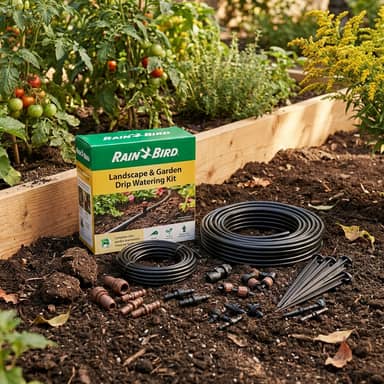
Rain Bird Drip Irrigation Landscape and Garden Watering Kit
Why this pick →
Raindrip Automatic Watering Kit with Timer (R560DP)
Why this pick →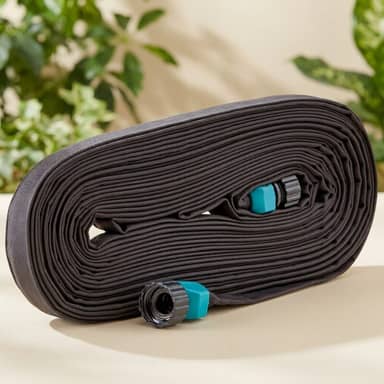
Gilmour Flat Weeper Soaker Hose
Why this pick →
Gardener's Supply Company Snip-n-Drip Soaker System
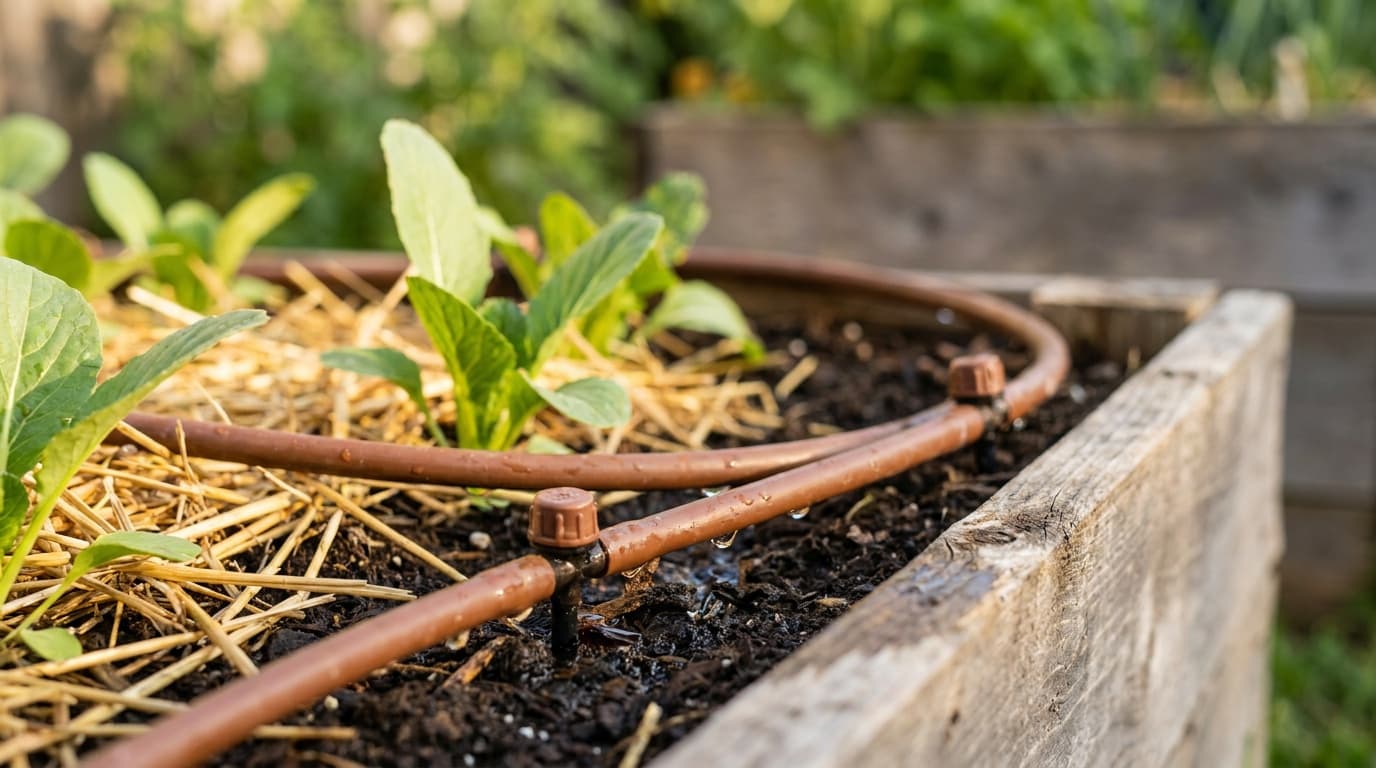
Why this pick →Choose between a soaker hose and drip irrigation by cost, setup time, and the control you need. A soaker hose releases water along its full porous length. A drip system uses a main line with an emitter at each plant, which gives you more control over placement. Both keep leaves dry and direct water toward roots instead of paths.
Whichever route you choose, pair it with a timer and check your watering against your crops' needs. Heat-loving plants like tomatoes and peppers want deep, consistent moisture, and your watering schedule should track the season. Run your ZIP through the planting calendar so you are watering on a real timeline, not a guess.
Best for precision: Rain Bird drip irrigation kit
Best overall
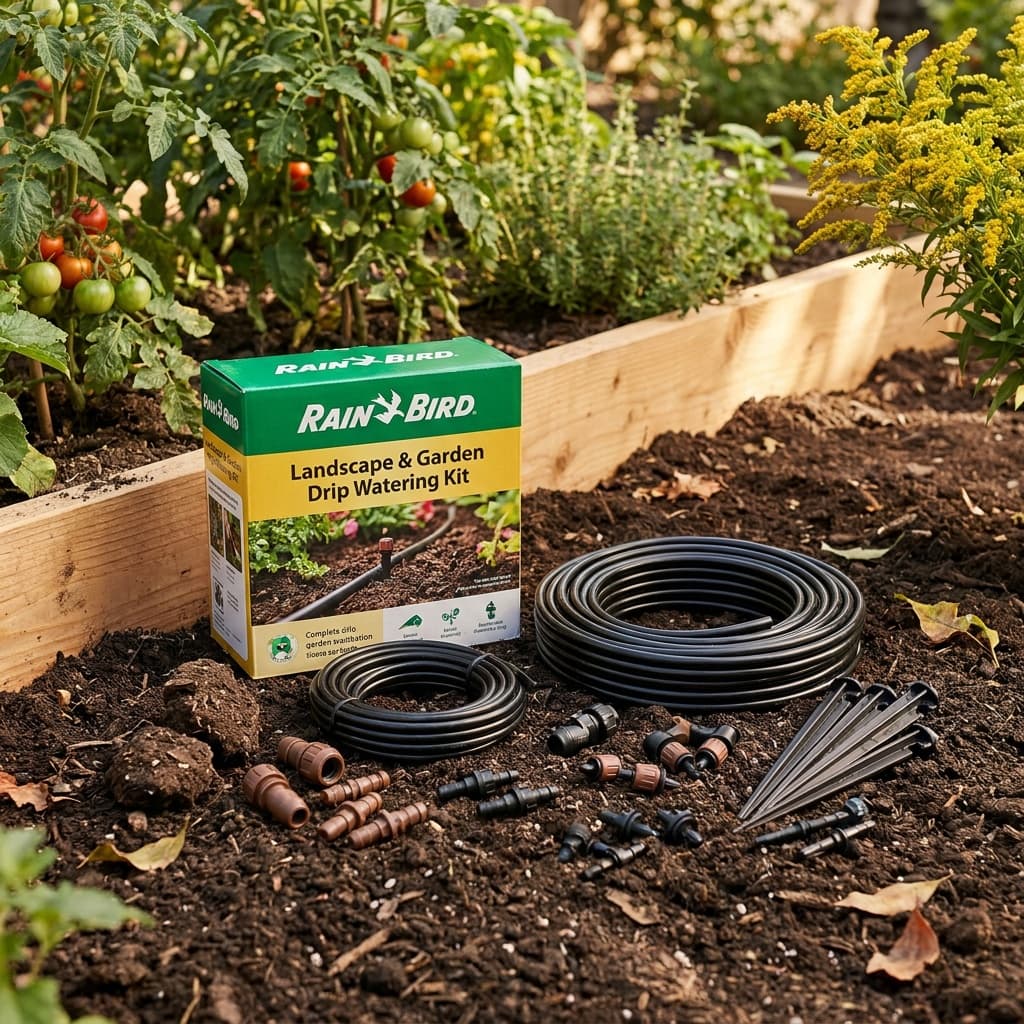
Rain Bird Drip Irrigation Landscape and Garden Watering Kit
Best for: Gardeners building an expandable drip system across rows and landscape beds.
Keep in mind: No timer included; automation requires a separate purchase
Amazon price as of the checked date, subject to change. The price on Amazon at checkout applies.
Full research
- Type
- Landscape and garden drip kit
- Tubing
- 1/4 in distribution tubing
- Emitters
- Adjustable and fixed-rate emitters
- Connection
- Standard hose faucet
Rain Bird's drip kit provides quality tubing and emitters from a trusted irrigation brand, designed to expand across rows and landscape beds.
This catalog-wide research score is separate from this guide's use-case ranking. How we research
Strengths
- Modular system expands as the garden grows
- Fittings and emitters from a long-established irrigation brand
- Covers rows and beds, not just containers
Weaknesses
- No timer included; automation requires a separate purchase
- Layout planning takes more effort than a container kit
Sprout Score breakdown
Best for
Gardeners building an expandable drip system across rows and landscape beds.
Owner rating snapshot
Amazon · 925 reviews · 4.5 stars
A true drip system is the most water-efficient way to garden, and Rain Bird is the brand most home growers reach for. The kit gives you the main components (tubing, emitters, fittings, and a pressure regulator) to run a network that places water at each plant. Because every emitter meters a set flow, you can give a thirsty tomato more than a lettuce a foot away, and you waste almost nothing to evaporation or runoff.
The trade-off is setup time. Laying the main line, punching in emitters, and connecting each plant can take an afternoon the first time. Afterward, you can expand and reconfigure the system as the garden grows. You can check current pricing on the Rain Bird kit and add components as your beds multiply.
Best easy drip: Raindrip automatic drip kit

Easiest setup
Raindrip Automatic Watering Kit with Timer (R560DP)
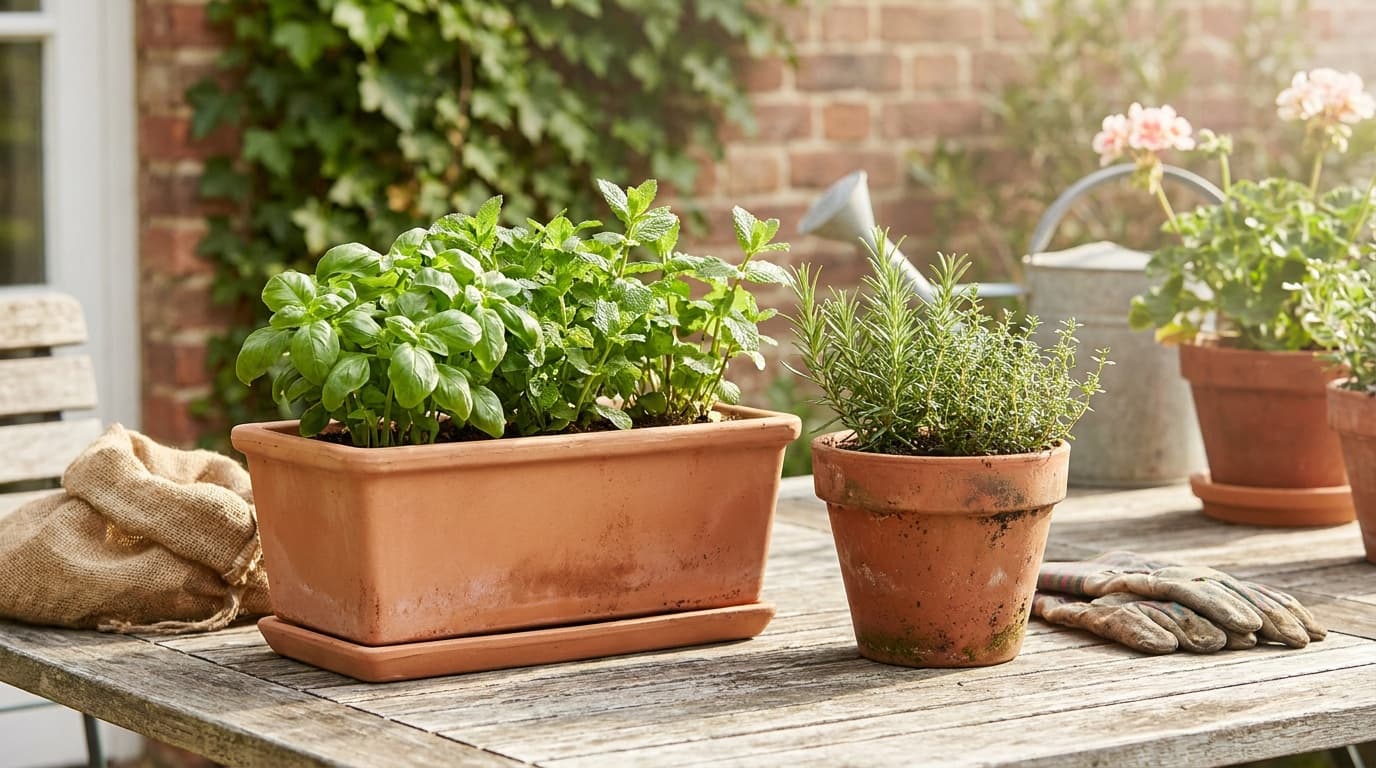
Best for: Container and patio gardeners who want automatic watering with minimal setup.
Keep in mind: Plastic fittings are less rugged than premium components
Amazon price as of the checked date, subject to change. The price on Amazon at checkout applies.
Full research
- Type
- Container and patio drip kit
- Timer
- Battery-powered automatic timer included
- Tubing
- 1/4 in and 1/2 in poly tubing
- Connection
- Standard hose faucet
Raindrip's automatic kit bundles a faucet timer, tubing, and emitters into a beginner-friendly drip system for containers and small plantings.
This catalog-wide research score is separate from this guide's use-case ranking. How we research
Strengths
- Includes a timer, so it automates watering out of the box
- Beginner-friendly assembly with no special tools
- Inexpensive way to test drip irrigation
Weaknesses
- Plastic fittings are less rugged than premium components
- Coverage suits containers and small areas, not large beds
Sprout Score breakdown
Best for
Container and patio gardeners who want automatic watering with minimal setup.
If a full Rain Bird layout sounds like more than you want to manage, the Raindrip automatic kit lowers the barrier. It bundles the tubing, emitters, and an automatic timer in one box, so the system can water on its own from day one. You still get drip's plant-by-plant control and water savings, but with less component-shopping and a built-in schedule.
This is the kit for someone who wants to set it and forget it: a few raised beds or a container cluster watered automatically while you are away. You can compare the Raindrip kit's current price and see what its starter set covers before you expand it.
Best simple soak: Gilmour flat soaker hose
Simplest
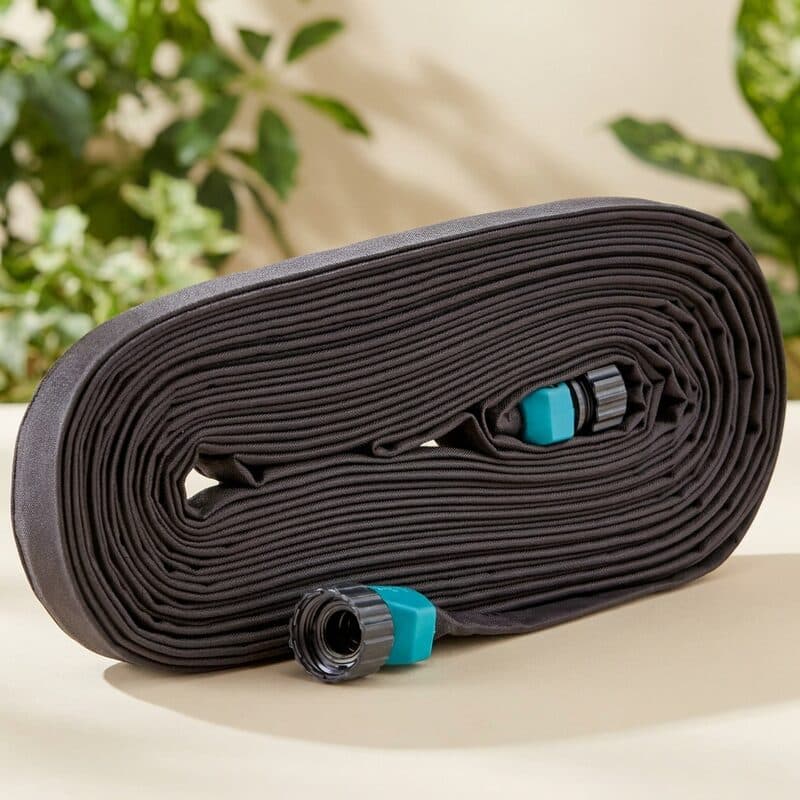
Gilmour Flat Weeper Soaker Hose
Best for: Row and border gardeners who want low-waste, root-zone watering on a budget.
Keep in mind: Even output drops over very long runs and on slopes
Amazon price as of the checked date, subject to change. The price on Amazon at checkout applies.
Full research
- Type
- Flat weeper soaker hose
- Lengths
- Available in multiple lengths
- Delivery
- Seeps along the full length
- Connection
- Standard hose faucet
Gilmour's flat weeper soaker hose seeps water along its length to deliver moisture at the root zone, lying flat along rows and borders.
This catalog-wide research score is separate from this guide's use-case ranking. How we research
Strengths
- Delivers water directly to the root zone with little waste
- Flat profile lies neatly along rows and borders
- Inexpensive and easy to route through a bed
Weaknesses
- Even output drops over very long runs and on slopes
- Should be drained and stored to avoid winter damage
Sprout Score breakdown
Best for
Row and border gardeners who want low-waste, root-zone watering on a budget.
Owner rating snapshot
Amazon · 49 reviews · 4.2 stars
When you want water in the ground with zero assembly, a soaker hose wins. The Gilmour flat soaker lies along a bed or row, weeps water through its full length, and needs nothing but a spigot connection. There are no emitters to punch, no fittings to leak, and nothing to plan. For a single long bed or a tidy row of the same crop, it is the fastest path to even watering.
The limit is control. A soaker waters its entire length at roughly the same rate, so it cannot favor one plant over another, and it is harder to route around irregular layouts. It also tends to deliver less evenly as the run gets longer (the near end soaks more than the far end). For straightforward beds, that is a fine compromise for the simplicity. A flat hose also stores flatter and coils more easily than round soaker hose between seasons.
Best soaker for raised beds: Gardener's Supply Snip-n-Drip

Best for raised beds
Gardener's Supply Company Snip-n-Drip Soaker System
Best for: Raised-bed and elevated-planter gardeners who want a soaker system they can cut and shape to fit an irregular bed layout without special tools.
Keep in mind: Costs more than a plain soaker hose of the same length
Amazon price as of the checked date, subject to change. The price on Amazon at checkout applies.
Full research
- Type
- Cut-to-fit soaker hose with connector kit
- Includes
- Soaker hose, garden hose feeder line, quick-connect couplers, end caps
- Assembly
- Snip to length and click together; no tools
- Best use
- Raised beds, elevated planters, borders
The Gardener's Supply Snip-n-Drip Soaker System is a cut-to-fit soaker hose and quick-connect coupler kit. You snip the soaker hose to length and click sections together to route root-zone watering around raised beds and elevated planters in any shape.
This catalog-wide research score is separate from this guide's use-case ranking. How we research
Strengths
- Snip-to-fit design routes the soaker exactly around a bed's shape
- Quick-connect couplers assemble without tools or clamps
- Delivers water at the root zone, keeping foliage dry
Weaknesses
- Costs more than a plain soaker hose of the same length
- Plastic couplers must be pushed firmly to seat and avoid leaks
Sprout Score breakdown
Best for
Raised-bed and elevated-planter gardeners who want a soaker system they can cut and shape to fit an irregular bed layout without special tools.
Owner rating snapshot
Amazon · 41 reviews · 4.3 stars
The routing limitation is exactly what the Gardener's Supply Snip-n-Drip system is built to solve. You cut the soaker hose to length and click sections together with quick-connect couplers, so instead of one straight run you can wrap the soaker around the shape of a raised bed, jump a gap with plain garden hose to the next bed, and cap the ends. It keeps a soaker's zero-emitter simplicity while borrowing drip's ability to follow an irregular layout.
You pay for that flexibility: the coupler kit costs more than a bare soaker hose of the same length, and the plastic connectors need a firm push to seat and seal. For a cluster of raised beds or elevated planters that a single straight hose cannot serve cleanly, it is the soaker worth the premium. You can check the current price and see what the kit includes before deciding how many bed lengths you need.
Should you use drip irrigation or a soaker hose?
Use drip irrigation for mixed beds, containers, or plant-by-plant control. Use a soaker hose for a simple row or bed that needs even watering with little setup. Four factors settle the choice.
Precision. Drip lets you meter water plant by plant; a soaker waters everything along its length equally. If your bed mixes thirsty and drought-tolerant crops, or you grow in containers of different sizes, drip pays off. If you grow rows of one thing, a soaker is plenty.
Setup effort. A soaker hose takes about five minutes to lay out. A drip system can take an afternoon the first time, though setup gets faster with practice. Choose the amount of setup you are willing to maintain.
Water efficiency. Both are far more efficient than sprinklers. Drip edges out soaker because emitters deliver a precise volume only where a plant is, while a soaker wets the whole strip including bare soil between plants.
Expandability and lifespan. Drip systems are modular: add tubing and emitters as beds multiply, and replace single clogged emitters cheaply. Soaker hoses are simpler but harder to extend cleanly, and the whole hose ages together. Both clog over time in hard water; a filter and an occasional flush extend either one.
| Product | Price | Best for | Buy |
|---|---|---|---|
| Rain Bird Drip Irrigation Landscape and Garden Watering Kit#1 · BEST OVERALL | Typical price range · $25-$50 | Gardeners building an expandable drip system across rows and landscape beds. | Shop Amazon |
| Raindrip Automatic Watering Kit with Timer (R560DP)#2 · EASIEST SETUP | Typical price range · $25-$50 | Container and patio gardeners who want automatic watering with minimal setup. | Shop Amazon |
| Gilmour Flat Weeper Soaker Hose#3 · SIMPLEST | Typical price range · Under $25 | Row and border gardeners who want low-waste, root-zone watering on a budget. | Shop Amazon |
| Gardener's Supply Company Snip-n-Drip Soaker System#4 · BEST FOR RAISED BEDS | Typical price range · $25-$50 | Raised-bed and elevated-planter gardeners who want a soaker system they can cut and shape to fit an irregular bed layout without special tools. | Shop Amazon |
Frequently asked questions
Is drip irrigation better than a soaker hose?
Drip is more water-efficient and far more precise, because each emitter delivers a set volume directly to a plant. A soaker hose waters its whole length evenly, which is simpler but wastes water on bare soil between plants. For mixed plantings and containers, drip wins. For a single uniform row or bed, a soaker hose is simpler and perfectly adequate.
Do drip irrigation emitters clog easily?
They can, especially in hard water or without filtration. The fix is simple: install an inline filter at the spigot and flush the lines occasionally by removing the end caps and running water through at full pressure. With a filter and a pressure regulator, a quality drip kit runs for years with minimal clogging.
How long should I run a soaker hose or drip system?
Aim for deep, infrequent watering rather than daily sips. For most vegetable beds, run a soaker hose 30 to 60 minutes two or three times a week, adjusting for heat and rain. Drip systems with low-flow emitters often run longer, sometimes an hour or more, because they deliver water slowly. Check soil moisture a few inches down to dial it in.
Can I use a drip kit or soaker hose with a timer?
Yes, and you should. A hose-end timer connects between the spigot and either system, automating early-morning watering on a set schedule. Some drip kits, like the Raindrip automatic kit, include a timer. For a soaker hose or a Rain Bird kit, add an inexpensive hose-end timer separately.
Our recommendation
Choose the Rain Bird drip kit if you want maximum control and water efficiency and do not mind an afternoon of setup. Choose the Raindrip automatic kit if you want drip's benefits with a timer built in and minimal planning. Choose the Gilmour flat soaker hose if you have a straightforward bed and want watering handled in five minutes. Whichever you pick, add a timer and align your schedule with what your crops actually need by checking the planting calendar for your ZIP.