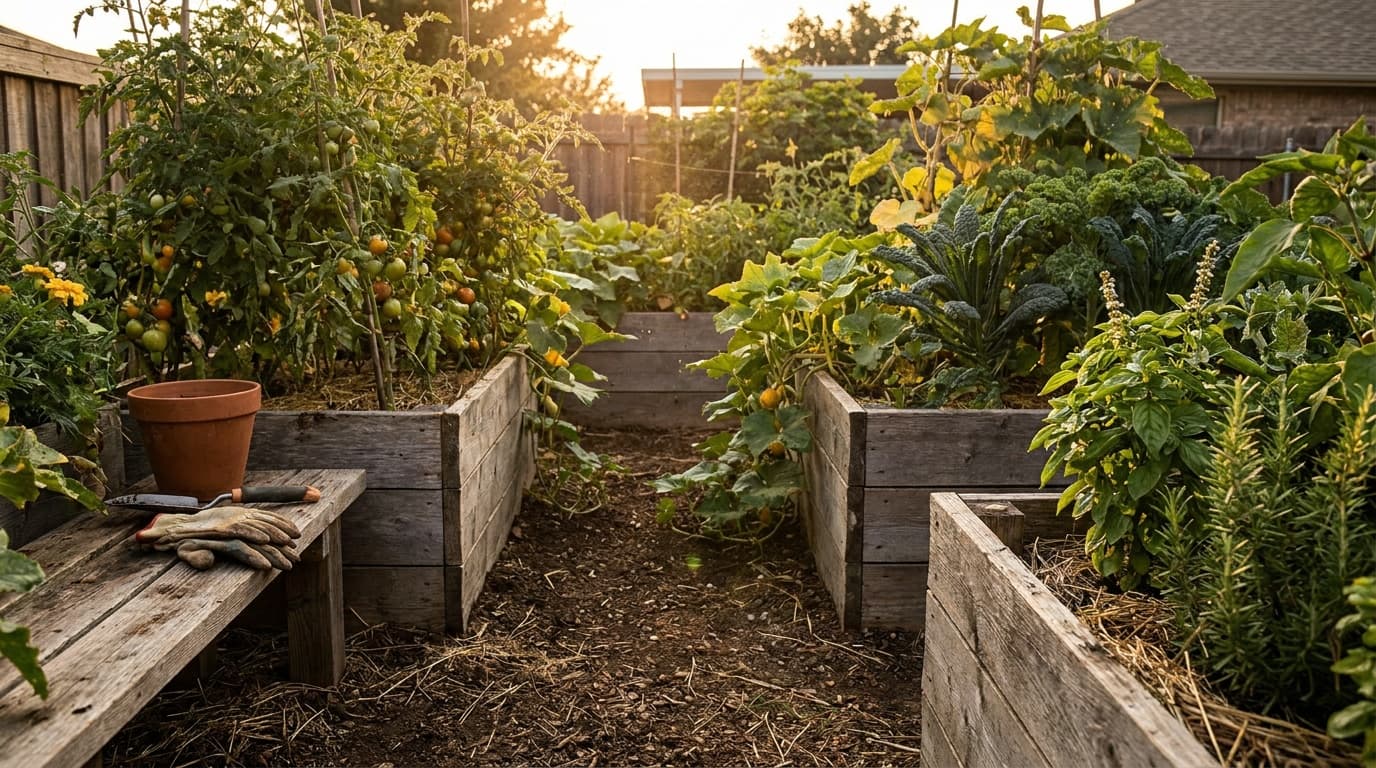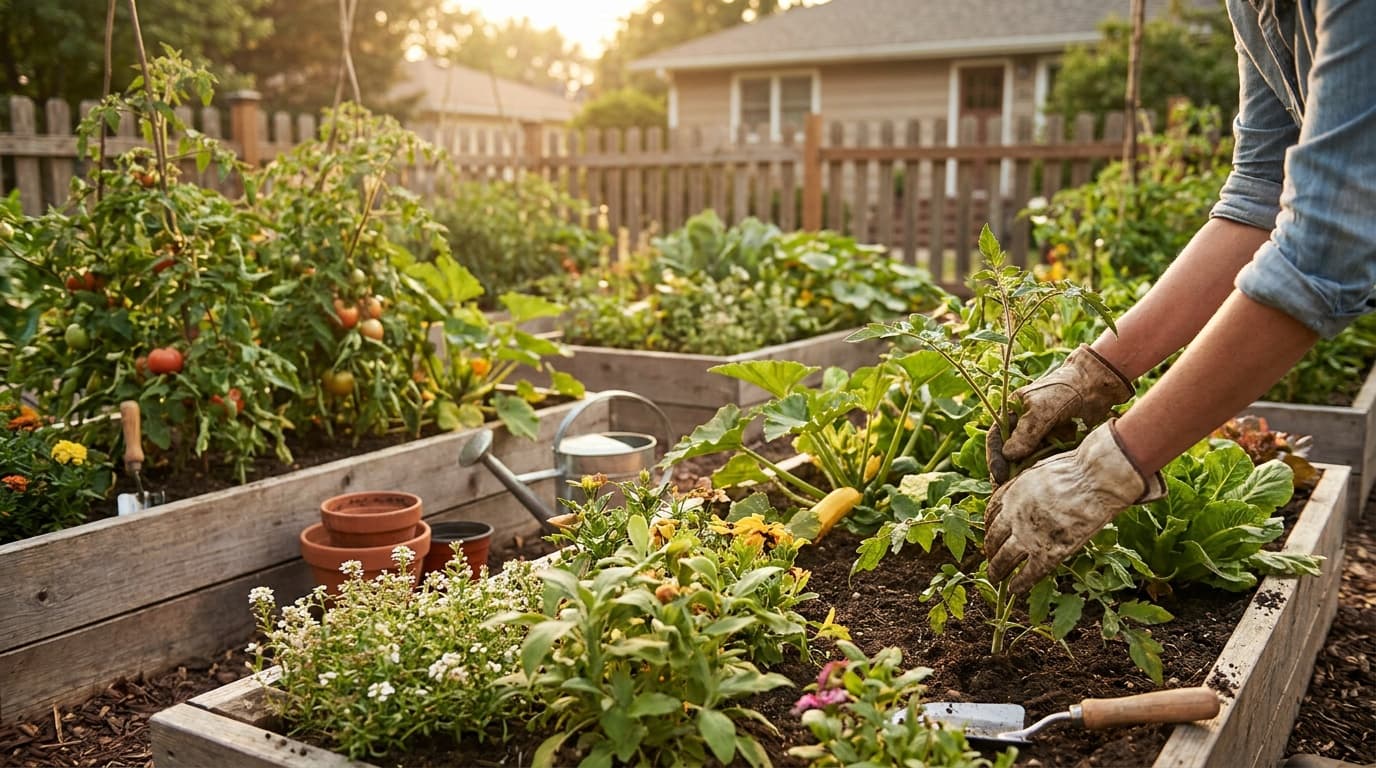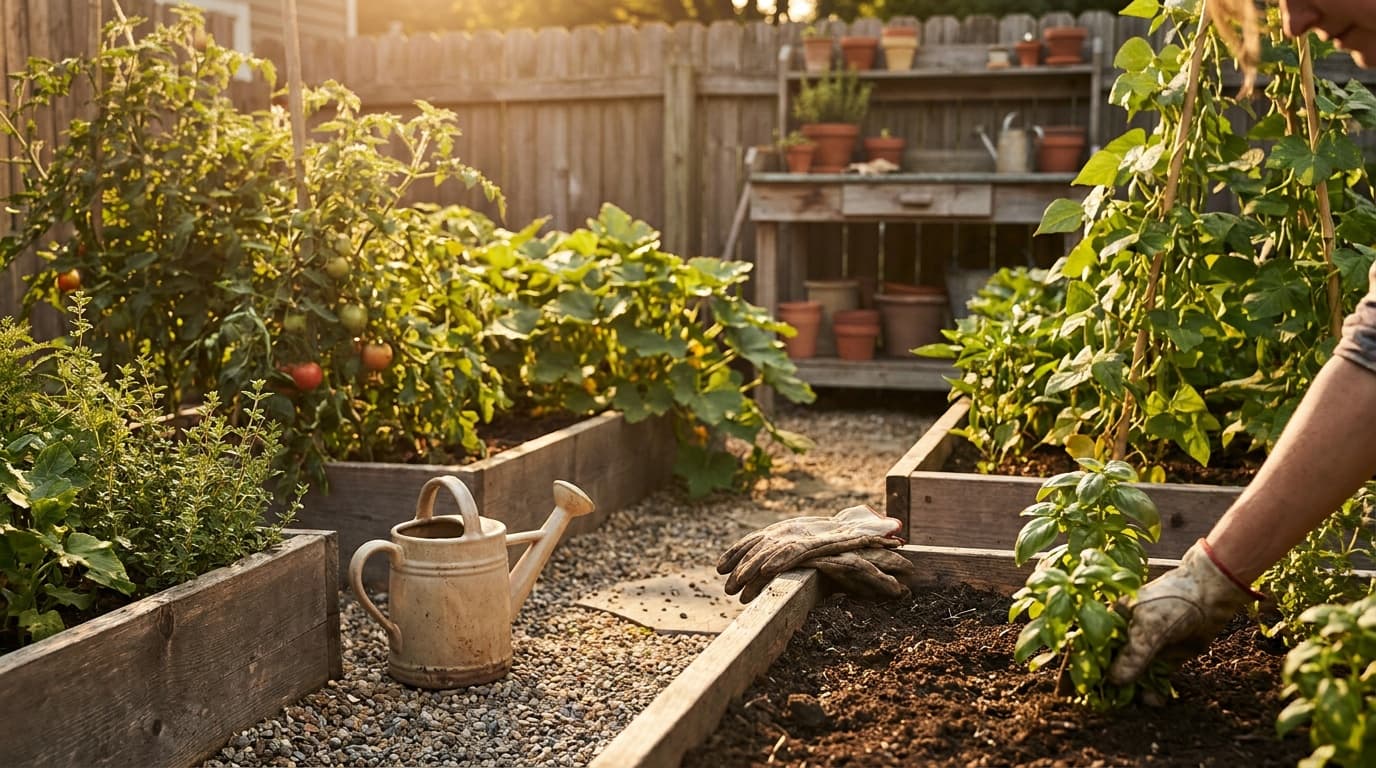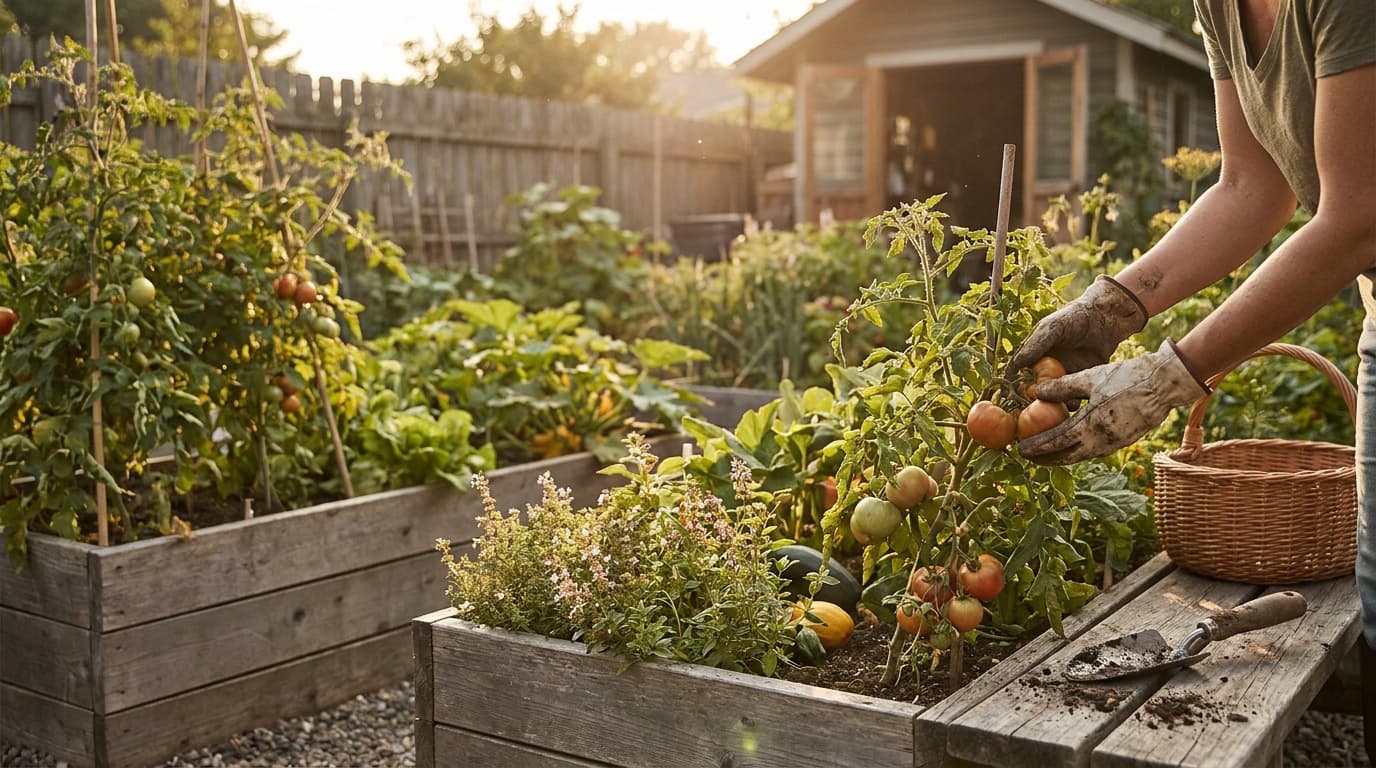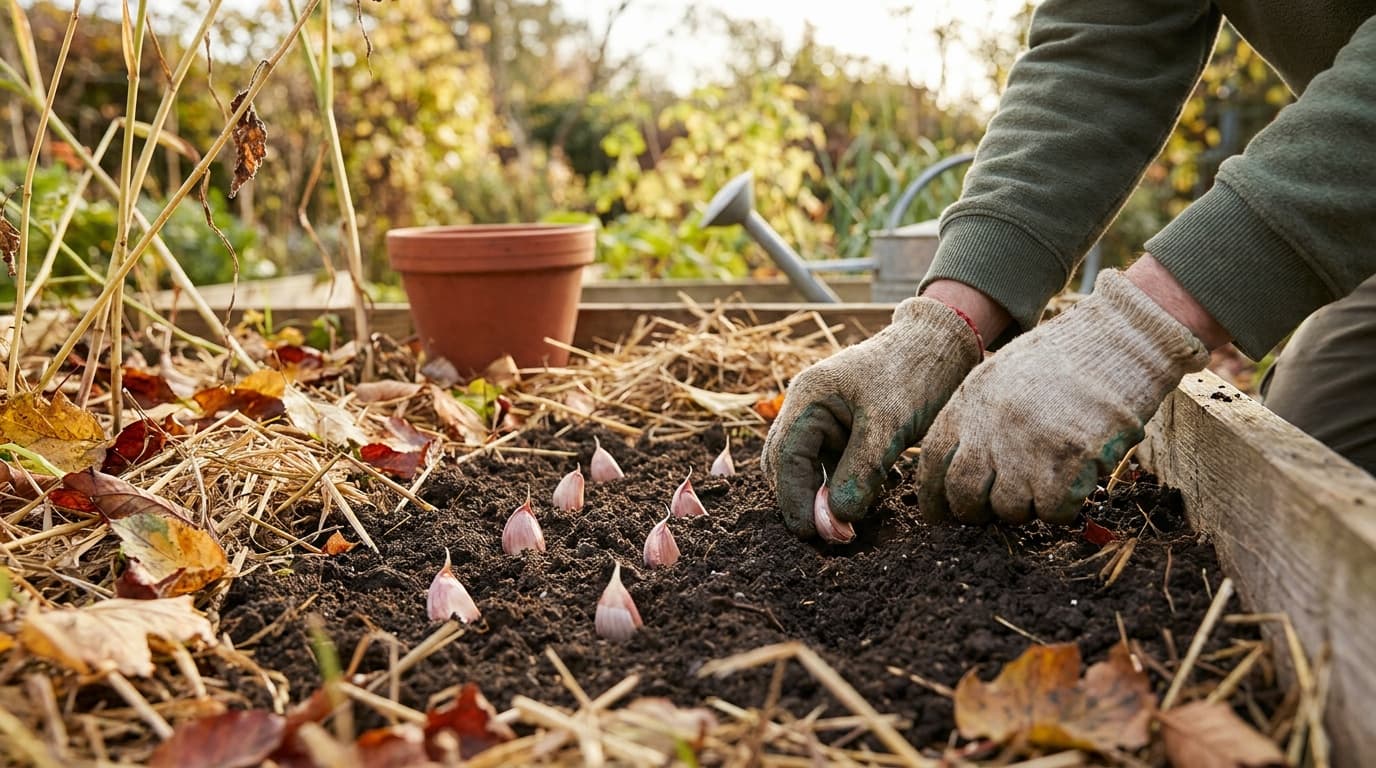
Plant garlic as the rest of the garden winds down. The cloves root before winter, resume growth in spring, and produce full heads the next summer. Choose sound cloves, plant at the right time, and cover the bed with mulch.
When to plant garlic in fall
Timing is the one thing worth getting right. Garlic needs a stretch of cold weather (a process called vernalization) to split a single clove into a full head, and it needs to grow roots in fall before the ground freezes hard. But you do not want a lot of top growth before winter, because tall green shoots are more vulnerable to harsh cold.
The reliable rule of thumb: plant about one to two weeks after your first fall frost, once the soil has started to cool but well before it freezes solid. That window lets cloves root in without pushing up much leaf. In most cold and temperate regions this lands somewhere in mid to late autumn, but the exact date depends entirely on your location.
Hardneck vs softneck garlic
Pick the type that suits your climate, because it makes a real difference.
Choosing your garlic
Hardneck for cold climates
Softneck for mild climates
Buy seed garlic, not grocery garlic
Break heads just before planting
How to plant the cloves
Garlic likes loose, rich, well-draining soil and full sun. A raised bed or a well-worked plot both work well.
Planting step by step
Prep the soil
Set spacing
Plant pointy end up
Cover and water in
Mulch heavily
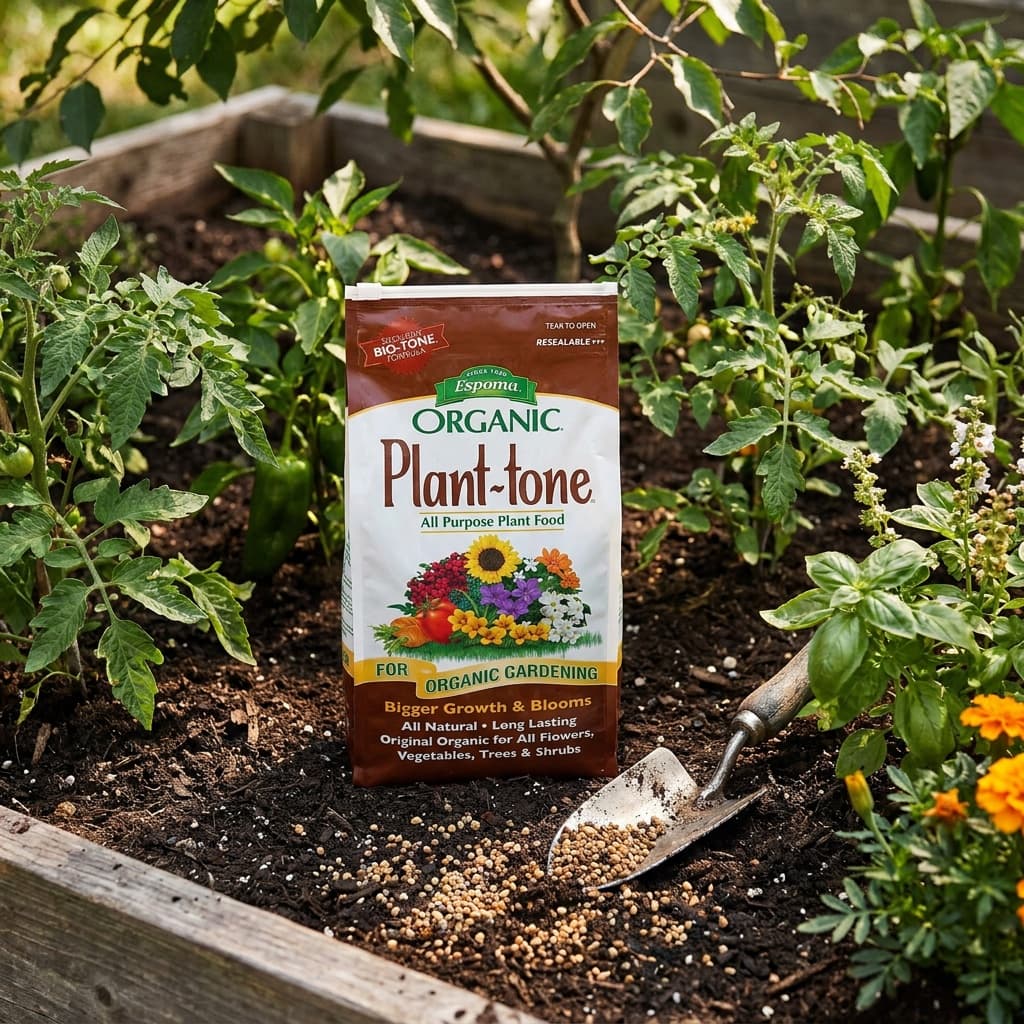
Feed the bed at planting
Garlic is in the ground for the better part of a year, so a fertile, slow-releasing base sets it up for a strong spring. A gentle all-purpose organic granular fertilizer worked into the bed at planting feeds the long season without burning the new roots.
Some links on this page are affiliate links. As an Amazon Associate I earn from qualifying purchases.
Long-season feed
Espoma Plant-tone Organic All-Purpose Fertilizer
Best for: Gardeners who want one safe, all-purpose organic feed for the whole garden.
Keep in mind: Granular organics have a noticeable earthy smell
Amazon price as of the checked date, subject to change. The price on Amazon at checkout applies.
Full research
- NPK
- 5-3-3
- Type
- Granular slow-release organic
- Microbes
- Bio-tone beneficial microbe blend
- Use
- All-purpose: vegetables, flowers, trees, shrubs
A slow-release granular organic fertilizer with a 5-3-3 NPK and the brand's Bio-tone microbe blend. An all-purpose feed for vegetables, flowers, trees, and shrubs that releases gradually over the season.
This catalog-wide research score is separate from this guide's use-case ranking. How we research
Strengths
- Gentle slow-release feeding that resists burning
- Bio-tone microbes support soil biology
- Truly all-purpose across the garden
Weaknesses
- Granular organics have a noticeable earthy smell
- Slower visible response than synthetic feeds
Sprout Score breakdown
Best for
Gardeners who want one safe, all-purpose organic feed for the whole garden.
Owner rating snapshot
Amazon · 15 reviews · 4.7 stars
Protection in the coldest gardens
In very cold or exposed gardens, a floating row cover like Agribon AG-19 laid over the mulched bed adds a few degrees of insurance against brutal freezes and frost heave, while still letting in light and water. It is an easy extra layer of winter protection where winters are harsh.
Winter protection
Agribon AG-19 Floating Row Cover
Best for: Gardeners who want cheap frost protection and pest exclusion in one fabric.
Keep in mind: Lightweight fabric tears and wears over seasons
Amazon price as of the checked date, subject to change. The price on Amazon at checkout applies.
Full research
- Weight
- 0.55 oz per sq yd
- Frost protection
- Down to roughly 28F
- Light transmission
- About 85%
- Material
- Spun-bonded polypropylene
A lightweight spun-bonded row cover that drapes over crops to add a few degrees of frost protection while still letting in light and water. It doubles as a physical barrier against many insect pests.
This catalog-wide research score is separate from this guide's use-case ranking. How we research
Strengths
- Extends the growing season at both ends
- Excludes many pests without chemicals
- Passes most light and water so it can stay on
Weaknesses
- Lightweight fabric tears and wears over seasons
- Needs hoops or pins to stay put in wind
Sprout Score breakdown
Best for
Gardeners who want cheap frost protection and pest exclusion in one fabric.
Spring care, scapes, and harvest
When the soil warms in spring, green shoots push up through the mulch. Keep the bed weed-free (garlic competes poorly with weeds) and watered evenly while it bulks up, then taper off water as harvest nears.
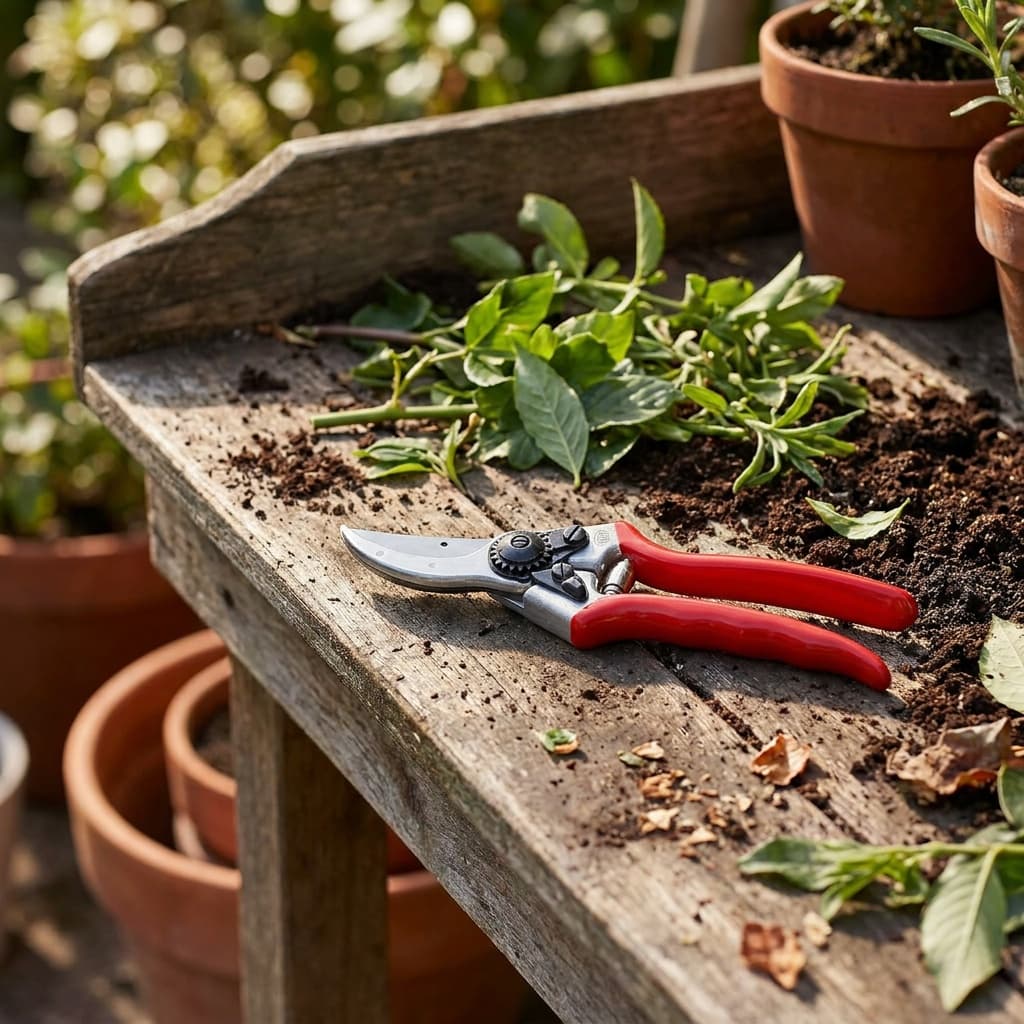
If you grew hardneck garlic, it will send up a curling flower stalk, the scape, in early summer. Snap or snip these off once they curl. Removing scapes pushes the plant's energy back into the bulb for a bigger head, and the scapes themselves are a delicious, garlicky vegetable. A clean light cut with a pair of pruners like the Felco F-2 is all it takes.
For clean scape cuts
Felco F-2 Classic Bypass Pruner
Best for: Gardeners who want one pruner they can rebuild and keep for decades.
Keep in mind: One size fits average to larger hands; no compact body
Amazon price as of the checked date, subject to change. The price on Amazon at checkout applies.
Full research
- Type
- Bypass
- Cutting capacity
- Up to 1 in (25 mm)
- Handle
- Forged aluminum
- Blade
- Hardened steel, replaceable
The Felco F-2 is the long-standing reference bypass pruner, with forged handles and a fully replaceable parts system that keeps it cutting season after season.
This catalog-wide research score is separate from this guide's use-case ranking. How we research
Strengths
- Fully serviceable: blades, springs, and other parts are replaceable
- Precise bypass cut that protects living stems
- Backed by a long owner track record across decades of use
Weaknesses
- One size fits average to larger hands; no compact body
- Premium price relative to entry-level pruners
Sprout Score breakdown
Best for
Gardeners who want one pruner they can rebuild and keep for decades.
Owner rating snapshot
Amazon · 312 reviews · 4.8 stars
Harvest in summer when the lower few leaves have turned brown but several upper leaves are still green, each green leaf marks a protective wrapper layer on the bulb. Loosen the soil and lift the heads gently rather than yanking. Then cure them: hang or lay the whole plants in a dry, airy, shaded spot for a few weeks until the necks and skins dry down, and your garlic will store for months.
Why garlic is the seasonal canary
Garlic timing starts with your local first frost. Use the garlic profile for variety details and a local planting window, then use the planting calendar to schedule the rest of the fall garden.
When should I plant garlic in the fall?
Plant garlic about one to two weeks after your first fall frost, once the soil has begun to cool but well before it freezes solid. This lets cloves grow roots before winter without pushing up much top growth. The exact date depends on your location, so look up your first frost date and count forward a week or two.
Should I plant hardneck or softneck garlic?
Choose hardneck garlic if you have cold winters, as it is more cold-hardy and produces flavorful heads plus edible scapes. Choose softneck garlic in mild-winter climates, as it tolerates warmth better, stores longer, yields more cloves per head, and has the flexible necks used for braiding.
How deep and how far apart do I plant garlic cloves?
Plant cloves pointy end up about 2 inches deep, a little deeper in very cold regions, and space them about 6 inches apart in rows roughly 8 to 12 inches apart. Plant the largest cloves from each head, since bigger cloves grow bigger bulbs.
Can I plant grocery store garlic?
It is better to plant seed garlic sold for growing rather than supermarket bulbs. Grocery garlic may be treated to resist sprouting, is often a softneck variety unsuited to cold climates, and can carry disease. Local seed garlic is also better adapted to your growing conditions.
When is garlic ready to harvest?
Harvest in summer when the lower few leaves have browned but several upper leaves are still green. Each green leaf corresponds to a protective wrapper layer on the bulb, so harvesting while some remain keeps the heads well-wrapped for storage. Lift gently, then cure in a dry, airy, shaded spot for a few weeks.
What to do next
Plant sound cloves a week or two after your first frost, choose a type suited to your climate, and cover the bed with a deep layer of mulch. The cloves will root before winter, resume growth in spring, and form full bulbs for a summer harvest.