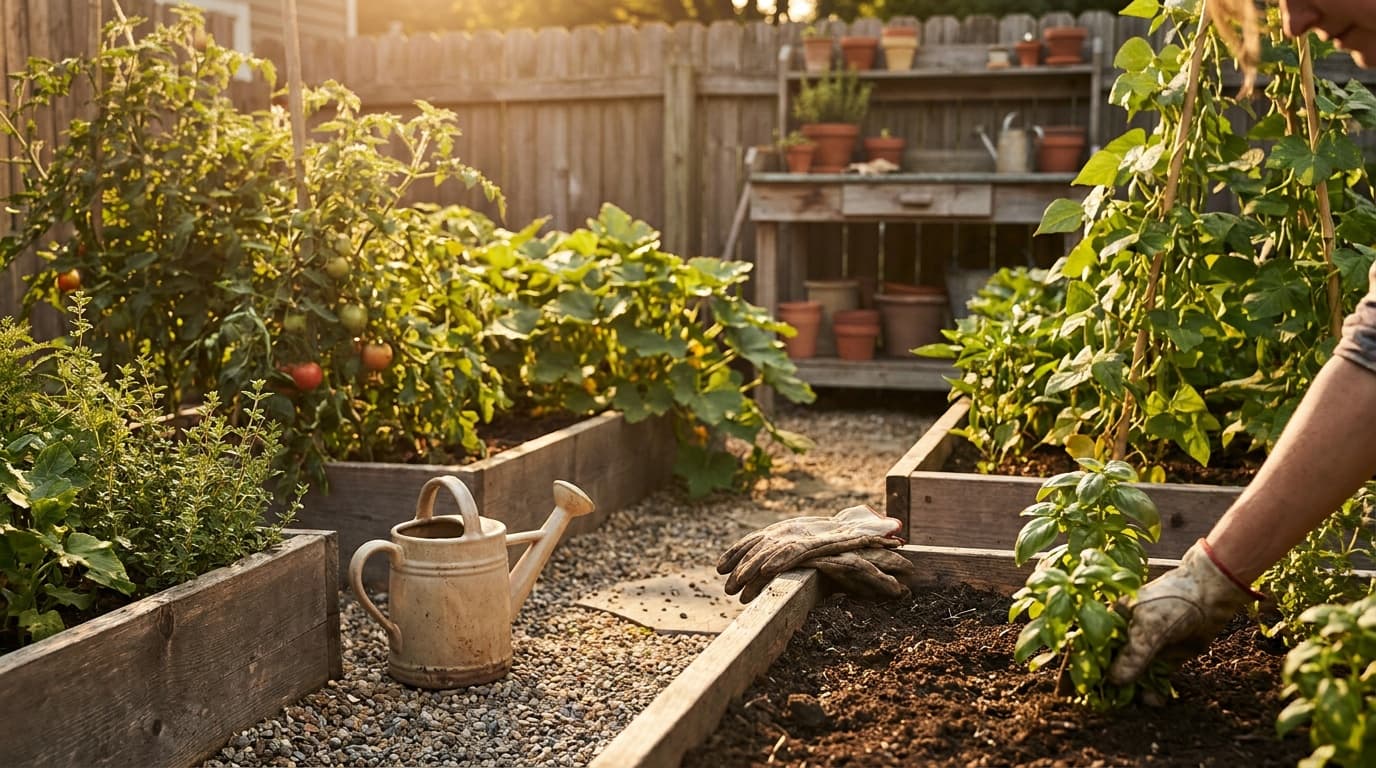
Crop rotation sounds like a commercial-farm concept, but the logic applies to a single backyard bed. When you grow tomatoes in the same spot year after year, two things accumulate in that soil: the specific pests and diseases that target tomatoes, and a lopsided depletion of the nutrients tomatoes favor. The pests overwinter knowing exactly where next year's meal will be. Rotation breaks that pattern by moving the target.
The intimidating part is the charts: elaborate wheels assigning crops to numbered beds across four years. You can ignore almost all of that. The real principle is one sentence (do not repeat a plant family in the same place), and the rest is bookkeeping.
Why rotation works: pests, disease, and nutrients
Three things build up under a repeated crop, and rotation interrupts each.
What rotation actually breaks
Soil-borne disease
Overwintering pests
Nutrient balance
Learn the families, not the individual crops
Rotate by plant family because many pests and diseases attack related crops. A vegetable garden uses only a handful of major families, so group those crops before planning each bed.
The two families to be most disciplined about are the nightshades and the brassicas, because they carry the most persistent soil diseases and pests. Keeping a tomato out of last year's tomato spot matters more than any other single rotation rule, partly because of soil diseases like early blight and late blight.
A simple home-garden rotation plan
Here is a plan that needs no chart, just a notebook.
Four steps to a working rotation
Divide your space
Group your crops by family
Move along each year
Write it down
A common refinement follows the nutrient logic: plant legumes (which add nitrogen) just before heavy feeders (which want it), so beans or peas in a bed one year set up tomatoes or brassicas the next.
Keep feeding the soil regardless
Rotation balances nutrient demand over time, but it does not replace feeding. Each year, work compost and a balanced organic fertilizer into beds as you replant, especially the section about to host heavy feeders.
Some links on this page are affiliate links. As an Amazon Associate I earn from qualifying purchases.
Rebuild as you rotate
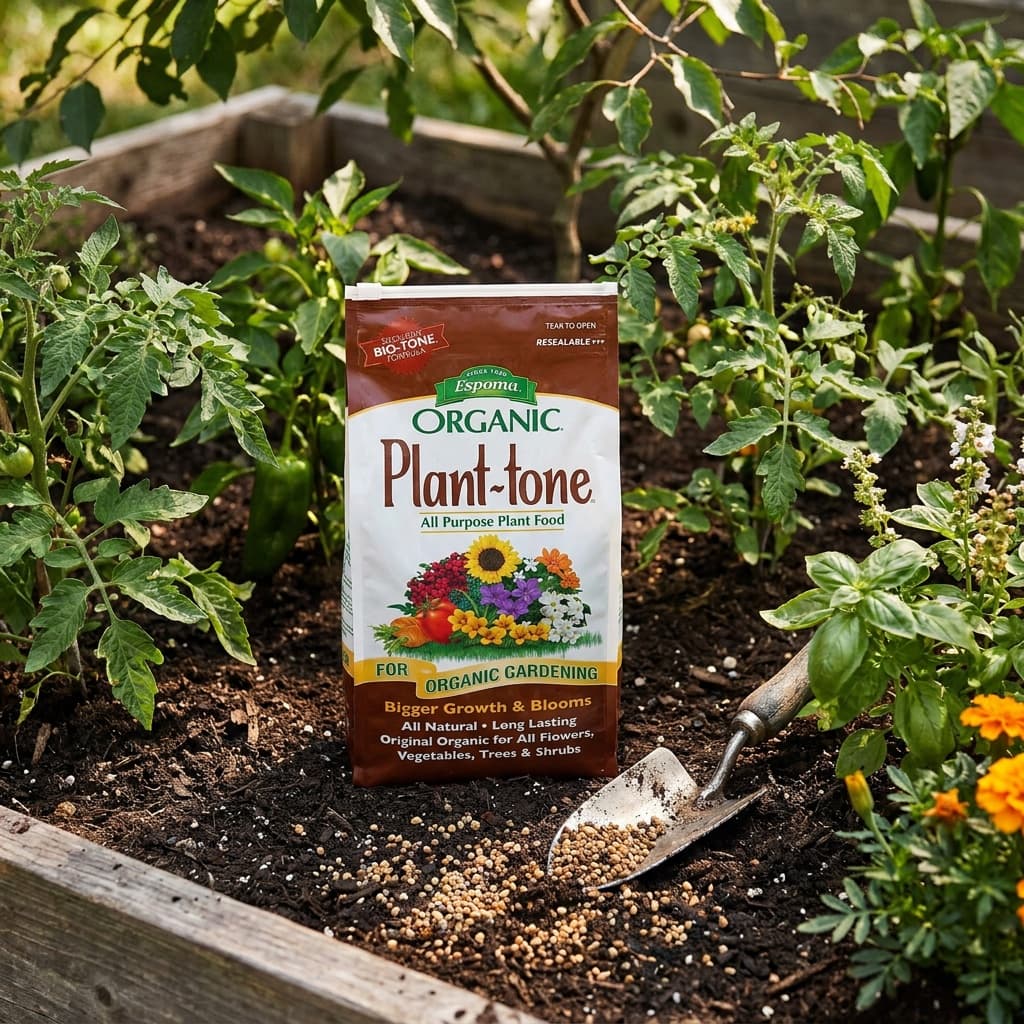
Espoma Plant-tone Organic All-Purpose Fertilizer
Best for: Gardeners who want one safe, all-purpose organic feed for the whole garden.
Keep in mind: Granular organics have a noticeable earthy smell
Amazon price as of the checked date, subject to change. The price on Amazon at checkout applies.
Full research
- NPK
- 5-3-3
- Type
- Granular slow-release organic
- Microbes
- Bio-tone beneficial microbe blend
- Use
- All-purpose: vegetables, flowers, trees, shrubs
A slow-release granular organic fertilizer with a 5-3-3 NPK and the brand's Bio-tone microbe blend. An all-purpose feed for vegetables, flowers, trees, and shrubs that releases gradually over the season.
This catalog-wide research score is separate from this guide's use-case ranking. How we research
Strengths
- Gentle slow-release feeding that resists burning
- Bio-tone microbes support soil biology
- Truly all-purpose across the garden
Weaknesses
- Granular organics have a noticeable earthy smell
- Slower visible response than synthetic feeds
Sprout Score breakdown
Best for
Gardeners who want one safe, all-purpose organic feed for the whole garden.
Owner rating snapshot
Amazon · 15 reviews · 4.7 stars
A slow-release organic fertilizer like Plant-tone, worked in when you set up each year's rotation, keeps every section feeding its new crop well. Compare blends in our best organic fertilizers guide. Pair feeding with mulching to keep building soil structure across the rotation.
When rotation is hard: small spaces and containers
If you garden in one small bed or a few containers, strict rotation is tough, there simply is not enough ground to move families around. Two practical workarounds: in containers, replace or substantially refresh the soil between crops, which resets the disease and nutrient situation without needing space to rotate. In a single bed, at minimum avoid following a crop with another from the same family, and lean hard on sanitation (remove all diseased debris) and good spacing for airflow to compensate.
Rotation timing fits your normal calendar
Rotation does not change when you plant, only where. Each crop still goes in on its usual schedule from the planting calendar, timed to your frost dates. The only addition is deciding which section each family lands in this year before you start planting.
What is crop rotation and why does it matter?
Crop rotation is moving each plant family to a different spot each year rather than replanting it in the same place. It matters because family-specific pests and soil-borne diseases build up when a crop stays put, and because different families deplete soil nutrients differently. Rotating breaks pest and disease cycles and balances nutrient demand, keeping soil healthier over time.
How many years should a crop rotation cycle be?
A 3 to 4 year cycle is the home-garden standard, meaning a given family does not return to the same spot for 3 or 4 years. Longer cycles further reduce disease pressure but require more space or sections. If you only have room for a 2 or 3 year cycle, that still delivers most of the benefit, especially if you are strict about nightshades and brassicas.
Do I rotate by individual crop or by plant family?
By family. Pests and diseases target whole families, so following a tomato with a pepper (both nightshades) does not break the cycle, since they share the same problems. Group crops by family (nightshades, brassicas, cucurbits, legumes, alliums, roots) and rotate the groups. Learning the half-dozen families is all the knowledge rotation really requires.
Can I do crop rotation in a small garden or containers?
Yes, with adjustments. In a small bed, at minimum avoid following a crop with another from its family, and rely more on sanitation and good spacing. In containers, refresh or replace the soil between crops, which resets the disease and nutrient situation without needing room to physically move plants around. Strict multi-bed rotation is ideal, but these workarounds capture much of the benefit.
Crop rotation is one sentence dressed up as a system: do not repeat a plant family in the same spot. Group by family, divide your space, move along each year, and write it down. Combine it with companion planting, good spacing, and yearly soil feeding, and your beds stay productive and far less disease-prone year after year.