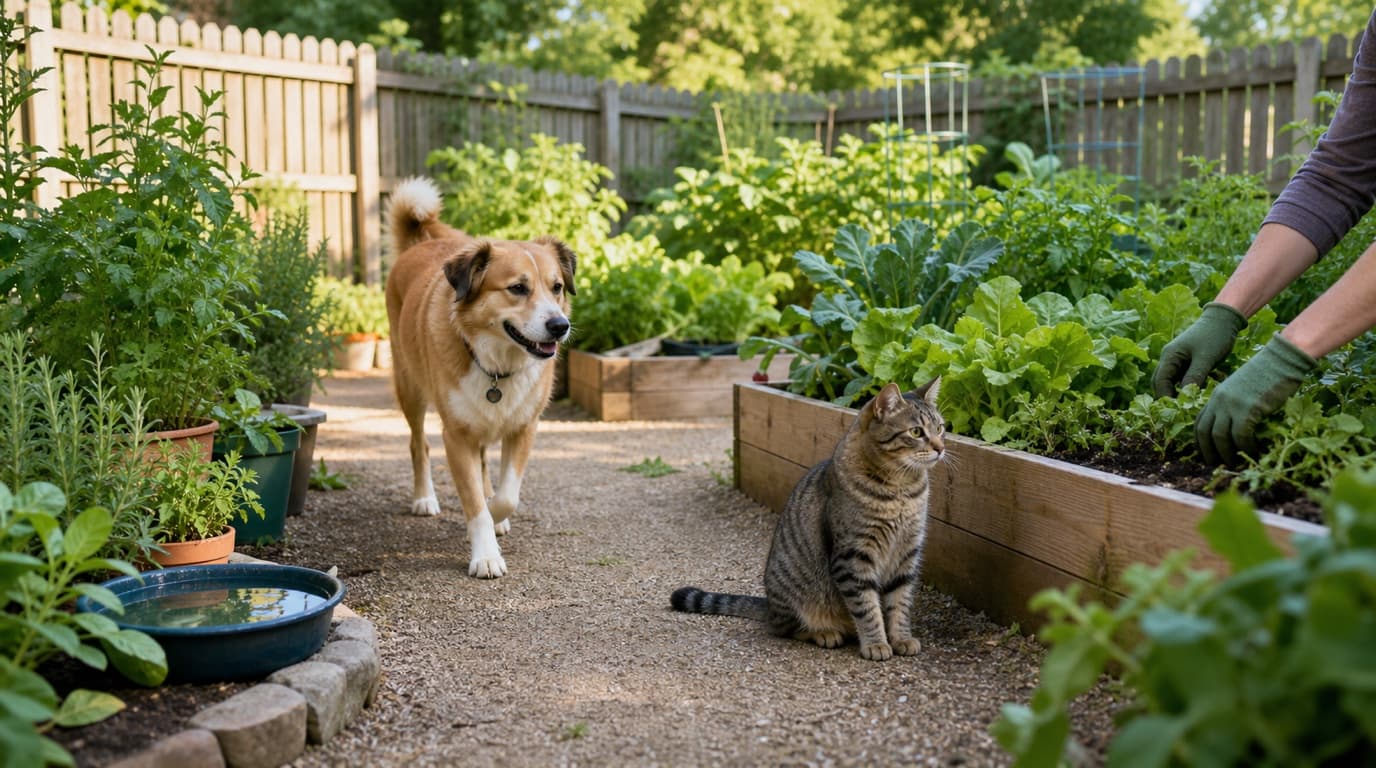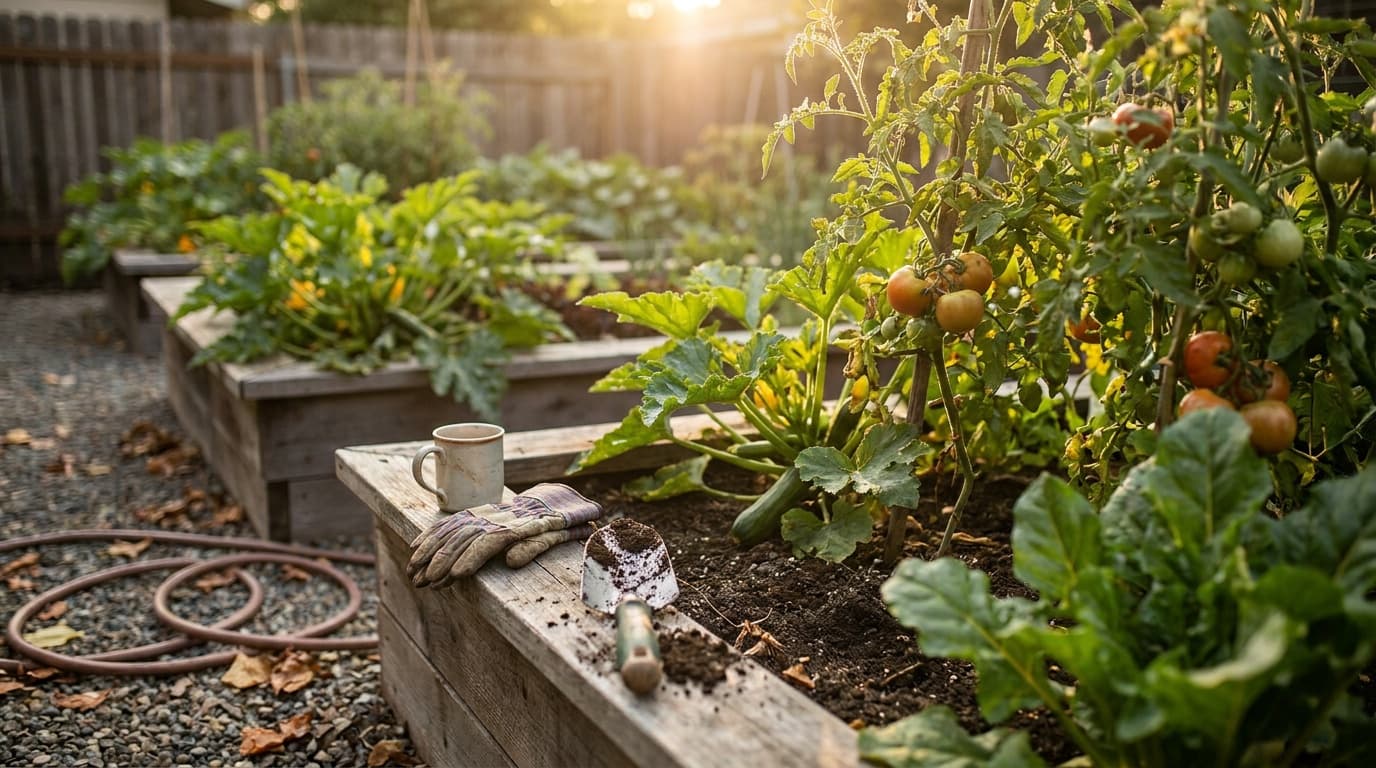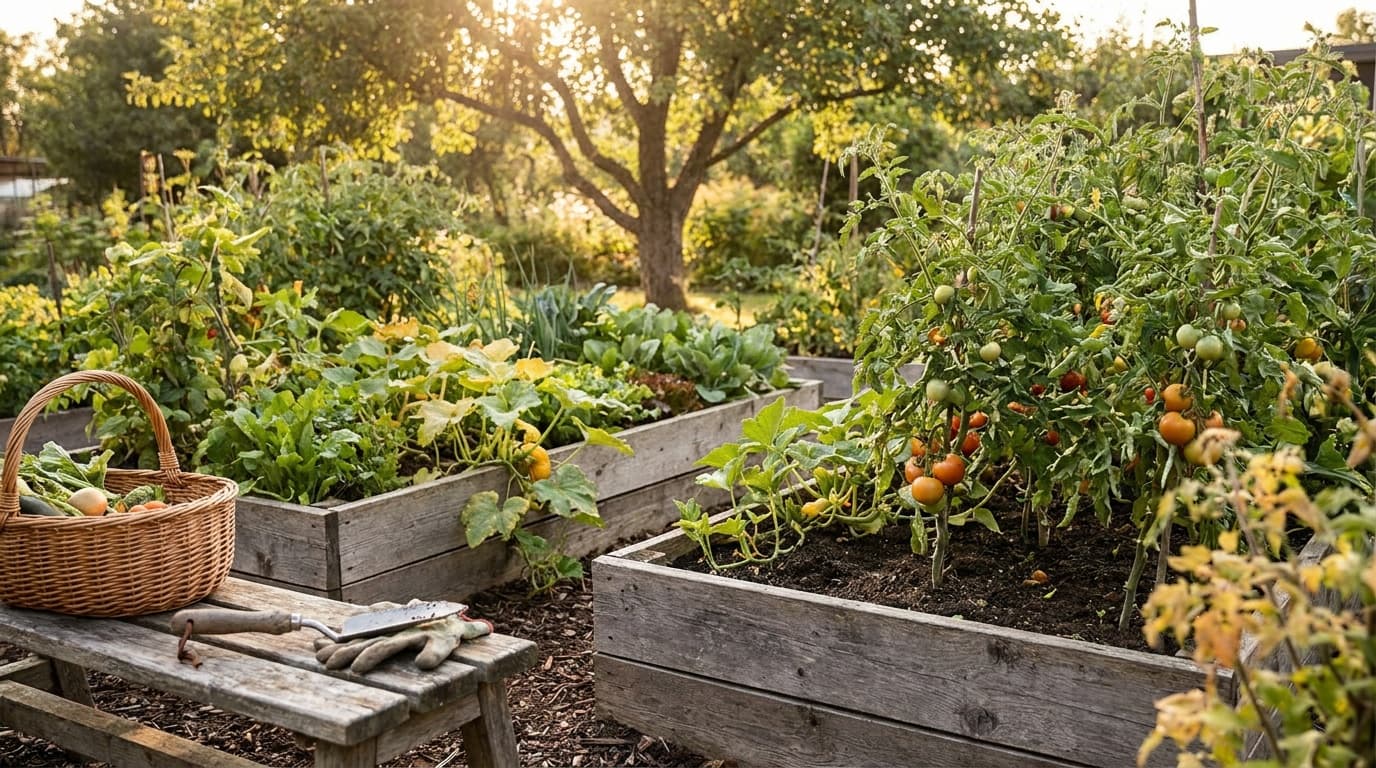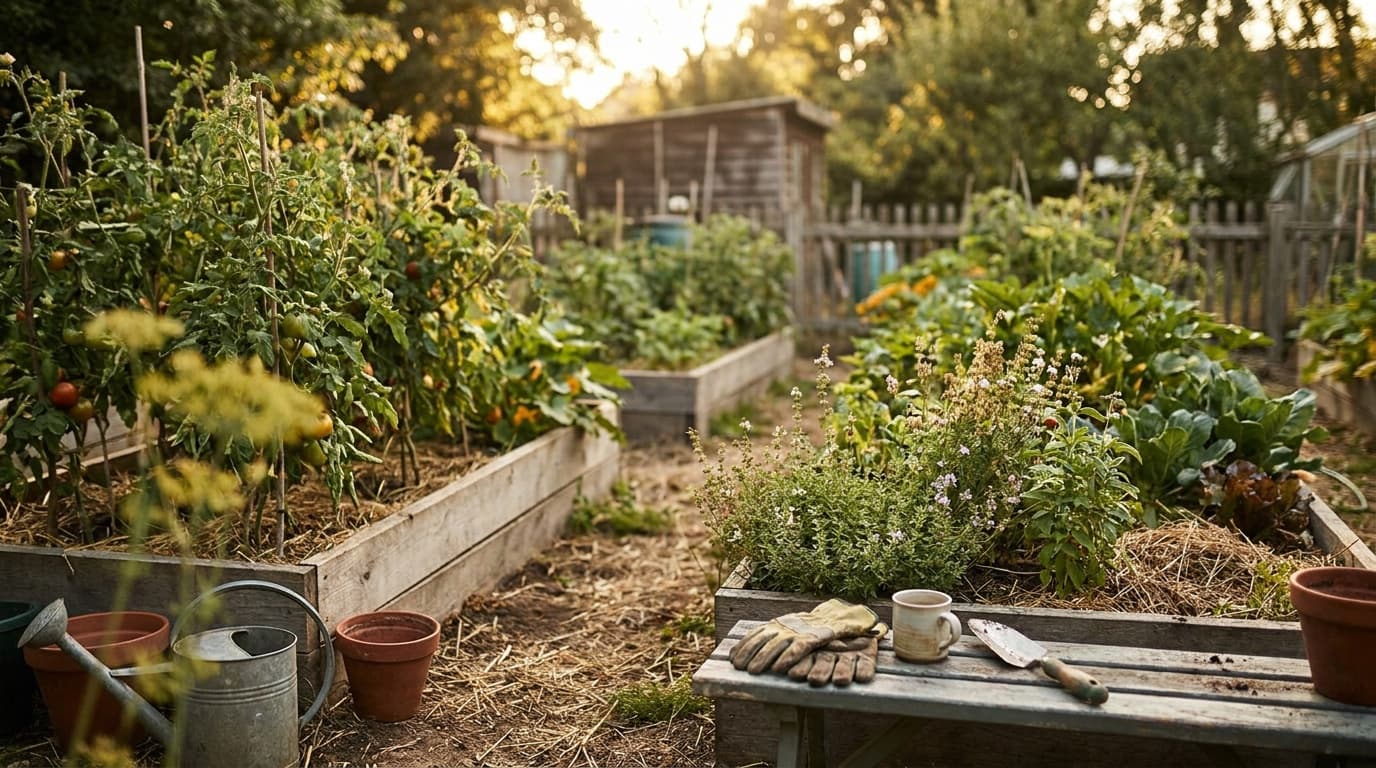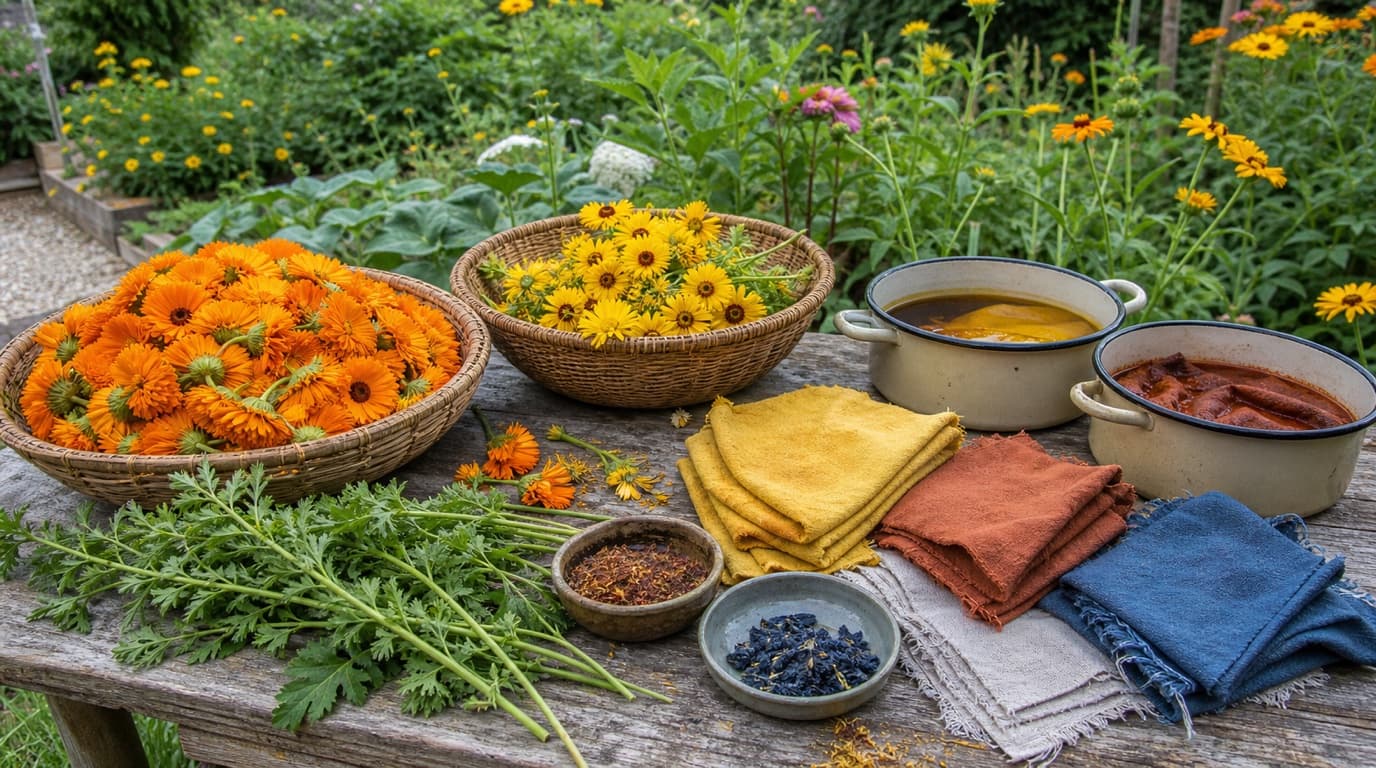
These dye plants grow alongside vegetables and can produce enough material for skeins or yardage, not only test swatches. The guide covers which plants to grow, the colors they produce on different fibers, the basic chemistry, harvest timing, and colorfastness.
The reliable homegrown dye plants
Marigold (Tagetes). This is one of the easiest dye plants, and you may already grow it as a companion flower. Fresh or dried flower heads give clear yellows through deep gold on mordanted wool. Regular picking encourages more blooms, and a dozen plants can supply a season of yellow dye baths. Start with our marigold growing guide and the marigold plant profile.
Coreopsis. Dyer's coreopsis (Coreopsis tinctoria, the annual, sold in seed catalogs as plains coreopsis) is the classic, giving strong orange, rust, and burnt-red tones that are unusual from a flower this easy. The perennial garden species, lanceleaf coreopsis among them, lean more toward plain yellow-orange. The flowers are small, so plant a generous patch and pick every few days.
Japanese indigo (Persicaria tinctoria). The realistic blue for temperate gardens. The leaves carry indigo precursors, and a fresh-leaf vat dyes wool and silk a genuine sky-to-mid blue with no mordant at all, since indigo attaches by a different mechanism than the other dyes here. It wants what basil wants: warmth, rich soil, steady water, and a head start indoors in cooler zones.
Madder (Rubia tinctorum). The dye material comes from the roots, so give this perennial a permanent corner where it can establish while annual dye flowers cycle through the rest of the bed.
Weld (Reseda luteola). Weld is a traditional yellow dye plant worth treating as a longer-term part of the bed rather than promising a first-season harvest. Confirm locally appropriate culture and harvest timing before planting it.
Black hollyhock (Alcea rosea 'Nigra'). The nearly black flowers of this cottage biennial give muted purples, plums, and gray-greens depending on the mordant and water pH. These colors fade faster than the more lightfast dyes in this list, so use them for work that can change with age. Grow hollyhock in sun, in well-drained soil, with enough room for its tall flower stalks.
Dyer's chamomile (Anthemis tinctoria). A short-lived perennial that covers itself in yellow daisies and gives soft, buttery yellows on wool. It tolerates poor, dry soil and blooms over a long season, making it the low-maintenance yellow of the group. It is a different species from the tea chamomiles, though garden chamomile culture is a fair guide to its easygoing habits.
Fiber determines the color you get
The same dye bath produces visibly different results depending on what you put in it. Animal (protein) fibers, wool and silk, take up plant dyes readily and are where all the colors above show their richest, deepest versions. Plant (cellulose) fibers, cotton and linen, bond weakly with most flower dyes and come out paler even when properly mordanted; traditional cotton dyeing leaned on the heavyweights, indigo and madder, plus extra mordanting steps, for exactly this reason.
If you want to understand why the fiber matters this much before you commit a season of flowers to a project, our sister site Stitch Authority explains the chemistry and behavior differences in its guide to natural vs synthetic fibers, and its fabric library profiles individual fibers and fabrics so you can match the cloth to the dye. The practical rule for a first dye garden: dye wool first, celebrate, then graduate to cotton with adjusted expectations. Synthetics like polyester take essentially nothing from a home dye bath and are not worth the flowers.
Mordant basics, at hobby scale
A mordant is a mineral salt that bonds dye to fiber; without one, most of these colors rinse out or fade fast. At home scale you need exactly one to start: alum (potassium aluminum sulfate), used at roughly 10 to 15 percent of the dry fiber weight for wool, often with a little cream of tartar to brighten. Dissolve, simmer the fiber in the solution for about an hour, and it is ready for any dye bath in this guide. Japanese indigo is the exception that needs no mordant at all.
Safety disclosures worth stating plainly: alum is the least hazardous of the traditional mordants, but it is still not food-safe practice to share equipment. Keep a dedicated dye pot, spoons, and thermometer that never return to the kitchen, label containers, work with ventilation when simmering baths, and store mordants sealed and away from children and pets. The historical metal mordants you will see in older books, chrome especially, carry real toxicity and are unnecessary for everything in this guide; iron is the one worth adding eventually, in tiny amounts, to shift colors darker ("saddening") once the basics are comfortable.
Harvest timing
When to harvest the best-documented dye crops
Flower dyes at peak bloom
Japanese indigo before flowering
Timing the sowings themselves works like any annual bed: marigold, coreopsis, and Japanese indigo go out after frost, and the planting calendar gives you the dates for your ZIP. Weld and hollyhock, as biennials, are usually sown in early summer to flower the following year, and both self-sow enthusiastically once established, so a dye garden tends to perpetuate itself. Saving your own seed keeps favorite color strains going; our seed saving guide covers the technique.
Treat colorfastness as a test, not a promise
Natural-dye colorfastness changes with species, harvest stage, fiber, mordant, extraction method, water chemistry, washing, and light exposure. The institutional sources behind this guide do not justify a universal durability ranking across every plant and fiber combination. Make a labeled sample from each batch, expose one piece to light, keep another protected, and let that comparison determine whether the recipe belongs on a garment, wall hanging, or experiment.
What is the easiest dye plant for a beginner?
Marigold. It germinates fast, blooms all season, tolerates ordinary garden care, and its flowers give dependable yellows and golds on alum-mordanted wool from the very first bath. Dyer's coreopsis is the natural second plant, adding orange and rust from an equally easy annual.
Can I get blue dye from a home garden?
Yes, from Japanese indigo (Persicaria tinctoria), which grows as a summer annual in most zones when started indoors and planted out after frost. A fresh-leaf vat dyes wool and silk genuine blues with no mordant. Woad is the cold-climate alternative with the same pigment at lower concentration.
Do natural dyes work on cotton?
They attach, and noticeably more weakly than on wool or silk. Cellulose fibers such as cotton and linen bond poorly with most flower dyes, giving paler shades even when mordanted, which is why traditional cotton dyeing centered on indigo and madder with additional mordanting steps. Dye wool first while learning, then approach cotton with adjusted expectations.
How long does madder take before harvest?
Madder is a root dye and should be treated as a long-term crop, but the evidence used for this guide does not support one universal harvest year for every climate and growing system. Establish it in a permanent location and use locally appropriate horticultural guidance to judge root maturity before lifting it.
Will homegrown natural dyes fade?
They can. Fiber, mordant, process, washing, and light all affect how a natural-dye color changes. Keep labeled control and light-exposed swatches from each batch instead of relying on a universal ranking, then use that result to decide which projects suit the recipe.
Start with well-documented flower and leaf crops, and give root crops and other long-cycle plants a permanent space. Keep dye equipment out of the kitchen. Record each harvest and dye bath, then store paired swatches so you can repeat successful results.