What makes a vegetable good in a container
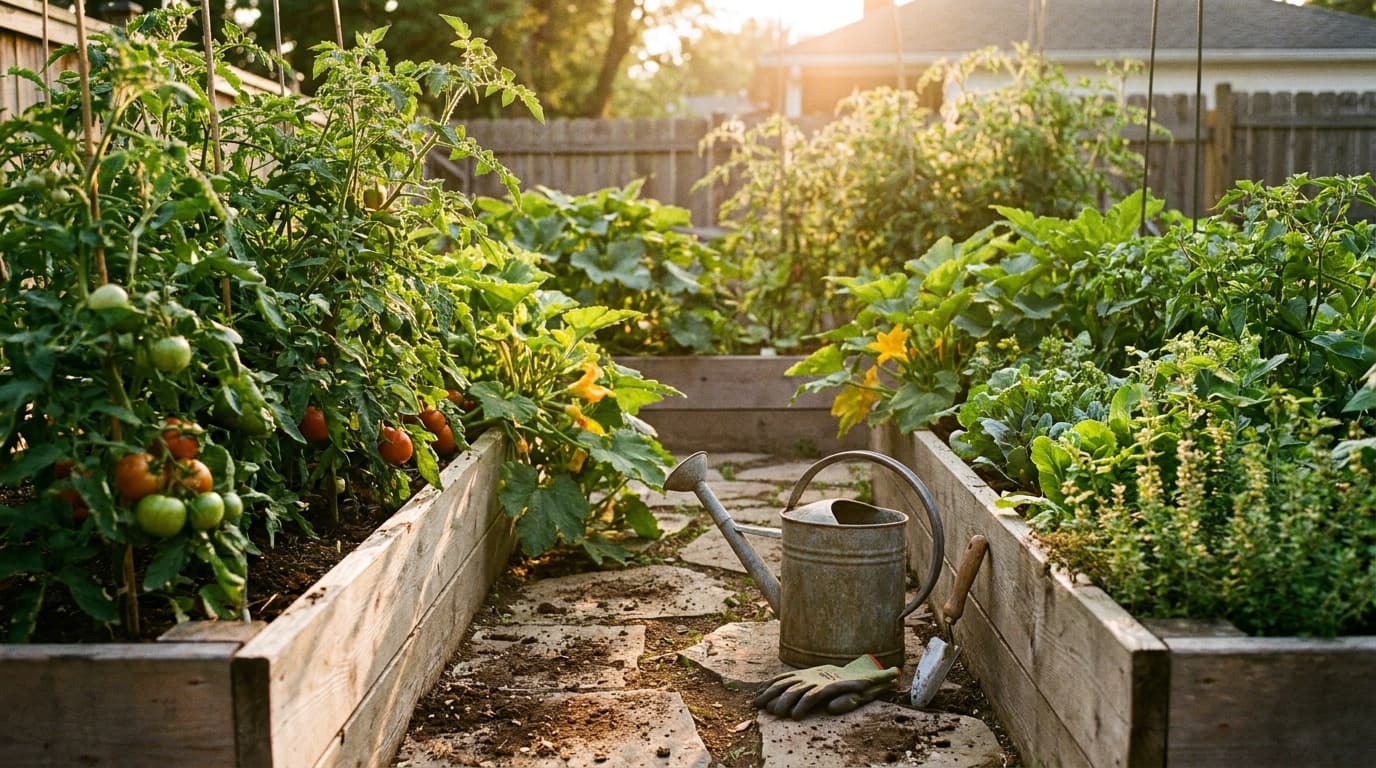
Container growing is mostly a question of root volume and water. A pot holds a fixed amount of soil, that soil dries quickly in sun and wind, and roots cannot range outward to find more. So the crops that excel are those with modest, shallow root systems and a compact habit, plus anything that finishes fast enough to live happily in a pot for a few weeks.
Each crop below links to its profile for spacing and timing. Run your pots through the spacing calculator too: container crowding is one of the most common reasons a balcony garden underperforms.
The best vegetables for containers
Leaf lettuce and salad greens
Lettuce, arugula, and spinach are nearly perfect container crops. Their roots are shallow, they tolerate a smaller pot than almost anything else, and you harvest the outer leaves for weeks from one sowing. A wide, shallow trough of greens by the kitchen door is one of the highest-value things a new container gardener can grow.
Herbs: basil, parsley, chives, mint
Most culinary herbs were made for pots. Basil thrives in a sunny container alongside tomatoes, parsley and chives tuck into small pots, and mint actually belongs in a container because it spreads aggressively in open ground. Keep herbs trimmed and they stay productive all season.
Peppers
Peppers are excellent in containers because the plants stay naturally compact and actually appreciate the warmer root zone a dark pot provides. Give each plant a 3 to 5 gallon pot, full sun, and steady water, and a single plant will produce all summer.
Bush beans and radishes
Green beans in bush form need no trellis and crop heavily in a medium pot. Radishes are the fastest container crop of all, ready in a few weeks, perfect for tucking into the edges of a larger planter while bigger crops fill in.
Patio and determinate tomatoes
A full-size indeterminate tomato can be grown in a pot, but it is demanding. Beginners do far better with a determinate or dwarf "patio" variety bred for containers. These stay compact, set a concentrated crop, and need a 5 gallon or larger pot with consistent water to avoid blossom end rot.
Get the container and soil right
The two most common container failures are pots that are too small and using the wrong soil. Both are easy to avoid.
Setting up a container that works
Pick the right pot size
Use real potting mix
Guarantee drainage
Plan to water often
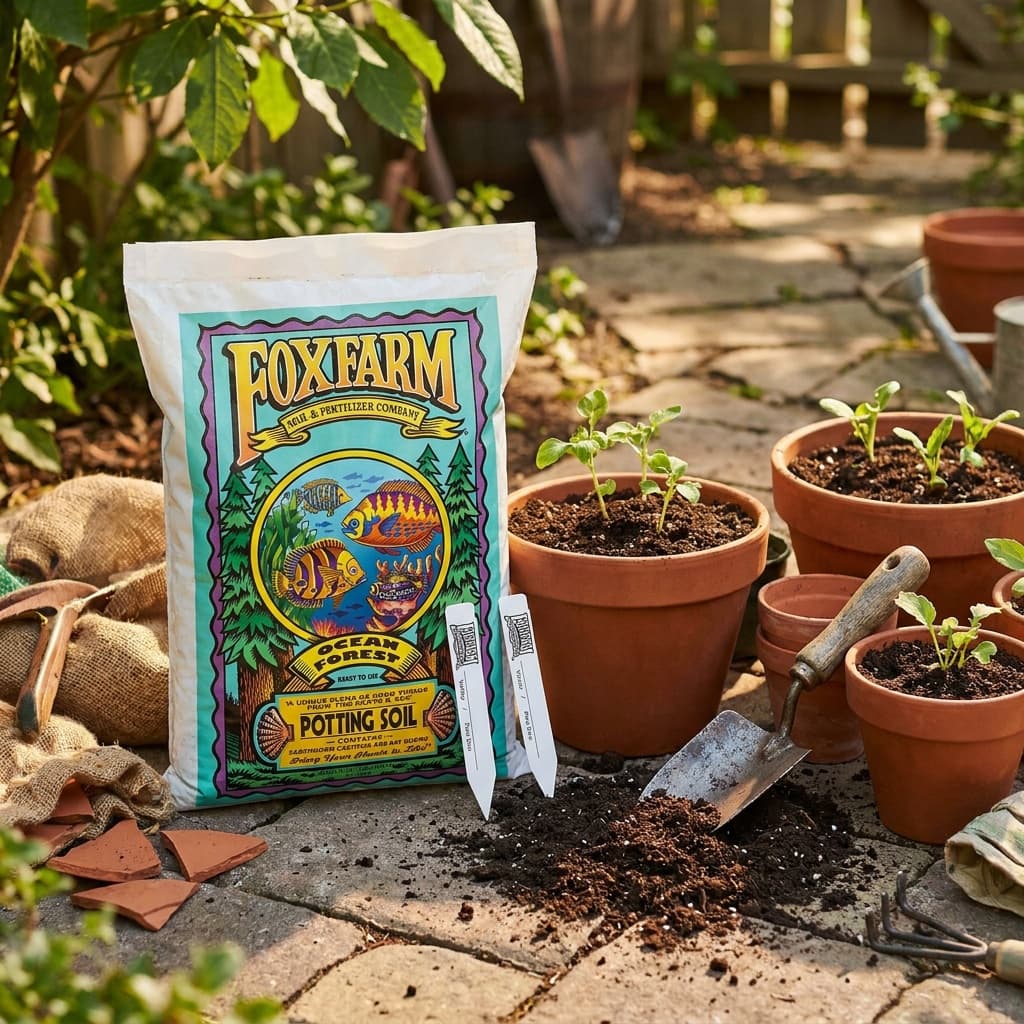
A quality potting mix is the foundation of the whole thing. A peat-and-forest-product blend holds moisture while still draining, and one amended with compost and nutrients gives container crops the steady feeding they cannot get from a confined root zone. The FoxFarm Ocean Forest mix is a popular ready-to-plant choice for vegetables.
Some links on this page are affiliate links. As an Amazon Associate I earn from qualifying purchases.
Best container mix
FoxFarm Ocean Forest Potting Soil
Best for: Container and raised-bed growers who want a rich, ready-to-plant mix.
Keep in mind: Can be too hot for tender seedlings without dilution
Amazon price as of the checked date, subject to change. The price on Amazon at checkout applies.
Full research
- Volume
- 1.5 cu ft
- Type
- Ready-to-use potting soil
- Key ingredients
- Aged forest products, sphagnum peat, earthworm castings, bat guano
- pH
- Adjusted to 6.3 to 6.8
A nutrient-dense, ready-to-use potting soil blended with earthworm castings, bat guano, and fish and crab meal. Its pH is pre-adjusted so nutrients stay available, making it a go-to for containers and transplants.
This catalog-wide research score is separate from this guide's use-case ranking. How we research
Strengths
- Rich, nutrient-dense blend that feeds early growth
- pH pre-adjusted to a plant-friendly range
- Drains well while holding moisture
Weaknesses
- Can be too hot for tender seedlings without dilution
- Premium price per bag
Sprout Score breakdown
Best for
Container and raised-bed growers who want a rich, ready-to-plant mix.
Owner rating snapshot
Amazon · 101 reviews · 4.7 stars
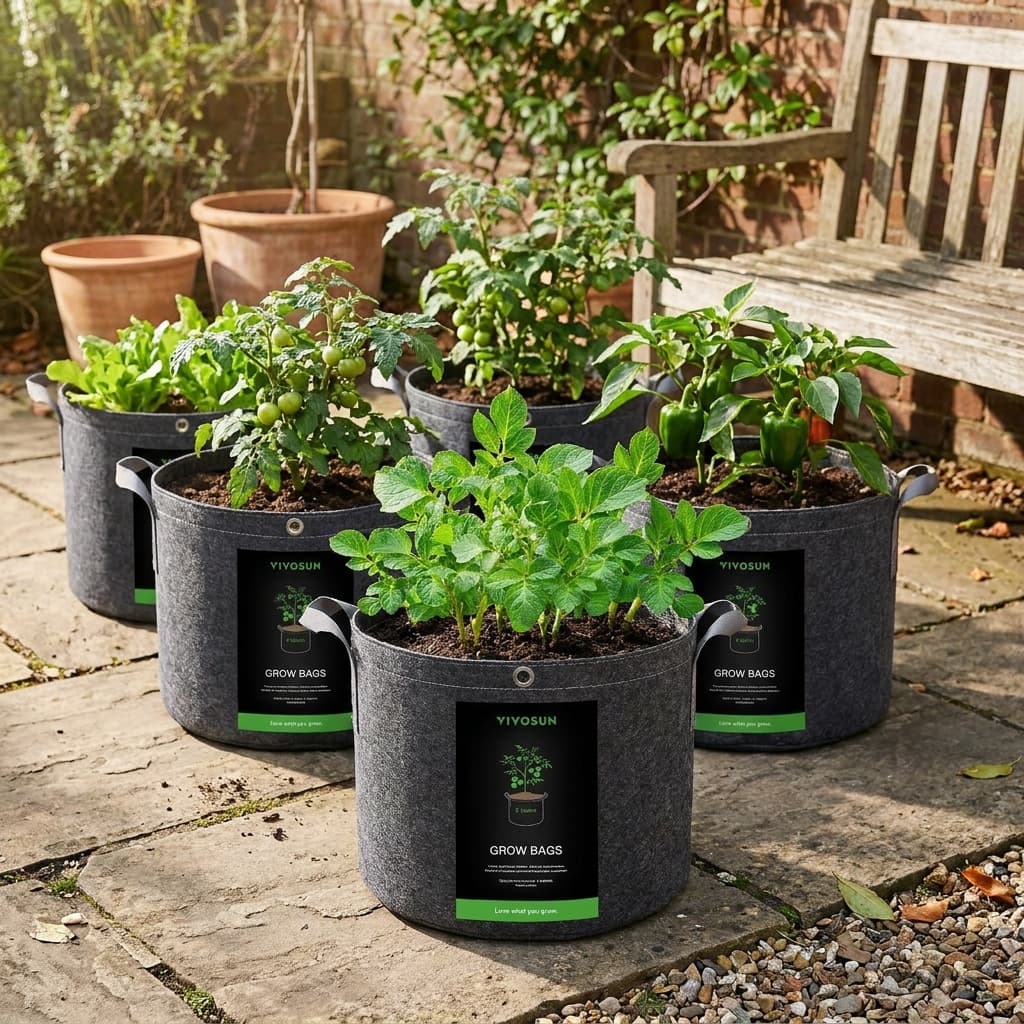
Fabric grow bags are an underrated container. They air-prune roots (so plants never circle and choke themselves), drain freely, and fold flat for storage. A set of 5-gallon fabric grow bags is an inexpensive way to grow peppers, tomatoes, or bush beans on a patio.
Best budget pots
VIVOSUN 5-Gallon Fabric Grow Bags (5-Pack)
Best for: Container growers who want cheap, breathable bags for tomatoes, peppers, or potatoes.
Keep in mind: Dries out faster than rigid containers
Amazon price as of the checked date, subject to change. The price on Amazon at checkout applies.
Full research
- Material
- Nonwoven fabric
- Capacity
- 5 gal each
- Pack
- 5 bags
- Handles
- Reinforced carry handles
VIVOSUN's fabric grow bags are a hugely popular budget pick for container growing. The breathable fabric air-prunes roots, and a five-pack costs little, though the handles can loosen after heavy seasons.
This catalog-wide research score is separate from this guide's use-case ranking. How we research
Strengths
- Breathable fabric air-prunes roots
- Very low cost per bag in a multi-pack
- Fold flat for off-season storage
Weaknesses
- Dries out faster than rigid containers
- Handles can loosen over multiple seasons
Sprout Score breakdown
Best for
Container growers who want cheap, breathable bags for tomatoes, peppers, or potatoes.
Easiest watering
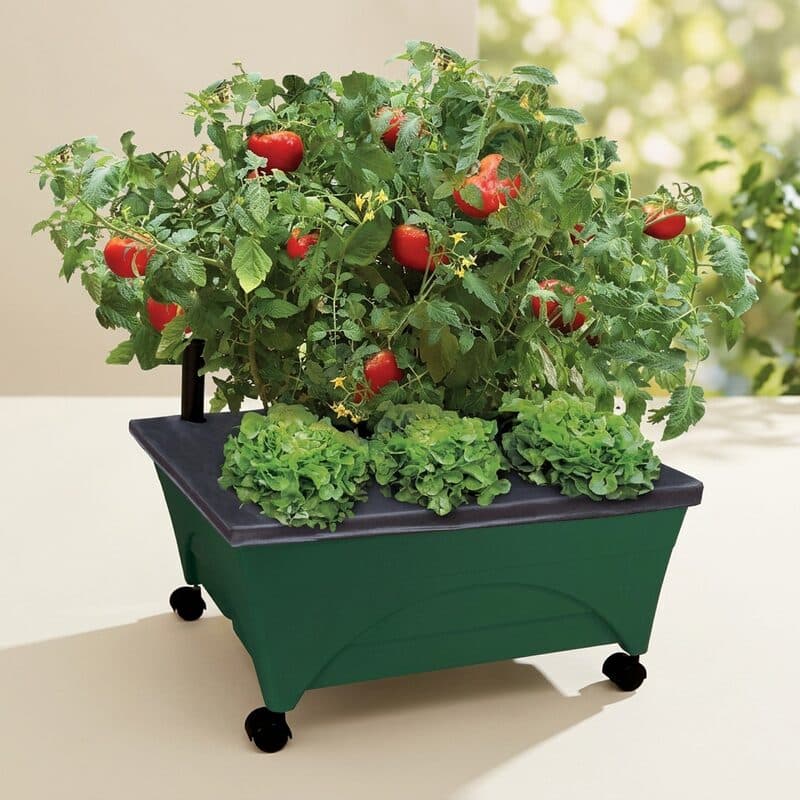
City Pickers Self-Watering Raised Garden Planter
Best for: Apartment and patio growers who want a self-watering box for a couple of plants.
Keep in mind: Small for large or sprawling plants
Amazon price as of the checked date, subject to change. The price on Amazon at checkout applies.
Full research
- Material
- Plastic
- Watering
- Bottom water reservoir
- Mobility
- Caster wheels included
- Use
- Patio vegetables and herbs
City Pickers is a compact self-watering planter kit built for patio vegetable growing. The bottom reservoir buffers watering for small-space gardeners, though it is on the small side for large or sprawling plants.
This catalog-wide research score is separate from this guide's use-case ranking. How we research
Strengths
- Self-watering reservoir eases watering
- Complete kit with casters included
- Compact footprint for patios
Weaknesses
- Small for large or sprawling plants
- Plastic build is functional, not premium
Sprout Score breakdown
Best for
Apartment and patio growers who want a self-watering box for a couple of plants.
Owner rating snapshot
Amazon · 223 reviews · 4.6 stars
Containers dry out: water is the real job
The single biggest difference between in-ground and container growing is water. A raised bed or garden plot has a deep reservoir of soil moisture; a pot does not. In peak summer, a container in full sun can go from saturated to bone dry in a day. Group pots together to shade each other's sides, mulch the surface to slow evaporation, and consider a self-watering design or a simple drip line on a timer if you travel.
What vegetables grow best in containers for beginners?
Leaf lettuce, herbs (basil, parsley, chives), radishes, peppers, and bush beans are the most forgiving container crops. They have shallow roots, stay compact, and tolerate the moisture swings that come with pot growing. Start with greens and herbs in smaller pots, then add peppers or a patio tomato in a larger container once you have the watering rhythm down.
How big should a pot be for vegetables?
It depends on the crop. Leafy greens and herbs do well in 1 to 2 gallon pots. Peppers and bush beans want 3 to 5 gallons. Tomatoes and other large plants need at least 5 gallons, and bigger is better. Undersized pots dry out faster and limit root growth, so when you are unsure, choose the larger container.
Can I use garden soil in containers?
No. Garden soil compacts in a pot, drains poorly, and can carry weed seeds and pests. Use a light potting mix made for containers, ideally one blended with compost. The mix should feel fluffy and drain freely while still holding some moisture. Refresh or amend it each season.
How often do I need to water container vegetables?
Far more often than in-ground crops. In hot, sunny weather a container may need water once or even twice a day. Check the top inch of mix with your finger and water whenever it is dry. Self-watering planters, grow bags grouped together, or a drip line on a timer all reduce how often you have to do it by hand.
Container gardening removes most of the excuses: no plot, no tilling, no bending. Pick compact crops, give them a big enough pot of real potting mix, and stay on top of watering. Do that and a balcony or patio can out-produce a neglected backyard bed, with a salad and fresh herbs always within arm's reach.