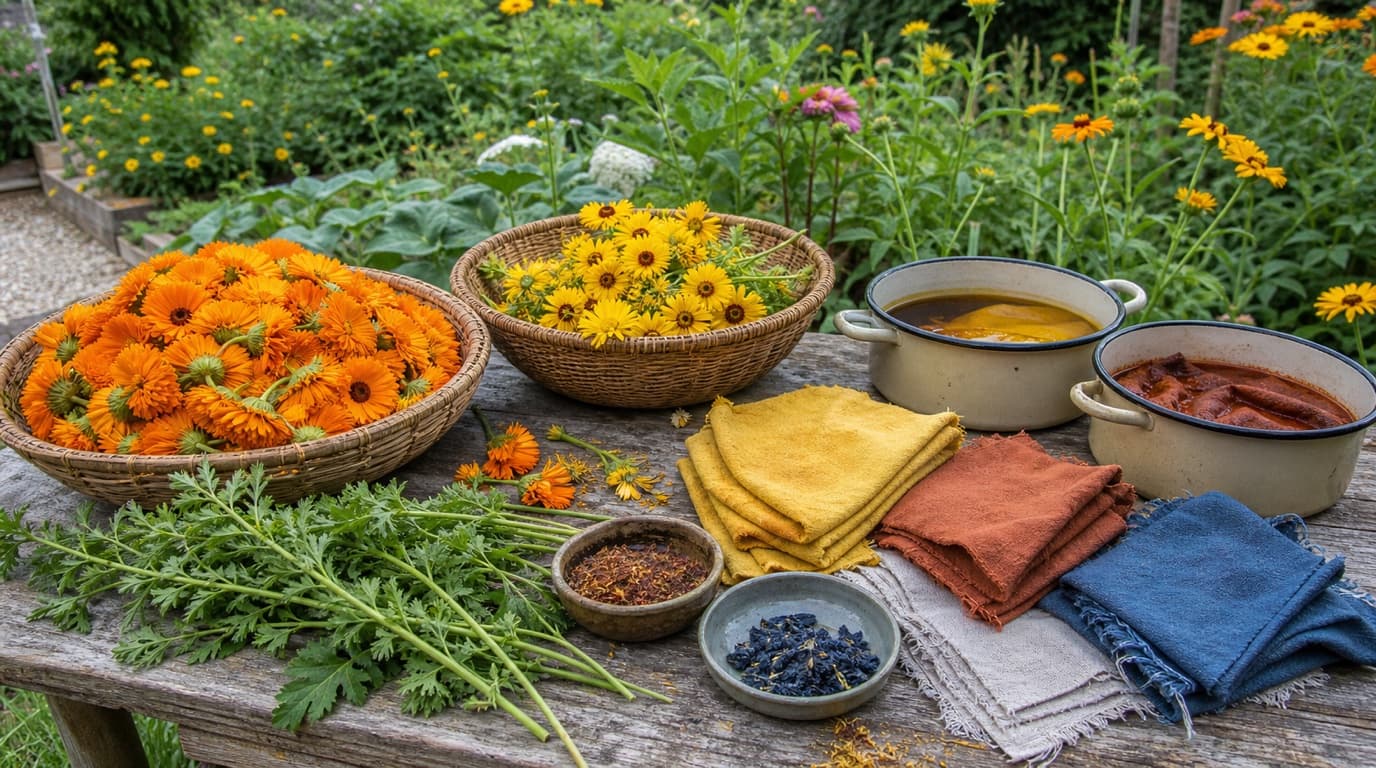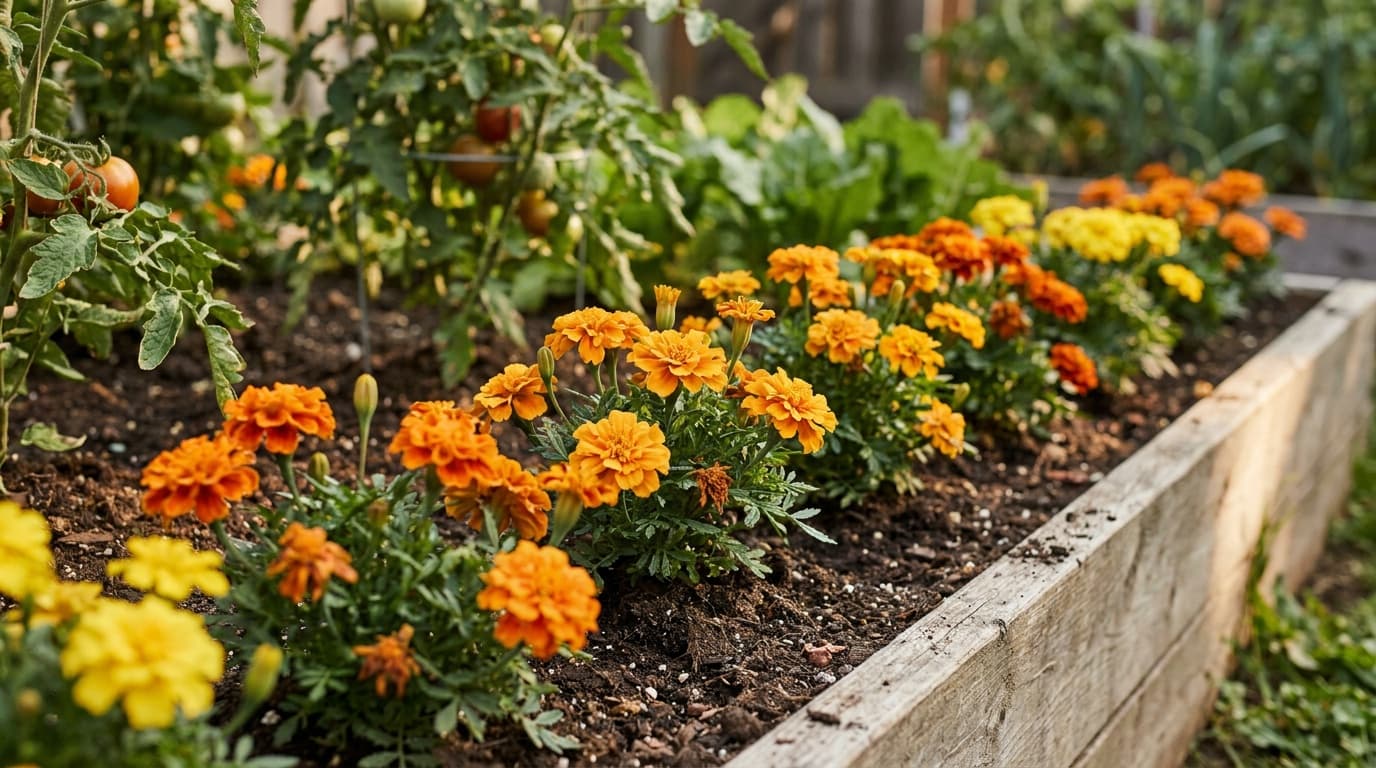
Marigolds are often sold as interchangeable orange bedding plants, but plant form changes how they should be used. A compact French type can edge a vegetable bed, while a tall African type needs support and a position where it will not hide smaller plants.
Choose the right marigold form
French marigolds are compact, branching plants suited to edging, containers, and the front of beds. Their smaller flower heads are less likely to trap rain.
African marigolds make taller stems and larger blooms. They may need discreet support in wind or heavy rain and work best behind shorter plants.
Signet marigolds have fine foliage and many small flowers. They create a lighter visual texture and are useful where large flower heads would feel bulky.
Match type to garden job
Bed edge
Cut flowers
Containers
Pollinator planting
Raise compact transplants
Whether started indoors or purchased, choose plants with short stems, healthy leaves, and roots that have not formed a dense circling mass. If growing from seed, provide strong light as soon as seedlings emerge and thin by cutting extras at the surface.
Use how to start seeds indoors for lighting and how to harden off seedlings before garden exposure.
Set transplants without burying the stem and water the root ball into contact with the surrounding soil. Raised beds can improve drainage where the native soil stays wet; see raised bed gardening for beginners.
Water roots and restrain fertilizer
Water at the base, then allow the surface to begin drying. Dense flower heads and foliage that stay wet are vulnerable to gray mold and leaf spots. In containers, check actual root moisture rather than watering every pot on the same schedule.
Rich feeding can produce soft leafy growth with fewer useful flowers. Use compost or a measured balanced feed only where soil or leaf color shows a need.
Deadhead to keep the plant working
Remove fading flowers by cutting the stem back to a healthy leaf junction. This produces a cleaner shape than pinching only the flower head and gives the plant a clear point for new branching.
If saving seed, leave selected healthy flowers to dry and continue deadheading the rest. Mark the seed heads so they are not removed during routine cleanup.
Use companions without promising pest control
Marigolds add flowers and visual separation around tomatoes, peppers, and zucchini, but they are not a universal pest barrier. Use them for diversity and pollinator support, then manage each pest with identification and a targeted response.
The companion planting guide separates observed relationships from common garden folklore.
Containers and cleanup
Choose a pot that will not tip under a tall cultivar and keep drainage openings clear. Deadhead regularly, remove fallen petals from the soil surface, and trim damaged branches back to a live junction. The container gardening guide covers mix and vessel selection.
Troubleshoot foliage and flowers
- Spider mites cause pale stippling and fine webbing during hot, dry stress.
- Aphids cluster on buds and tender tips.
- Gray mold damages wet flowers and decaying tissue.
- Slugs, leafminers, whiteflies, and thrips can create distinct feeding patterns; inspect both leaf surfaces and the flowers before treating.
What is the practical difference between French and African marigolds?
French marigolds are compact and branching, making them useful for edging and containers. African marigolds are taller with larger flower heads and may need support in exposed or rainy sites.
Do marigolds repel every vegetable-garden pest?
No. Marigolds add diversity and flowers, but they do not replace pest identification and targeted management. Use the companion planting guide for evidence-aware relationships.
How should I deadhead marigolds?
Cut a fading flower stem back to a healthy leaf junction. This removes decaying tissue and leaves a clear branch point for new growth. Keep selected dry heads only when saving seed.
Why are marigolds leafy but not flowering well?
Excess nitrogen and shade are common causes. Stop feeding, check the plant's exposure, and remove damaged growth. Do not add more fertilizer until the plant response is clear.