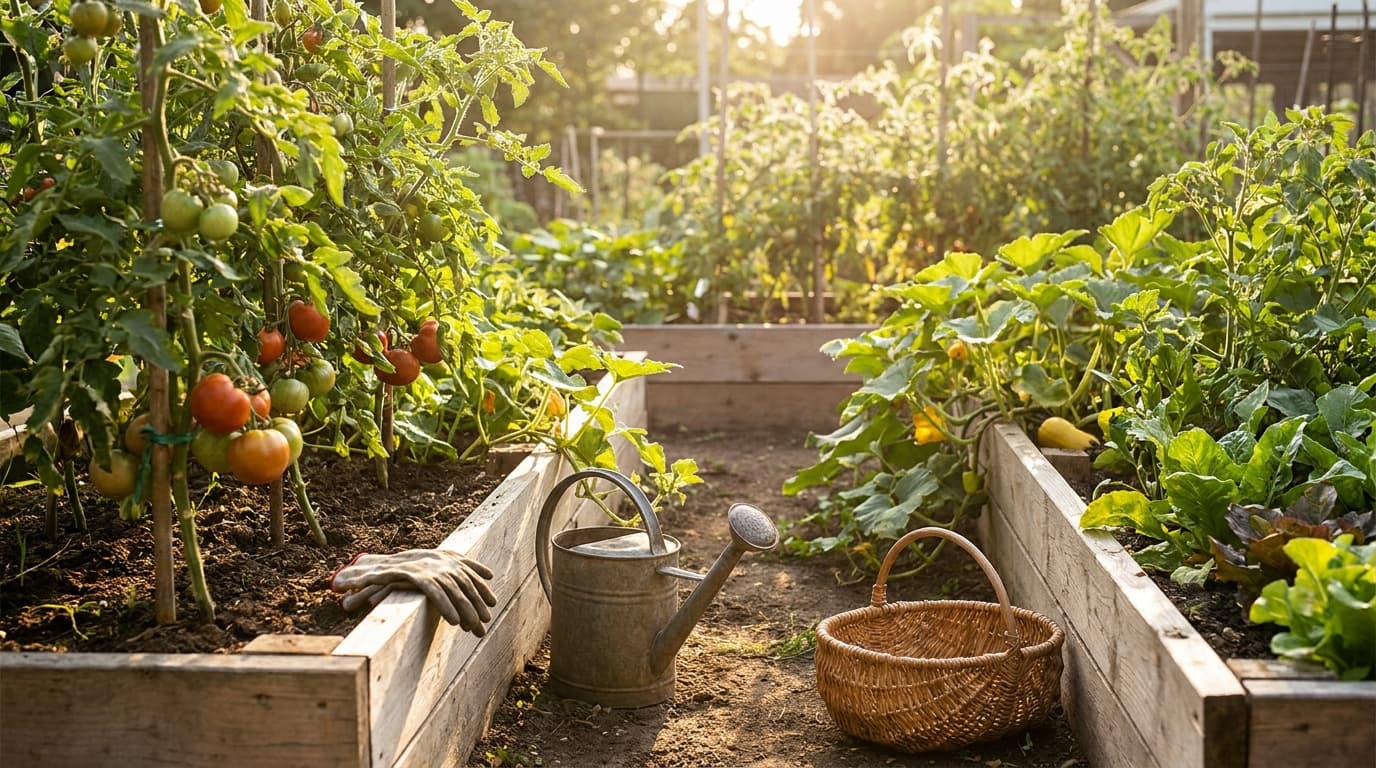
Choose the mix for what is under the bed
Container and in-ground soil pull in opposite directions. Potting mixes are light and fast-draining for pots that dry quickly; native topsoil is dense and holds water but compacts under its own weight. A raised bed sits between the two, so the best mix blends both ideas: enough mineral body to hold moisture and nutrients, enough organic matter to feed plants, and enough coarse material to keep air in the root zone.
University of Maryland Extension separates the recommendation by site rather than naming one universal recipe:
The surface matters because a bed over healthy ground can drain into the soil below and let roots continue downward. A bed on pavement is a closed, faster-drying root zone, so it needs a lighter growing medium and enough depth for the crop. Maryland Extension lists at least 8 inches for leafy greens, beans, and cucumbers on hard surfaces, and 12 to 24 inches for peppers, tomatoes, and squash.
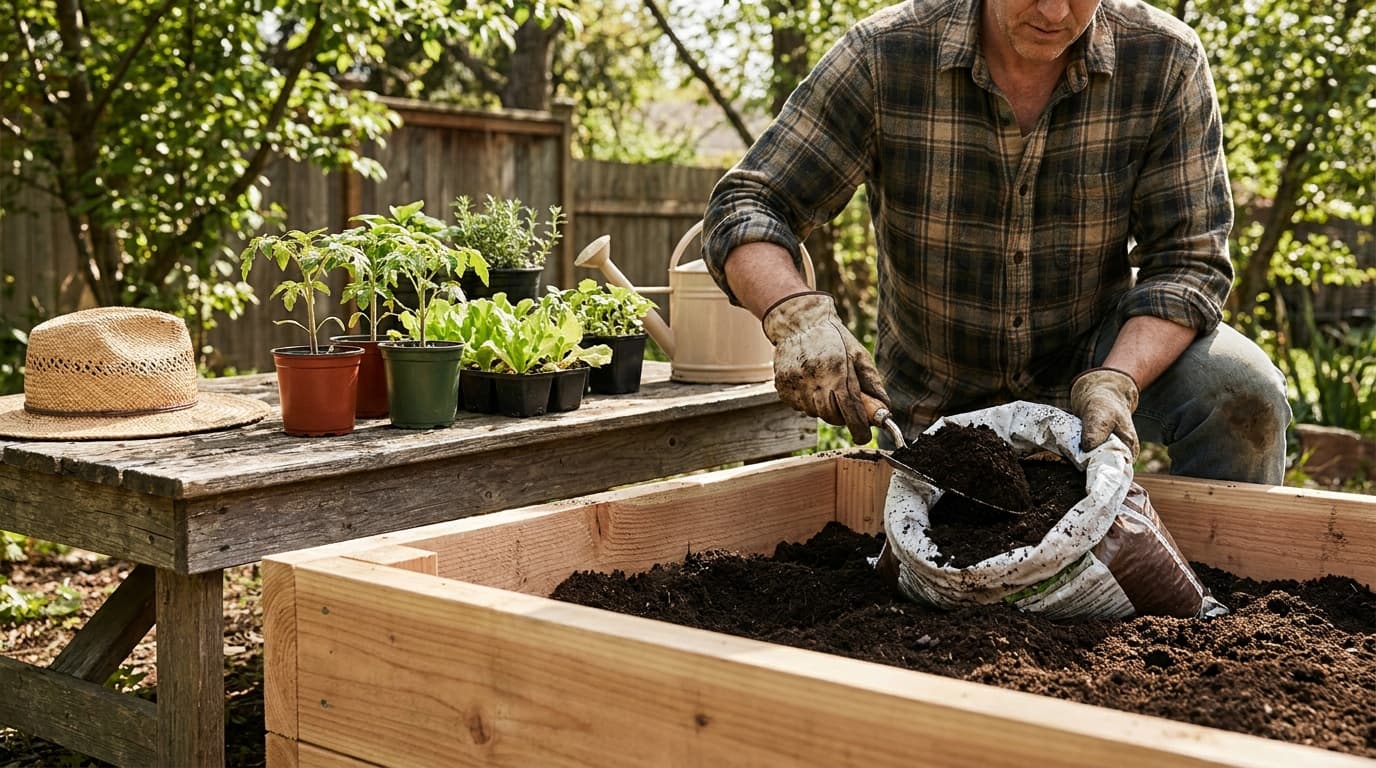
How to fill a raised bed without overspending
Soil volume adds up fast, and a deep bed can cost more to fill than it cost to build. Two strategies keep it reasonable.
Filling a bed economically
Calculate the volume
Measure the soil layer
Match depth to the site
Water and settle before planting
Bagged options for a small bed
If you are filling one small bed, mixing components by the bag can cost as much as buying a purpose-blended product, and bagged is far less work. A high-quality bagged mix already contains compost, aged forest products, and aeration, so you can fill, water, and plant the same day.
Some links on this page are affiliate links. As an Amazon Associate I earn from qualifying purchases.
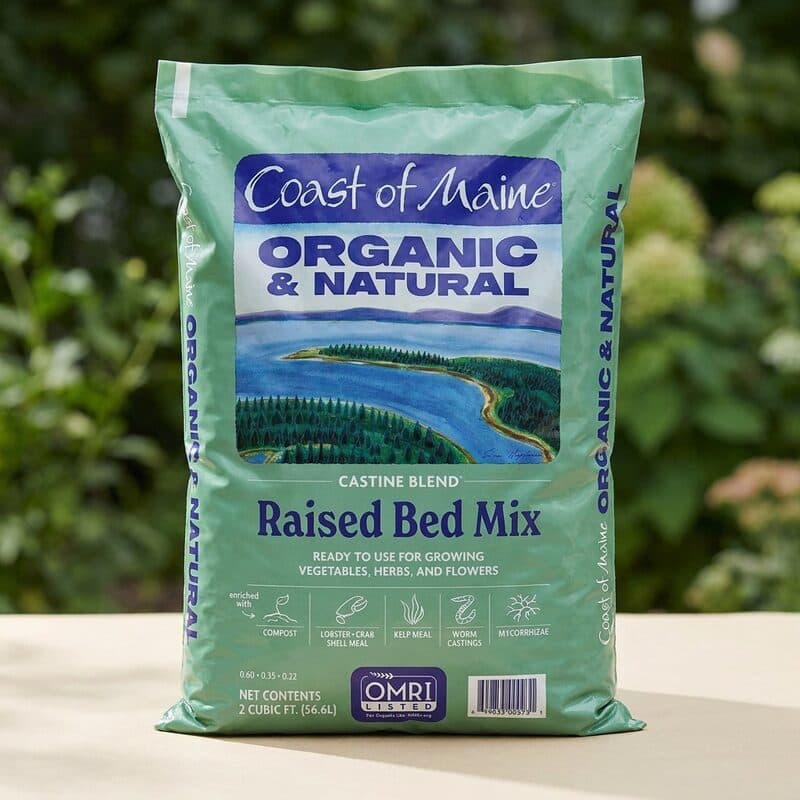
Ready-mix option
Coast of Maine Castine Blend Organic Raised Bed Mix (1 cu ft)
Best for: Raised-bed vegetable growers who want a rich, ready-to-use organic mix that performs without extra amending.
Keep in mind: Premium price per cubic foot makes filling multiple large beds expensive
Amazon price as of the checked date, subject to change. The price on Amazon at checkout applies.
Full research
- Bag size
- 1 cu ft
- Type
- Ready-to-use raised bed mix
- Base
- Compost, sphagnum peat, aged bark
- Amendments
- Worm castings, mycorrhizae, biochar, kelp, greensand
Coast of Maine's Castine Blend is a ready-to-use raised bed mix built on compost, peat, and aged bark and enriched with worm castings, mycorrhizae, biochar, kelp, greensand, and lobster and crab shell meal for vigorous vegetable growth.
This catalog-wide research score is separate from this guide's use-case ranking. How we research
Strengths
- Formulated specifically for raised beds, so it fills a bed and grows without further amending
- Biologically rich blend with mycorrhizae, worm castings, and marine meals supports vigorous vegetable growth
- Holds moisture in the root zone while still draining freely
Weaknesses
- Premium price per cubic foot makes filling multiple large beds expensive
- Sold in single cubic-foot bags, so a big bed needs many bags to fill
Sprout Score breakdown
Best for
Raised-bed vegetable growers who want a rich, ready-to-use organic mix that performs without extra amending.
Owner rating snapshot
Amazon · 419 reviews · 4.7 stars
A purpose-labeled raised-bed mix is the simplest route when convenience matters more than bulk pricing. Check the bag volume against the calculator instead of estimating by bag count, since package sizes vary. For a direct comparison of ready-made options, see our guide to the best raised bed soil.
If you are still choosing the bed itself, our guide to the best raised garden beds covers metal, wood, and depth tradeoffs.
Keeping raised bed soil healthy over time
A raised bed is not "fill once and forget." Every harvest exports nutrients, and compost breaks down and settles, so the level drops a few inches each year.
Each season, top up with an inch or two of compost and work a balanced organic fertilizer into the surface when a soil test supports it. A slow-release feed can help in raised beds because they drain freely and lose soluble nutrients faster than heavy ground.
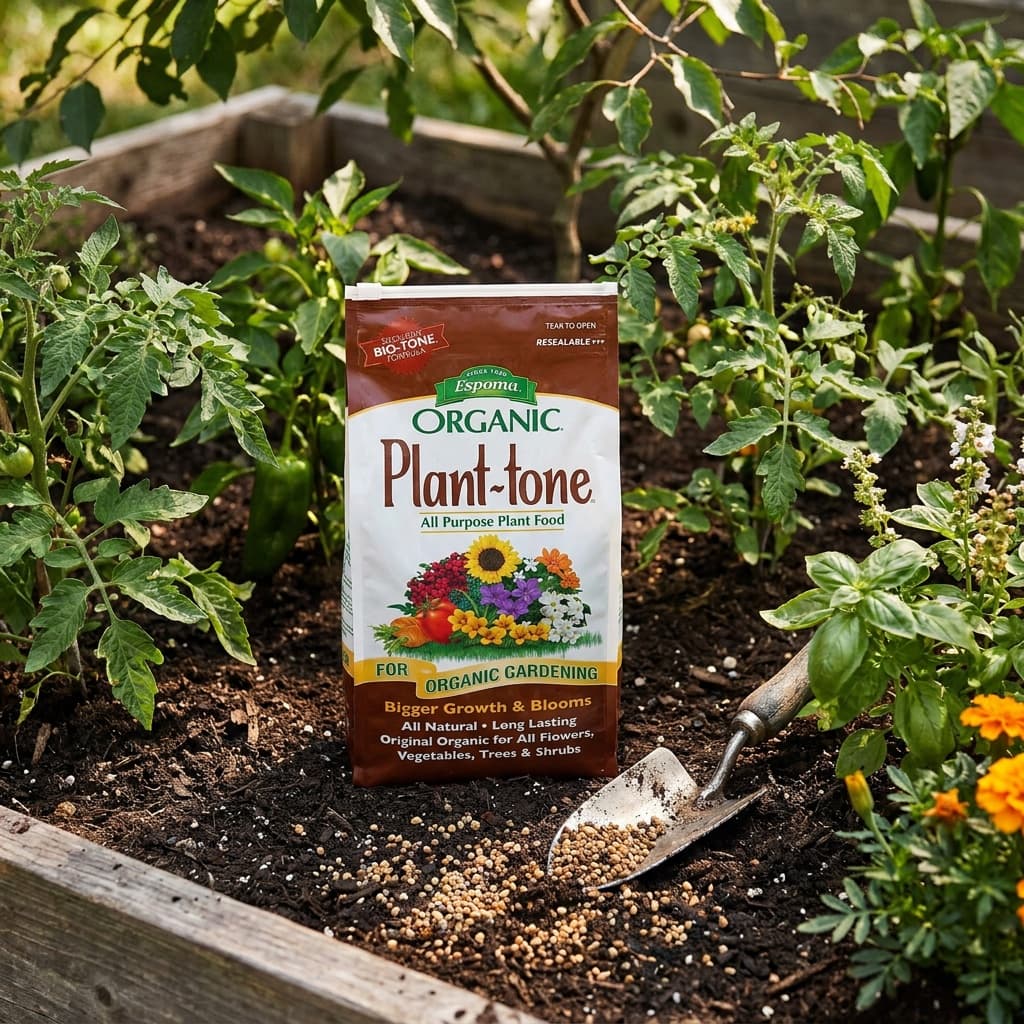
Seasonal feed
Espoma Plant-tone Organic All-Purpose Fertilizer
Best for: Gardeners who want one safe, all-purpose organic feed for the whole garden.
Keep in mind: Granular organics have a noticeable earthy smell
Amazon price as of the checked date, subject to change. The price on Amazon at checkout applies.
Full research
- NPK
- 5-3-3
- Type
- Granular slow-release organic
- Microbes
- Bio-tone beneficial microbe blend
- Use
- All-purpose: vegetables, flowers, trees, shrubs
A slow-release granular organic fertilizer with a 5-3-3 NPK and the brand's Bio-tone microbe blend. An all-purpose feed for vegetables, flowers, trees, and shrubs that releases gradually over the season.
This catalog-wide research score is separate from this guide's use-case ranking. How we research
Strengths
- Gentle slow-release feeding that resists burning
- Bio-tone microbes support soil biology
- Truly all-purpose across the garden
Weaknesses
- Granular organics have a noticeable earthy smell
- Slower visible response than synthetic feeds
Sprout Score breakdown
Best for
Gardeners who want one safe, all-purpose organic feed for the whole garden.
Owner rating snapshot
Amazon · 15 reviews · 4.7 stars
Mulch the surface to slow evaporation, and avoid walking on or compacting the soil. One of the main points of a raised bed is that the soil never gets stepped on, which keeps it loose without tilling. That makes raised beds a natural fit for no-dig gardening, where you build fertility by layering compost on top instead of digging it in.
What not to use
Skip pure peat moss as a base: it is acidic, hard to re-wet once dry, and not a sustainable choice. Skip straight builder's sand, which can cement into a hard layer when mixed with fine soil. And be cautious with free "topsoil" from unknown sources, since it can carry weed seeds, herbicide residue, or construction debris. When in doubt, pay for screened topsoil from a landscape supplier.
What is the best soil mix ratio for raised beds?
For a new bed over existing ground, University of Maryland Extension lists compost and topsoil at either 1:2 or 1:1. For a bed on a hard surface, it lists equal parts compost and soilless growing media. Choose the option for the surface beneath the bed rather than treating one ratio as universal.
Can I use potting soil in a raised bed?
Potting mix can serve as the soilless growing-media component in the hard-surface option, but check the product label because many bagged products already contain compost. For a bed over existing ground, Maryland Extension instead lists topsoil and compost at 2:1 or 1:1.
How deep should the soil be in a raised bed?
Most vegetables are happy with 8 to 12 inches of good soil, since that is where the bulk of their roots grow. Root crops like carrots and deep feeders like tomatoes prefer the deeper end. You can fill beds deeper than 12 inches with cheaper bulk material at the bottom.
Do I need to replace raised bed soil every year?
No. You refresh it, not replace it. Each season top up with an inch or two of compost plus a balanced organic fertilizer, and add aeration material if the soil feels dense. Full replacement is only needed if the soil becomes contaminated or severely diseased.
Match the blend to the site, calculate the actual volume before buying, and top the bed up with compost as the level falls over time. That gives the roots a workable starting medium without pretending one recipe fits every bed.