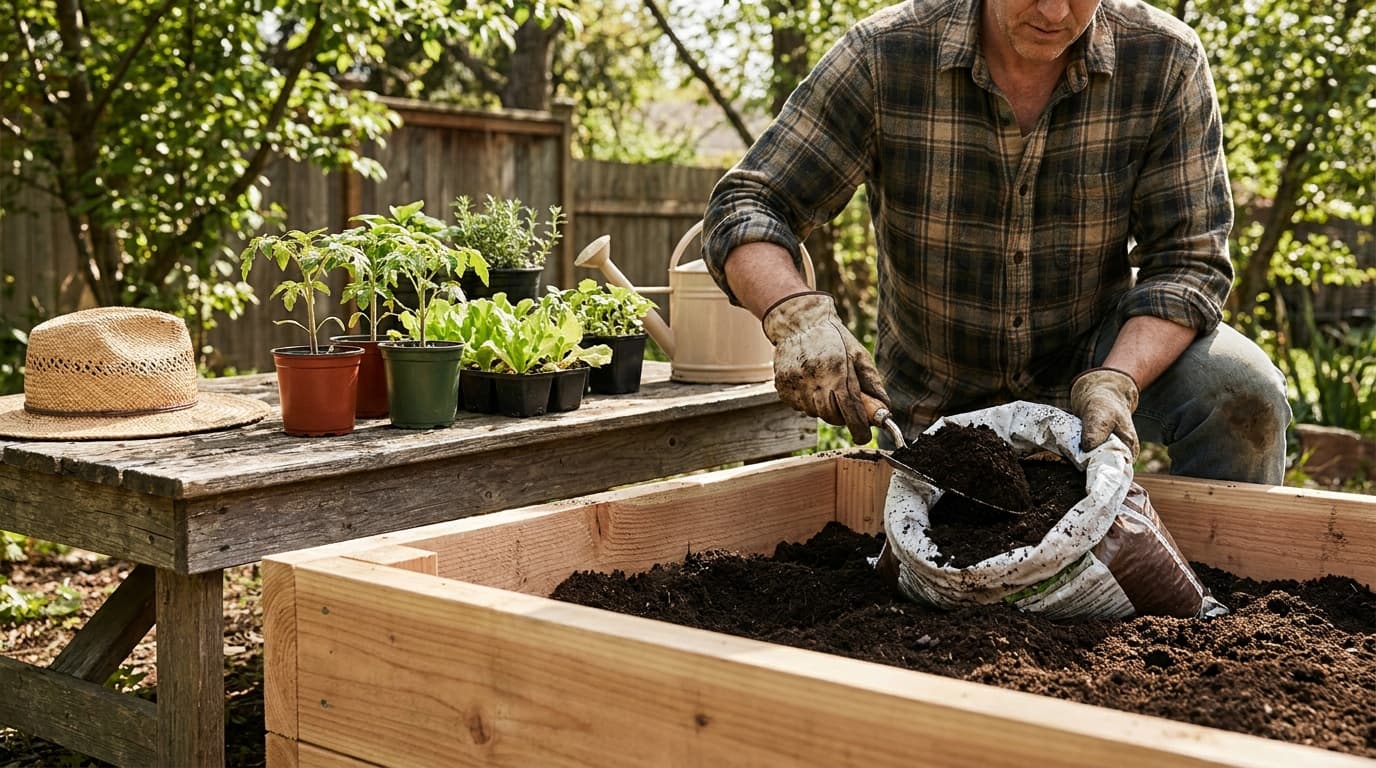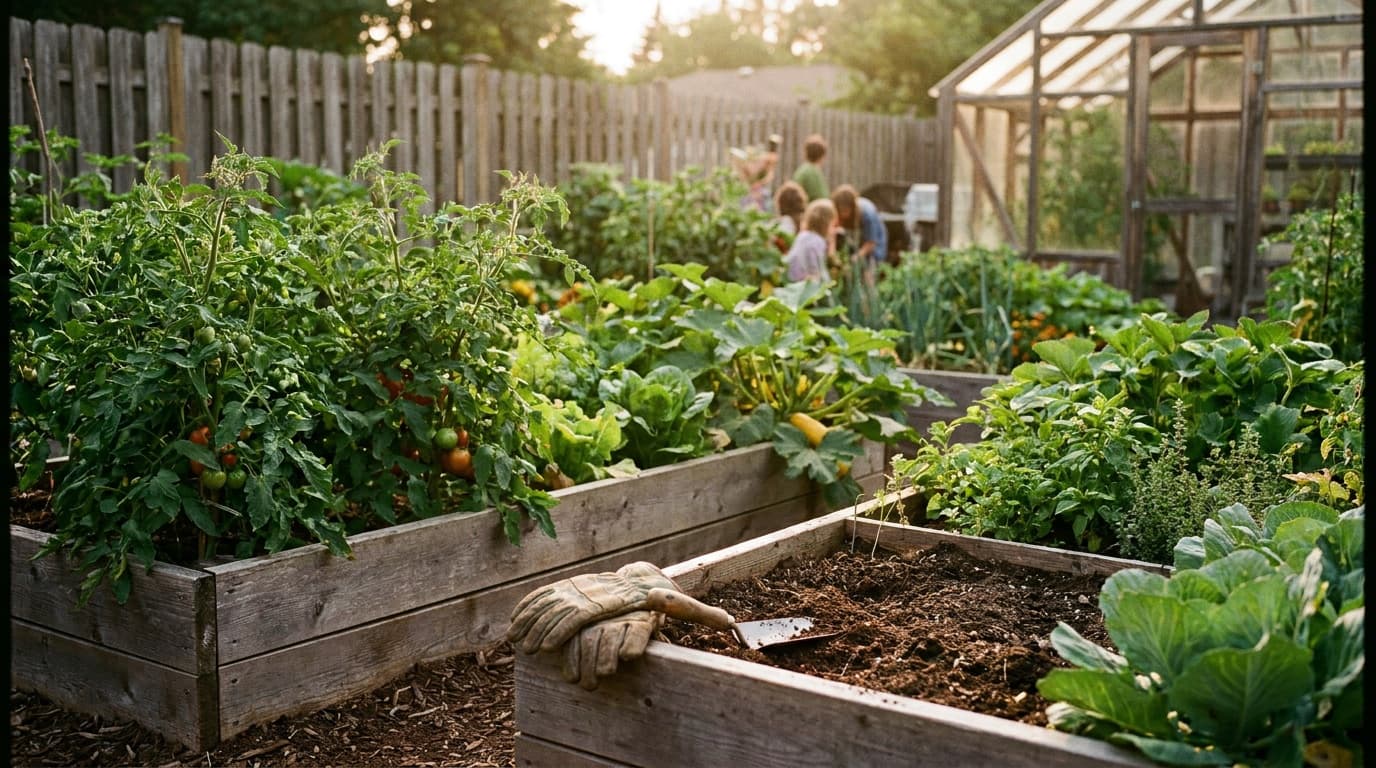
Container gardening may be the only practical choice for a renter, a balcony gardener, or anyone whose sunny space is paved. Plants in pots still need the same five things as plants in the ground: root room, soil, water, light, and food. Get those right and a 5 gallon container of tomatoes can outproduce a neglected in-ground bed.
The catch is that containers are less forgiving. A pot has no deep subsoil to buffer a missed watering, and no surrounding earth to hold nutrients. Everything you give the plant, and everything you forget, shows up faster. This guide is about getting the inputs right so that speed works in your favor.
Match the pot to the crop
The most common beginner mistake is growing a big plant in a small pot. Roots need volume, and a cramped root ball means a stunted, thirsty, underproductive plant. Bigger is almost always safer, because larger pots hold more soil, dry out more slowly, and give roots room.
Minimum container size by crop
Herbs and leafy greens
Peppers, bush beans, compact tomatoes
Full-size tomatoes
Root crops
Whatever you use, it must have drainage holes. A pot without drainage drowns roots after the first heavy watering. Fabric grow bags solve this automatically and also air-prune roots for a healthier root ball, which is why so many container growers favor them, see our best grow bags guide.
Use potting mix, never garden soil
This rule is worth repeating because it sinks so many first attempts. Garden soil and bagged "topsoil" are too dense for containers. They compact into an airless brick, drainage collapses, and roots suffocate.
You want a true potting mix: light, fluffy, formulated to drain freely while still holding moisture, usually based on coir or peat, bark, and perlite.
Some links on this page are affiliate links. As an Amazon Associate I earn from qualifying purchases.
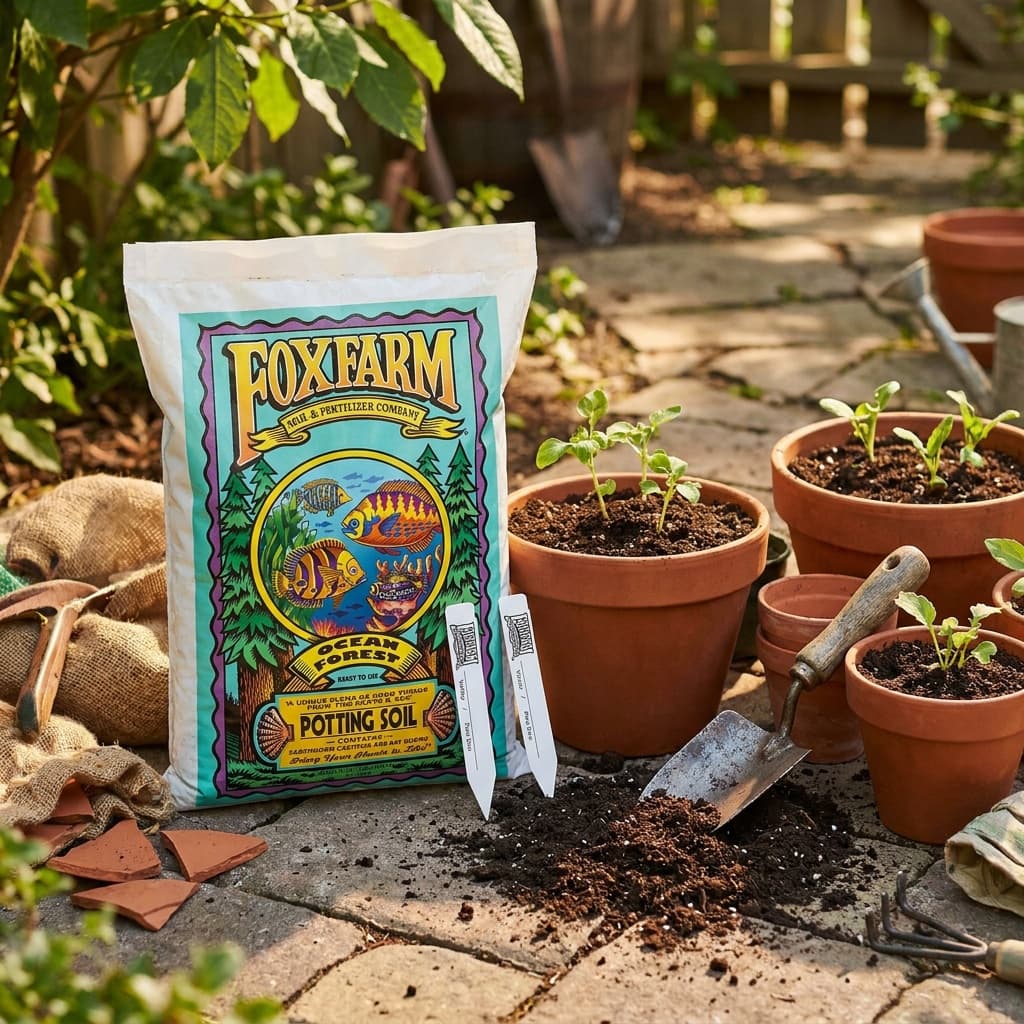
Ready to plant
FoxFarm Ocean Forest Potting Soil
Best for: Container and raised-bed growers who want a rich, ready-to-plant mix.
Keep in mind: Can be too hot for tender seedlings without dilution
Amazon price as of the checked date, subject to change. The price on Amazon at checkout applies.
Full research
- Volume
- 1.5 cu ft
- Type
- Ready-to-use potting soil
- Key ingredients
- Aged forest products, sphagnum peat, earthworm castings, bat guano
- pH
- Adjusted to 6.3 to 6.8
A nutrient-dense, ready-to-use potting soil blended with earthworm castings, bat guano, and fish and crab meal. Its pH is pre-adjusted so nutrients stay available, making it a go-to for containers and transplants.
This catalog-wide research score is separate from this guide's use-case ranking. How we research
Strengths
- Rich, nutrient-dense blend that feeds early growth
- pH pre-adjusted to a plant-friendly range
- Drains well while holding moisture
Weaknesses
- Can be too hot for tender seedlings without dilution
- Premium price per bag
Sprout Score breakdown
Best for
Container and raised-bed growers who want a rich, ready-to-plant mix.
Owner rating snapshot
Amazon · 101 reviews · 4.7 stars
Ocean Forest comes pre-blended with compost and aged forest products, so it is ready to plant without amending, which is exactly what a beginner wants from bag one. For the full breakdown of mixes, including budget options and how to read an ingredient list, see our best organic potting soil guide.
Water on a rhythm, not a guess
This is the part that separates thriving container gardens from crispy ones. A 5 gallon pot in full summer sun can need water every single day, sometimes twice. The ground forgives a skipped watering; a pot does not.
The test is your finger, not the calendar: push it an inch or two into the mix. If it is dry at the fingertip, water. If it is still moist, wait. Water until it runs freely from the drainage holes, which tells you the entire root zone got wet, not just the surface.
If daily watering is unrealistic with your schedule, automate it. A simple hose timer on a drip line into the pots removes the single biggest cause of container failure.
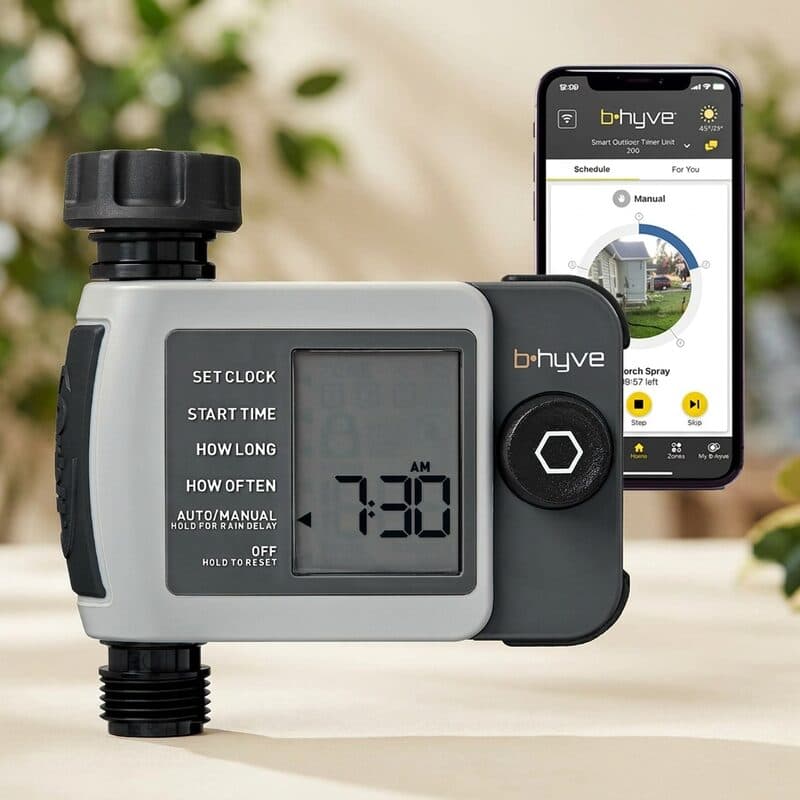
Hands-off watering
Orbit B-hyve Smart Hose Faucet Timer
Best for: Gardeners who want app control and weather-aware automatic watering.
Keep in mind: WiFi setup can be finicky at the faucet's signal range
Amazon price as of the checked date, subject to change. The price on Amazon at checkout applies.
Full research
- Connectivity
- WiFi and Bluetooth
- Scheduling
- App-based, weather-adjusting
- Zones
- Single outlet (multi-outlet models available)
- Power
- Battery powered
Orbit's B-hyve smart timer adds WiFi and Bluetooth control with weather-based scheduling, automating faucet watering from a phone app.
This catalog-wide research score is separate from this guide's use-case ranking. How we research
Strengths
- Weather-based scheduling skips watering after rain
- Controllable from a phone over WiFi or Bluetooth
- Flexible programs for multiple watering windows
Weaknesses
- WiFi setup can be finicky at the faucet's signal range
- Costs more than a basic mechanical dial timer
Sprout Score breakdown
Best for
Gardeners who want app control and weather-aware automatic watering.
Owner rating snapshot
Amazon · 17 reviews · 4.1 stars
The B-hyve lets you set a watering schedule (and adjust it from your phone), which turns the riskiest container chore into something that happens whether you remember or not. We dig into timers and zones in the best garden hose timers guide.
Feed more often than you would in the ground
Every time water runs out the bottom of a pot, it carries dissolved nutrients with it. That is good for flushing salts, but it means container plants run hungry faster than in-ground ones. You are responsible for replacing what washes away.
Mix a slow-release organic fertilizer into the mix at planting, then supplement through the season, especially for heavy feeders like tomatoes and peppers once they start setting fruit.
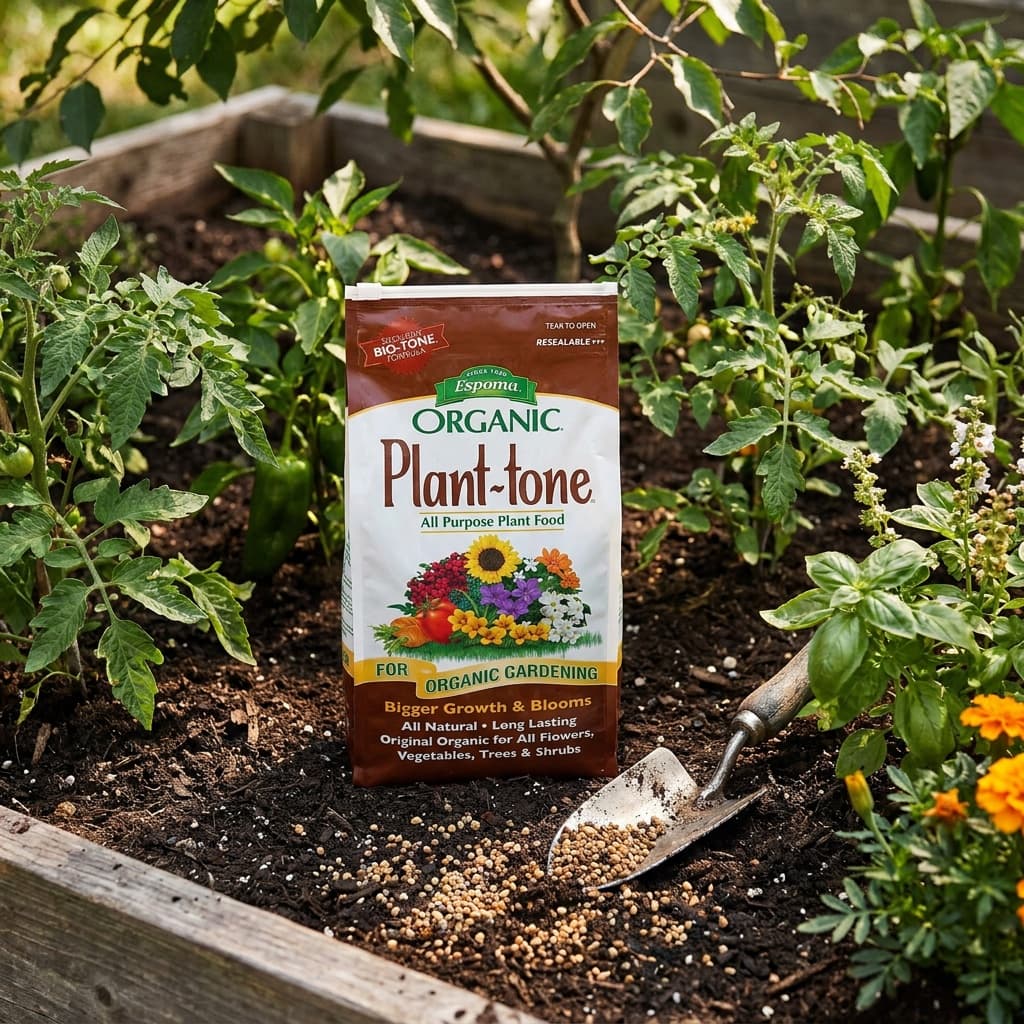
Slow-release base
Espoma Plant-tone Organic All-Purpose Fertilizer
Best for: Gardeners who want one safe, all-purpose organic feed for the whole garden.
Keep in mind: Granular organics have a noticeable earthy smell
Amazon price as of the checked date, subject to change. The price on Amazon at checkout applies.
Full research
- NPK
- 5-3-3
- Type
- Granular slow-release organic
- Microbes
- Bio-tone beneficial microbe blend
- Use
- All-purpose: vegetables, flowers, trees, shrubs
A slow-release granular organic fertilizer with a 5-3-3 NPK and the brand's Bio-tone microbe blend. An all-purpose feed for vegetables, flowers, trees, and shrubs that releases gradually over the season.
This catalog-wide research score is separate from this guide's use-case ranking. How we research
Strengths
- Gentle slow-release feeding that resists burning
- Bio-tone microbes support soil biology
- Truly all-purpose across the garden
Weaknesses
- Granular organics have a noticeable earthy smell
- Slower visible response than synthetic feeds
Sprout Score breakdown
Best for
Gardeners who want one safe, all-purpose organic feed for the whole garden.
Owner rating snapshot
Amazon · 15 reviews · 4.7 stars
Plant-tone gives a steady baseline feed mixed into the pot, and you can top up with a liquid feed during peak production. See the best organic fertilizers guide for how to layer a slow-release base with periodic liquid feeding.
Time it like any other garden
Containers do not change the calendar. Warm crops still wait until after your last spring frost, and cool crops still go in early. One advantage: pots are portable, so you can move tender plants under cover if a surprise late frost threatens.
Enter your ZIP into the planting calendar for crop-by-crop dates, and confirm your window with the frost dates tool.
Watch for the container-specific problems
Two issues show up more in pots than in the ground. The first is blossom end rot on tomatoes and peppers, a sunken dark patch on the fruit's bottom, which is driven by inconsistent watering swinging the plant between bone-dry and soaked. Steady moisture is the fix. The second is crowding multiple plants into one pot, which invites powdery mildew from poor airflow. One big plant per pot beats three crammed together.
What vegetables grow best in containers?
Leafy greens (lettuce, spinach, kale, chard), herbs (basil, parsley, mint), bush beans, peppers, and compact or "patio" tomato varieties are the most reliable in pots. Radishes and green onions are fast and easy too. Avoid sprawling crops like full-size pumpkins or sweet corn, which need far more room than a container realistically offers.
How often do I water container vegetables?
Check daily in warm weather by pushing a finger an inch into the soil; water when the tip feels dry. In peak summer, a 5 gallon pot in full sun often needs watering once or twice a day. The ground holds moisture far longer, so do not apply in-ground watering habits to pots. A hose timer on a drip line removes the guesswork.
Do I need drainage holes in containers?
Yes, always. A container without drainage holes will waterlog after the first deep watering and drown the roots, which leads to root rot. If you love a decorative pot that has no holes, drill some or use it as an outer "cache pot" with a draining nursery pot tucked inside.
Can I reuse potting soil from last year?
You can, but refresh it first. Old mix is compacted and nutrient-depleted, and may harbor disease if last year's plant was sick. Loosen it, blend in fresh mix and compost (roughly one part new to two parts old), and add fertilizer. If the previous crop had a disease problem, start fresh instead.
A balcony can produce a useful harvest when the pots are large enough for the crops. Use potting mix, water consistently, and replace nutrients as plants use them. To keep the containers productive, read succession planting for a longer harvest.